Riding the Tide: Reflections on the Next Era of Healthcare Innovation
Editor’s Note: This article is republished from the CCI Cardiovascular Physician Innovation Club, authored by Liu Yuqi. Republished with authorization by VCBeat.
"It was the best of times, it was the worst of times;"
It was the age of wisdom, it was the age of foolishness;
This was the age of trust, this was the age of doubt;
It was the best of times, it was the worst of times;
"It was the spring of hope, it was the winter of despair;"
It was the best of times, it was the worst of times;
People are stepping onto the path to heaven; people are walking toward the gates of hell.
——A Tale of Two Cities, Dickens
“When I read this passage from A Tale of Two Cities, I felt it was describing the current macro-environment of healthcare in China. Perhaps doctors are gatekeepers holding the keys, but no one can guarantee whether the door they open for patients leads to heaven or hell.”
“I Am Not a Medicine God,” and Doctors Are Not Gods Either. When confronting disease, doctors also need to rely on various tests, medications, and medical devices to assist in diagnosis and treatment. Although there are thousands of diagnostic and therapeutic methods, seemingly offering everything one could ask for, some patients leave doctors feeling utterly helpless, making them feel as though they are in a “winter of despair.” Yet there are those who lead others in this best of times to seek a “spring of hope.”
Looking back at the societal transformations in China since the reform and opening-up, I believe the domestic healthcare market has undergone three major upheavals.
1
The First Transformation: The Initial Two Decades of Reform and Opening-Up (1979–1999), During Which We Achieved the Monumental Shift from “Nothing to Something”
(1) Rapid Economic Growth Stimulates a Surge in Healthcare Demand
During this period, China’s reform and opening-up policy spurred rapid economic growth, with improvements in material living conditions accompanied by a surge in demand for disease diagnosis and treatment. In the past, many Chinese citizens struggled to meet even basic needs for food and clothing, let alone afford medical care. As living standards gradually improved, the disease spectrum also underwent subtle shifts in tandem with changes in dietary patterns.
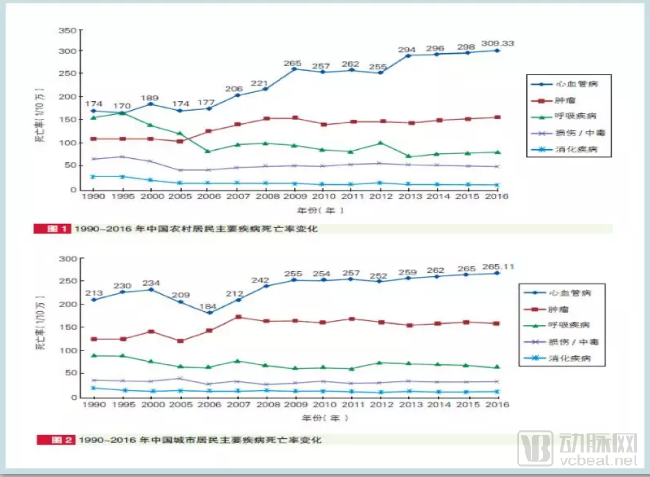
Data source: Report on Cardiovascular Diseases in China 2018
(II) Influx of Foreign Medical Enterprises, Quiet Rise of Domestic Brands
Foreign medical companies have flooded into China, bringing with them a surge of new drugs, novel medical devices, and innovative treatment concepts. Meanwhile, domestic enterprises have sprung up like mushrooms after rain, driven by a clear awareness of our gaps at that time. With this understanding, we began to emulate and learn, focusing on localizing the needed products; successful localization virtually guaranteed market access.
A classic example is statins. After the 1980s, the advent of 3-hydroxy-3-methylglutaryl coenzyme A (HMG-CoA) reductase inhibitors may have been unforeseen as a milestone in the history of pharmaceutical development. In the early 1990s, imported lovastatin was already being used in clinical treatment, and domestic production was achieved in 1996. Subsequently, drugs such as pravastatin, simvastatin, and fluvastatin entered the Chinese market one after another, with domestically produced atorvastatin receiving its new drug certificate and production approval in 1999.
The defining characteristic of the healthcare industry during this period was its pioneering spirit. Whether it was foreign investment entering the market or domestic companies following suit, all demonstrated the courage to be the first to venture into uncharted territory. Many recall this era as a “golden age” of the market, where success seemed effortless. In reality, however, amid considerable policy and market uncertainties, those who dared to be the first to “eat crabs”—a Chinese metaphor for trying something new and risky—were true pioneers.
2
The Second Transformation: In the Past Two Decades (2000–2019), We Experienced a Shift “From Availability to Innovation”
(1) The Market Launch of Domestically Produced Drugs and Medical Devices Provides Patients with “New” Options
With market development, pharmaceuticals and medical devices developed and manufactured by both domestic and foreign-invested enterprises have come to feature multiple batch numbers, offering doctors and patients a wider range of choices. In this context, there are several keys to open the same door: two or three “foreign keys,” and even more “domestic keys.”
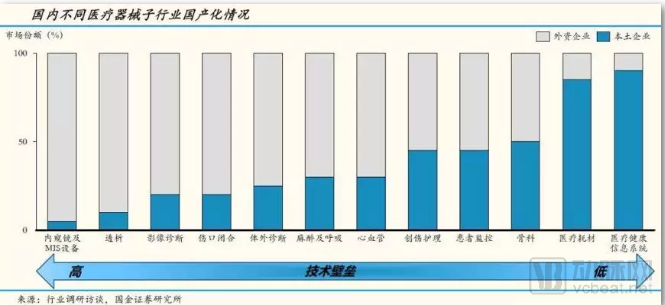
Taking coronary stents, a common type of medical device, as an example, imported brands include Medtronic, Boston Scientific, and Abbott, while domestic manufacturers include Lepu Medical, MicroPort, and Jiwei. Therefore, physicians often ask patients or their families whether they prefer domestically produced or imported stents, thereby ensuring that different patient populations receive the most appropriate and cost-effective treatment options.
(2) “New” corporate marketing strategies, government regulatory policies, etc.
For enterprises, how can they avoid being eliminated and even stand out in a limited market space with fierce competition? The key lies in “change,” as change leads to progress.
First, enterprises must transform their external marketing models. For instance, over-the-counter (OTC) drugs such as “Bai Jia Hei” and “Gai Zhong Gai” have intensified media promotion. Meanwhile, prescription drugs and medical devices are enhancing their academic influence through new approaches, such as hosting academic conferences and conducting collaborative research projects, thereby influencing clinical diagnosis and treatment protocols. Second, companies must also reform their internal management practices, including raising product standards, modifying dosage forms, and obtaining production system certifications. Furthermore, amidst increasingly fierce competition, enterprises are solidifying their market position, securing room for development, and creating new profit growth points by increasing R&D investment and diversifying their product portfolios.
For the government, it is essential to ensure that pharmaceuticals and medical devices adhere to the fundamental principles of safety and efficacy, while also balancing economic benefits and industry development. Consequently, relevant functional departments have successively introduced numerous policies and guidance documents, such as the transition from local standards to national standards, Good Manufacturing Practice (GMP) certification, the National Essential Medicines List, tendering and bidding processes, consistency evaluations, the two-invoice system, and tiered diagnosis and treatment.
The interplay between corporate “workarounds” and frequent policy adjustments has shaped the current landscape of China’s healthcare sector. On a positive note, several cutting-edge Chinese innovations—such as artificial hearts, artificial livers, and bioresorbable stents—have entered clinical trials. Yet, it is regrettable that underdeveloped regions still exist where patients remain unaware of their own diabetes diagnoses. Nevertheless, with the passage of time, we are confident that these challenges will gradually be resolved.
3
The Third Transformation: The Next Two Decades (2020–), We Have Entered the Era of “From New to Refined”
No matter how much national regulatory authorities emphasize the “safety and efficacy” of drugs and medical devices, or how rigorously companies establish quality management systems and enforce strict quality control, efforts to further improve existing therapeutic outcomes will not satisfy everyone. Let us first examine the data related to percutaneous coronary intervention (PCI) in China from 2011 to 2018:
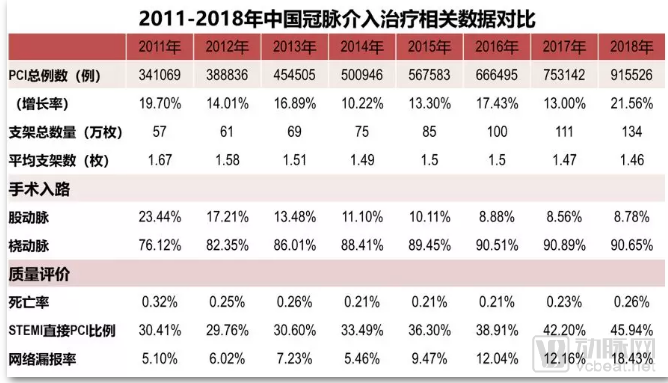
Data Source: Compiled from data released at the CCIF Conference
(from 1,788 local hospitals and military hospitals)
For patients undergoing coronary stent implantation: some have technically successful procedures, adhere strictly to medication regimens and regular follow-up visits as prescribed, yet still experience major adverse cardiovascular events (MACE) within six months. The underlying causes may vary: genetic testing might reveal clopidogrel resistance; lifestyle apps could identify unhealthy dietary and behavioral patterns; or artificial intelligence might detect that stent-induced turbulent flow compromises plaque stability. The emergence and application of new technologies—such as genetic testing, big data, and artificial intelligence—have opened a new window for physicians, providing additional parameters to guide surgical planning and help select the most appropriate therapeutic strategy. It is precisely these new technologies that enable clinicians to deliver personalized patient care.
Let us continue our discussion on the aforementioned statins. Statins function by inhibiting endogenous cholesterol synthesis. Studies have indicated that the peak period for endogenous cholesterol synthesis occurs around 10:00 PM, while the time to reach peak plasma concentration (Tmax) for statins is approximately two hours. Consequently, standard medical advice recommends administering statins once nightly (q.n.), with 8:00 PM being the optimal time for dosing. It is important to note, however, that these findings are derived from large-scale population studies; due to individual variability, this pattern may not apply uniformly to every patient.
Perhaps in the next two decades, for the same disease and the same medication, physicians will be able to provide personalized, precision treatment by tailoring dosage and timing to individual patient differences. Humans are not mass-produced; “I am not a ‘Drug God,’” nor are physicians deities. Yet, like the hand of God, doctors can precisely deliver hope and healing to patients.
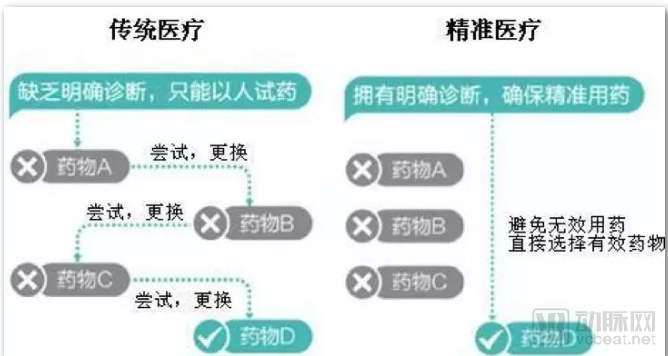
An expert once said, “Healthcare is not about showcasing new technologies or winning awards; it is about addressing patients’ needs. Solidly meeting those needs constitutes the essence of healthcare.”
For example, artificial intelligence will play a significant role in precision cardiovascular medicine. This is because diagnosis has advanced from the morphological level to the functional level.
Discovering new disease phenotypes or genotypes in cardiovascular diseases with heterogeneous characteristics to guide personalized targeted therapy; identifying unknown risk factors associated with cardiovascular diseases or their treatments; interpreting cardiovascular imaging, ultrasound, and electrocardiograms; and assisting in the development of clinical decision support systems for cardiovascular diseases all fall within the scope of precision medicine.
These efforts have made it possible to accurately assess patients' conditions, assist physicians in making clinical decisions, and predict treatment outcomes, thereby tangibly addressing real-world problems for patients.
Over the next two decades, societal expectations for healthcare will center on being “effective, precise, safe, and cost-efficient.” In this context, as innovators in the medical field, we identify clinical patient needs to generate project ideas, leverage technology to invent product-based solutions, and ultimately implement commercialization to address clinical needs on a large scale.