

Special Forum at the 9th China-U.S. Health Summit: Intellectual Property Protection and Regulation for Biopharmaceutical Enterprises
VCBeat (WeChat ID: vcbeat) has learned that the 9th China-US Health Summit was recently held in Boston. Over the course of two days of intensive agenda sessions, elites from various sectors in China and the United States—including industry, academia, research, government, and business—gathered together for in-depth and efficient dialogues and exchanges centered on two major themes: innovation and investment/financing in healthcare, and the establishment of a sustainable health system. Among the more than 400 attendees, over 100 were healthcare policy makers, presidents of public and private hospitals, representatives from medical teaching and research institutions, and professionals from investment and pharmaceutical companies who traveled specifically from China to participate in the China-US Health Summit.
At the Martin Conference Center of Harvard Medical School in Boston, USA, the Special Forum on Intellectual Property Protection and Regulation for Biopharmaceutical Innovation was held as part of the 9th China-US Health Summit and the Healthcare Innovation and Investment & Financing Forum. The special forum was moderated by Liang Wang Yuanheng, a health technology and biopharmaceutical entrepreneur and lawyer. Panelists included Jeffrey J. Ellison, Partner at Clark+Elbing; Cui Can, Attorney at Morrison & Foerster LLP; and Jonathan Darrow, Assistant Professor of Policy, Therapeutics, and Law at Harvard Medical School.This article was written by Yin Chaoqun,VCBeat compiled its content.
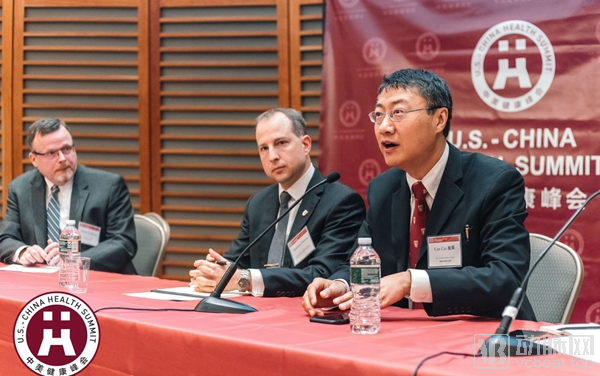
Special Forum Discussion Scene (Photo provided by the author)
Mutual Non-Infringement Is the Prerequisite for Protecting One's Own Intellectual Property Rights
In Jeffrey’s view, patents serve as a catalyst that helps research teams bring clinical studies to market. Before new therapies can enter the market, they generally require patent approval. Patents not only incentivize research teams to pursue innovative developments but also reduce corporate risks related to competition and potential losses. In the biopharmaceutical sector, legal protections grant patent holders monopoly rights, thereby safeguarding their freedom to operate.
What aspects should company founders consider when addressing intellectual property protection?
Jeffrey believes that the most important thing for patent applicants is to maintain contact with their attorneys, so they can be informed and respond promptly when business plans change. Secondly, before conducting public clinical trials, applicants should document their ideas to protect their rights.
Jonathan added that patent applicants must ensure that the invention has not been publicly disclosed or invented by others prior to filing the patent application, and they cannot use independent invention as an excuse for infringing on others’ patents. Furthermore, balancing regulatory exclusivity is also a critical issue. Generally, inventors attempt to broaden the scope of their patents and assert as many claims as possible to prevent infringement by others. However, a balance must be struck between these two aspects. It is important to remember that excessive expansion can lead to downfall: the broader the patent scope and the more it seeks to cover, the greater the risk of the patent being declared invalid.
Cui Can discussed the issue of intellectual property protection for startups from the perspective of key areas of interest to investors. The first aspect is the protection of trade secrets. Trade secret protection serves as the default mode of safeguarding inventions before patent applications are filed. In addition to implementing reasonable internal measures for trade secret protection, Cui Can advised startups to include trade secret protection clauses in any technology-related agreements signed with third parties. Regarding patent applications, given that substantive laws and procedural requirements for patents vary across countries, it is essential for companies to develop a global strategy for patent filing.
Secondly, while safeguarding its own intellectual property (IP) rights, a company must also ensure that its commercial activities do not infringe upon the IP rights of others. If it is impossible to avoid infringing on others’ IP rights, the company should seek patent licenses. Therefore, enterprises need to formulate reasonable IP licensing strategies. In addition, the ownership of IP rights held by employees and consultants must be carefully addressed to avoid potential conflicts of interest. On the basis of properly addressing these issues, startups should also draft and execute IP assignment agreements and trade secret protection agreements that provide substantial protection for the enterprise.
New Trends in Laws and Regulations: Innovation and Responsibility
Over the past decade, intellectual property protection has undergone some fundamental changes. How should startups respond to these changes?
Cui Can discussed the latest developments in intellectual property and pharmaceutical regulatory laws and regulations related to biomedicine from a Chinese perspective, which can be summarized in two words: innovation and responsibility.
Innovation is reflected in the introduction of new policies and measures designed to encourage it. For instance, the newly revised Drug Administration Law prioritizes the review and approval of new drugs for the prevention and treatment of major infectious diseases and rare diseases. It also allows for conditional approval of certain drugs that are urgently needed for public health or for treating severe, life-threatening conditions with no existing effective therapies. Additionally, the Patent Examination Guidelines have recently relaxed restrictions on the patent eligibility of human embryonic stem cells.
Responsibility is reflected in the strengthening of liability attribution. For instance, amendments to the Trademark Law and the Anti-Unfair Competition Law have been enacted, and the fourth amendment to the Patent Law has also been proposed. Specifically, these changes include increasing statutory damage awards, prohibiting bad-faith trademark squatting to a certain extent, and introducing punitive damages into the Anti-Unfair Competition Law.
Cui Can also highlighted some unique aspects of intellectual property protection in China.
From a patent perspective, inventors in U.S. patent applications benefit from a one-year grace period; filing a patent application within one year after publishing an article does not result in loss of novelty. In China, however, once a paper is published, the patent application loses its novelty.
In the United States, issues of patent eligibility are primarily addressed through judicial proceedings, whereas in China, they are resolved through administrative measures. For instance, China’s Guidelines for Patent Examination have recently relaxed restrictions on the patent eligibility of human embryonic stem cells. Additionally, regarding the requirement that domestic inventions be filed first in China, any invention made in China must undergo a national security review before filing a patent application abroad.
Furthermore, the import and export of technology also involve national security concerns. Cui Can stated that just as the United States imposes export controls on technology, China likewise maintains controls on the import and export of technology. Even when a U.S. parent company exports intellectual property to its Chinese subsidiary, if the technology is included in the catalog of restricted imports, its importation requires approval from the Chinese Ministry of Commerce. Even if the technology is not subject to restrictions, it must still be filed with the Chinese Ministry of Commerce.
The application for utility model patents is also a unique feature of the Chinese patent system. It is a special category of patent that does not require substantive examination in China and can generally be granted within one year, with a validity period of ten years. This type of patent primarily covers products with fixed structures or shapes, making it highly valuable for medical device companies. Medical device companies may adopt a strategy of filing simultaneous applications for both utility model and invention patents. If the invention patent is granted, they can abandon the utility model patent. This approach allows them to take infringers to court at an earlier stage while also securing a longer term of patent protection.