

Hefei Sinopharm Precision Biotech Submits IPO Prospectus: HDGS Platform Delivers Personalized Drug Sensitivity Testing for Over 4,000 Cancer Patients
Cancer is a highly heterogeneous disease. Variability exists not only among different patients but also between primary and metastatic lesions in the same patient, and even across different regions within the same tumor. Consequently, treatment strategies must be tailored to individual circumstances, involving the selection of appropriate anticancer agents and the formulation of personalized, precision medication regimens.
Genetic testing can identify a patient’s mutated genes and enable precise recommendations for targeted therapies. In many cases, genetic testing has even become synonymous with precision oncology medication in China.
“Precision oncology medication involves more than just genetic testing.” said Dr. Ren Tao, General Manager and Founder of Hefei Zhongke Ruisheng Biomedical Technology Co., Ltd. (hereinafter referred to as “Zhongke Ruisheng”). “In fact, relying solely on genetic testing cannot address the individualized treatment needs of most patients. Statistical data from a U.S. study covering 38 types of cancer showed that less than 5% of patients benefited from targeted therapy based on genetic testing.”
The HDGS technology platform, independently developed by Dr. Ren Tao’s team at Zhongke Purui Sheng, is a phenotypic screening system based on renewable primary cancer cells. It enables rapid ex vivo expansion of patient-derived autologous primary cancer cells while maintaining their continuous dynamic growth, allowing for the evaluation of dozens to hundreds of drug regimens within 7 to 14 days.
Meanwhile, the HDGS technology systemMore reflective of actual clinical drug response than genetic testing, with a broader drug panel, lower cost, and shorter turnaround time than traditional drug susceptibility testing and PDX models., is the most feasible in vitro antimicrobial susceptibility testing method under current scientific and technological conditions.
Genetic testing alone can address only a very limited range of issues. Dr. Ren Tao explained, “Patients who benefit from genetic testing are the ‘lucky ones.’”
The U.S. journal JAMA reported 13-year statistical data showing that the efficacy rate of gene-targeted therapy for patients with 38 types of cancer was less than 5% from 2006 to 2018. In other words, 95% of tumor patients did not benefit from targeted therapy guided by genetic testing.
“Particularly for gastric cancer, esophageal cancer, nasopharyngeal cancer, and liver cancer, which have a high incidence among Chinese people, there are virtually no targeted therapies available; clinical treatment still relies primarily on chemotherapy, leaving patients with intermediate to advanced stages of these diseases with few therapeutic options,” added Dr. Ren Tao.
Dr. Ren Tao stated, “As a critical technology in oncology research and treatment, genetic testing has made indispensable contributions and will continue to play a vital role.”However, tumors are complex, and it is difficult to turn the tide with a single technology alone. Precision medicine requires more technologies and concepts to go further.!”
As early as 2015, the United States launched the Precision Medicine Initiative, signaling that oncology treatment had entered the post-genomic era. With technological advancements, numerous new products and technologies have gradually emerged internationally, far exceeding the scope of gene sequencing, genetic screening, and genetic testing.
At that time, Dr. Ren Tao noticed a phenomenon: “There were more than 5,000 companies in China’s precision medicine industry, most of which relied on genetic testing as their core technology and flagship product, resulting in extremely fierce competition.”
Recognizing the product redundancy in China’s precision medicine industry and the gap with international markets, Ren Tao, Liu Qingsong, Liu Jing, and Wang Wenchao decided in 2015 to leverage their professional expertise and align with the national trend of encouraging technological innovation by founding Zhongke Puruisen to develop novel high-throughput drug sensitivity testing technologies based on phenotypic screening.
Before returning to China, Ren Tao, Liu Qingsong, Liu Jing, and Wang Wenchao all conducted postdoctoral research at Harvard Medical School. After their return, they, together with Zhang Xin, Zhang Na, Wang Junfeng, and Lin Wenchu, became known as the “Harvard Eight Knights,” a group that was featured in a special report by the program *Focus Interview*.
Dr. Liu Qingsong is primarily engaged in the research and development of novel oncology drugs; Dr. Liu Jing focuses on drug design and pharmacological research; Wang Wenchao is dedicated to cellular engineering; and Dr. Ren Tao specializes in model construction and technical optimization for high-throughput drug screening.This combination has provided strong support for our high-throughput clinical drug screening technology system using primary tumor cells as a model.“said Dr. Ren Tao.”
The team at Zhongke Purification has successively established Anhui Province’s first high-throughput, high-content drug screening and monitoring system, and built the world’s largest kinase target cell library for targeted drug target screening and selectivity evaluation, laying a solid foundation for the development of novel anti-tumor targeted drugs and precision medicine research characterized by pharmacogenomics.
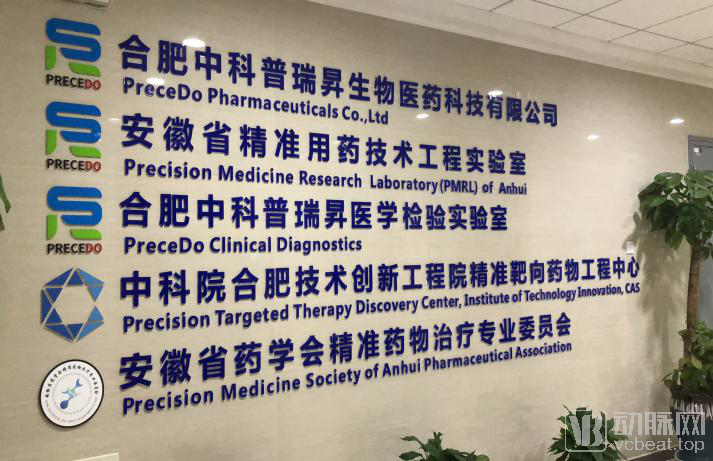
Despite their strong technical expertise, the four founders still faced a dilemma when establishing the company. “We were all technicians with no experience in business operations.”
As there are no mature commercial kits or user-friendly instruments available for precision oncology medication testing, each experiment typically requires operation by a PhD holder or skilled technician. Consequently, researchers must take steps toward industrialization. Furthermore, the founding team aims to develop products driven by clinical needs, believing that “establishing our own company allows for better alignment with the market and avoids developing in isolation.”
Fortunately, after the establishment of Zhongke Purui Sheng, it received strong support from governments at all levels in Anhui Province.
The Hefei Institutes of Physical Science, Chinese Academy of Sciences, established the CAS (Hefei) Institute of Technological Innovation to facilitate the commercialization of scientific and technological achievements; Zhongke Puruisheng is one of the incubated enterprises under this initiative. Furthermore, government departments at the provincial, municipal, and district levels provided policy guidance and engaged in in-depth exchanges with enterprises in the High-Tech Industrial Development Zone, enabling Ren Tao and his colleagues to gradually master the intricacies of business operations.
Unlike conventional NGS (next-generation sequencing), the HDGS technology developed by Zhongke Purui Sheng offers broader applicability. This technique is suitable for any patient who is eligible for surgery, presents with ascites, or can undergo biopsy, thereby providing new options for many patients who previously failed to achieve a successful “match” through genetic testing.
Following the extraction of living tumor samples from patients, Zhongke Purui Sheng utilizes its core technologies to rapidly isolate and culture patient-derived primary cancer cells within one week, followed by pathological and karyotypic identification. Furthermore, in vitro drug sensitivity testing of these primary cancer cells is conducted using the high-throughput automated JANUS® automated workstation platform (PerkinElmer Inc., Wellesley, MA).
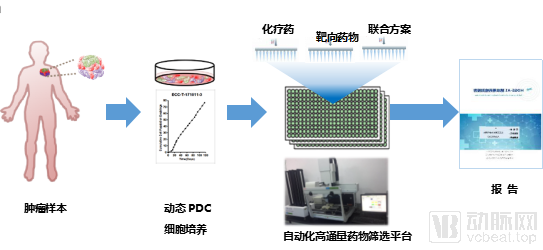
Schematic Diagram of the HDGS Technical Operation Process (Image Provided by the Enterprise)
HDGS technology is a phenotypic screening system based on renewable primary cancer cells, capable of rapidly expanding patient-derived autologous primary cancer cells in vitro while maintaining their continuous dynamic growth, enabling the evaluation of dozens to hundreds of drug regimens within 7 to 14 days.
Meanwhile, the HDGS technical framework more closely reflects actual clinical drug responses in patients than genetic testing, and offers broader drug coverage, lower costs, and shorter turnaround times compared to traditional drug susceptibility testing and PDX models. It is currently the most feasible in vitro drug susceptibility testing method under existing scientific and technological conditions.
Furthermore, compared with standalone genetic testing, HDGS technology is applicable to a broader patient population and can serve as a “detector” for monitoring dynamic tumor changes, enabling real-time assessment of tumor response to therapy and assisting clinicians in timely adjustment of treatment regimens.
Furthermore, compared with PDX and 3D organoid technologies, Zhongke Purui Sheng adopts a more mature and cost-effective 2D in vitro culture system, which is better suited for clinical adoption. “The 2D culture system is characterized by high efficiency, rapid turnaround, and high throughput. Given the current state of scientific and technological development, it represents a relatively ideal and feasible platform for tumor drug evaluation,” said Dr. Ren Tao.
Since April 2017, HDGS technology has been piloted in clinical applications for leukemia, and has subsequently launched medication testing systems for lung cancer, gastric cancer, ovarian cancer, breast cancer, and liver cancer.
Meanwhile, Zhongke Puruisen has established partnerships with 55 hospitals nationwide and, leveraging Anhui Province’s “one-time filing, province-wide promotion” policy and the Chinese Academy of Sciences’ STS (Science and Technology Service) program, is advancing hospital-level collaborations across medical institutions at all levels throughout Anhui Province.
To date,HDGS technology has provided precise, personalized medication regimens for over 4,000 patients with intermediate to advanced-stage cancers, including leukemia, liver cancer, breast cancer, lung cancer, gastric cancer, ovarian cancer, and colorectal cancer, achieving a clinical efficacy rate of 60% to 80%., highly praised by clinicians.
Among them, there are numerous cases of drug repurposing.
For example, HDGS technology identified disulfiram, an alcohol-cessation medication, for a patient with ovarian cancer and malignant ascites; following treatment, the patient’s ascites resolved, and quality of life improved. In a pediatric patient with relapsed/refractory leukemia, the platform detected celastrol, a traditional Chinese medicine used for arthritis, extending the patient’s survival from an expected one month to over one year. For an elderly patient with lung adenocarcinoma who could not tolerate high-dose chemotherapy, a targeted therapy originally indicated for breast cancer was identified, leading to effective disease control with manageable side effects. Additionally, a personalized combination regimen was developed for a patient with ovarian clear cell carcinoma—a rare condition lacking established clinical treatment protocols—resulting in tumor regression.
In the field of pediatric leukemia, the Department of Pediatric Hematology at Anhui Provincial Cancer Hospital has taken the lead in implementing a precision medication assessment system. The department boasts advanced diagnostic and therapeutic capabilities as well as specialized expertise in stem cell transplantation. Supported by Zhongke Puruisheng’s HDGS technology, the hospital has achieved an approximately 50% remission rate among children with relapsed, drug-resistant, and refractory leukemia—cases that many other hospitals have declined to treat.
Dr. Ren Tao stated, “Children are the continuation of a family. Moving forward, we will continue to refine the pediatric leukemia testing system to bring hope to more families.”
Recently, a clinical trial on liver cancer conducted by a hospital in Chongqing demonstrated that patients using Zhongke Purui Sheng’s precision medication regimen could extend their survival by up to eight months compared to those treated according to standard clinical guideline protocols. Additionally, the company is initiating multi-center, international-standard clinical trials for liver cancer and leukemia, laying the groundwork for establishing industry standards.
Dr. Ren Tao has noted that phenotypic screening technologies have garnered increasing attention in recent years.
At the 2018 CSCO Annual Conference, more than 90 companies from the diagnostic testing industry exhibited, including four firms specializing in phenotype-based screening using novel PDC/PDX models. At the 2019 CSCO Annual Conference, the concept of phenotype-based screening was featured multiple times in keynote addresses, and a growing number of Chinese companies are developing next-generation drug sensitivity testing technologies.
Meanwhile, Dr. Ren Tao also noted: “Most products currently developed by these companies are intended for research services, whereas the HDGS technology developed by Zhongke Purui Sheng is relatively mature and can be directly applied to clinical patients.”
Next, CASP’s goal is to develop more efficient, low-cost, and broadly applicable technologies. “We aim to establish high-throughput screening systems for PDX and 3D models, and leverage AI to assist physicians in precision medication.”
Dr. Ren Tao further stated, “Although the 2D primary tumor cell culture system we employ can effectively evaluate drug efficacy, it still exhibits certain differences from the in vivo tumor growth environment and human metabolism.”
In the future, Zhongke Purui Sheng will conduct in-depth research on simulating the human tumor growth environment to further enhance the accuracy and speed of detection.“Currently, the company is accelerating the R&D of high-throughput PDX and high-throughput organoid models, as well as CTC-based drug sensitivity testing technologies. Moving forward, the company will continuously upgrade its technologies, persist in technological innovation, and raise technical barriers to secure a competitive advantage in the market!”
Dr. Ren Tao noted that tumors are complex and heterogeneous; therefore, precision oncology medication requires the integration of multiple technologies and synchronized analysis of diverse data sets. “Future products will undoubtedly be faster, more accurate, smarter, more effective, and lower in cost. This represents the technological development direction of the precision medication industry. Furthermore, precision medication will converge with psychological counseling, electronic medical record tracking systems, medical imaging, and artificial intelligence, giving rise to a diversified range of products and services.”
Therefore, in the future, Zhongke Purui Sheng will also focus on major malignant diseases, developing new technologies, products, and services that cover the entire process of preclinical research, clinical trials, and clinical diagnosis and treatment, thereby achieving integrated innovative development across the entire biopharmaceutical industry chain.