

Wenlan Medical: Opening Two Burn Clinics in 50 Days – How a Niche Chain Model Monetizes Low-Probability Incidents
This June, a news report titled “Baby Scalded, Father Pours Erguotou on Burns! Resulting in Alcohol Poisoning and ICU Admission” drew sighs of dismay. Less than two months later, the media reported another case in Zhangzhou, where an eight-month-old baby girl was immersed in baijiu by her parents after being scalded, leading to alcohol poisoning with blood alcohol levels more than three times the legal limit for drunk driving.
“Emotionally, having experienced my daughter’s scald injury, I understand the desperation that leads people to seek help from any available source in a medical emergency. Rationally, however, I am well aware that such ‘folk remedies’—including white liquor, toothpaste, and soy sauce—offer no therapeutic benefit and can actually interfere with wound debridement.” One year later, Wei Xiao returned to the VCBeat (WeChat ID: vcbeat) interview studio. This time, he brought with him Wenlan Medical’s latest product—the Wenlan First Aid Kit.
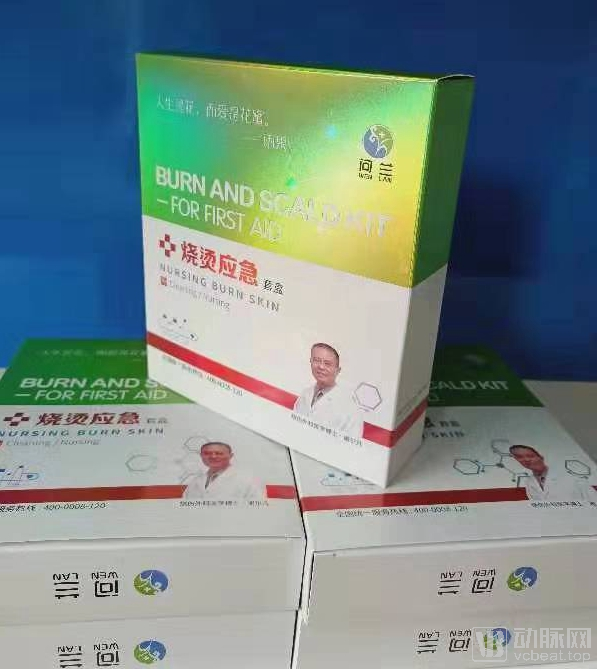
Wenlan First Aid Kit (Image source: provided by the company)
Debridement, disinfection, treatment, and bandaging—while demonstrating the emergency response steps for burns and scalds to reporters, Wei Xiao also introduced Wenlan Medical’s achievements over the past year: The Wenlan Clinic model has been proven viable, implementing a rapid replication strategy with simultaneous construction of two stores, enabling the establishment of two outpatient clinics within just 50 days. Since March, more than ten clinics have opened. The flagship store’s visibility has significantly increased, with daily foot traffic reaching approximately 50 to 70 visitors. The first-aid kits are scheduled for launch this month...
“Admittedly, compared to the popular sectors in rehabilitation, burn and scald rehabilitation is indeed a highly specialized niche. ‘In reality, each approach has its pros and cons. In larger markets, competition is fierce, whereas our niche market allows for steady, sustainable growth. We aim to pioneer a new category in burn and scald rehabilitation and become the number one player,’ said Wei Xiao.”
According to data from *Burn Rehabilitation*, published by the People’s Medical Publishing House, approximately 26 million people in China suffer from burns and scalds of varying degrees each year. The academic paper “Hope and Challenges in Burn Rehabilitation in China” indicates that burn rehabilitation in China began around the 1970s. Due to the late introduction of rehabilitation medicine into China, burn rehabilitation undoubtedly started later than in developed countries. In the early stages, Chinese burn surgeons made preliminary attempts at comprehensive treatment of burn scars under very limited conditions.
Subsequently, thanks to the tireless efforts of medical and technical staff, the level of burn rehabilitation has been improving year by year. With advances in medical aesthetics and skin grafting techniques, patients with severe burns can undergo skin graft surgery; however, for patients with first- and second-degree burns, there is still a lack of scientifically effective rehabilitation methods.
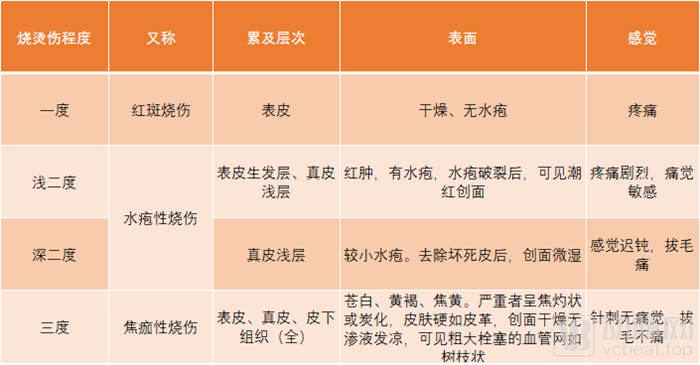 Burn Severity Scale (Compiled by VCBeat from Public Sources)
According to Cai Jinglong’s *Modern Scarology*, after human skin is damaged by burns or scalds, some sweat glands, sebaceous glands, and hair follicle cells may remain. Therefore, the therapeutic principle for burn and scald injuries is “to remove necrotic tissue and promote granulation, restoring the regenerative capacity of residual sweat glands, sebaceous glands, and hair follicle cells,” while simultaneously preventing bacterial infection on the skin surface. Thus, the pathogenesis and treatment process for burn and scald injuries should follow this sequence: “burn/scald injury → debridement and disinfection → sloughing of necrotic tissue → drug-induced stimulation of regeneration in residual tissue cells → skin repair.”
Naturally, certain details cannot be overlooked. Wei Xiao provided an example to reporters: the dead skin (necrotic tissue) resulting from burns and scalds should not be removed completely in a single session, as this can lead to scarring. Instead, frequent debridement and dressing changes over a short period are required to achieve a balance between necrotic tissue and newly regenerated skin, thereby preventing discoloration (i.e., scarring). In contrast, treatment in hospitals and general clinics often involves the complete removal of necrotic tissue in one go.
Currently, clinics in the market are predominantly internal medicine or general practice clinics. Due to staffing and organizational constraints, hospitals often categorize burn care under “General Surgery.” In hospitals with more specialized burn care capabilities, such as West China Hospital and Shanghai Ruijin Hospital, “Burns and Plastic Surgery” departments have been established, integrating burn treatment with medical aesthetics. Consequently, there is a lack of specialized institutions dedicated to the diagnosis and treatment of burns and scalds in the current market.
Relevant data indicate that, as an acute incident, burn injuries typically cause severe pain within the first few hours; prompt and active management can effectively alleviate pain symptoms. Therefore, Wenlan Medical has proposed service requirements aimed at helping patients “seize time” and “optimize space.”
To help patients “save critical time,” Wenlan Medical streamlines its clinical workflows to maximize efficiency, offering real-time appointment scheduling from registration to consultation, around-the-clock outpatient services, online rehabilitation guidance by physicians, and 24/7 professional support through its call center. Furthermore, in selecting clinic locations, Wenlan Medical prioritizes sites with convenient transportation access, enabling patients and their families to reach the facilities quickly by private car, bus, or subway, while also reducing the company’s additional operational costs.
To help patients “buy time,” Wenlan Medical leverages telemedicine to reduce heavy reliance on healthcare personnel, ensuring medical quality, managing risks, and optimizing the patient experience. While lowering specialist costs, it enables patients to access premium services from top-tier industry experts at a lower cost and with high quality.
Furthermore, Wenlan Medical possesses a comprehensive portfolio of proprietary product lines and patented technologies. By directly distributing its own branded medical devices and consumables, the company eliminates intermediaries, significantly reducing clinical usage costs. This approach not only saves patients on medical expenses but also ensures the quality of pharmaceuticals and medical devices.
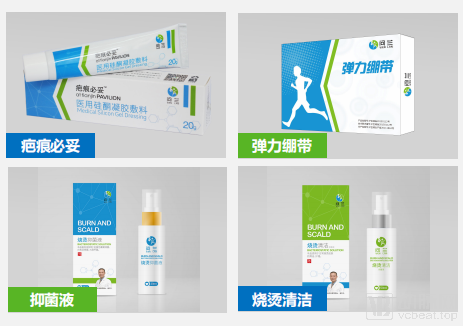
Product images of Wenlan (Source: Provided by the company)
To further ensure the quality of pharmaceuticals and medical devices, and to address the needs of a broader range of burn and scald patients, Wenlan Medical has established a comprehensive R&D translation system. The company founded a Burn and Scald Research Institute, led by Dr. Xie Erfan, a top expert in the field of burn care from the Army Medical University, to continuously upgrade its products and facilitate the research, development, and commercialization of pharmaceuticals, medical devices, and consumables.
With its product portfolio fully established, Wenlan Medical began to focus on enhancing clinical outcomes. To achieve superior post-treatment results, Wenlan Medical shifted from the traditional paradigm of “treating burns first, then addressing scars” to a synchronized approach that integrates burn wound management with scar control. Furthermore, to ensure optimal product compatibility, Wenlan Medical aligned physicians’ treatment protocols with medical device procurement, implementing personalized strategies based on specific factors: distinct etiologies of burns warrant different therapies; varying wound symptoms require different medications; different anatomical sites of injury necessitate different interventions; and patients of different ages receive tailored treatment plans.
Wei Xiao told reporters that, to date, Wenlan Medical has cured nearly 50,000 patients with first- and second-degree burns and scalds, establishing a strong reputation in several markets where it has operated for a relatively long period, such as Suzhou, Changsha, and Dalian. Notably, approximately 60% of its patients were referred through word-of-mouth recommendations.
In addition to word-of-mouth referrals, Wenlan Medical has established its own health education system. Leveraging new media platforms, it further drives patient traffic to its clinics through service-oriented engagement. “We provide 24/7 online customer support. Our staff first address patients’ queries and, when necessary, connect them with our remote experts to offer timely, evidence-based guidance during the critical early window, encouraging follow-up rehabilitation at our clinics,” explained Wei Xiao. “Through complimentary online consultations, patients with Grade I conditions typically do not need to visit the clinic, whereas those with Grade II or higher severity require further in-person evaluation and treatment.”
The clinic is staffed with professional medical personnel. Wenlan Medical assigns one physician and two to five nurses to each clinic based on specific operational needs. Physicians must have at least five years of clinical experience and complete training and internship programs at the Suzhou headquarters before being authorized to practice. Notably, to reduce costs associated with replicating its chain model, Wenlan Medical has established an in-house renovation team. Led personally by founder Wei Xiao, this team handles everything from site selection to interior and exterior fit-out, completing the entire process within three months.
From professional diagnostic and treatment services, R&D translation and protection systems, to operational management systems, Wenlan Medical has established a comprehensive SOP standard model after two years of exploration. Since 2019, Wenlan Medical has entered Phase 2.0: rapid market expansion. By adopting three models—namely, the co-construction partnership model, the franchise model, and the licensing model—the company aims to rapidly expand its presence across more provinces and cities, with a target of operating 40 clinics by 2020.
To establish a comprehensive service loop, Wenlan Medical is currently building its specialized hospital for burns and scalds. Wei Xiao stated that by accumulating patient data through outpatient treatment, online medical services, and remote consultations, the company aims to create market and technological barriers, while extending upstream into the production and sales of medical devices and consumables, and downstream into skin grafting, reconstructive surgery, and medical aesthetic services.
VCBeat has learned that Wenlan Medical is seeking angel-round financing, aiming to rapidly deploy its services in the ten cities piloting the clinic filing-based registration system. Interested institutions may contact VCBeat’s investment assistant, Xiao Yun, at: DongMai_Investent