

Meiqiao Tech Files IPO Prospectus: Pioneering AI-Powered Virtual Companion for End-to-End Patient Care
If a dedicated nurse were to guide you through the entire process of seeking medical care at a hospital, answering your questions and saving you the time and energy spent on aimless searching and running around, would you assume such a scenario could only exist in luxurious private clinics? However, advancements in information technology are making this privilege, once reserved for a select few, potentially accessible to the general public.
Nanjing Meiqiao Information Technology Co., Ltd. (hereinafter referred to as “Meiqiao Technology”) is the “driving force” behind the popularization of this VIP service. Established in August 2003, Meiqiao Technology is an enterprise engaged in software development, system integration, and the research, development, production, and sales of projects and products related to computer and communication technologies. It is also one of the earliest companies in China to focus on the development and provision of intelligent service software products for medical patients.
Meiqiao Technology: 18 Years of Business Evolution, Delivering Information Services Centered on Primary Healthcare
Meiqiao Technology has been in operation for 18 years, a lifespan exceeding that of most enterprises. Over these 18 years, Meiqiao Technology has undergone multiple business iterations, yet it has remained steadfastly focused on the healthcare services market, leveraging information technology to empower primary healthcare in China.
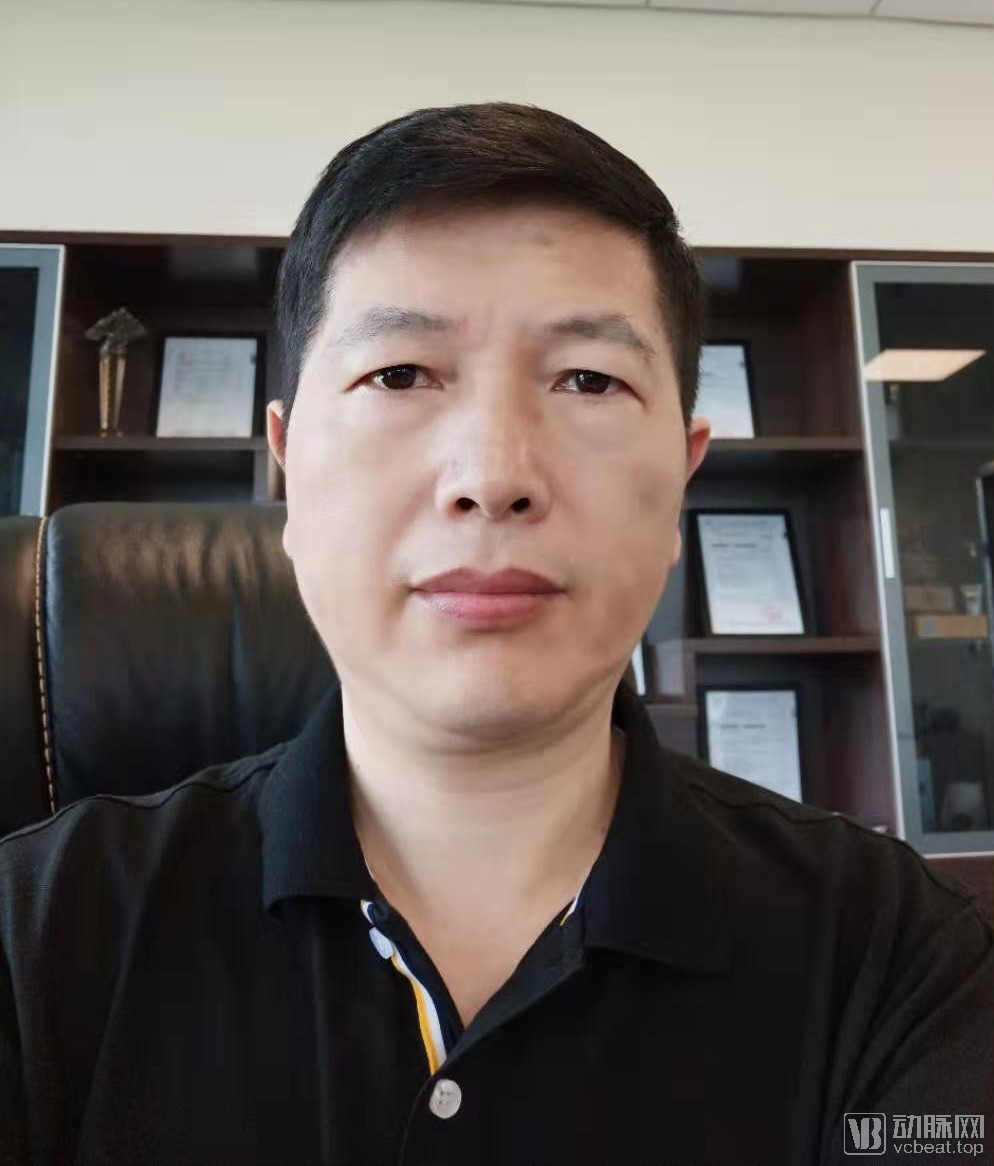
Guo Zhiyang, Founder of Meiqiao Technology (Photo provided by the company)
Mr. Guo Zhiyang, the founder of Meiqiao Technology, graduated from the Department of Computer Science at Huazhong University of Science and Technology in 1983. He obtained his master’s degree from Nanjing University of Aeronautics and Astronautics in 1991 and subsequently pursued an MBA at Nanjing University. After completing his undergraduate studies, Mr. Guo joined the Jiangsu Institute of Computing Technology as an engineer. From 1990 to 1992, he worked under Academician Gu Guanqun, then President of Southeast University, participating in the research and development of key provincial projects. Between 1992 and 1997, the project “Jiangsu Provincial Government Remote Network and Official Document Transmission,” developed under his leadership, was promoted and implemented in more than 200 organizations. In 1998, Mr. Guo embarked on his first entrepreneurial venture by co-founding Jiangsu Sumec Computer System Co., Ltd.
In 2002, Guo Zhiyang, who had a background in computer science, decided to pivot to the healthcare sector, leveraging computer technology to empower primary healthcare services. However, this direction did not align with the shareholders’ preferences. In 2003, Guo Zhiyang led his original team to establish a new company, which is now known as Meiqiao Technology. At its inception, Meiqiao Technology primarily served primary healthcare institutions, providing tailored medical information services based on client requirements, with its core business focused on the integrated agency of hospital information systems.
In 2009, Wuxi People’s Hospital, an integrated client of Meiqiao Technology, needed to launch a “Patient Service System.” The hospital’s information department leadership and Guo Zhiyang conducted a nationwide survey across China but failed to identify any comprehensive patient service system. Subsequently, both parties decided to jointly develop a “Hospital Customer Service System,” marking the beginning of Meiqiao Technology’s focus on researching and developing products with independent intellectual property rights.
In 2011, the hospital customer service system was successfully developed and launched for nationwide promotion. To date, this system has been implemented in more than 50 hospitals across 14 provinces and municipalities throughout China. With the adoption of the hospital customer service system, Wuxi People's Hospital ranked first in the third-party patient satisfaction survey conducted by the Health Commission of Jiangsu Province for three consecutive years.
AI Medical Accompaniment Simulates Human Conversation, with “Foolproof” Operating System to Be Deployed by Year-End
Meiqiao Technology’s first proprietary intellectual property product is its Hospital Customer Service System, but what Guo Zhiyang takes the most pride in is the AI Medical Companion System that Meiqiao began developing in 2017. Guo stated, “This system is highly advanced both domestically and internationally, and I believe it will create significant buzz in China once deployed.”
What exactly is this system that Guo Zhiyang holds in such high regard? Amidst the dazzling array of medical information service systems on the market, what sets it apart? The answers can be found in Meiqiao Technology’s product and technical overview.
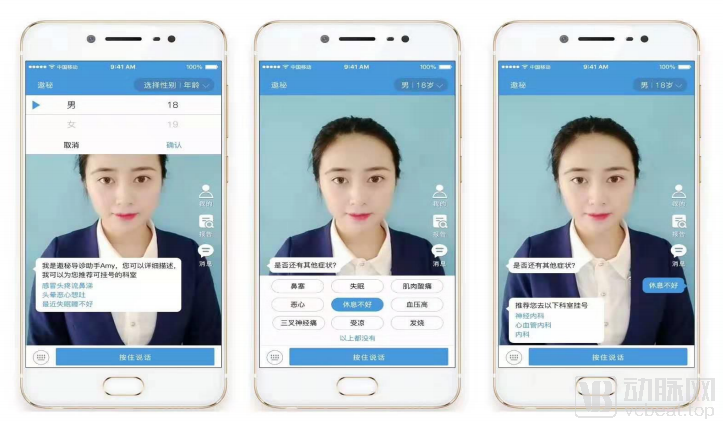
AI Medical Escort Service System Diagram
Meiqiao Technology’s AI Medical Escort Service System enables patients to interact with a virtual customer service agent, providing comprehensive guidance throughout the entire medical journey. From pre-consultation preliminary inquiries to post-consultation service evaluations, the system eliminates inefficient and unguided steps in the healthcare process. It continuously reminds patients of the sequence of each clinical node, procedural instructions, queue status for waiting appointments, and estimated wait times. The system offers full-route navigation within the facility, reminders for required documents and reports, payment notifications, itemized billing, precautions, physician’s orders, and medication alerts. By pushing real-time updates on medical procedures and operational guidance, it delivers intelligent services spanning pre-consultation, during-consultation, and post-consultation phases, thereby reducing patients’ time spent searching for information and lingering in the hospital.
Opting for a “foolproof” approach that allows users to speak directly with the virtual robot was a deliberate choice by Guo Zhiyang. He told VCBeat, “Many middle-aged and elderly patients who visit hospitals are largely unable to use traditional healthcare service apps. These apps often feature small font sizes and complex interfaces, resulting in limited real-world adoption. Moreover, since people only visit hospitals intermittently, the usage frequency of such apps is low, naturally leading to a declining user base over time.”
Since the traditional app model proved unviable, Guo Zhiyang explored leveraging AI to effectively implement medical services. The first step was to achieve “zero-touch interaction,” allowing patients to obtain desired answers simply by conversing with a virtual nurse, without needing to perform any manual operations. Meiqiao Technology has realized this through its independently developed virtual robot. Unlike traditional one-on-one physical navigation robots used in hospitals, Meiqiao’s virtual robot resides on users’ smartphones. Patients need only follow the official WeChat account of the respective hospital, where they can access the “Virtual Nurse” feature and receive complimentary, personalized, end-to-end guidance.
Faced with patients’ diverse and unconventional requests, some may worry that “virtual nurses” lack sufficient intelligence. Meiqiao Technology has anticipated this concern. When a virtual nurse is unable to provide an appropriate response, it forwards the patient’s query to the hospital’s dedicated call center backend, where specialized doctors and nurses provide direct voice-based answers. These verbal responses are then converted into text and delivered to the patient through the virtual nurse interface. From the patient’s perspective, the “virtual nurse” appears highly intelligent, capable of resolving even the most challenging inquiries.
Meanwhile, the application functions of this system can significantly assist hospitals in evaluating their compliance with the "Hospital Smart Service Grading Assessment Standard System." It helps improve the hospital's PDCA (Plan-Do-Check-Act) cycle management, enhances patients' sense of gain and satisfaction, reduces the workload and stress of medical staff, and drives concurrent economic benefits through improved social benefits.
Currently, Meiqiao Technology holds 38 software copyrights and 12 invention patents, backed by a robust medical knowledge base. The company has initiated collaborations with hospitals such as Jiangsu Province People’s Hospital and Zhongda Hospital. By integrating foundational hospital data and systems—including HIS, LIS, PACS, and EMR—via interfaces, it is piloting an AI-assisted consultation service system, which is expected to be fully deployed by the end of this year.
Regarding its business model, Meiqiao Technology primarily sells its AI patient escort service system to hospitals through agents, with a small portion sold via direct sales, aiming to enhance hospitals’ service star ratings. The company’s initial plan is to rapidly promote the product to achieve higher market share. In the future, the company also intends to expand this smart service product to other sectors such as tax payment and transportation.
In terms of financing, Meiqiao Technology has launched a new round of funding plan, aiming to raise RMB 30 million to 50 million by offering 15% to 25% equity. The proceeds will be primarily used for further product research and development implementation, as well as market promotion.
Currently, Meiqiao Technology is seeking a new round of financing. Interested parties please contact VCBeat’s Financing Assistant Xiaoyun: DongMai_Investent