

Accelerating Innovation in Rare Disease Therapeutics: Takeda China President Shan Guohong Advocates for a Patient-Centric Ecosystem
In September 2019, the 8th China Rare Disease Summit (hereinafter referred to as the “Summit”) was held in Shenzhen. As the largest comprehensive forum in the field of rare diseases in China to date, it was co-hosted by the Shanghai Clover Center for Rare Disease Family Care (abbreviated as “Center for Rare Disease Development” or “CORD”) and Shenzhen Luohu Hospital Group. As a global leader in the rare disease sector and a long-term key partner of the Center for Rare Disease Development, Takeda China actively supported and participated in the Summit, launching an industry development initiative titled “Patient-Centric Approach: Building an Innovative Ecosystem for Rare Diseases in China.” During the Summit, VCBeat interviewed Mr. Shan Guohong, President of Takeda China.
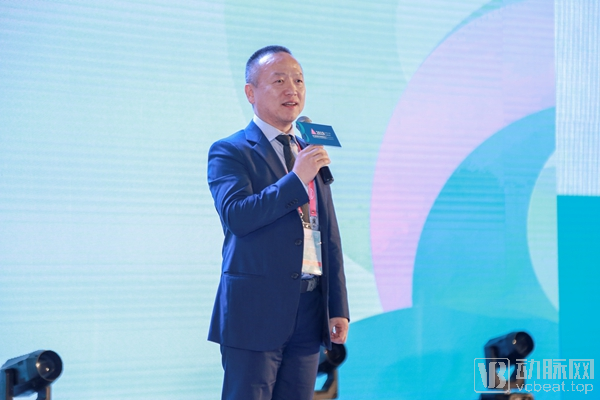
Mr. Shan Guohong, President of Takeda China
Data shows that there are more than 7,000 known rare diseases worldwide, yet only 5% have available treatments. There are approximately 350 million people living with rare diseases globally, equivalent to 1 in every 20 people. In China, the number of patients with rare diseases is estimated at around 20 million; however, due to limited disease awareness and a lack of effective treatment options, they have long faced challenges such as low diagnosis and treatment rates.
Taking hemophilia as an example, China has an estimated total of 136,000 patients with the condition, yet only 10% are registered. The overall level of treatment remains low: more than 30% of patients receive no treatment or only occasional treatment, and fewer than 10% undergo standardized prophylactic therapy. It is reported that approximately 80% of hemophilia patients in China begin experiencing joint bleeds between the ages of 3 and 6, and nearly all patients over the age of 12 suffer from joint damage. Among patients with rare lysosomal storage diseases (LSDs), the diagnosis rate for Fabry disease is less than 5%, and that for Gaucher disease is only 9%. Only a handful of hospitals in China are capable of diagnosing these conditions; in some extreme cases, patients may wait two to three decades before receiving a definitive diagnosis.
Regarding the accessibility of disease-modifying therapies, suitable treatments for certain rare diseases have not yet been introduced in China, leaving patients facing a shortage of medical care and medications. Taking Fabry disease as an example, since patients currently can only receive symptomatic or palliative care, the vast majority are unable to control disease progression, which gradually advances to the stage of uremia. There is an urgent need among patients for the introduction of enzyme replacement therapy (ERT) drugs that target the underlying condition.
As a global leading biopharmaceutical company that is value-based and R&D-driven, Takeda adheres to the patient-centric philosophy and is committed to translating science into highly innovative medicines, safeguarding patients’ healthy lives and promising future. Currently, Takeda focuses on four core therapeutic areas: gastroenterology, oncology, rare diseases, and neuroscience, while making targeted R&D investments in plasma-derived therapies and vaccines. Among these, rare diseases undoubtedly constitute a vital strategic pillar for Takeda. Notably, among all corresponding products marketed in the United States for the conditions listed in the First Batch of Rare Diseases Catalogue jointly issued by China’s National Health Commission and four other ministries, Takeda alone offers 18 rare disease treatments.
According to Mr. Shan Guohong, President of Takeda China, Takeda expects several innovative products to be approved and launched in China over the coming year. These include medications for rare diseases such as hereditary angioedema (HAE), Fabry disease, and Gaucher disease, as well as personalized treatment solutions developed for patients with hemophilia.
The development of drugs for rare diseases is characterized by high difficulty, substantial costs, and logistical challenges in distribution. The per-patient R&D cost for treatments of ultra-rare diseases is approximately 25 times that of common drugs, deterring most pharmaceutical companies from investing in such R&D efforts. Among every 10,000 rare disease drug candidates under investigation, only an average of 1–2 successfully navigate all stages of development and ultimately reach the market. Of the more than 40 new compound development projects currently in clinical stages being conducted globally by Takeda, over 50% have received orphan drug designation.
The journey of innovative drugs for rare diseases from research and development to market launch is often fraught with challenges. Even physicians frequently struggle to make precise diagnoses and formulate optimal treatment plans due to limited understanding of these conditions. The development of orphan drugs typically requires substantial investment, while facing significant hurdles in patient recruitment and the selection of clinical trial endpoints. Furthermore, even after regulatory approval, patients continue to confront barriers such as drug accessibility. These persistent difficulties deter many pharmaceutical companies from pursuing R&D in the rare disease space.
Throughout the research and development (R&D) of orphan drugs, comprehensive patient engagement is the cornerstone for ensuring that innovative medicines meet patients’ individualized needs. To enhance R&D efficiency and accelerate patient access to new therapies for rare diseases, Takeda is actively strengthening communication and collaboration with patients, their families, and patient organizations. By gaining deeper insights into patients’ experiences and needs through these partnerships, Takeda aims to develop novel therapies best suited to patients. Globally, 30% of Takeda’s clinical study teams have established Patient Engagement Plans (PEPs), with the goal of having all clinical study teams participate in and track at least one patient engagement initiative by 2020.
Globally, Takeda maintains strong collaborative relationships with more than 180 patient organizations and has jointly launched multiple large-scale initiatives with leading rare disease organizations such as EURORDIS (European Organization for Rare Diseases) and the World Federation of Hemophilia (WFH), aiming to improve the diagnosis and treatment landscape for rare diseases, increase diagnostic rates, and shorten patients’ diagnostic journeys.
Since 2018, Takeda has partnered with EURORDIS – Rare Diseases Europe and Microsoft to establish the Global Commission to End the Diagnostic Odyssey for Children with a Rare Disease, leveraging technology to help shorten patients’ diagnostic journeys;
Since 2003, Takeda has collaborated with the World Federation of Hemophilia (WFH) on a Global Development Program. The two parties maintained this partnership for 16 years, working to improve the diagnosis and treatment of rare bleeding disorders in developing countries.
In China, Takeda also works closely with patient organizations represented by the Center for Rare Disease Development (CORD) to jointly promote rare disease awareness, establish an information exchange platform for rare diseases, and help improve public understanding as well as the diagnosis and treatment of rare diseases:
In 2017, Takeda supported the 12th International Conference on Rare Diseases and Orphan Drugs, co-hosted by CORD and Peking Union Medical College Hospital, demonstrating its support for rare disease advocacy organizations in China and across the Asia-Pacific region to help patients combat their diseases;
In 2017, during the High-Level Forum of the Center for Rare Diseases Development, Takeda supported the launch of the HAE China Patient Organization Incubation Program, providing a platform for HAE patients to voice their concerns, facilitating the establishment of the Chinese HAE patient registry, and supporting the implementation of daily patient management initiatives;
In 2018, Takeda continued its collaboration with the Rare Disease Development Center Summit Forum, focusing on the diagnostic and therapeutic challenges associated with lysosomal storage disorders, a category of rare diseases, to help enhance public awareness of these conditions;
In February 2018, Takeda, Microsoft, and the European Organisation for Rare Diseases announced the establishment of a “Global Council” to collaborate with experts from multiple fields. By International Rare Disease Day in February 2019, they jointly released the inaugural *Report of the Global Council on Eliminating Diagnostic Barriers for Children with Rare Diseases*, exploring feasible pathways for aligning China’s diagnosis and treatment standards for rare diseases with international practices.
Since 2015, Takeda has annually invested RMB 300 million as a dedicated fund to support its global research and development (R&D) activities in China, including R&D in the field of rare diseases. In 2017, Takeda officially relocated the headquarters of its Asia Development Center from Singapore to Shanghai.
Today, China has become one of Takeda’s four key R&D regions, and Takeda has launched its “China Simultaneous Development” initiative for new drugs in China, aiming to gradually achieve synchronized new drug development with Europe, the United States, and Japan.
Following the development and market launch of drugs for rare diseases, the urgent challenge to address is patients’ inability to afford these treatments. The vast majority of “orphan drugs” are not covered by medical insurance schemes, imposing a significant financial burden on patients and their families throughout the course of treatment. Among known rare diseases, only 50% globally have dedicated disease foundations or patient support groups.
“We hope that enterprises, patient organizations, and all sectors of society will join hands under government leadership to establish a multi-stakeholder collaborative mechanism and innovation incentive framework spanning new drug R&D, regulatory approval, and market access. By building a multi-tiered medical security system and improving drug accessibility, we can ensure that more and better innovative medicines benefit patients with rare diseases at an earlier stage,” said Shan Guohong.
Takeda has long been closely attuned to the urgent needs of patients, actively collaborating with governments, research and medical institutions, and public welfare organizations. It has achieved significant results in promoting innovative assistance models, enhancing diagnostic and therapeutic standards, and disseminating disease-related knowledge, with the aim of alleviating patients’ financial burden and improving access to treatment.
Currently, Takeda China has joined forces with charitable organizations such as the China Primary Health Care Foundation, the China Charity Federation, and the China Cancer Foundation, as well as various sectors of society, to launch patient assistance programs for rare diseases and oncology. These initiatives aim to improve healthcare accessibility and alleviate the financial burden on patients. By the end of 2018, Takeda-supported patient assistance programs had covered nearly 90 cities, benefiting more than 2,800 patients.
Since 2010, Takeda has jointly launched the “Hemophilia Tiered Diagnosis and Treatment System Construction” project with local medical institutions to strengthen and improve the management of patient information and medical records for hemophilia patients in China, thereby promoting the advancement of diagnostic and therapeutic standards as well as medical services in the field of hemophilia. To date, more than 17,000 patients have been registered across 43 registration centers.
Since 2017, Takeda has supported the China Children and Teenagers’ Fund in organizing summer camps for children, primarily targeting pediatric patients with rare diseases and their families. These initiatives aim to promote scientific disease management concepts, advocate for early diagnosis and treatment, and address the physical and mental well-being of children with rare diseases. Over the past three years, the summer camp program has expanded to more than 10 cities across China, benefiting nearly 280 families of affected children and garnering widespread attention from all sectors of society.
“We hope to contribute our modest efforts as a pharmaceutical company to support the entire process of rare disease registration, identification, diagnosis, and treatment, helping patients alleviate their suffering and reintegrate into society to the greatest extent possible. Within our capabilities, Takeda will spare no effort to collaborate with all stakeholders in actively building an innovative ecosystem for the rare disease industry,” said Shan Guohong.