

Google and Mayo Clinic Forge 10-Year Strategic Alliance to Accelerate Healthcare Digital Transformation

Internet-related services and product providers
Recently, Google and Mayo Clinic announced a 10-year strategic partnership. Under this collaboration, Google will assist Mayo Clinic in formulating its digital strategy and developing roadmaps for cloud and artificial intelligence tools. Furthermore, the two organizations will collaborate with hospitals and research centers to create machine learning models for severe and complex diseases, serving as the “cornerstone” of Mayo Clinic’s digital transformation. Mayo Clinic will store patient data on Google Cloud and leverage advanced cloud computing, data analytics, machine learning, and artificial intelligence to enhance disease diagnosis and treatment.
The powerful alliance between tech giants and leading healthcare enterprises has generated significant anticipation within the industry. What strengths position Google as the “cornerstone” of Mayo Clinic’s digital transformation? From which areas might their collaboration commence? How can Chinese technology companies draw lessons from this partnership? VCBeat (WeChat ID: vcbeat) will provide a detailed analysis.
Google Cloud Announces 10-Year Partnership in Blog Post
This strategic partnership will combine Google’s cloud and AI capabilities with Mayo Clinic’s world-leading clinical expertise to improve people’s health through large-scale transformation, ultimately working together to address humanity’s most severe and complex medical challenges.
Google Cloud will serve as the cornerstone of Mayo Clinic’s digital transformation, charting a roadmap for cloud- and AI-based solutions, and helping Mayo Clinic develop new digital strategies to enhance disease diagnosis and treatment.

Mayo Clinic, Source: Mayo Clinic Official Website
In addition to building a data platform on Google Cloud, Mayo Clinic’s medical experts will collaborate with Google to develop machine learning models for severe and complex diseases, with the ultimate goal of sharing these models and other joint solutions with healthcare professionals worldwide to improve the quality of care. Furthermore, Mayo Clinic looks forward to exploring additional areas of collaboration with Google Health in the future.
Mayo Clinic is the largest nonprofit healthcare and academic system in the United States, providing medical services to one million patients annually from all 50 U.S. states and nearly 140 countries worldwide, and is renowned globally for its high-quality medical care.
On the 2019–2020 U.S. News & World Report Best Hospitals Honor Roll, Mayo Clinic (Rochester, Minnesota) ranked No. 1 overall for another consecutive year. In the specialty rankings, Mayo Clinic (Rochester, Minnesota) secured the top spot in five specialties and ranked second in six others. Beyond clinical practice across various healthcare settings—including hospital and clinic services—Mayo Clinic is also engaged in medical research and education, operating its own laboratories and medical school. The exceptional stature of Mayo Clinic speaks for itself and requires no further elaboration.
Prior to this, Mayo Clinic had already been exploring ways to share its achievements with healthcare professionals worldwide. For instance, in China, Mayo Clinic formed a joint venture with Hillhouse Capital to establish Huimei Healthcare Group. Its artificial intelligence system incorporates cutting-edge AI technologies such as deep learning and natural language processing, integrating the core knowledge from Mayo Clinic’s knowledge base and the latest clinical guidelines. This system provides comprehensive, intelligent, and efficient support for healthcare management and clinical decision-making.
However, with a history spanning more than 150 years, Mayo Clinic has accumulated a vast knowledge system that has become a treasure trove requiring continuous exploration. How can the potential of this knowledge system be maximized to benefit more healthcare professionals and patients? Selecting a robust technology company for development is particularly crucial. “In choosing a technology partner, Mayo Clinic sought an organization with engineering talent, focus, and cloud computing expertise to collaborate with us in realizing our shared vision of delivering digital health innovations globally,” explained Christopher Ross, Chief Information Officer at Mayo Clinic, citing this as the reason for selecting Google.
Let’s turn to Google.
As a tech giant, Google has long established its presence across multiple niches within the healthcare sector. Alphabet, its parent company, owns subsidiaries such as Verily and Calico that are involved in healthcare: Verily leverages wearable devices to collect data for healthcare applications, while Calico focuses on researching ways to combat aging and age-related diseases. Meanwhile, Google Ventures, the venture capital arm of Alphabet, is accelerating its investment pace in healthcare companies.
Focusing on Google, the company established a new division, Google Health, in 2018 to consolidate its fragmented internal healthcare and medical projects, while also integrating the health operations of the leading artificial intelligence firm DeepMind.
Furthermore, Google Cloud has adopted an industry-centric sales approach, featuring multiple solutions tailored for healthcare and life sciences.
According to publicly available information from Google and the Mayo Clinic, this ten-year partnership primarily involves Google Cloud and Google Health.
Google’s cloud business has a long history, but for a significant period it was primarily focused on consumer services.
In 2015, Google Cloud officially entered the enterprise cloud computing services market. By that time, Amazon had already established a strong presence in the cloud computing industry. To better compete for market share, Google Cloud recruited Diane Greene, co-founder of the cloud computing company VMware, as its CEO at a significant cost. At that time, Google Cloud’s product portfolio covered nine major areas: compute, storage and databases, networking, big data, Internet of Things (IoT), machine learning, identity and security, management tools, and developer tools. During her three-year tenure, Diane Greene secured a number of high-profile enterprise customers, yet Google Cloud still struggled with sluggish growth.
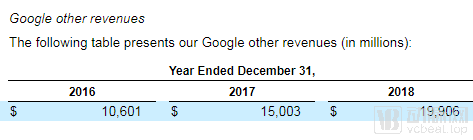
“Other revenues” including Google Cloud business over the past three years. Source: Alphabet 2018 Annual Report
AI capabilities are a hallmark of Google Cloud. While the market acknowledges Google’s undeniable strength in AI technology, this is not what customers prioritize most; instead, they place the greatest emphasis on security, stability, and cost-effectiveness.
In 2018, Google Cloud experienced frequent executive turnover: Chief Operating Officer Diane Bryant departed; AI and machine learning executives Fei-Fei Li and Jia Li left the company; and even CEO Diane Greene stepped down at the end of 2018.
Based on a synthesis of multiple survey datasets, Google Cloud’s share of the global cloud computing market currently lags significantly behind its rivals, AWS and Microsoft Azure, prompting Google to urgently seek a larger slice of the pie in this sector.
After navigating a series of twists and turns, what is Google Cloud’s strategic approach going forward? In 2019, former Oracle executive Thomas Kurian joined Google Cloud as CEO and introduced the following strategies:
Three Major Functions Empower Enterprises with Digital Transformation
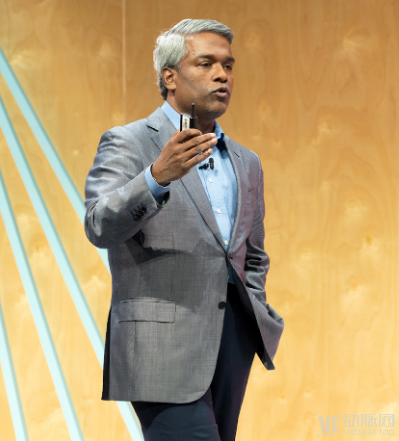
Thomas Kurian Delivers Keynote at Google Cloud Next ’19, Source: Google Cloud Blog
In April this year, at Google Cloud’s annual Next ’19 conference, Thomas Kurian outlined three key capabilities that Google Cloud offers for digital transformation in his keynote address:
First, a highly scalable, secure, and reliable infrastructure, including state-of-the-art computing, storage, and networking capabilities across many regions worldwide.
Second, digital transformation platforms can manage data at scale, develop and modernize applications, understand and analyze data, collaborate with humans, and leverage new AI capabilities in meaningful ways.
Third, a suite of industry-specific solutions delivers new digital capabilities for healthcare, retail, media and entertainment, and other sectors.
In recent years, the wave of digitalization has swept across various industries. Hospitals are seeking to provide new models of patient care, retailers need to optimize their online and offline shopping experiences, and financial services organizations are building new trading platforms, among other developments. Google Cloud believes that enterprise digital transformation can be accelerated through two key approaches: reducing costs and improving efficiency.
Launch an Open Platform Compatible with Competitors
At the Google Cloud Next ’19 conference, Thomas Kurian also announced a major update: the launch of Anthos, an open platform. Anthos is a managed platform that can run on third-party clouds, including those of Google’s biggest competitors, Amazon AWS and Microsoft Azure, enabling customers using its managed container services to manage multi-cloud or hybrid cloud deployments. Its compatibility with rival cloud services demonstrates Google’s efforts to make its products work alongside competitors’ offerings to meet customer needs.
Google Cloud hopes that Anthos will help potential customers who are averse to modifying legacy applications, enabling them to migrate these applications to Google Cloud without frequent code changes. Meanwhile, customers can run their code on other cloud services without undergoing complex processes.
Anthos appears to be a double-edged sword. While this approach may help Google Cloud rapidly increase its market share, such an open strategy could also inadvertently drive customers to competitors. The launch of the platform demonstrates that Google Cloud is going all out to capture market share.
Industry-Centric Customized Solutions
To address the previous lack of in-depth understanding of customer needs, Google Cloud has adopted an industry-centric sales approach, tailoring its expertise into vertical-specific solutions. According to the Google Cloud website, it offers solutions for nine major industries: education, energy, financial services, gaming, government, healthcare, life sciences, media and entertainment, and retail.
Thomas Kurian also announced new customers from key industries at Google Cloud Next ’19, including the American Cancer Society, healthcare IT company BrightInsight, pharmaceutical wholesaler McKesson, and diabetes telehealth company Virta Health in the healthcare sector.
This September, Google Cloud secured Mayo Clinic as a partner, further bolstering its roster of high-profile collaborators. Although the financial terms of the deal have not been publicly disclosed, preventing an assessment of the direct revenue impact on Google Cloud from available public information, it is certain that a successful partnership will create a demonstrative effect, positively influencing Google Cloud’s revenue generation.
To integrate its internal health-related businesses, Google established Google Health in November 2018. Following the formation of the new division, David Feinberg, former CEO of Geisinger Health System, joined Google to serve as the head of Google Health.
Absorbing the Technological Prowess of Top AI Enterprises
The business integration of Google Health quickly got underway. In November 2018, the Streams team from DeepMind, a subsidiary of Alphabet (Google’s parent company), was merged into Google Health. DeepMind is a world-leading artificial intelligence research company, and Streams is a mobile app it developed to help physicians more rapidly identify and diagnose patient conditions.
This September, DeepMind’s health division, DeepMind Health, was fully integrated into Google Health. Previously, DeepMind Health collaborated with institutions such as Moorfields Eye Hospital, University College London Hospitals, and the U.S. Department of Veterans Affairs. Its AI technologies have made significant strides in detecting eye diseases, improving the efficiency of cancer treatment planning, and predicting patient deterioration. Following its integration into Google Health, DeepMind Health will be able to leverage expertise in application development, data security, cloud storage, and user-centered design to build products that support care teams and improve patient outcomes.
Here, it is essential to highlight DeepMind. Founded in 2010 and headquartered in London, UK, DeepMind employs more than 700 people and focuses on developing general-purpose self-learning algorithms. It was acquired by Google for £400 million in 2014 and became a subsidiary of Alphabet following Google’s corporate restructuring in 2015.
DeepMind boasts a top-tier AI research team, having recruited extensive talent from the University of Oxford and the University of Cambridge. The papers published by DeepMind are highly regarded in the research community, covering a broad spectrum of fields including deep reinforcement learning, Bayesian neural networks, robotics, and transfer learning.
DeepMind Health’s business was merged into Google Health, bolstering the latter’s capabilities in AI product development.
“Google is already a health company”
This June, more than six months after David Feinberg took the helm at Google Health, he published an interview on the Google Blog, in which he shared his reflections and plans.
“I believe Google is already a health company,” said David Feinberg. Looking across Google’s products, the company has begun to address various aspects of people’s health. Search helps people answer everyday health questions, Maps guides them to the nearest hospitals, and other tools and products are tackling health-related issues such as literacy, safe driving, and air pollution. “I am excited to leverage Google’s strengths—its exceptional talent and remarkable products—to do more for health.”
David Feinberg believes that the landscape of healthcare has undergone significant changes in recent years, bringing new opportunities and challenges. In response, Google and Alphabet have devoted substantial efforts to strengthening their competitive advantages and prioritizing users, patients, and care providers; however, there is still much work to be done.
AI plays a significant role in Google’s extensive health-related business. Regarding the next steps in AI research, David Feinberg stated that artificial intelligence will undoubtedly drive the next wave of tools capable of improving many aspects of healthcare. Google Health will continue to share its findings with researchers and the medical community, gather feedback, and ensure that it delivers tangible value to patients, physicians, and caregivers.
From David Feinberg’s remarks, it is evident that AI will play a significant role in the operations of Google and Google Health. However, since the establishment of Google Health, Alphabet has not separately disclosed the performance of its health business in its financial reports, making it difficult to assess the operational status of this segment at present. On one hand, this may be because Google Health generates relatively little direct revenue, with most revenues still reflected in other business segments. On the other hand, it may also indicate that the integration of Google Health is not yet fully complete, and overlapping health-related operations have not been entirely carved out. Nevertheless, in light of this adjustment, we anticipate that the health segment will appear in Alphabet’s future financial reports in the near term.
In China, tech giants represented by BAT have also made in-depth investments in the healthcare sector, providing digital transformation services to healthcare-related institutions and enterprises. Due to differences between domestic and foreign healthcare systems, corporate strategic layouts vary significantly, making it difficult to directly replicate any specific business model. However, starting from this strategic partnership and combining it with Google’s healthcare initiatives, we believe there are several commonalities worthy of attention and reflection for Chinese tech companies.
No shortage of conglomerates have diversified into the healthcare sector. A single company may operate across multiple healthcare subsectors, with business initiatives launched at different times. Over the long term, this can lead to overlapping or redundant operations. Only through rational optimization of the organizational structure can established strategies be effectively advanced.
As early as 2008, Google launched the online health information platform Google Health, but it was shut down after four years of operation, primarily due to its limited market impact, low user adoption, and unsustainable business model. In 2015, following Google’s corporate restructuring and the establishment of its parent company, Alphabet, various subsidiaries under Alphabet—including Verily, Calico, and DeepMind—entered the healthcare sector. Additionally, multiple divisions within Google itself, such as Search, Cloud, the AI research unit Google Brain, Nest (home automation), and Google Fit (wearable devices), also became involved in healthcare-related businesses.
Google’s approach is to establish a new Google Health division. Media forecasts suggest that Google will likely leverage Google Health to drive initiatives in five key areas: promoting home health, addressing healthcare challenges through transportation, leveraging big data to combat diseases, inventing next-generation wearable devices and trackers, and becoming the world leader in AI. These five strategic directions span multiple scenarios—including healthcare, home care, and transportation—thereby integrating previously fragmented health and medical business operations.
Fragmented operations inevitably lead to siloed efforts, and the absence of a unified, clear strategic goal may result in inefficient overall planning and interdepartmental coordination. To achieve significant breakthroughs in a specific area, it is crucial to organically integrate these disparate business units.
Healthcare is a highly specialized industry, and when technology companies enter this field, experts who have been tempered on the clinical frontline and possess a profound understanding of clinical needs are indispensable.
Google certainly has no shortage of top-tier software engineers and medical experts, but it may lack a leader with a clinical background and experience managing large healthcare systems. To address this, Google recruited David Feinberg, former CEO of Geisinger Health System, to serve as its head.
David Feinberg has made significant contributions in the fields of hospital management, healthcare, and patient assurance. He launched the “ProvenExperience” program at Geisinger, which allowed patients to request a refund if they were dissatisfied with their medical services—a move that had considerable influence within the healthcare industry at the time. According to media reports, this remarkable initiative not only failed to negatively impact Geisinger but also resulted in substantial savings on advertising and consulting costs, while patient refunds decreased year over year.
David Feinberg was named one of the Most Influential People in Healthcare, Most Influential Physician Executives and Leaders by Modern Healthcare for two consecutive years. Since 2012, he has also been listed among the “Physician Leaders” by Becker’s Hospital Review.
This September, Alphabet hired former U.S. Food and Drug Administration (FDA) Commissioner Robert Califf as its Head of Health Strategy and Policy, with his role set to commence on November 18. Califf has been serving as an advisor at Verily, an Alphabet subsidiary, since 2017.
Robert Califf is a renowned cardiologist. Apart from his few years of service at the FDA, Robert Califf has been affiliated with Duke University, where he founded the Duke Forge Center for Health Data Science and served as the founding director of the Duke Clinical Research Institute, the world’s largest academic research organization.
Both of these prominent figures possess profound backgrounds in medical knowledge. Furthermore, David Feinberg excels in hospital management, while Robert Califf brings extensive experience in academic and policy research, as well as a track record in government regulatory agencies. The expertise and resources they bring to Google are both specialized and diversified. While outstanding managers are more likely to lead their teams to greater success, the extent to which they can integrate with the corporate culture is crucial for the smooth execution of strategy. Whether these two leaders will achieve significant accomplishments at Google Health remains to be seen.
Industries across the board recognize the vast wealth hidden within the AI sector, leading to a surge in AI companies emerging like mushrooms after rain, with substantial capital invested to seize these opportunities. Today, both tech giants and numerous AI-focused enterprises have seen a large number of their products enter the implementation phase. However, technical success does not equate to a mature business model. The commercialization of AI remains a widespread challenge, which is even more pronounced in the medical field due to its high barriers of professional expertise. The profitability of AI products is limited; in particular, AI-enabled imaging products struggle to identify payers. This is primarily because such products are not essential for physicians—they serve as a nice-to-have enhancement rather than a necessity, as their absence does not hinder normal clinical workflows.
Take DeepMind as an example. Although the company is already a technological leader in the industry, it remains in an awkward position regarding commercialization. Public records show that DeepMind incurred losses of £123.5 million in 2016, £302 million in 2017, and £470 million in 2018. As mentioned earlier, DeepMind Health has been integrated into Google Health this year, a move regarded as an opportunity for DeepMind Health to achieve commercialization.
AI Takes Center Stage in the Google–Mayo Clinic PartnershipTo facilitate close collaboration between engineers, researchers, physicians, and data scientists, Google will establish a dedicated new office near the Mayo Clinic’s Rochester campus. With 26 existing offices across North America, Google’s decision to open a site specifically for the Mayo Clinic underscores the strategic importance it places on this partnership. This proximity and intensified interaction are expected to align AI product development more closely with clinical workflows, better address the needs of frontline healthcare providers, and tackle critical pain points in medical practice, thereby achieving significant breakthroughs in commercialization. We look forward to seeing relevant metrics reflected in Google’s public disclosures or financial reports in the future.
In a video announcing the partnership, Steve Peters, a pulmonologist at Mayo Clinic, stated that Mayo Clinic aims to leverage technology to better manage patients post-surgery and after physician appointments through the use of wearable devices at home, while collaborating with Google to enhance these technological tools. “Direct contact with patients and physicians, as well as surgical and procedural interventions, remain essential. However, we are increasingly seeking tools that enable us to manage patients with chronic and complex conditions who require follow-up care but do not need to visit in person, thereby sparing them the burden of traveling long distances back to Rochester,” said Steve Peters.
In addition, Mayo Clinic will also leverage Google’s technology to develop AI-powered virtual care for digital diagnostics and enhance its capabilities in medical research.
This means that the two parties’ collaboration on AI technology applications could at least involve scenarios such as chronic disease management, post-diagnosis follow-up, and virtual nursing. In addition, Google DeepMind’s AI products also cover areas including eye disease screening and disease prediction. The diversity of Google’s product portfolio can provide partners with comprehensive, systematic solutions.
In China, most medical AI companies are heavily concentrated in the niche field of medical imaging. While medical imaging holds significant potential, medical AI can also be applied to other areas beyond the aforementioned niches, such as drug discovery and health management. After accumulating technological expertise in the imaging sector, technology companies should consider developing differentiated product lines to avoid homogeneous competition.