AI Becomes the New Standard in Medical Imaging: What Do Doctors Really Need? Insights from MICCAI 2019 Leaders

DeepWise
Developer of Artificial Intelligence Medical Imaging Diagnosis System

Tencent
Internet Comprehensive Service Provider

United Imaging
High-end Medical Device Developer
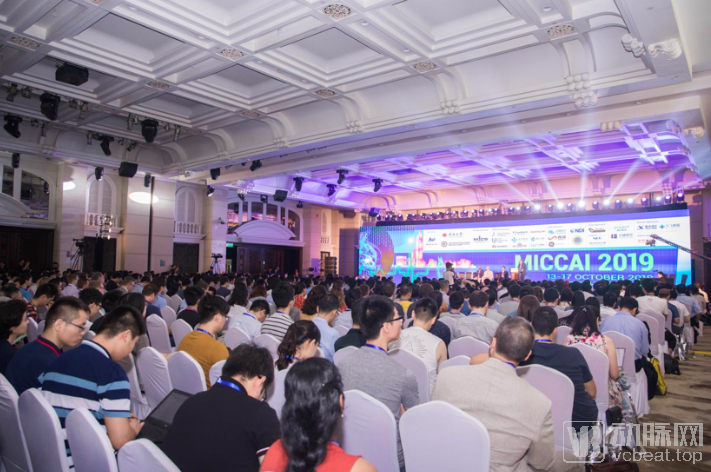
MICCAI (Medical Image Computing and Computer Assisted Intervention) was established in 1998 at the Massachusetts Institute of Technology. At its inaugural conference, only 400 scholars participated in academic exchanges. Today, MICCAI has become a premier academic conference in the field of medical image analysis. According to conference statistics, more than 2,400 scholars from around the world gathered in Shenzhen for this year’s event to jointly explore advancements in medical imaging.
The upheaval was not limited to changes in attendance. In terms of paper acceptance, the number of submissions accepted by MICCAI 2019 exceeded 1,000, more than double the figure for 2017, with the final number of included papers reaching 538.
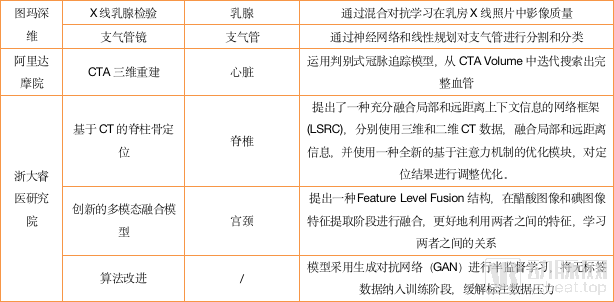
Equally encouraging is the rise of domestic giants and medical AI startups. According to incomplete statistics, Tencent Miying had 8 papers accepted; United Imaging Intelligence had 7 papers accepted; Imsight Technology had 6 papers accepted; DeepWise had 5 papers accepted; Huawei Cloud had 3 papers accepted; Tuma Shenwei, Airdoc, Zhiyuan Huitu, and Zhejiang University Ruiyi each had 3 papers accepted; and Alibaba DAMO Academy had one paper accepted (see the end of the article for a summary of the paper).
Shen Dinggang, Co-Chair of MICCAI 2019 and Co-CEO of United Imaging Intelligence, stated, “Last year, nearly 20 papers from Chinese enterprises were accepted. This year, that number is approximately 40, while the total number of accepted papers from China stands at around 150. Compared with previous years, we can see that China’s research strength in medical imaging has grown very rapidly.”
Among these papers, “intelligence” is an unavoidable keyword. It is foreseeable that “imaging intelligence” will continue to be a major topic in the field of medical imaging in the coming years.
“Deep learning dominates everything.” Inria Research Director Nicholas Ayache exclaimed in an interview at MICCAI 2019, succinctly capturing the grandeur of the conference in a single sentence.
Compared with the industry, academia seems to hold greater expectations and aspirations for the future of artificial intelligence in medicine. A glance at the conference corridors reveals that the majority of the more than 500 papers featured in the exhibition employed algorithms related to convolutional neural networks. Their content ranged from using deep learning to reconstruct imaging workflows to optimizing the analysis of CT, pathology, and other images for specific diseases.
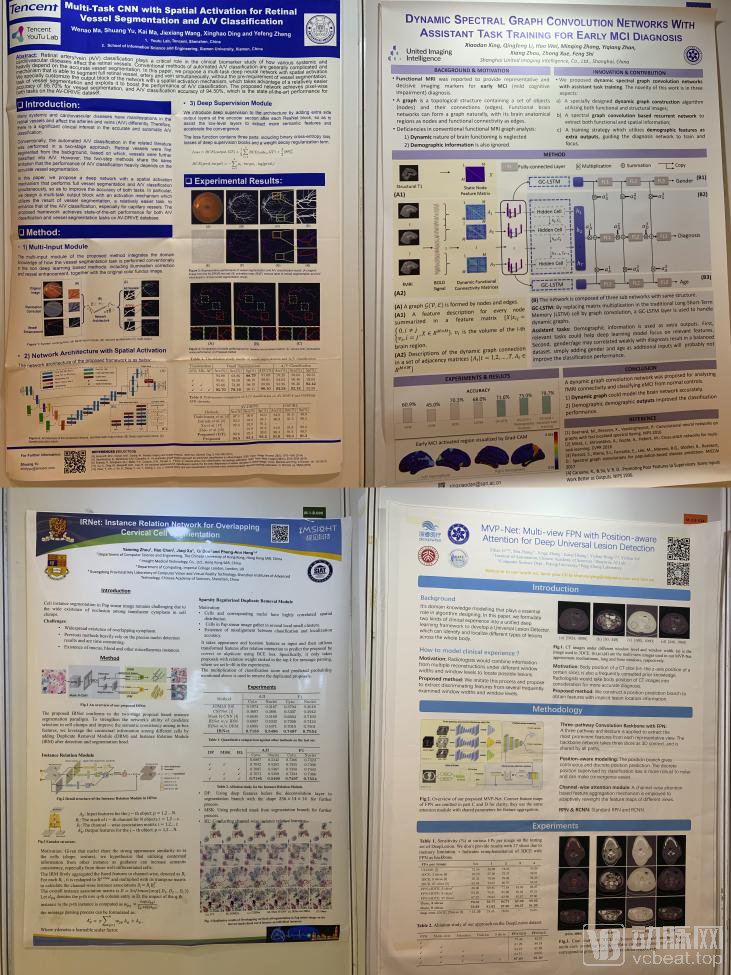
Accepted papers from Tencent, United Imaging Intelligence, DeepWise, and Imsight were all displayed at the conference venue.
Do these papers reflect future academic research trends? While the widespread application of artificial intelligence represents one aspect of this transformation, more importantly, technologies from various industries are converging into the field of medical imaging. In response, Shaohua Zhou—member of the editorial boards of IEEE Transactions on Medical Imaging (TMI) and Medical Image Analysis, area chair for CVPR and MICCAI, and co-chair of the MICCAI 2020 Program Committee—proposed three potential directions for the future development of artificial intelligence.
The first direction is Federated Learning, an “imported technology” that is becoming a key solution to privacy concerns in medical imaging data. Originally proposed by Google as a learning paradigm to address on-device model updates for Android users, federated learning was designed to ensure information security during large-scale data exchanges while safeguarding terminal data and personal privacy. It has been widely applied in artificial intelligence algorithm training within the insurance industry.
The healthcare industry faces equally severe privacy concerns: data cannot leave hospitals, while many AI systems are unable to enter them. The risk of privacy breaches has significantly hindered the development of artificial intelligence.
In the process of advancing smart healthcare within the medical and health sector, patient privacy data—such as pathology reports and test results—are often scattered across diverse medical institutions, including hospitals and clinics in different regions. Federated learning enables cross-regional collaboration among these institutions while keeping data localized, allowing predictive models developed through multi-party cooperation to more accurately predict complex diseases such as cancer and genetic disorders.
The second direction is the automation of deep learning. Zhou Shaohua stated, “Deep learning itself still requires significant manual intervention, such as establishing manual data standards, designing network architectures, and formulating loss functions. Can these manual tasks be performed by machines? Given the current speed of manual data processing, it is difficult to achieve a breakthrough from isolated points to interconnected lines, meaning that solutions can only address individual problems in isolation. Therefore, deep learning also needs to be automated, and many scholars are currently researching this issue.”
The third direction is general representation learning. The issue still lies with data: in practice, many related projects each have a certain amount of data, but this data is insufficient to support effective algorithms. Therefore, can we seek a universal learning approach to perform all tasks simultaneously?
The benefit of general representation learning lies in the fact that when there are numerous tasks but limited data for each individual task, integrating these tasks and datasets may yield better representations. This approach enables the technology to address, to some extent, the dual challenges of data scarcity and multi-task parallelism.
While the evolution of software is undoubtedly important, medical imaging devices, as the carriers of these algorithms, equally require robust support.
At the MICCAI 2019 Workshop, Professor Dinggang Shen highlighted the overall trend in medical device development: a continuous progression from single-modality, single-process systems toward multi-modality, full-process solutions, with artificial intelligence playing a pivotal role in this evolution.
For a long period, the development of imaging equipment followed a singular, vertical trajectory: evolving from single-parameter to multi-parameter imaging, and advancing from low-slice-count to high-slice-count configurations. While this progress has steadily improved diagnostic accuracy, it has also substantially increased the volume of data requiring processing per unit of time, thereby effectively raising the overall workload for physicians.
The advancement of artificial intelligence has driven the horizontal integration of imaging equipment, connecting previously isolated stages—such as image acquisition, navigation, diagnosis, and treatment—into a cohesive whole to deliver full-stack solutions. This transformation brings physicians not only improved efficiency but also a fundamental shift in their workflow, liberating them from repetitive, mechanical tasks to engage in more valuable, creative work. This is precisely the mission of United Imaging Intelligence: integrating high-quality hardware with continuously innovative software.
United Imaging Intelligence COO Zhan Yiqiang told VCBeat, “United Imaging has pursued a path of independent R&D, developing its own AI software products alongside its medical equipment, with the aim of capturing the market through high-quality AI solutions that cover the entire diagnosis and treatment workflow.”
“Our approach is to start from the source, using our full line of equipment as the entry point for AI to empower these devices. Furthermore, we enable AI to better support clinical practice by developing AI solutions that span the entire clinical diagnosis and treatment workflow and cover multiple disease types.” By integrating software with hardware, United Imaging Intelligence possesses inherent advantages in AI implementation—namely, data and application scenarios.
While independently developing AI, Zhan Yiqiang proposed United Imaging Intelligence’s proprietary model: “The development cost of a single AI product is high, yet its value is limited. Therefore, United Imaging Intelligence is striving to identify a more effective approach to AI development that enables scaling of the entire development process—by creating a unique series of functional modules specific to United Imaging Intelligence and building AI products upon this foundation. As a result, our investment is substantial for the first AI product and still considerable for the second; however, once we have accumulated sufficient AI functional modules, the cost of developing subsequent products gradually decreases. As our AI functional modules continue to mature, AI technology may experience exponential growth.”
With hardware support, United Imaging Intelligence is well-positioned to sustain a long-term competitive battle, both in terms of application scenarios and commercial entry points. As Zheng Hairong, a researcher at the Shenzhen Institutes of Advanced Technology, Chinese Academy of Sciences, stated, “If AI technology is truly valuable, how could it fail to gain regulatory approval? It is only a matter of time.”
Under China’s overall investment landscape, the years without regulatory approval are inevitably a difficult period for startups. After all, to achieve scale and commercialization, regulatory approval remains a “critical logjam,” trapping AI startups in the riverbed.
However, there is no need for excessive concern. Zhan Yiqiang stated, “The development of AI in medical imaging requires time to mature and in-depth exploration. Building an innovative ecosystem also demands joint efforts from all sectors. We believe that truly capable AI startups will be able to endure.”
So, where is medical imaging AI headed in the future? Zhan Yiqiang also highlighted several directions.
First, artificial intelligence will become a standard feature in medical imaging, a trend already reflected in many advanced devices. As technological advancements drive down costs, this benefit will ultimately be extended to more healthcare institutions.
Second, optimization for personalized scenarios will become a key research focus. As deep learning applications become increasingly widespread, standard algorithms should be further optimized according to specific problems. For instance, artificial intelligence requires optimization of network architectures, loss functions, and supervised tasks based on the specificity of organs and diseases.
The technological breakthroughs mentioned above still seem somewhat distant from practical application, and for physicians, the immediate priority remains addressing fundamental issues. As a significant presence at this year’s MICCAI, the medical community offered a different perspective.
“What I most hope to address now is the issue of data,” said Wang Xiaoying, Director of the Department of Medical Imaging at Peking University First Hospital, in an interview. The data used for training AI models are cleaned; therefore, AI models have certain requirements regarding the format and quality of imaging data used for prediction. However, in clinical practice, a large proportion of image data generated and stored according to routine imaging examination protocols fail to meet the requirements of AI algorithms, thereby compromising predictive performance.
“Currently, the data processing workflow is disconnected from the AI prediction workflow. When integrating AI into clinical practice, if physicians manually isolate images recognizable by AI and then submit them for AI processing, full-process automation cannot be achieved. In the future, we aim to address these issues through standardization of clinical operations, expansion of algorithm modules, and enhancement of algorithmic capabilities.”
Another issue stems from physicians’ experience with AI. Although many radiologists have heard of artificial intelligence, few have had hands-on experience with AI technologies; broader adoption will require concerted efforts from all stakeholders.
Meanwhile, greater educational outreach is needed to foster physicians’ acceptance of AI. “From their initial training, physicians establish a logic of ‘understanding phenomena through mechanisms and inferring mechanisms from phenomena.’ Medicine is a discipline interwoven with countless connections, and interpretations of task outcomes must be approached with caution. The ‘input’ and ‘output’ processes of AI should be comprehensible to physicians; otherwise, they will find it difficult to trust this black-box process,” stated Director Wang Xiaoying.
Overall, the prosperity of MICCAI attests to the thriving state of AI in medical imaging, with ample research findings awaiting translation and numerous questions yet to be explored.
However, we must also remain vigilant about the limitations of technology. Deep learning, a technology with a history of nearly 40 years, only achieved its current prosperity following the emergence of convolutional networks in 2012. Yet, several years of development may have already exhausted the technological dividends. Among the three key factors influencing artificial intelligence—algorithms, data, and computing power—“data” has long been regarded as the core driver. So, how can algorithms achieve breakthroughs?
Regarding this issue, Zhou Shaohua stated, “We cannot predict when the next algorithmic breakthrough will occur; however, the current algorithmic framework indeed falls short of the artificial intelligence envisioned by people. Where lies the next frontier of intelligence? This requires the concerted efforts of scholars across various disciplines.”
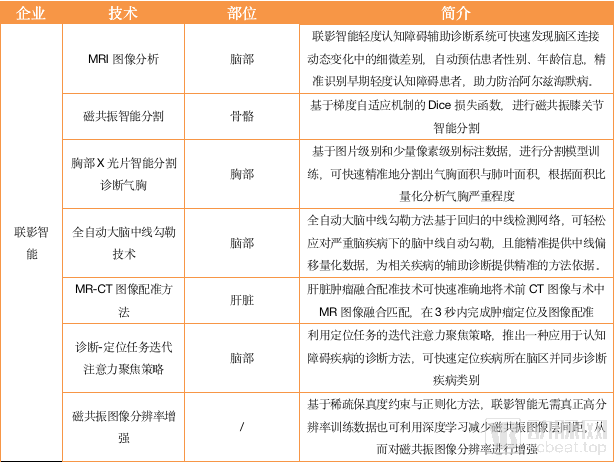
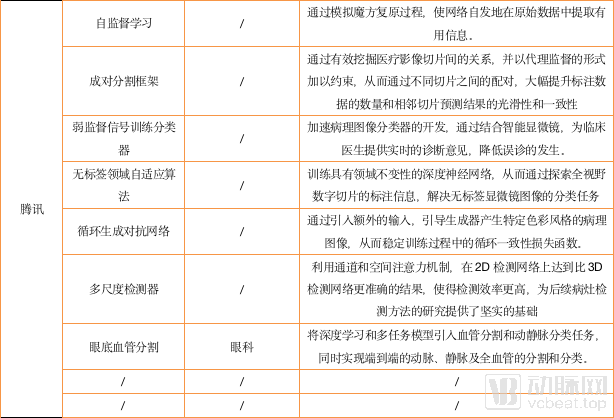
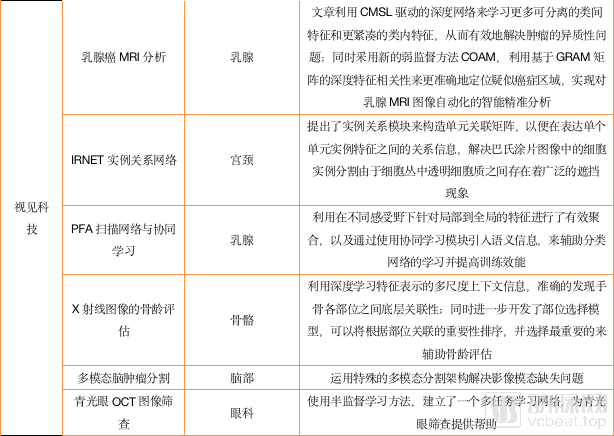
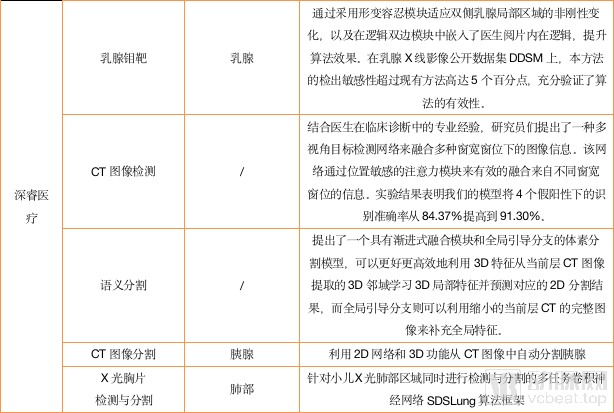
Appendix: 2019 MICCAI Paper Acceptance Status (Domestic Enterprises Only)