

Miao Health Empowers Pink Ribbon Campaign, Setting a New Benchmark for Women's Health
In recent years, with the rise in educational attainment and socioeconomic status, women have become a major force in contemporary society. However, factors such as high work-related stress and irregular lifestyles have also exposed women to numerous health issues. According to data from the National Cancer Center of China, breast cancer ranks first among newly diagnosed malignant tumors in Chinese women, with approximately 304,000 new cases reported annually. Breast cancer has thus become the leading threat to women’s life and health.
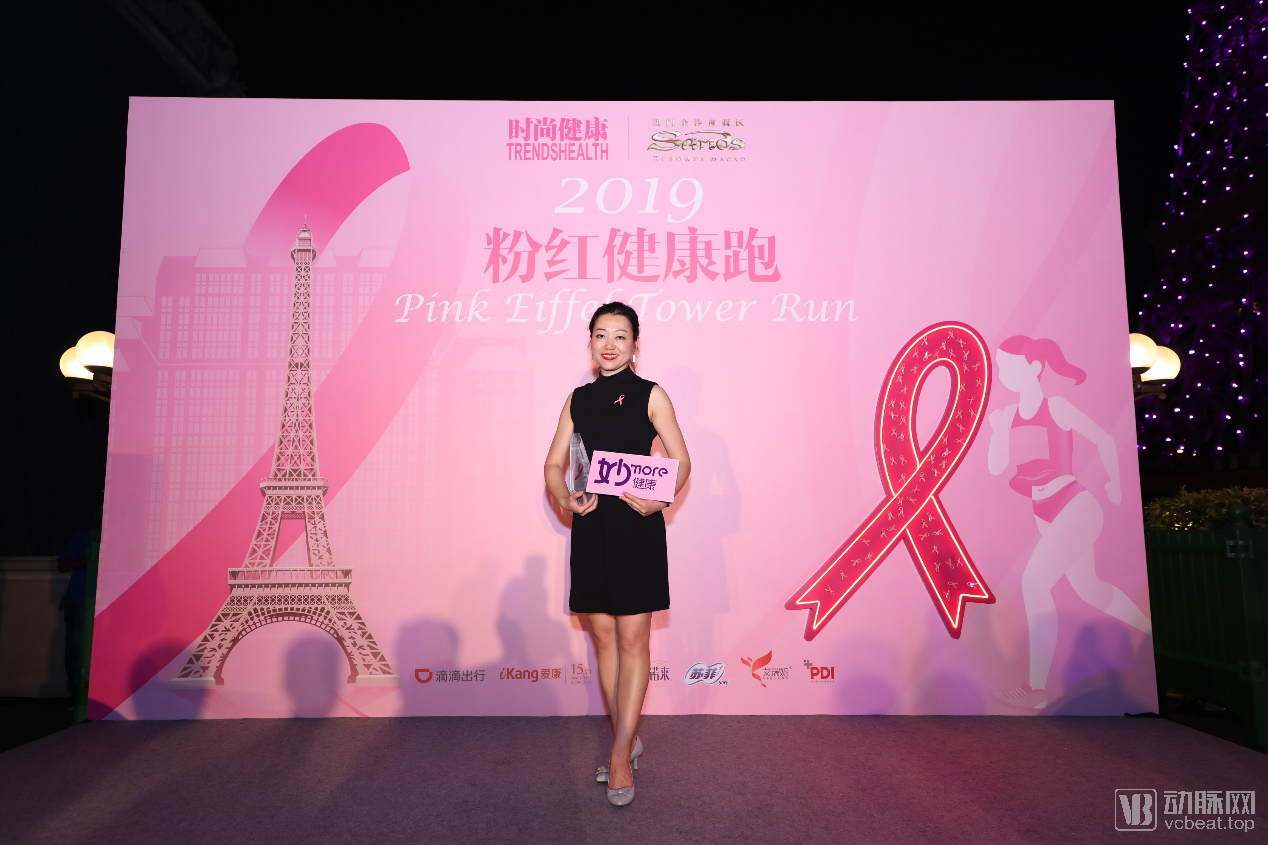
On October 12, the “2019 ‘I Care About Pink’” Pink Ribbon Campaign, prominently launched by *Men’s Health China*, officially kicked off. Senior executives from Miao Jiankang (Beijing Miaoyijia Health Technology Group Co., Ltd.) were invited to attend the event’s charity gala dinner and entered into a partnership with the Men’s Health Group. Leveraging Miao Jiankang’s robust capabilities in artificial intelligence, big data, and the Internet of Things (IoT), the collaboration aims to provide female users with services including health management, tracking and analysis of health data, and personalized health guidance. This initiative seeks to enhance women’s quality of life and support the prevention and control of cancer and chronic diseases.
In recent years, thanks to the rapid economic development in China, people’s living standards and consumption concepts have continued to rise. However, this has been accompanied by immense work-related stress and unhealthy lifestyle habits, leading to a trend where major diseases are affecting younger individuals and becoming more prevalent. This is particularly evident among women, who not only strive in the workplace under various pressures but also bear the responsibilities of caring for their families, childbirth, and raising children. If these challenges are compounded by long-term habits such as staying up late, irregular eating patterns, smoking, and alcohol consumption, they are highly susceptible to physiological and psychological issues, which may even progress to serious diseases.
A survey report indicates that nearly 50% of working women aged 22 to 55 reported frequently suffering from insomnia or sleep disorders. Gastrointestinal discomfort, skin issues, cervical and lumbar spine pain, and menstrual irregularities are the most prevalent health concerns among working women born in the 1980s and 1990s, with each working woman facing an average of more than four health issues.
Faced with growing health concerns among younger demographics, many working women have begun to proactively address these challenges through diet and exercise. However, misconceptions about nutrition, fragmented sources of health information, and a tendency to prioritize health management while overlooking scientifically grounded solutions remain prevalent. Most working women rely on new media platforms, such as WeChat official accounts and mobile apps, to acquire health knowledge; yet the information they obtain is often extremely limited and highly uncertain.
Meanwhile, traditional health management primarily relies on routine physical examinations, featuring a simplistic process and lacking dynamic monitoring of the overall health trajectory, thereby failing to provide long-term and effective tracking of health status. In recent years, emerging women’s health platforms have largely focused on specific life stages, such as the menstrual cycle or postpartum recovery, making it difficult to achieve comprehensive disease prevention, monitoring, and intervention across the entire lifespan.

In fact, the vast majority of women's health issues can be resolved through effective intervention and treatment. Scientific prevention and treatment, combined with health management guidance, can help avoid the onset of many diseases.
However, the current field of women’s health management lacks scientific and systematic models. Particularly in meeting the demand for full-cycle health management services, there is a deficiency in comprehensive health assessment protocols, health big data platforms, rigorous management systems, and related technologies, making it difficult to deliver effective, all-encompassing, and personalized services. In the market, issues such as outdated service models, inconsistent levels of professional expertise, and mismatches between technological products and actual needs are prevalent, leaving many women’s health management needs unmet.
Miao Health has been committed to helping women and the broader Chinese population address health issues by creating a closed-loop service ecosystem that integrates “wellness, medical care, pharmaceuticals, and insurance,” covering disease prevention, monitoring and intervention, chronic disease management, as well as insurance coverage and medical services.
Miao Health, a well-known health management brand in China, leverages big data as its entry point by integrating user data from smart wearable devices into its platform to build a comprehensive health database. By combining this with medical examination results and daily behavioral data, it delivers personalized health management plans to users. Whenever the tags in a user’s profile change, the AI system provides timely reminders and pushes targeted intervention strategies based on these changes, aiming to achieve truly individualized care for each user.
In conjunction with online solutions, users can also visit Miao Health’s offline facilities—the Canada Wellness Management Center (China), hereinafter referred to as “CWI (China)”—to receive health prescriptions and professional guidance issued by a team of nationally certified experts in exercise, nutrition, psychology, and medicine, thereby completing the assessment and guidance components of offline programs. Leveraging Miao Health’s advanced internet capabilities in the Internet of Things (IoT), big data, and artificial intelligence, the Health Management Center conducts continuous, full-scenario data tracking and analysis for members and users. Health managers and nutritionists are able to monitor members’ health behaviors in real time and provide timely health guidance and recommendations as needed, achieving seamless integration between online and offline services.
For women already diagnosed with breast cancer, Miao Health has partnered with the insurance industry to launch the “Pink Fighter” Postoperative Care Program for Breast Cancer. This initiative targets the critical first year after surgery, providing professional medical health management to support postoperative recovery and reduce recurrence rates. It also offers RMB 1 million in insurance coverage for postoperative recurrence, ensuring that breast cancer patients have reliable insurance protection and access to insurable options.
It has been 16 years since Fashion Health introduced the “Pink Ribbon Breast Cancer Prevention and Control Campaign” to China. The “Fashion Health Pink Ribbon Campaign” has become China’s most influential health-focused public welfare brand, with brand awareness reaching over ten million people.
Miao Health possesses robust capabilities in AI-driven big data and online-offline integration. Its collaboration with the Fashion Health Group, marking its entry into the Pink Ribbon Alliance, represents a significant step in disseminating health management knowledge and chronic disease prevention across China through public welfare initiatives. This move also constitutes a strategic milestone for Miao Health in laying the foundation for the nation’s health.
The “Outline of the ‘Healthy China 2030’ Plan” proposes strengthening chronic disease prevention and control, reducing the disease burden, and increasing residents’ healthy life expectancy. It aims to significantly improve the environment for chronic disease prevention and control by 2020 and reduce premature mortality caused by chronic diseases. As a primary consumer group in society, women hold key resources related to family consumption, health, and educational needs. A mother’s decisions can influence her children, husband, and even parents. Therefore, enhancing women’s awareness of health management and chronic disease prevention can help entire families establish scientific and effective health management concepts, promote continuous improvement in national health literacy, and accelerate the achievement of the Healthy China goals.
Previously, Miao Health has completed cross-industry collaborations with hospitals, real estate, insurance, and other sectors, creating new health management models such as the Taihe Hospital branch of the Canadian Health Management Center and the Medical-Nursing Town in Hangzhou Bay New Area, Ningbo. In the future, Miao Health will expand its platform advantages and capabilities, collaborate with more industries and institutions, and use data and technology to assist in building a new blueprint for preventive medicine and health management in China, laying the foundation for family health management among Chinese people.