Standardizing AI in Radiotherapy: Dr. Lang Jinyi Leads Multi-Hospital Initiative to Establish Expert Consensus on AI-Based Target Delineation
Standards First for Industry Development.
Standardization is one of the key measures to promote the sound development of the industry. From a standardization perspective, the AI healthcare sector is still relatively new. Therefore, tackling this challenging issue from the standpoint of data quality makes the expert consensus on standardization highly significant.
Recently, the 16th National Congress of Radiation Oncology (CSTRO) of the Chinese Medical Association was held in Shenzhen. At the Lianxin Medical Satellite Symposium during CSTRO 2019, Professor Lang Jinyi, President of Sichuan Cancer Hospital, shared his insights and reflections on establishing an expert consensus on AI-based radiotherapy contouring standards. He also introduced the progress of the Expert Consensus Project on AI Radiotherapy Contouring Standards, noting that an Expert Consensus Committee for Precision Radiotherapy Standards has been established to promote the standardized development of artificial intelligence-based target volume delineation.Transforming the Original Text-Based Expert Consensus into a Quantifiable Image-Based Version。
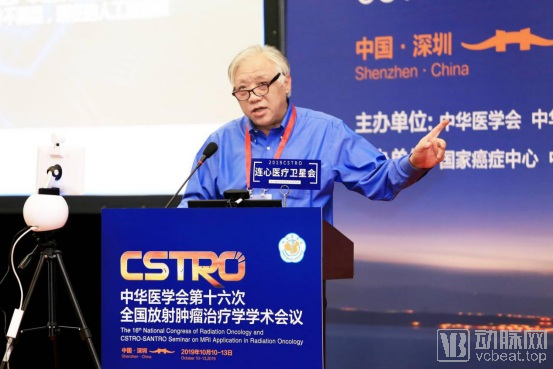
At the 2019 CSTRO Satellite Symposium hosted by Defiled Medical, Lang Jinyi, President of Sichuan Cancer Hospital, delivered a keynote address titled “Exploration and Reflections on Establishing an Expert Consensus for AI-Based Radiotherapy Delineation Standards.”
When it comes to the application of medical artificial intelligence (AI), China is unequivocally a global leader. Whether in terms of policy and capital support, or data volume, AI algorithms, computing power, and application feedback, China possesses unique advantages. Since 2017, the state has issued multiple documents to guide the development of AI. Leading medical AI enterprises have secured financing totaling hundreds of millions of yuan each. Each company maintains deep collaborations with at least 50 Grade A tertiary hospitals, accessing tens of thousands of diverse datasets. This level of emphasis and development intensity is unmatched by many other countries.
The medical artificial intelligence industry, bolstered by the “protagonist” halo, has nevertheless encountered certain problems in its concrete development. Take the application of artificial intelligence in radiotherapy as an example.
Currently,The applications of AI in radiotherapy mainly focus on four aspects: automatic organ delineation, automated radiotherapy planning, prediction of radiotherapy toxicity, and prediction of treatment outcomes.. An AI-powered radiotherapy assistance system enables intelligent, automated delineation of organs (target volumes) without distinguishing between left and right sides, covering major anatomical regions throughout the body. This AI-driven delineation reduces a task that originally took several hours to just a few minutes.
Products developed by companies through clinical research have encountered challenges during promotion.Dean Lang stated that there are currently four major issues with AI-based target delineation: inconsistent delineation standards, lack of relevant datasets, absence of evaluation criteria, and inability to perform quality control.
As is well known, data forms the foundation of artificial intelligence training. If AI systems are likened to students, then data serves as their textbooks. Should these textbooks lack standardization or contain errors, the resulting learning outcomes for the students will inevitably be highly inconsistent and varied.
Regarding the confirmation and delineation of target volumes, President Lang Jinyi stated that in tumor radiotherapy, the confirmation and delineation of target volumes constitute the first step and are of paramount importance. Therefore, a standardized protocol for target volume delineation is essential. Without such standards, inadequate delineation will compromise the efficacy of subsequent radiotherapy and cause significant damage to normal human cells. Furthermore, the absence of standards will lead to serious quality control issues in subsequent processes.
Radiotherapy AI systems require standardized data as the cornerstone of research.
In the field of AI, relevant national authorities have begun to gradually establish standardized databases for research and regulatory approval purposes. For instance, over the past year, the National Institutes for Food and Drug Control (NIFDC) has successively announced progress in developing standardized datasets for fundus imaging and pulmonary nodules. This development plays a positive role in advancing the establishment of standardized datasets and expert consensus for other organs and medical domains.
President Lang Jinyi stated that, after identifying various issues arising from the lack of standardized datasets and expert consensus, he collaborated with radiation oncology experts from more than ten hospitals—including Peking University Third Hospital and the Chinese PLA General Hospital—as well as Zhang Hua, CEO of Lianxin Medical, to explore the establishment of standardized radiotherapy datasets and expert consensus.
They considered four aspects when establishing the standard data:
Reference to relevant international guidelines and standardsZhang Hua told VCBeat that there is currently only one global standard dataset for radiotherapy, comprising approximately 50 standardized data entries. Although the volume of data is limited, its methodology and requirements can serve as a reference for us. Furthermore, to ensure universality, the establishment of standards must be based on clinical guidelines.
Reference NMPA registration application requirements:As a medical device, AI-based medical products must comply with the registration requirements of the National Medical Products Administration (NMPA). The establishment of foundational datasets should also take these factors into account.
Refer to the "Review Points for Medical Device Software with Deep Learning-Assisted Decision-Making"On June 28, 2019, the Center for Medical Device Evaluation of the National Medical Products Administration issued the Key Points for Approval of Medical Device Software with Deep Learning-Assisted Decision-Making, providing professional guidance for the registration and submission of corresponding medical device software. Radiotherapy AI systems also extensively employ deep learning technologies; these systems are developed based on this standard database, which must be established in accordance with the aforementioned approval guidelines.
Establishment of the Expert Consensus Committee on Standards for AI-Based Organ Delineation in Precision Radiotherapy for Oncology: For a standard database to be persuasive, the source and quality of its data must be guaranteed, with consensus reached by numerous experts at minimum while adhering to established guidelines. As an open platform, after establishing an expert committee, Dean Lang hopes that radiation oncologists and medical physicists from major hospitals will participate in the construction of the standard database for radiotherapy target delineation. During the satellite symposium, 54 colleagues in the field of radiotherapy expressed their support and registered to participate.
Dean Lang stated that, based on clinical tumor classifications, three specialized working groups are planned to be established. The members of these specialized groups will comprise renowned medical institutions and research organizations in China within the relevant fields. Each specialized group will have one lead institution, which will be responsible for organizing and implementing related activities within the group and submitting relevant reports and materials to the Office.
The establishment of a standard database for radiotherapy target volume delineation will achieve three objectives:1. Establish and release a standardized contouring dataset for organs at risk; 2. Develop evaluation methods suitable for artificial intelligence algorithms; 3. Share with the broader community the consensus, research methodologies, and established standards from experts in the field of AI-driven radiotherapy.
As a technical partner and participant in the development of expert consensus on AI-assisted radiotherapy contouring standards, Lianxin Medical actively promotes the advancement of standardized AI contouring in the field of radiation therapy. This includes collaborating with partner hospitals to provide data for scientific research, establishing an expert consensus on standard radiotherapy target volume contouring based on clinical expertise, applying this consensus to standardize data processing, and leveraging the processed data to train models, ultimately forming a comprehensive set of standards.
The greatest advantage of this standard dataset is its transformation of text-based expert consensus into an image-based format amenable to quantitative analysis.. Zhang Hua stated that there is actually an expert consensus in clinical practice regarding the delineation of target volumes for organs. However, the original expert consensus was presented in textual descriptions.
Defiled Medical transforms textual descriptions into tens of thousands of actual physician-annotated results, converting the originally imprecise, non-quantitative text-based expert consensus into a quantifiable and computable image-based expert consensus.
Zhang Hua stated,The development of this “image-based” expert consensus and contouring standards holds significance far beyond that of a single product; the establishment and promotion of these standards will greatly advance the standardization of normal tissue and organ contouring in radiation therapy across China.。
Defiled Medical firmly believes that the significance of establishing contouring standards extends far beyond any single product. The development and promotion of these standards will greatly advance the standardization of normal tissue and organ contouring in radiation therapy across China, ultimately propelling the nation’s radiotherapy practices onto a new historical trajectory.
Lianxin Medical welcomes industry peers to actively join in jointly accelerating the implementation of the AI-based standardized segmentation project. Meanwhile, Lianxin Medical will make a portion of its data available in full compliance with laws and regulations for research by scientists worldwide.
These hospitals collectively provided corresponding data for scientific research and, drawing on the expertise of specialists, developed an expert consensus on the delineation of standard radiotherapy target volumes. Leveraging this consensus, the data were standardized to train models, thereby establishing a unified standard.
Scan the QR code below to apply for membership in the [Expert Consensus Committee on Standards for AI-Driven Precision Radiotherapy in Oncology]:
Contact: Lu Shun
Tel: 189 0819 0393
Email: lushun1982@live.cn