

How Hospitals Can Significantly Improve VTE Prevention and Treatment Efficiency: Consensus Reached by Over 1,800 Experts

SYNYI AI
Provider of Comprehensive Solutions for Medical Big Data
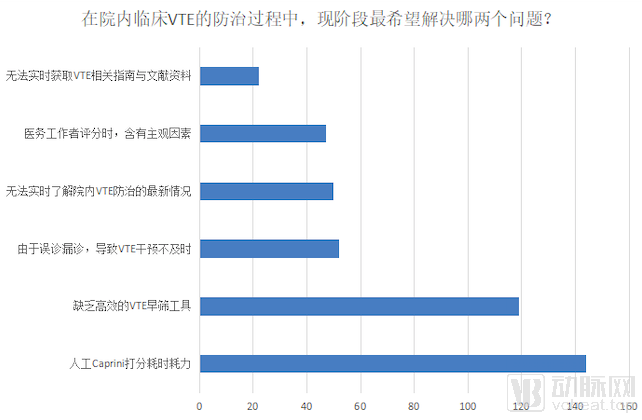
What is the most vexing challenge for physicians and nurses in the clinical prevention and treatment of venous thromboembolism (VTE)? At the recent Chinese Conference on VTE Prevention and Treatment, a questionnaire survey was quietly conducted among more than 1,800 medical experts from across China...
Survey results showed that the two most commonly selected factors were the time-consuming and labor-intensive nature of manual Caprini scoring and the lack of efficient early screening tools for VTE.
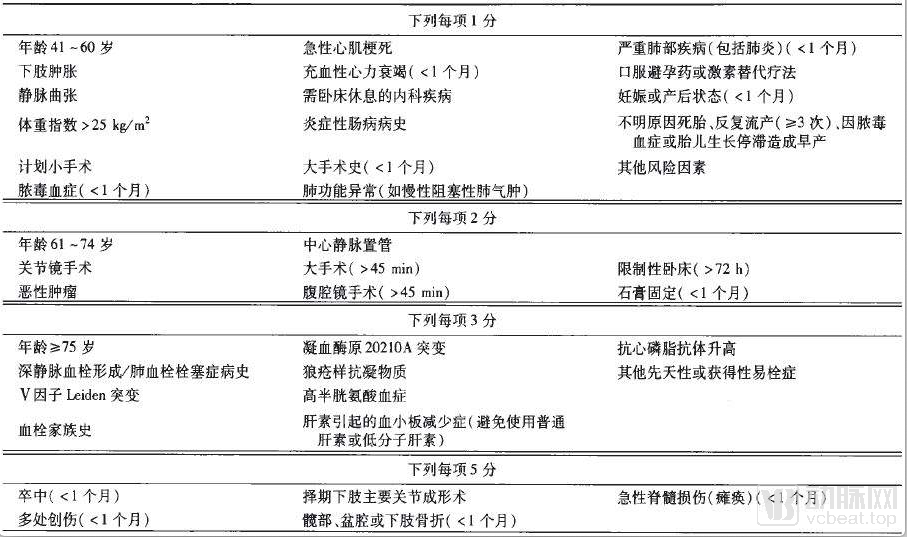
Healthcare professionals who have dealt with venous thromboembolism (VTE) are likely very familiar with this table. It was designed by an American surgeon named Joseph A. Caprini. Since the late 1980s, Dr. Caprini and his colleagues have been dedicated to developing a highly detailed, individualized VTE risk assessment model, known as the Caprini Risk Assessment Model for Thrombosis.
To this day, this scoring system remains an indispensable component of VTE prevention and management in many hospitals. In addition to the Caprini score, other assessment tools such as the Padua score are also widely used in internal medicine.
With the development of hospital management systems, medical personnel have gradually identified certain unavoidable issues with this manual data collection method. For instance, the Caprini risk assessment model, which relies on traditional manual statistical analysis and clinical judgment, not only poses significant challenges in variable data acquisition and consumes substantial time and energy of healthcare workers, but also increases the risk of misdiagnosis and missed diagnosis.
As indicated by the findings from the aforementioned survey, many hospital experts emphasized the importance of VTE informatization in their presentations at this year’s China VTE Prevention and Control Conference.
Regarding the role of information technology in the prevention and treatment of venous thromboembolism (VTE), Professor Zhai Zhenguo from China-Japan Friendship Hospital offered his perspective. He believes that information technology does not operate independently of traditional pharmacological prophylaxis and mechanical prophylaxis; rather, it serves as a means and tool to ensure that preventive measures achieve optimal outcomes. The effectiveness of assessment and implementation of preventive measures must be evaluated using data obtained through information technology systems.
To summarize in Professor Zhai’s words: “Information technology serves as a binding agent, playing a pivotal role in the prevention, treatment, and management of venous thromboembolism (VTE), thereby providing support to patients, hospital administrators, and healthcare professionals. Future IT solutions for VTE must not only be deeply integrated with clinical practice but also establish standardized terminologies and datasets, laying a solid foundation for the homogenization, standardization, and normalization of VTE prevention and control.”
At the 2019 China VTE Prevention and Control Conference, multiple hospitals, including West China Hospital, Sir Run Run Shaw Hospital, and Shanghai Tenth People’s Hospital, shared their experiences and achievements in the informatization of VTE management. Notably, Shanghai Tenth People’s Hospital (hereinafter referred to as “Shanghai Tenth Hospital”) developed a VTE risk prediction model based on data from 78,112 patients collected over one year. Leveraging this model, Shanghai Tenth Hospital successfully integrated three core modules—VTE prevention, diagnosis and treatment, and management—as well as four user terminals for administrators, physicians, nurses, and patients, thereby establishing an intelligent, hospital-wide closed-loop VTE management system.
Regarding the original intent behind the system’s development, Li Jiyu, Vice President of Shanghai Tenth People’s Hospital, stated: “The inefficiencies associated with the Caprini model represent only part of the challenges in hospital-based VTE prevention and control. Healthcare professionals also frequently encounter unpredictable issues. For instance, a high rate of pharmacological prophylaxis has led to postoperative major bleeding events; the lack of DVT screening tools forces physicians to rely solely on clinical experience for judgment; and there are complexities surrounding pharmacological prophylaxis in special patient populations.”
Furthermore, the coordination between medical and nursing staff is also a significant challenge. In many hospitals, VTE risk assessments are conducted by nurses, while physicians are responsible for issuing medical orders and providing timely follow-up. Inadequate handoffs between these two groups can easily lead to delayed diagnoses or missed diagnoses.
Therefore, he emphasizes that the informatization of VTE should not be limited to the electronic and automated implementation of assessment scales; rather, it should be grounded in practical needs, encompassing the entire diagnostic and therapeutic process of the disease, so as to enhance clinical capabilities and efficiency, with ultimate patient benefit as the goal.
For instance, when calculating the risk of venous thromboembolism (VTE), physicians typically need to collect data on patients’ medical history and medication history. However, in clinical practice, it is often difficult for physicians to obtain complete information, which can easily lead to missed or incorrect diagnoses. In contrast, the system at Shanghai Tenth People’s Hospital can leverage data from patients’ previous hospitalizations and WeChat mini-programs to accurately complete scale assessments and calculate risk, thereby ensuring the safety of patient diagnosis and treatment.
Under the leadership of Director Li, Shanghai Tenth People’s Hospital and the SYNYI·AI product team collaborated over a period of one and a half years to refine the system. In doing so, they summarized the following four solutions for the closed-loop management of venous thromboembolism (VTE):
1. Develop an AI model to quantitatively assess patients' current risk of venous thromboembolism (VTE), enabling physicians to make more informed decisions when balancing the risks of bleeding and thrombosis;
2. Leverage AI technologies such as NLP to extract data from the system and automatically calculate scores on VTE-related assessment scales, thereby reducing repetitive workload for physicians and nurses;
3. Achieve a closed-loop information flow in the clinical care system through data integration, ensuring that physicians do not miss any critical information;
4. For patients with special conditions, literature and guidelines are compiled to reduce the time and effort physicians spend reviewing them.
As of now, the VTE risk assessment rate at Shanghai Tenth People’s Hospital has increased significantly from 53.75% to 98.8%, while the time required per patient has been sharply reduced from 15 minutes to just 1–2 minutes. In other words, the system saves an average of 600 hours of working time for all medical staff each month.
Since its official launch on October 13, 2018, the National Project for the Prevention and Treatment of Pulmonary Embolism and Deep Vein Thrombosis has actively promoted in-hospital VTE prevention and control efforts, garnering widespread attention from hospitals at all levels across China.
Many hospitals have established in-hospital VTE prevention and control systems by forming prevention and management teams, implementing supervisory mechanisms for VTE prevention and management, advancing disciplinary development, and conducting health education. However, in today’s highly specialized medical environment, not all healthcare professionals are proficient in managing a condition that is not closely related to their own specialty.
Multiple attending managers stated that despite the frequent organization of training for medical personnel, the results have been minimal. There is an urgent need for a tool that can unify everyone’s understanding and awareness, enabling medical staff to understand how to implement prevention and control measures. A Clinical Decision Support System (CDSS) serves as an effective solution; it provides physicians with decision-making recommendations based on clinical guidelines and literature, allows for knowledge retrieval, and updates in tandem with revisions to guidelines and literature, thereby significantly reducing training costs.
However, VTE prevention and treatment remain inseparable from risk assessment scales, which are time-consuming and labor-intensive for healthcare professionals to complete. For administrators, the absence of data feedback from information systems makes it difficult to evaluate the effectiveness of prevention and control efforts. Therefore, without informatics support, VTE prevention and control are ultimately built on sand. Only by implementing measurable and effective preventive strategies can we truly reduce adverse patient outcomes, lower medical risks for hospitals and physicians, and mitigate medical disputes.
The Future of VTE InformaticsAs experts stated at the China VTE Prevention and Control Conference, “The implementation of VTE informatics in China is imperative. However, there are currently few enterprises engaged in this field, with only a handful of participants such as SYNYI·AI, Huimei, and Donghua. VTE informatics should establish a closed-loop system, as demonstrated by SYNYI·AI, and be deeply integrated with clinical practice to truly ensure the effective implementation of VTE prevention and control.”