

Pengyang Medical: Pioneering 18-Lead Ambulatory ECG Technology and Empowering Primary Care through Remote ECG Solutions
In 1885, Dutch physiologist W. Einthoven recorded electrocardiographic waveforms from the body surface for the first time, pioneering the technique of surface electrocardiography. After more than a century of development, the electrocardiogram (ECG) remains one of the most commonly used and important diagnostic tools in clinical practice, playing a decisive role in the diagnosis of acute myocardial infarction and arrhythmias.
The 1990s witnessed rapid development in electrocardiology research in China. In 1996, the Electrocardiology Group was established under the Chinese Society of Cardiac Pacing and Electrophysiology of the Chinese Medical Association, initiating efforts to study, popularize, and promote electrocardiographic standardization.
In the 2015 ECG standards for chest pain issued by the ESC/ACCF/AHA (European Society of Cardiology/American College of Cardiology Foundation/American Heart Association), it was proposed that: For patients with suspected acute ST-segment elevation myocardial infarction, an electrocardiogram should be performed within 10 minutes of first medical contact; for patients with suspected inferior and posterior wall myocardial infarction, right ventricular and left ventricular true posterior leads must be additionally recorded.
Therefore, the certification standards for Chest Pain Centers in China closely adhere to international guidelines, designating the 18-lead electrocardiogram as a mandatory examination item.
18-lead ambulatory electrocardiography offers two major advantages: long-term monitoring and comprehensive coverage of detection sites. However, its clinical adoption has lagged, primarily due to limitations imposed by the number of electrodes on monitoring. The use of 16 electrodes for 24-hour ambulatory monitoring presents several drawbacks: First, the closely spaced electrodes increase electrostatic interference between them, rendering the data unanalyzable; second, it significantly raises the cost of consumables for medical departments, thereby increasing their operational burden.
Pengyang Medical, established in 2004, is a medical device manufacturer specializing in cardiovascular disease detection. After more than a decade of development, Pengyang Medical has achieved significant innovations and breakthroughs in the lead system innovation of 18-lead dynamic ECG products and intelligent auxiliary diagnostic systems. The company has filed nine national invention patents and has become the only enterprise awarded the title of “R&D Base for 18-Lead Dynamic ECG Technology” by the Chinese Society of Electrocardiology.
Pengyang Medical’s 18-lead ambulatory ECG product employs a patented algorithm that reduces the number of electrodes required for 18-lead ambulatory electrocardiography—from the traditional 16 electrodes to just 9—thereby minimizing electrode count while enabling prolonged synchronized recording. The system utilizes the Kernel Kiss algorithm, which combines hardware and software analysis to significantly accelerate data download speeds. Its proprietary full-lead pre-analysis method automatically filters out leads with no signal or interference, maximizing the accuracy of automated analysis and substantially reducing the time required for manual editing.
Through a series of innovative analytical tools—including full-template superposition, full-lead re-aggregation, clustering template adjustment, and intelligent heartbeat recognition—Pengyang Medical provides clinicians with authentic and reliable research tools. The system’s intelligent automated conclusion feature enhances work efficiency while streamlining the overall workflow. Every stage of the 18-lead ambulatory ECG product, from data playback and pre-analysis to report generation, is designed to maximize operational efficiency, significantly reducing physicians’ interpretation time and genuinely alleviating their workload.
Establish a full-lifecycle product matrix for patients with heart disease, with 18-lead linked/static electrocardiograms filling clinical gaps
According to the latest data, cardiovascular disease has surpassed cancer as the leading threat to human health.
290 million is the number of cardiovascular disease patients in China, and this figure continues to rise with the accelerating aging of the population. If left uncontrolled, the resulting social burden and associated challenges would be severe. Fortunately, with timely and effective regular screening, intervention, and treatment, cardiovascular disease can be well managed, thereby ensuring improved post-treatment survival rates and quality of life.
Zhou Yulong, CEO of Pengyang Medical, stated that the company has shifted its business focus to providing full-cycle solutions for patients with heart disease. It has established its own product portfolio, including 18-lead/12-lead Holter monitors, 18-lead/12-lead electrocardiograph (ECG) machines, wearable ambulatory blood pressure monitors, and remote ECG medical consortium solutions, all of which have been widely deployed in the market. Among these, the 18-lead comprehensive information ambulatory ECG analysis system is its core product.
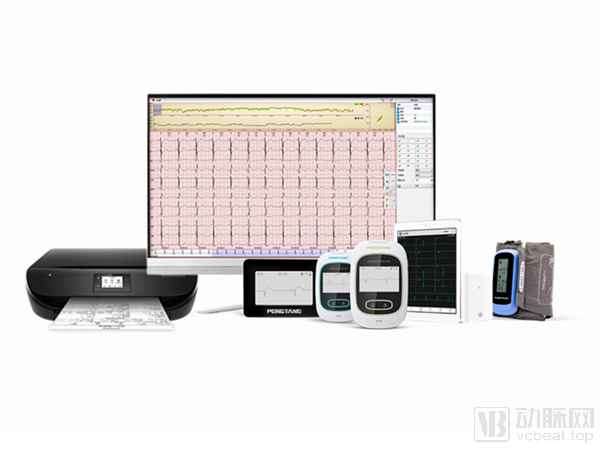
Product Portfolio of Pengyang Medical (Image provided by the interviewee)
18-lead ambulatory electrocardiography refers to a synchronous 18-lead ECG system that, based on conventional 12-lead ambulatory ECG and grounded in the theoretical extension of the cardiac transverse plane chest leads, adds three leads to the left and three to the right, thereby comprising six limb leads and twelve precordial leads.
According to reports, 18-lead ambulatory electrocardiography (ECG) fills the diagnostic gap left by standard 12-lead ECG in detecting ischemic heart disease affecting the right ventricle and the true posterior wall of the left ventricle. By capturing electrical changes in the right ventricular and left ventricular posterior leads, it enables holographic data monitoring of the heart, significantly reducing missed and misdiagnoses of cardiac conditions, and providing more comprehensive and precise evidence for clinical practice and disciplinary research.
Wang Xiaoyu, Product Director at Pengyang Medical, introduced that the company has independently developed an AI-powered ECG intelligent diagnostic system designed to work in conjunction with its data acquisition devices. This system comprehensively enhances the clinical application efficiency of ECG equipment and the efficiency of ECG report analysis and interpretation, thereby reducing the workload and intensity for physicians. It has tripled the speed of dynamic ECG analysis and diagnosis, supporting the accuracy of primary care ECG diagnostics and improving physician productivity. Notably, in the inaugural 2018 "Haichuang Cup" National AI Intelligence Competition, Pengyang Medical’s AI-powered ECG analysis and diagnostic system won the championship with the highest overall score.
Currently, Pengyang Medical’s 18-lead ambulatory ECG product series has been deployed in 115 Grade A tertiary hospitals across 25 provinces in China. Among the top ten hospitals nationwide for cardiovascular care, six have adopted Pengyang Medical’s products, accumulating extensive clinical data. To promote the adoption of this medical technology in more clinical institutions and benefit a greater number of cardiovascular patients, the Chinese Society of Electrocardiology convened numerous clinical electrocardiography experts from across the country to establish the world’s first professional expert working group on 18-lead ambulatory ECG. Additionally, they published the world’s first monograph on the subject, *18-Lead Ambulatory Electrocardiography*.
“In 2019, Pengyang Medical will continue to launch several web-based products for dynamic and static ECG monitoring and ambulatory blood pressure monitoring, forming a more comprehensive regional medical ECG center solution in conjunction with our independently developed remote diagnostic analysis system,” said Wang Xiaoyu.
“After decades of development and evolution, Holter monitors have become the prevailing trend by reducing size and weight, shortening interpretation time, and expanding lead systems to meet the requirements of holographic data acquisition.” Zhou Yulong, CEO of Pengyang Medical, believes that non-invasive testing, precise diagnosis, and intelligent assistance represent the future direction of cardiovascular disease detection devices. Moving forward, Pengyang Medical will focus on product development and strategic layout for full-cycle disease management, covering screening, diagnosis, treatment, and rehabilitation of cerebrovascular and cardiovascular diseases.
Solving the Challenge of Access to Medical Care: Launching a Regional ECG Medical Consortium Project
On May 6, 2019, Ma Xiaowei, Director of the National Health Commission, stated in a signed article that “access to medical care for all” is a major livelihood issue, and addressing the difficulties and high costs of seeking medical treatment is the primary focus of deepening healthcare reform.
How to Address the Difficulty of Accessing Medical Care? On September 26, Ma Xiaowei stated that integrating regional medical institution resources is one of the solutions to this problem. “Large hospitals are overcrowded, while small hospitals are nearly empty.” The need for improved diagnostic and treatment capabilities at primary care facilities makes patients’ strong preference for large hospitals understandable. Ma Xiaowei noted that in urban areas, medical consortiums should be established, with large hospitals leading smaller ones; in rural areas, medical communities should be developed, linking county hospitals with township health centers to achieve integration between counties and townships, as well as among townships. This will facilitate the vertical flow of medical resources, enhance primary care diagnostic and treatment capabilities, and thereby accelerate the construction of an integrated healthcare service system.
Under the key task of “Prevention and Control of Major Diseases” outlined in the Healthy China 2030 Planning Outline, the top priority is to “Implement Actions for the Prevention and Treatment of Cardiovascular and Cerebrovascular Diseases,” aiming to reduce the mortality rate from these conditions to 209.7 per 100,000 population or lower by 2022, and to 190.7 per 100,000 population or lower by 2030. To prevent the onset of cardiovascular and cerebrovascular diseases and reduce mortality, the most effective and convenient approach is non-invasive cardiac examination and screening. Among these, 24-hour ambulatory electrocardiogram (ECG) monitoring—a test that coronary angiography cannot replace—is the most essential and effective method.
Pengyang Medical’s “18-Lead Dynamic ECG Analysis System” provides comprehensive coverage of all cardiac regions, significantly improving the detection rate of conditions such as myocardial ischemia while reducing misdiagnosis and missed diagnoses. It serves as one of the most effective and comprehensive tools for screening and examining cardiovascular and cerebrovascular diseases, thereby supporting the achievement of the goals outlined in the “Healthy China 2030” Planning Outline for the prevention and control of cardiovascular and cerebrovascular diseases and the reduction of mortality rates. Furthermore, it is expected to substantially reduce government health insurance expenditures over the coming years, alleviate the burden on healthcare institutions, and conserve societal medical resources.
Given that Pengyang Medical’s products and market strategy are highly aligned with national policies vigorously promoting tiered diagnosis and treatment, telemedicine, and other initiatives, the company is accelerating the deployment of its advanced technologies and product solutions in county-level medical institutions. “This enables patients at the grassroots level to receive timely and accurate screening and testing within primary care settings,” said Wang Xiaoyu, Product Director at Pengyang Medical. “Pengyang Medical aims to improve disease cure rates and reduce out-of-pocket expenses for serious illnesses through early detection and early intervention, thereby enhancing patients’ quality of life and well-being.”
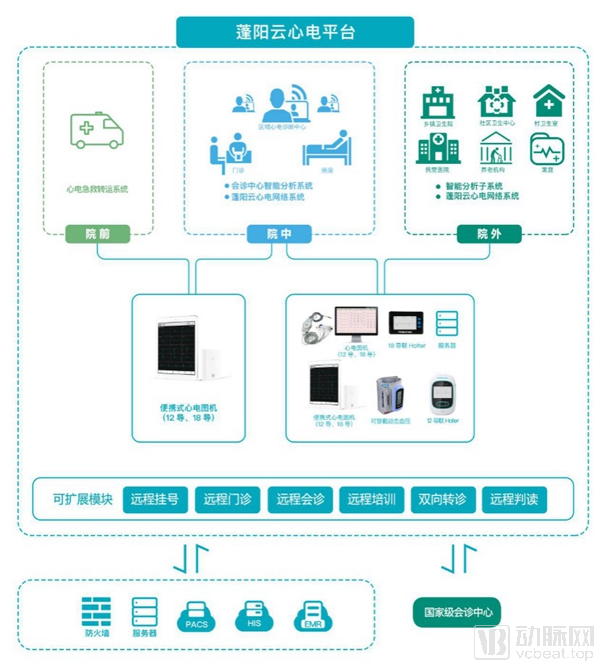
Pengyang Cloud ECG Platform (Image provided by the interviewee)
To this end, Pengyang Medical has proposed the Regional 18-Lead Linked/Static ECG Medical Consortium Project, based on a model integrating “intelligent monitoring devices + intelligent platform systems + remote interpretation services.” This initiative aims to establish district/county-level hospitals as hubs to build remote ECG medical consortia with township, village, and community healthcare institutions within their jurisdictions, thereby addressing the challenges in cardiovascular disease prevention and screening at the primary care level.
To address the challenges faced by primary healthcare institutions, where limited funding constrains project scale and operational quality, Pengyang Medical has introduced an annual service fee model. This approach allows medical institutions to mitigate the financial pressure and risks associated with the one-time procurement of large volumes of equipment and systems by adopting a phased service purchase strategy. This model not only fosters long-term cooperation and service relationships among healthcare institutions but also enables more sustainable, refined, and in-depth customer support, thereby helping primary healthcare institutions achieve comprehensive improvements in both disciplinary expertise and overall brand capability.
Zhou Yulong, CEO of Pengyang Medical, revealed that the company will further integrate capital and technical resources to carry out R&D and promotion of products related to “precision medicine, smart healthcare, IoT-enabled healthcare, and digital healthcare,” aiming to drive innovation in China’s medical technology and enhance diagnostic and treatment standards. Institutions interested in the company are requested to contact the financing assistant, Xiao Yun, at DongMai_Investent.