

Pinggu Model: AI-Powered Primary Healthcare 'Showcase' Files IPO Prospectus

SHUKUN
Provider of Intelligent Products and Innovative Solutions
“I’m 70 years old. The year before last, my daughter-in-law took me to a major hospital in the city for a cardiac check-up. The doctor said I had high blood pressure and arterial stenosis, and prescribed medication along with regular follow-ups. For the past two years, I’ve been taking an electric scooter to the bus stop each week, then riding the bus to Pinggu District Hospital to refill my prescriptions and have the doctor review my electrocardiogram (ECG). However, I haven’t returned to the city hospital for the CT scans as recommended by the doctor. At my age, making one trip into the district center each week is already quite taxing; I simply can’t manage another trip to the city for follow-up examinations,” said Grandma Li, a resident of the mountainous area of Pinggu District in Beijing, expressing her helplessness during a follow-up visit at the district hospital.
Wang Minghao, Deputy Secretary of the Pinggu District Committee and District Mayor, stated that Pinggu District has a permanent resident population of 430,000, with over 100,000 individuals aged 60 and above. According to the "China Cardiovascular Disease Report 2018," one in every five Chinese people suffers from cardiovascular disease. Based on this ratio, there are no fewer than 20,000 patients in Pinggu similar to Grandma Li. Given the current level of primary healthcare, most of these individuals cannot receive timely diagnosis or treatment for cardiovascular and cerebrovascular diseases, which have the highest case fatality rate.
Dr. Xu Lei, Director of the Department of Radiology at Beijing Anzhen Hospital, a leading institution in cardiovascular disease, has stated that coronary CTA and head-and-neck CTA are the preferred non-invasive imaging modalities for patients with suspected cerebrovascular and cardiovascular conditions. With sensitivity and negative predictive value for diagnosing coronary heart disease reaching 100%, these techniques serve as reliable tools for screening and ruling out obstructive coronary artery disease (CAD).
Currently, an increasing number of regional hospitals across China are equipped with devices capable of performing coronary CTA and head-and-neck CTA. However, there is a shortage of physicians with the corresponding high-level diagnostic expertise, making cardiovascular disease a persistent “intractable challenge” in primary healthcare. With 290 million cardiovascular patients in China, there is an enormous demand for medical services. If new smart healthcare technologies can fill this critical gap in early diagnosis and screening for the country’s most prevalent chronic disease, their commercial value could exceed RMB 100 billion, while their social value would be immeasurable.
On October 16, the “Joint Research and Development Application Center for Health Information Technology” in Pinggu District was officially established. Eight technology enterprises, including Huawei, China Mobile, SHUKUN, and Ping An Group, signed cooperation agreements with the Pinggu District Health Commission. Leveraging medical consortia anchored by institutions such as Beijing Friendship Hospital and Beijing Hospital of Traditional Chinese Medicine, Pinggu District, together with hospitals and technology companies, is jointly building the “Pinggu Smart Healthcare Model.” This model utilizes artificial intelligence and information technology to provide smart healthcare services to grassroots patients like “Grandma Li.”
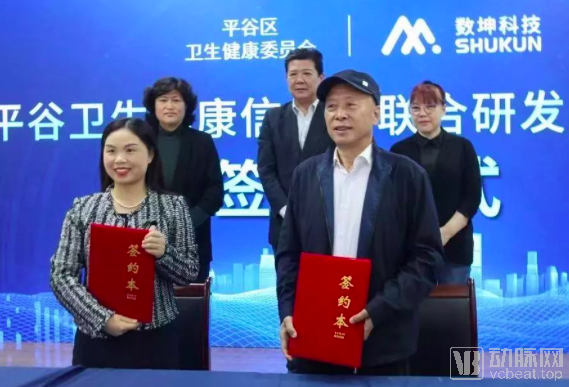
Jin Daqing, Director of the Pinggu District Health Commission, and Ma Chun’e, CEO of SHUKUN Technology, Sign Agreement as Representatives
“With coronary AI, our diagnostic workflow for cardiovascular and cerebrovascular diseases has been significantly streamlined, while accuracy has notably improved. The number of patients undergoing coronary heart disease examinations at our hospital each day has also increased markedly,” remarked a radiologist from a Grade 3A hospital in Beijing.
AI-assisted cardiovascular diagnostic tools, such as coronary CTA and head-and-neck CTA, can improve physicians’ diagnostic efficiency by at least fivefold while maintaining accuracy comparable to that of senior specialists at top-tier tertiary hospitals. However, cardiovascular applications impose exceptionally high demands on AI performance, and most AI companies have failed to overcome algorithmic and data-related bottlenecks. To date, SHUKUN’s cardiovascular AI products are widely recognized by leading experts as the most mature medical imaging AI solutions currently available. At the 7th Annual Meeting of the SCCT China Chapter, five authoritative radiology experts from the First Hospital of China Medical University, Changzheng Hospital Affiliated to Naval Medical University, Beijing Friendship Hospital Affiliated to Capital Medical University, Xuanwu Hospital of Capital Medical University, Hubei Provincial People’s Hospital, and the First Affiliated Hospital of Zhengzhou University affirmed the value of SHUKUN’s cardiovascular and cerebrovascular AI across multiple dimensions, including quality control, efficiency, generalizability, coverage, and scientific research.
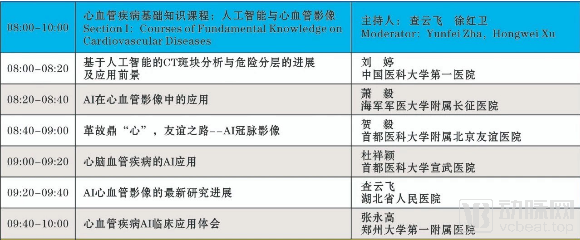
“In the past, patients had to wait seven days for a coronary CTA appointment, extending to 14 days during peak periods, and then wait another three days after the scan to receive their reports. This process was particularly burdensome for elderly patients from remote suburban counties. Now, with SHUKUN’s cardiovascular AI, the appointment waiting time has been reduced to one day; I’ve heard that some hospitals even offer same-day scans. Patients can receive their reports as early as the afternoon of the scan or by the next day, significantly streamlining the clinical workflow. This naturally saves considerable costs on accommodation and travel. Most importantly, it enables patients at primary care facilities to receive local diagnosis and management for these critical conditions,” said a radiologist from Pinggu District Hospital to the reporter.
“Cardiovascular issues are life-threatening, and patients naturally seek immediate care at the largest hospitals. However, constraints such as distance, time, cost, and health insurance coverage make it impractical for everyone to visit major hospitals. If primary healthcare institutions possessed corresponding diagnostic capabilities, allowing residents to access screening and even effective treatment for serious conditions close to home, it would be a great benefit to the public. Even if implemented step by step—starting with local screening and diagnosis, referring only those in genuine need to major hospitals, and facilitating follow-up examinations back in their local communities—this would represent the ideal scenario envisioned by both the government and healthcare providers,” stated Director Jin from the Pinggu District Health Commission at the signing ceremony.
To deploy AI at the primary care level, the first challenge to address is its compatibility with primary care equipment; furthermore, there is a significant disparity in the technical and clinical expertise of technicians and physicians between primary hospitals and large tertiary hospitals. Cardiovascular AI products must be sufficiently “intelligent” and “standardized,” while also being “interconnected” with regional central hospitals, in order to benefit patients in primary care settings.
The newly established Joint R&D and Application Center has made the existing Pinggu Medical Consortium system “smarter, more efficient, and standardized.” If patients in Pinggu experience cardiac discomfort, they can undergo remote consultations with specialists from superior hospitals through community healthcare facilities. SHUKUN’s cardiovascular AI enables patients to receive diagnostic services at the level of experts from top-tier tertiary hospitals without having to drive into the city, allowing them to access high-quality care right at their doorstep and truly benefiting the public.
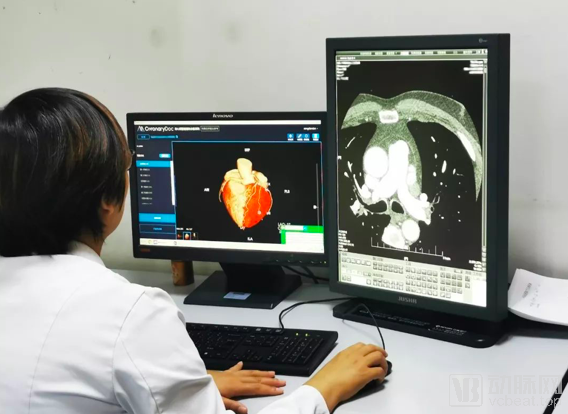
SHUKUN AI in Use at Pinggu Hospital
Secondly, regional hospitals can retain patients locally, which not only ensures revenue for medical institutions at all levels within the medical consortium but also plays a significant role in enhancing the diagnostic capabilities and experience of primary care physicians. Meanwhile, the R&D center recently established in Pinggu can leverage advanced AI-driven learning methods to perform structured organization of patient medical data within the region and conduct regional sub-multicenter studies, thereby effectively helping tertiary Grade A hospitals fulfill their scientific research requirements.
The true value of AI will ultimately be realized through a patient-centric and health-centric approach. Previously, no stage in the cardiovascular disease care continuum—from prevention and screening to diagnosis, treatment, follow-up, and rehabilitation—was effectively covered by intelligent solutions. In the Pinggu Model, SHUKUN AI integrates into the critical diagnostic phase, empowering primary healthcare institutions with the capability to screen for cerebrovascular and cardiovascular diseases. This enables a workflow where procedures are performed at the primary level and reviewed by superior-level experts, with the entire process completed within five minutes.
This AI-driven “new approach” can be rapidly replicated across more than 2,000 counties and cities and over 1,200 tertiary hospitals in China, serving the nation’s 290 million cardiovascular patients. This is merely one component of whole-cycle disease management; if AI and smart technologies are integrated into every stage, the commercial potential becomes clearly evident.
Director Jin of the Pinggu District Health Commission stated, “Shifting from the treatment of severe chronic diseases to their prevention and control aligns with the correct philosophy of putting people’s health at the center, as advocated by the ‘Healthy China 2030’ initiative.” Cardiovascular disease fatalities exhibit a distinct characteristic: in more than half of cases, the first manifestation is either myocardial infarction or sudden cardiac death. This is primarily attributable to two factors: first, the absence of symptoms; and second, the lack of regular medical check-ups. Therefore, rather than scrambling to seize the “golden window” for treatment after disease onset, it is preferable to integrate screening procedures into daily life. Consequently, primary healthcare plays a more significant role in enabling early detection, diagnosis, and treatment, thereby preventing sudden occurrences of coronary heart disease.
For a long time, the diagnosis and treatment of cardiovascular diseases have been largely isolated from primary healthcare. The collaboration between SHUKUN and Pinggu has undoubtedly built a bridge for “primary care + cardiovascular diagnosis and treatment.” Aligned with the core mission of “Healthy China 2030,” this partnership focuses on strengthening the screening and prevention capabilities of primary healthcare institutions.
At the signing ceremony, Wang Minghao, Deputy Secretary of the Pinggu District Committee and District Mayor, stated, “To address the difficulties elderly residents in grassroots communities face in accessing medical care, there is no alternative but to advance medical informatization and intelligence.” The collaboration between SHUKUN and Beijing’s Pinggu District serves as a demonstration model for decentralizing cardiovascular disease management to the primary care level. Providing verified, advanced AI capabilities to grassroots healthcare institutions genuinely drives intelligent transformation in primary care. It empowers tens of thousands of primary care physicians to effectively manage serious conditions, and alleviates the anxieties of countless individuals like “Grandma Li,” who previously worried about the monthly burden of traveling to large urban hospitals. With ubiquitous “smart digital doctors,” they can now enjoy healthy lives with peace of mind.
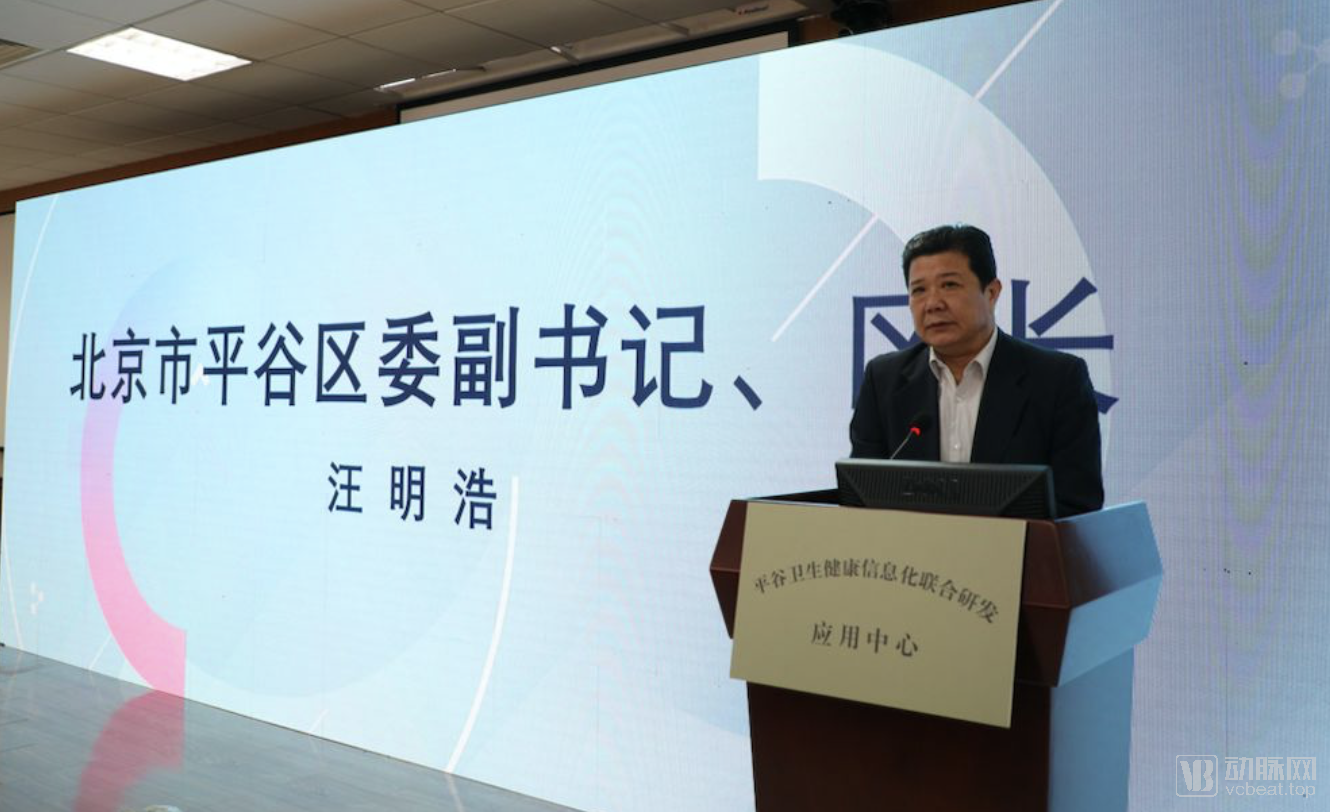
Address by Wang Minghao, Deputy Secretary of the Pinggu District Committee of the Communist Party of China and District Mayor
In July 2019, the Artificial Intelligence Medical Device Innovation Promotion Conference, led by the National Medical Products Administration (NMPA), determined the establishment of eight standard AI databases, including those for cardiac MRI, coronary CTA, and ECG. Among these, three databases are dedicated to cardiovascular diseases, underscoring them as a key focus during this phase. To alleviate the financial burden on medical insurance and enhance social recognition of medical services, many regional Health Commissions are continuously promoting the development of smart healthcare. Whether the newly launched “Pinggu Model” will serve as a “template” for medical AI to benefit the public, empower grassroots healthcare institutions, and achieve leapfrog commercial implementation remains to be seen.