

How to Invest in Healthcare with Precision, Accuracy, and Impact? Dozens of Investment Leaders Gather in Shenzhen for an Intensive Brainstorming Session
“Domestic investors are becoming increasingly mature and cautious; in the future, startup projects with high technical barriers and substantial value will be the ones to gain favor.”.” said Wang Yongrui, Executive Deputy General Manager of TusStar, in an interview with VCBeat (WeChat ID: vcbeat).
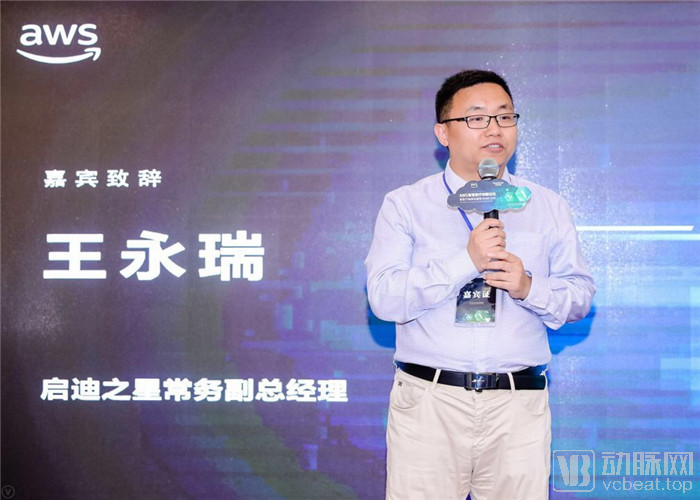
Wang Yongrui, Executive Deputy General Manager of TusStar
On October 18, the “AWS Smart Healthcare Innovation Forum and Healthcare Accelerator Demo Day,” co-hosted by TusStar and AWS, kicked off in Shenzhen.At the conference, Duan Weizhi, Regional Business Development Director of AWS Government and Public Sector, shared insights from an enterprise perspective on how the AWS cloud platform empowers the growth of smart healthcare companies. Ma Jian, CEO of XtalPi, summarized experiences in AI-driven drug discovery from a technical standpoint. Industry leaders from Besview Medical, Yiyuan Intelligence, and Wuhan Zhizhong engaged in discussions on “Medical Innovation Practices in the AI Era.” Additionally, twelve high-quality enterprises selected by the AWS Healthcare Accelerator Program conducted project roadshows.
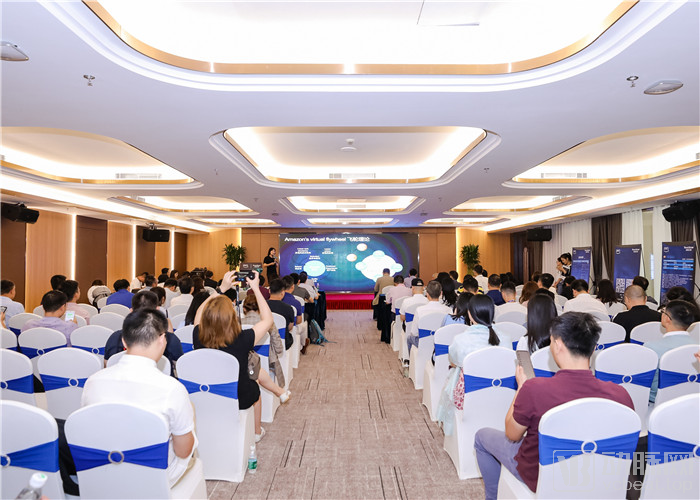
Conference Venue
In addition to the above highlights,Senior investors from dozens of investment institutions, including Legend Star, Sinowood Capital, Qingcheng Capital, GTJA Capital, Beishu Capital, Jiangxing Investment, and Qirui Jianyuan, gathered together to discuss current investment trends and share insights on hot topics, offering a wealth of valuable content.
Capital Insights: What Are Top Investors Watching? What Does a Startup Need to Attract Investor Attention? VCBeat has compiled the perspectives of several investors from the conference, offering this brief analysis.
At the conference,Liu Tong, Managing Director at Sinovation Capital, shared his insights on “Reflections on Smart Healthcare Investment” from an investor’s perspective.He pointed out that we are currently at a turning point in economic transformation; if the twelve traditional Chinese two-hour periods were used to describe this clearance process, we would perhaps be at the Hour of the Horse (Wu Shi).
“Noon is the hottest time of the day, a period marked by either arduous struggles or abundant opportunities. During this phase, capital needs to exercise greater caution and approach the fundamental issues of investment with an entrepreneur’s mindset,” said Liu Tong.
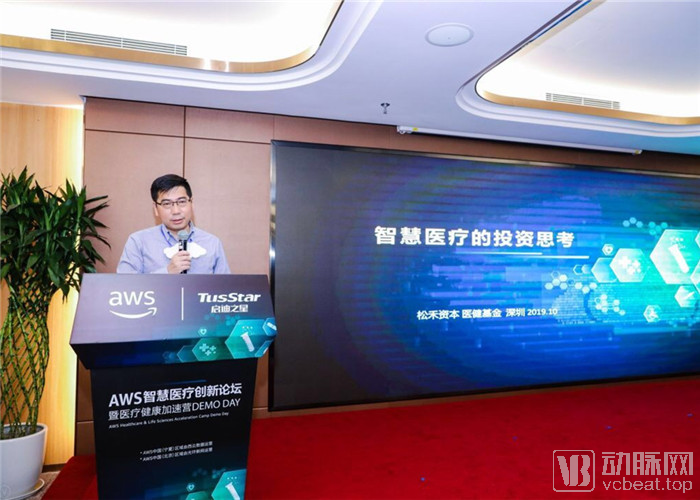
Liu Tong, Managing Director at Songhe Capital
He stated that China is currently undergoing its third wave of transformation since 1978 and 1990, with AI representing one of the systemic opportunities. “Data indicates thatAI: Healthcare Accounts for the Largest Share of Equity Transactions Across Sub-sectors in Recent Years“Liu Tong said.”
In view of the current status and pain points of the healthcare industry, there is an urgent need for new technologies such as AI and 5G to provide solutions. The government has also been continuously introducing policies to accelerate the development of the AI and 5G-enabled smart healthcare ecosystem. This clearly demonstrates that the market prospects for AI in healthcare are robust.
Liu Tong pointed out that in the field of AI, medical imaging AI is developing most rapidly. Furthermore, statistics show that the United States leads globally with 850,000 AI talents, while China has approximately 50,000, making AI talent a scarce resource. “In this environment, as an investment institution, we must manage capital wisely and invest effectively. The prerequisite for investment is to choose the right direction; we should not chase trends but instead lay out our strategic positioning in advance. Secondly, talent is crucial, and the composition of the founding team is also vital—we need scientists with an entrepreneurial spirit,” said Liu Tong.
Finally, Liu Tong shared:“As an investor, one must carefully evaluate niche sectors by addressing key questions: Is user demand genuine or artificially created? Where do the real pain points lie? Does the company possess core technologies and accumulated technical expertise? Does it control the ‘linchpin’ of the industry chain?””
At the roundtable forum themed “New Investment Thinking in the Healthcare Industry,” Li Guolin, Executive Partner at GTJA Capital; Zeng Lingxi, General Manager of Leaguer Biotechnology; Sun Liqing, Partner at Qingcheng Capital; Zhang Zhihang, Deputy General Manager of Qirui Jianyuan; and Wang Yi, Investment Director at Legend Star, shared their insights and individually highlighted the investment sectors they are currently most focused on.
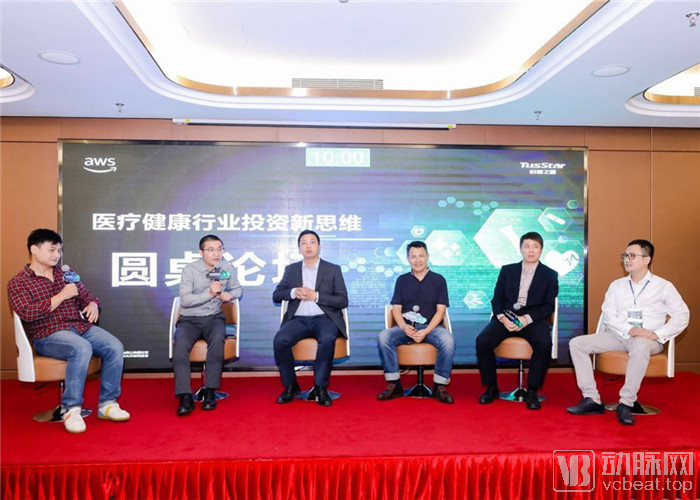
From left to right: Warren Li, Li Guolin, Zeng Lixi, Sun Liqing, Zhang Zhihang, Wang Yi
Wang Yi, Investment Director at Legend Star: Focusing on AI Products for Medical Diagnosis and Treatment, and New Opportunities at the Intersection of Healthcare and Payment Industries
Wang Yi stated, “The zero-markup policies for pharmaceuticals and medical consumables, which have introduced structural changes, have led to declining profits, creating a need for products to fill this gap. The advantage of ‘Healthcare + Therapeutic AI’ products is that they promote more standardized surgical procedures and better align with pharmacoeconomic value. This is a direction we are focusing on.”
Wang Yi pointed out that the second direction is to focus on new opportunities emerging from the integration of healthcare and payment industries. “In the past two years, million-yuan medical insurance and critical illness insurance have grown rapidly. It is roughly estimated that the market will reach RMB 800 billion this year. Over the next 5–10 years, insurance professionals and policyholders will give rise to a new payment market. Alongside this capital flow, service providers and supply chains will certainly present new opportunities,” said Wang Yi.
Zeng Lingxi, General Manager of Lihe Bio: Focusing on the entry of overseas innovative drugs into the Chinese market, optimistic about the sub-sectors of bioinformatics and smart healthcare, with high-quality domestic alternatives also being a key investment focus.
Zeng Lingxi stated, “The entry of overseas innovative drugs into the Chinese market is currently a hot topic. Most of these innovative drugs seeking to enter the Chinese market have basically completed Phase II clinical trials and are submitting applications to the China Food and Drug Administration (CFDA). We are also observing whether there are any promising drug candidates worth considering for investment.”
"In addition, he stated that Lihe Bio has recently made investments in niche sectors such as 'bioinformatics' and 'smart healthcare.' 'We are highly optimistic about the development prospects over the next decade, whether in the realm of medical devices combined with AI or gene diagnostics integrated with big data. Furthermore, import substitution for medical devices—particularly high-quality technologies capable of replacing imported products with domestically produced alternatives—is also a key area of our investment,' said Zeng Lingxi."
Sun Liqing, Partner at Qingcheng Capital: Focusing on Niche Segments in Tumor Immunotherapy
Sun Liqing stated, “Investing in early-stage ventures certainly requires active engagement within the industry ecosystem. Previously, we invested in several companies focused on genetic testing, including those specializing in oncology-related genetic testing and early cancer screening. Currently, from my personal perspective, immuno-oncology is a niche area that I am closely monitoring.”
Li Guolin, Executive Partner at GaoTeJia: Focusing on Innovation and “Relatively Mature” Niche Sectors
Li Guolin stated, “Our primary focus is on innovation. In this regard, we mainly assess whether a company’s project is based on clinical needs, whether it addresses a sufficiently rigid demand, and whether it fulfills currently unmet needs. This is the first point. The second point is to evaluate the competitive landscape of the product from both market and clinical perspectives.”
“He pointed out that the second investment direction focuses on relatively mature niche sectors. ‘Since our team was originally founded through mergers and acquisitions, we have accumulated certain expertise in this area. After years of development, China’s pharmaceutical market has seen the emergence of numerous relatively mature niches, such as generics and in vitro diagnostics (IVD), with many enterprises based in Shenzhen. There are also ample portfolio opportunities within these mature segments, which we are closely monitoring. On a personal note, I am particularly interested in antibodies, small-molecule targeted therapies, gene therapy, and cell therapy,’ said Li Guolin.”
Beyond investment focus, what is the investment rationale used by venture capital firms when selecting portfolio companies?
When it comes to investment logic,Zhang Zhihang, Deputy General Manager of Qirui JianyuanShared a case study on the investment in Zhongke Weiguang, and provided relevant analysis based on it.
Why did Qirui Jianyuan invest in this company?First, look at the track.This company specializes in cardiovascular imaging. Given that annual expenditures and mortality rates associated with cardiovascular diseases far exceed those of cancer, the sector was viewed very favorably at the time.
Secondly, their products have significant technological advantages.The founder is a senior alumnus of Tsinghua University and one of the pioneering figures in China’s OCT field. The company won first prize in the Shenzhen Innovation and Entrepreneurship Competition in 2011 and continued its development until 2017, by which time it had advanced to the stage of animal clinical trials. Given the promising animal clinical data at that time, there was optimism about obtaining regulatory approval.
Third, the market potential is substantial.At that time, an assessment of Terumo’s OCT imaging in Japan revealed a penetration rate exceeding 90%. In other words, OCT technology was utilized in over 90 out of every 100 coronary stent procedures in Japan. In contrast, the penetration rate in China was only around 3–5%, indicating substantial market potential, further amplified by China’s large population base.
Finally, the company is in relatively sound financial health, with excellent cash flow management.
“This is also what I want to share with everyone: for startups, in addition to focusing wholeheartedly on professional technology, it may be necessary to devise strategies to enhance operational stability, particularly in cash flow management. Given the current tight financing environment, this could be a critical factor determining the survival of many startups,” pointed out Zhang Zhihang.
Beyond evaluating the sector, talent, technology, and cash flow, what else do investors look for?
Sun Liqing, a partner at Qingcheng Capital, pointed out that in early-stage investment, they place greater emphasis on: “Is it a rigid demand? What is the market size? Is there an opportunity to scale?”
Zeng Lingxi, General Manager of Lihe Biotech, pointed out in a case study on corporate investments targeting the niche sector of gut microbiota that they evaluate factors such as team background and the feasibility of achieving a robust monetization model.
“In the biopharmaceutical industry, our investment logic is based on milestone nodes. From filing for product approval, through Phase I, II, and III clinical trials, to finally obtaining regulatory approval, each stage represents a critical hurdle for entrepreneurs across the entire value chain. In this process,”I believe that investing in biopharmaceuticals is not simply a matter of providing capital. Rather, we aim to offer entrepreneurs critical support at key milestones across multiple dimensions, including technology, talent, and infrastructure.“Zeng Lingxi said.
As the organizer of this event, Wang Yongrui, Executive Deputy General Manager of TusStar, introduced that another highlight of the conference was the exciting pitch presentations delivered by 12 companies participating in the acceleration program from across China. “TusStar is committed to helping startups achieve growth. For the companies in this acceleration camp presenting today, their founders have the opportunity to engage directly with investors,” said Wang Yongrui, Executive Deputy General Manager of TusStar.
He introduced that the companies selected for this roadshow are: Lianta Times (Nanjing) Intelligent Technology Co., Ltd., Beijing Aimindewei Technology Co., Ltd., Jiandao (Hangzhou) Technology Co., Ltd., Shenzhen Zhiyao Information Technology Co., Ltd., Nanjing Corgi Data Technology Co., Ltd., Beijing Zhijingling Education Technology Co., Ltd., Zhejiang Mingdu Intelligent Control Technology Co., Ltd., Beijing Yizhiying Technology Co., Ltd., Deepwise Medical Technology, Shenzhen Zhichu Computer System Co., Ltd., Shenzhen Zhiqin Instrument Co., Ltd., and Shenzhen Nanke Zhengtu Co., Ltd.
Following the roadshow, expert panels from ten investment institutions—including Anjue International Capital, Multiple Capital, Jiangxing Investment, and Qirui Jianyuan—conducted a review.Zhejiang Mingdu Intelligent Control Technology Co., Ltd., Beijing Zhijingling Technology Co., Ltd., and Shenzhen Deepwise Medical Technology Co., Ltd. Were Awarded the Title of “Most Investment-Worthy”。
About TusStar
TusStar has been deeply engaged in startup services for 20 years and has currently established industry-specific vertical incubators in fields such as clean energy, artificial intelligence, new microelectronic materials, and smart hardware.In specialized sectors, TusStar partners with industry leaders such as AWS, CIMC Group, CRRC Group, Honeywell, and BP China to drive sector-specific acceleration, supporting startups through funding, technology, talent, policy, and supply chain resources. In the future, TusStar will connect with more industrial resources and establish a collaborative mechanism for direct dialogue with innovative enterprises through short-term, high-frequency matchmaking and long-term follow-up services.
About the AWS Healthcare Accelerator Camp
The AWS Healthcare Accelerator is Amazon Web Services’ (AWS) first startup accelerator tailored for a vertical industry. Launched in Beijing on July 30 in partnership with TusStar, it aims to precisely empower innovative startups in the healthcare sector through technological, market, and capital support, while fostering a collaborative community for mutual exchange.Over the course of one month, the organizers received applications from 232 companies spanning medical AI, healthcare services, and medical devices. The accelerator program selected 19 and 12 companies, respectively, to participate in two acceleration events held in Shanghai and Shenzhen, with an acceptance rate of less than 10% for each cohort.