

16th CSTRO Annual Conference Held in Shenzhen, Gathering Global Experts to Discuss New Trends in Radiotherapy
From October 11 to 13, 2019, the 16th Annual Academic Conference of the Chinese Society for Therapeutic Radiology and Oncology (CSTRO) was held at the Shenzhen Convention and Exhibition Center. Focusing on the frontiers of radiation therapy, the conference provided a comprehensive and systematic overview of cutting-edge technologies, high-impact academic research, recent advances, and emerging insights in radiotherapy both domestically and internationally, delivering a three-day academic feast for attendees from home and abroad.
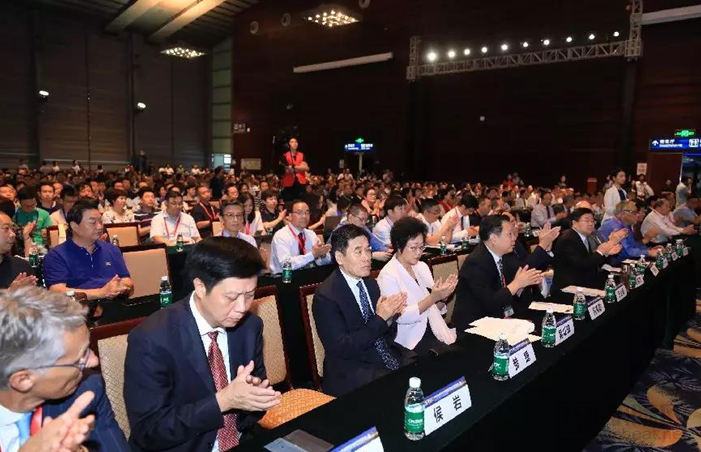
The focus of this conference remains on precision radiotherapy. In his keynote address titled “New Practices in Precision Radiotherapy,” Academician Yu Jinming, an academician of the Chinese Academy of Engineering and President of Shandong Cancer Hospital, pointed out that with the precise integration of precision medicine technologies with other modalities, continuous advancements in new radiotherapy equipment and technologies, and steadily improving survival rates across various cancer types, radiation therapy is transitioning from the era of precision radiotherapy to that of intelligent radiotherapy.
Professor He Jie, an academician of the Chinese Academy of Sciences, Director of the National Cancer Center of China, and President of the Cancer Hospital of the Chinese Academy of Medical Sciences, stated that in recent years, the five-year survival rate for cancer patients in China has improved significantly. In 2005, the five-year survival rate for cancer patients in China was 30.9%. After ten years of effort, this figure rose to 40.5%, an increase of nearly ten percentage points. However, compared with the nearly 70% five-year survival rate in developed countries in Europe and America, there is still substantial room for improvement. Furthermore, China’s cancer prevention and control mechanism and network have taken initial shape, with the establishment of the Inter-Ministerial Joint Conference System on the Prevention and Control of Major Diseases under the State Council and a tumor quality management and control system. Meanwhile, a big data-based quality control platform has been built to promote the development of tumor diagnosis and treatment quality control through informatization.
Professor Wang Luhua, Chairman of the Chinese Society of Clinical Oncology (CSCO) Radiation Oncology Branch, presented an overview of the recent national status of the radiotherapy industry in China. He first highlighted the substantial demand for radiotherapy in the treatment of malignant tumors. According to the latest 2019 statistics, there were 3.929 million new cancer cases and 2.338 million cancer-related deaths. The incidence rate was higher in males than in females, and higher in urban areas than in rural areas; however, the age-standardized mortality rate was lower in urban areas compared to rural areas.
As one of the three major cancer treatment modalities, radiotherapy is required by 60% to 70% of patients with malignant tumors during their course of treatment. However, China has only 1.57 linear accelerators per million people, far lower than the 12.4 per million in the United States, and even failing to meet the World Health Organization (WHO) recommendation of 2 to 4 units. Although the adoption of IMRT, SBRT, VMAT, and TOMO technologies has increased year by year, their overall proportion remains low, at less than 20%. Compared with Europe, the United States, Japan, and other countries, China has limited access to proton and heavy ion therapy technologies, with few projects under construction, indicating a significant gap. Meanwhile, the number of professionals specializing in radiotherapy decreased by 2.3% compared to 2017, highlighting the need for further optimization of staffing ratios.
Wang Lvhua suggested making full use of big data in oncology, promoting the construction of medical consortia, expanding the scope of radiotherapy at the primary care level, strengthening the training of resident physicians and international technical exchanges, advancing research and development of technologies such as artificial intelligence, implementing regional coverage for cancer screening along with early diagnosis and treatment, and striving to achieve the goal of “raising the overall five-year survival rate for cancer in China to no less than 46.6% by 2030.”
This survey covered 1,442 radiotherapy institutions across 29 provinces, marking the most extensive industry census to date in terms of geographic coverage and number of participating organizations. It facilitates a comprehensive understanding of the industry landscape, objectively reflects existing challenges, and lays a solid foundation for standardizing the development of the radiotherapy sector. Reportedly, Quanyu Medical Group provided robust support for data collection, analysis, and mining in this survey, leveraging its years of accumulated medical data and technical expertise.