

JunLian Medical Global Drug Pipeline Update – Issue 27: Key Clinical Trial Results and IPO Filings
Oct 21, 2019 16:03
CST Updated
16:03

This week, there were 9 new drug data entries, including 4 in dermatology, 1 in oncology, 1 in immunology, 1 in neurology, 1 in respiratory medicine, and 1 in infectious diseases.
❖ Eli Lilly Announces Phase 3 Results of the SEQUOIA Study: Pegilodecakin Combined with FOLFOX Failed to Meet the Primary Overall Survival Endpoint in Pancreatic Cancer, Reinforcing Its Status as the “King of Cancers.” When Eli Lilly acquired Armo Biosciences for $1.6 billion in May 2018, pegilodecakin was its most valued asset, already in Phase 3 clinical trials at the time; thus, this failure is particularly disappointing. Currently, there are 10 IL-10-targeting drugs under development globally, with three having entered Phase II clinical trials. However, apart from pegilodecakin, none of the other candidates are indicated for pancreatic cancer. While the setback of IL-10 in pancreatic cancer does not negate its viability as a druggable target, the market potential has significantly diminished.
❖ InnoCare Pharma has released its prospectus, planning an IPO in Hong Kong. The company’s lead candidate, orelabrutinib, is an irreversible BTK inhibitor for the treatment of various B-cell malignancies and autoimmune diseases, currently in Phase II clinical trials. BTK inhibitors have already demonstrated blockbuster potential in hematologic malignancies and have emerged as the most promising target beyond TNF and CD20 in autoimmune diseases. Globally, only ibrutinib (Johnson & Johnson and AbbVie) and acalabrutinib (AstraZeneca) are currently marketed, with 2018 sales exceeding $6 billion and $62 million, respectively, while more than 20 other products have entered clinical development. In China, BeiGene’s zanubrutinib is advancing the fastest and has filed for marketing approval, positioning it to potentially become the third approved BTK inhibitor after ibrutinib and acalabrutinib.
Lilly’s Pegilodecakin (Pegylated Interleukin-10) Fails to Meet Primary Endpoint in Phase III Pancreatic Cancer Trial
Lilly Updates Phase III Clinical Results: Primary Endpoint of OS Improvement Not Met; Incidence of Grade 3/4 Adverse Events with Pegilodecakin Combination Regimen Increased by ≥5%.
Pegilodecakin is a pegylated form of IL-10, an immunotherapy that activates tumor-reactive cytotoxic CD8+ T cells in patients while exerting anti-inflammatory effects. This immuno-oncology agent mediates tumor clearance by enhancing T-cell infiltration into and destruction of cancer cells.
A global, multicenter, randomized Phase 3 clinical study designed to compare the efficacy and safety of AM0010 in combination with FOLFOX versus FOLFOX monotherapy in patients with metastatic pancreatic cancer. The primary endpoint is overall survival, and the key secondary endpoints are progression-free survival and objective response rate.
Pegilodecakin combination therapy did not meet the primary endpoint of improving overall survival; moreover, compared with the FOLFOX monotherapy group, the combination therapy group had a higher incidence of the most common grade 3/4 adverse events (difference >5%), including neutropenia, thrombocytopenia, fatigue, and anemia.
Positive Clinical Results for Novartis’ New Drug Ligelizumab in the Treatment of Urticaria
Novartis announced that ligelizumab (QGE031), a humanized anti-IgE monoclonal antibody, demonstrated superior efficacy compared with Xolair in a Phase 2b trial in patients with chronic spontaneous urticaria inadequately controlled by H1-antihistamines, resulting in complete symptom resolution in a greater proportion of patients.
Ligelizumab is a monoclonal antibody targeting immunoglobulin E (IgE) and is currently in clinical development for the treatment of patients with chronic spontaneous urticaria (CSU) who have inadequate response to H1-antihistamines.
In a randomized, double-blind, active-controlled Phase 2b clinical trial, 382 patients with chronic spontaneous urticaria (CSU) inadequately controlled by H1-antihistamines were randomized to receive treatment with one of three different doses of ligelizumab or Xolair.
Interim data showed that at Week 12 of treatment, complete resolution of disease symptoms was achieved in 30% (24 mg dose), 44% (72 mg dose), and 40% (240 mg dose) of patients receiving ligelizumab, compared with 26% in the Xolair treatment group.
FDA Approves First Transdermal Therapy for Schizophrenia
Noven Pharmaceuticals, a subsidiary of Hisamitsu Pharmaceutical, announced that the U.S. FDA has approved Secuado, its transdermal delivery system, for marketing to treat adult patients with schizophrenia. Secuado is currently the first and only transdermal patch therapy approved for the treatment of patients with schizophrenia.
Secuado is a transdermal patch formulation of the atypical antipsychotic asenapine. The transdermal drug delivery system (TDDS) developed by Noven can maintain therapeutic blood concentrations over a 24-hour dosing period.
A Phase 3, double-blind, placebo-controlled clinical trial. This study evaluated the efficacy and safety in 616 adult patients with schizophrenia over a 6-week treatment period.
Compared with the placebo group, Secuado demonstrated a significant improvement from baseline in the total score on the Positive and Negative Syndrome Scale (PANSS) at Week 6, thereby meeting the primary endpoint of the trial. Patients also achieved a statistically significant improvement in disease severity as assessed by the Clinical Global Impression (CGI) scale, which constituted the key secondary endpoint of the study. The safety profile of Secuado was consistent with the known safety profile of sublingual asenapine tablets.
Significantly Slows the Rate of Lung Function Decline! Boehringer Ingelheim’s Innovative Therapy Receives FDA Breakthrough Therapy Designation
Boehringer Ingelheim Announces U.S. FDA Grants Breakthrough Therapy Designation to Its Small-Molecule Tyrosine Kinase Inhibitor Ofev (Nintedanib) for the Treatment of Patients with Chronic Progressive Fibrosing Interstitial Lung Disease (ILD)
Ofev is a small-molecule tyrosine kinase inhibitor that simultaneously blocks three growth factor receptors, including vascular endothelial growth factor receptor, platelet-derived growth factor receptor, and fibroblast growth factor receptor, thereby effectively inhibiting signaling pathways involved in the fibrotic process.
A randomized, double-blind, placebo-controlled Phase 3 clinical trial designed to evaluate the safety, tolerability, and efficacy of Ofev in patients with progressive fibrosing interstitial lung disease.
At Week 52, Ofev treatment reduced the decline in lung function by 57%, as assessed by forced vital capacity (FVC), thereby meeting the primary endpoint of the trial. Furthermore, it is worth noting that Ofev slowed disease progression in patients with various progressive fibrosing interstitial lung diseases during the trial.
HuiRuike Oral JAK1 Inhibitor Phase 3 Results Are Positive, Significantly Alleviating Dermatitis Symptoms
Pfizer announced at the 28th Congress of the European Academy of Dermatology and Venereology that its JAK1 inhibitor, abrocitinib, met the primary endpoint and all key secondary endpoints in a pivotal Phase 3 clinical trial for the treatment of patients aged 12 years and older with moderate-to-severe atopic dermatitis (AD).
Abrocitinib is an oral, small-molecule, selective JAK1 inhibitor. The JAK pathway is also a key component of hematopoietic signaling and exhibits hyperactivation in the early stages of graft-versus-host disease (GVHD). JAK1 inhibitors control the disease by modulating various cytokines associated with the pathogenesis of atopic dermatitis, including interleukins IL-4, IL-13, IL-31, and interferon-gamma.
JAKRole in Hematopoietic Signaling
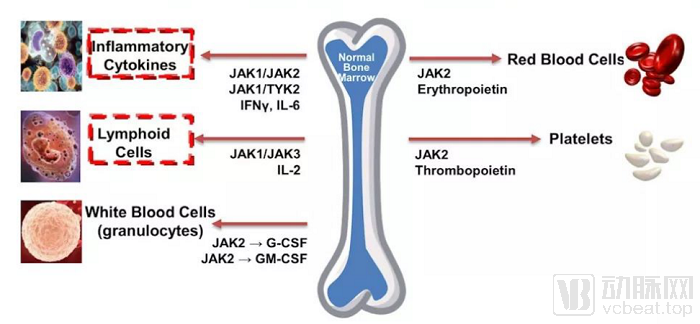
Data Source: Prime Oncology
A randomized, double-blind, placebo-controlled trial to evaluate the efficacy and safety in patients aged 12 years and older with moderate-to-severe atopic dermatitis (AD), who were randomly assigned to receive once-daily abrocitinib 200 mg, 100 mg, or placebo.
After 12 weeks of treatment, 43.8% and 23.7% of patients in the treatment group achieved complete or near-complete clearance of skin symptoms, respectively, compared with 7.9% in the placebo group. In the treatment group, 62.7% and 39.7% of patients achieved at least a 75% improvement from baseline in Eczema Area and Severity Index (EASI-75), respectively, versus only 11.8% in the placebo group, thereby meeting the primary efficacy endpoint of the trial.
81% of Pediatric Patients Achieve Skin Clearance, Eli Lilly’s New Psoriasis Drug Meets Phase 3 Clinical Endpoints
Eli Lilly announced at the 28th Congress of the European Academy of Dermatology and Venereology that Taltz, its IL-17A inhibitor, met the primary endpoint and all key secondary endpoints in a Phase 3 trial involving patients aged 6 to 18 years with moderate-to-severe plaque psoriasis.
Taltz is an IL-17A monoclonal antibody. IL-17A is a pro-inflammatory cytokine; by binding to IL-17A, Taltz can reduce inflammation levels, thereby alleviating patient symptoms.
A total of 201 patients aged 6 to <18 years with moderate-to-severe plaque psoriasis were enrolled in this randomized, double-blind, placebo-controlled Phase 3 clinical trial.
At Week 12, the proportion of patients treated with Taltz who achieved a reduction of more than 75% in their Psoriasis Area and Severity Index (PASI) score was significantly higher than that in the control group (89% vs. 25%). In the treatment group, 81% of patients achieved a score indicating complete or almost complete clearance of skin symptoms, compared with only 11% in the placebo group, thereby meeting the primary endpoint of the trial.
JAK Inhibitor Meets Phase 3 Clinical Endpoints, Approved for Treatment of Graft-versus-Host Disease
Incyte announced positive results from the pivotal Phase 3 REACH2 trial of its JAK inhibitor, Jakafi. REACH2 evaluated the efficacy of Jakafi in treating steroid-refractory acute graft-versus-host disease.
Ruxolitinib is an oral JAK1/JAK2 inhibitor. Inhibition of JAK1/JAK2 suppresses the release of inflammatory cytokines, mitigates the pathological progression of GVHD, and inhibits donor T-cell activation, thereby attenuating the immune response.
In evaluating the efficacy and safety of ruxolitinib for the treatment of steroid-refractory acute graft-versus-host disease (aGVHD), the primary endpoint was improvement in the overall response rate (ORR) at Day 28; secondary endpoints included ORR at Days 14 and 56, duration of response, overall survival (OS), and event-free survival.
The trial met its primary endpoint. Specific trial results will be presented at future medical conferences. The REACH2 trial results will be used for global regulatory submissions outside the United States.
Genentech’s New Influenza Drug Approved Today for Expanded Indication to Treat High-Risk Populations for Influenza Complications
Genentech, a member of the Roche Group, announced that the FDA has approved its expanded indication application for the novel anti-influenza drug Xofluza (baloxavir marboxil). Xofluza will be used to treat individuals aged 12 years and older who are at high risk of developing influenza-related complications.
Xofluza is effective against oseltamivir-resistant influenza virus strains and avian influenza virus strains (H7N9, H5N1) by inhibiting cap-dependent endonuclease in the influenza virus, thereby suppressing viral replication.
Aims to evaluate the efficacy and safety of Xofluza compared with oseltamivir or placebo in patients aged 12 years and older at high risk for influenza complications.
In patients at high risk for influenza complications, Xofluza significantly delayed the median time to alleviation of influenza symptoms; compared with oseltamivir, Xofluza demonstrated similar efficacy in reducing the duration of influenza symptoms. For influenza B virus, Xofluza improved influenza symptoms more rapidly than placebo.
XofluzaMechanism of Action
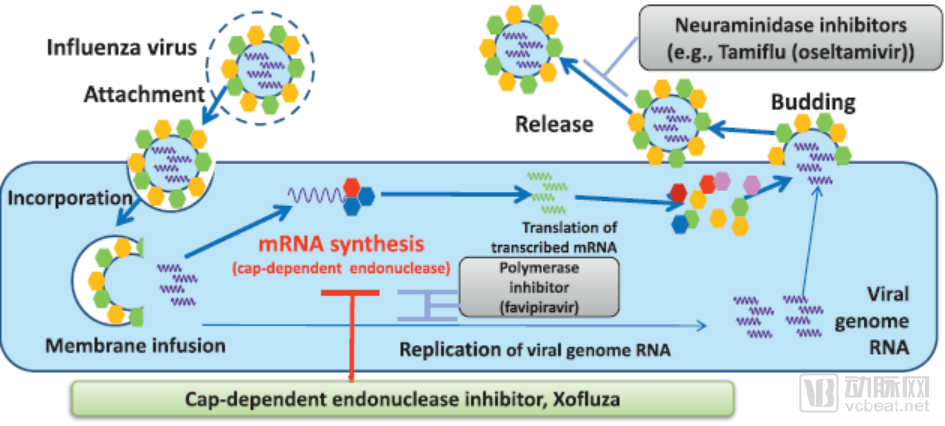
Data source: Shionogi
Efficacy Superior to Approved Therapies: UCB’s IL-17A/F Dual Inhibitor Meets Phase 3 Clinical Endpoints
UCB announced that bimekizumab, its dual inhibitor targeting IL-17A and IL-17F, demonstrated significantly superior efficacy compared to another marketed biologic agent and placebo in a Phase 3 clinical trial involving adult patients with moderate-to-severe chronic plaque psoriasis, meeting all primary and secondary endpoints.
Bimekizumab is a fully humanized monoclonal antibody that potently and specifically neutralizes IL-17A and IL-17F. It simultaneously targets the IL-17A and IL-17F signaling pathways, which are associated with various inflammatory responses, and the concurrent inhibition of these two cytokines enhances anti-inflammatory efficacy.
A randomized, double-blind, Phase 3 clinical trial with placebo and active comparator arms, designed to compare the efficacy and safety of bimekizumab versus ustekinumab, an approved IL-12/IL-23 inhibitor, in patients with moderate-to-severe plaque psoriasis.
The trial met its primary endpoint: after 16 weeks of treatment, the bimekizumab group demonstrated a greater than 90% reduction in Psoriasis Area and Severity Index (PASI) scores, with a significantly higher proportion of patients achieving complete or near-complete clearance of skin symptoms compared to the active control group.
❖ On October 17, the Hong Kong Stock Exchange disclosed InnoCare Pharma’s prospectus, indicating that the company aims to raise over USD 200 million. Co-founded by renowned structural biologist Academician Shi Yigong and distinguished biopharmaceutical executive Dr. Cui Jisong, InnoCare commenced its R&D operations in China in 2016. Its lead candidate, orelabrutinib, is a highly selective and irreversible BTK inhibitor currently being evaluated in extensive clinical programs in both China and the United States for the treatment of various B-cell malignancies and autoimmune diseases. To date, the company has identified and developed nine drug candidates.
❖Akcea Therapeutics, a subsidiary of Ionis Pharmaceuticals, announced that it has entered into an exclusive global patent licensing agreement with Pfizer for its investigational antisense oligonucleotide drug, AKCEA-ANGPTL3-LRx, designed to treat specific cardiovascular and metabolic diseases. Under the terms of the agreement, Akcea and Ionis will receive a $250 million upfront payment and are eligible to receive up to $1.3 billion in milestone payments.
❖ Recently, the results of the CASPIAN study on small cell lung cancer (SCLC) were published in The Lancet Oncology, a leading international oncology journal. This international, phase III, controlled clinical trial enrolled 795 patients with previously untreated extensive-stage SCLC, who were randomly assigned to three groups. The study met its primary endpoint of overall survival (OS). The median OS in the durvalumab (“I” drug) plus chemotherapy group was extended by 2.7 months compared with the chemotherapy-alone group, representing a 27% reduction in the risk of death, which was statistically significant. The combination of durvalumab and chemotherapy has broken through the survival limitations associated with the traditional first-line EP regimen for SCLC that had persisted for decades. This study, which set a new record for the longest survival in extensive-stage SCLC history, has paved the way for long-term survival in SCLC and significantly improved patients’ symptoms and quality of life, marking a milestone of profound clinical significance.
❖ AstraZeneca and Daiichi Sankyo jointly announced that the Biologics License Application (BLA) for trastuzumab deruxtecan (also known as DS-8201), an antibody-drug conjugate (ADC) co-developed by the two companies, has been accepted by the U.S. FDA for the treatment of HER2-positive metastatic breast cancer. The FDA has also granted Priority Review designation to this BLA, with a decision expected in the second quarter of 2020.
❖ Blueprint Medicines Announces R&D Agreement with Ipsen via Its Subsidiary Clementia Pharmaceuticals to Co-Develop BLU-782, an ALK2 Inhibitor for the Treatment of Fibrodysplasia Ossificans ProgressivaBlueprint Medicines has announced that it has entered into a research and development agreement with Ipsen through its subsidiary, Clementia Pharmaceuticals. The two companies will jointly develop BLU-782, an ALK2 inhibitor, for the treatment of patients with fibrodysplasia ossificans progressiva (FOP). BLU-782 is a highly selective oral ALK2 inhibitor that directly targets mutant ACVR1 and inhibits abnormal protein activity. It has currently demonstrated favorable tolerability in Phase 1 clinical trials.