

Nanjing Langdengjie Technology: Leveraging UDI to Reduce Hospital Costs Amid NMPA's Mandatory Medical Device Identification Push
On August 27, 2019, the National Medical Products Administration (NMPA) issued the Rules for the Unique Device Identification System, stipulating that all medical devices sold in China must implement the Unique Device Identification (UDI) system starting from October 1. Subsequently, on October 15, a notice concerning matters related to the implementation of the first batch of UDI initiatives was released.
For Niu Zhenbei, founder of Nanjing Langdengjie Technology, the long-awaited certainty has finally arrived. He noted that in the past, when introducing surgical instrument management solutions to hospital directors, he had to devote considerable effort to explaining what UDI (Unique Device Identification) was; at least now, that is no longer necessary.
Simply put, the UDI label gives medical devices a unique “fingerprint,” facilitating automatic identification, precise recalls, traceability, information interoperability, and intelligent management of medical device products.
In Nanjing Landengjie’s solution, the role of surgical UDI labels is akin to the squares on a chessboard. Only by establishing a structured framework for surgical instrument management can hospitals accumulate substantial data, achieve optimized instrument management, transition from extensive,粗放-style administration to refined, precision-based management, and thereby reap managerial dividends.
How to Help Hospitals Manage Surgical Instruments and Control Costs Amid the Trend of Medical Insurance Cost Containment? VCBeat Interviewed Niu Zhenbei, Founder of Nanjing Langdengjie.
Niu Zhenbei told VCBeat that foreign countries implemented UDI-based device traceability earlier than China, initially due to the bovine spongiform encephalopathy (BSE) agent. As a prion, the BSE agent exhibits extremely strong resistance to various physical and chemical factors used to kill bacteria and viruses, rendering conventional disinfection methods ineffective. It can only be inactivated under high-temperature (136°C) and high-pressure conditions for two hours. Furthermore, the incubation period of the disease can last as long as 10–15 years.
A major factor contributing to viral transmission is iatrogenic infection. Hospitals utilize a vast array of medical devices daily; due to the lengthy production and distribution supply chain and high degree of interconnectivity, these devices—particularly reusable ones—face an extremely high risk of contamination, with surgical instruments being of paramount concern.
To reduce the risk of iatrogenic infections and improve the efficiency of regulation and traceability, regulatory agencies and hospitals need to establish comprehensive databases to track the whereabouts of every medical device and record the sterilization status of surgical instruments after each use. In response to this need, the Unique Device Identification (UDI) system for medical devices was introduced.
Unlike high-value consumables and implants, surgical instruments must undergo multiple processes, including instrument kit assembly, sterilization, distribution, use, retrieval, and cleaning. Reusable instruments are repeatedly exposed to acidic and alkaline environments as well as high-temperature, high-pressure sterilization.
Traditional laser and micro-impact marking methods both have their limitations, with issues of corrosion and readability consistently hindering the development of unique identification for surgical instruments. This not only creates significant management blind spots for hospitals but also poses hidden risks to infection control and sterilization processes.
To address these pain points, Nanjing Langdengjie has developed UDI marking technology for reusable medical devices, including DPM (Direct Part Marking) with Datamatrix 2D codes. In collaboration with Murata, a giant in the sensor industry, Langdengjie has also launched RFID chip packaging and installation solutions specifically for surgical instruments. Furthermore, the company has developed automated equipment for sorting, recovering, and kitting surgical instruments based on machine vision, along with a series of dedicated readers/writers, a high-value instrument traceability management system, and a hospital-wide infection control and sterilization single-item traceability system.
This type of RFID tag measures only 6 x 2 x 2.3 mm and can be attached to the vast majority of medical devices. Furthermore, it withstands the harsh conditions encountered in the routine reprocessing of reusable medical instruments, including high-temperature and high-pressure sterilization, cleaning, disinfection, and exposure to acidic and alkaline corrosion. Its excellent anti-metal interference performance ensures efficient and reliable reading and identification even in scenarios involving stacking, occlusion, or high humidity.
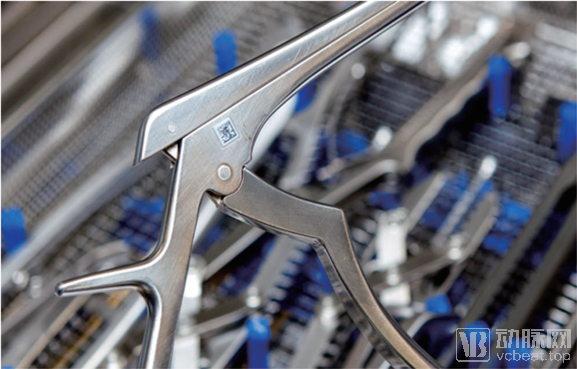
This small RFID tag, when embedded in surgical instruments, serves purposes beyond merely enabling automatic identification and precise recall of these devices. More importantly, it provides support for indirect cost allocation, data analysis, and decision-making analytics, thereby becoming the “infrastructure” for hospitals’ intelligent management of surgical instruments.
Niu Zhenbei stated, “Another major characteristic of reusable medical devices lies in their impact on the operational efficiency and indirect costs associated with surgical and interventional diagnostic and therapeutic procedures throughout the closed-loop circulation process. Therefore, traceability and management of reusable devices, primarily surgical instruments, can help drive workflow optimization in hospitals and optimize indirect costs within DRG surgical groups. Such refinement in management granularity can significantly reduce costs and enhance efficiency. In the context of DRG-based price cap reforms, this holds substantial significance for improving hospital operations and management.”
In fact, the implementation of UDI is closely related to the adoption of DRG-based payment. Under the backdrop of DRG promotion and centralized procurement, hospitals are facing immense pressure to control costs.
Abroad, when DRGs were first implemented, hospitals also went through a phase of strict cost control. Before Germany implemented the DRG payment reform, every medical institution had purchased a large amount of large-scale medical equipment. However, after the implementation of DRG payment, major hospitals have tried to minimize the purchase of large-scale equipment by outsourcing services in order to reduce costs. Some hospitals even outsource logistical services such as laundry rooms.
Against this backdrop, the underlying implication is that in the face of irresistible medical insurance cost containment pressures, extensive management practices will only impose a heavy burden on hospitals.
Niu Zhenbei pointed out, “In the current management of surgical instruments in domestic hospitals, many institutions fail to conduct even basic inventory checks. In well-known large Grade-A tertiary hospitals in China, there are over 100,000 circulating surgical instruments, and each instrument incurs costs for cleaning, disinfection, and maintenance. The extensive and disordered management approach leaves hospitals lacking relevant data, thereby hindering effective oversight. The market for purchasing reusable medical instruments is substantial yet highly unregulated.”
As health insurance authorities intensify cost-containment measures, the previous extensive management model will become unsustainable. The implementation of the Unique Device Identification (UDI) system enables hospitals to reap management dividends through dynamic performance management, reduce capital occupancy, and lower costs while improving efficiency by optimizing spare parts inventories.
From practical application cases, Zhenjiang First People's Hospital has implemented the Langdengjie surgical instrument single-item traceability system. By managing the entire process and key elements of surgical instruments, the system provides robust information support for refined management, hospital infection traceability, sterilization quality traceability, procurement decision support, and cost amortization accounting. This enables targeted management and eliminates safety hazards caused by blind spots in oversight.
Taking the verification of fixed assets for surgical instruments and the planning of maintenance support as an example, hospitals have achieved the minimization of amortization costs for surgical instruments over a five-year period while ensuring and strengthening support for clinical usage needs. This approach has resulted in cost savings of nearly 30% compared to the same period in the past. With socialized support services, the implementation of UDI coding has helped hospitals eliminate spare parts inventories that accounted for 13% of the total volume of surgical instruments, thereby reducing the capital tied up in hospital inventory.
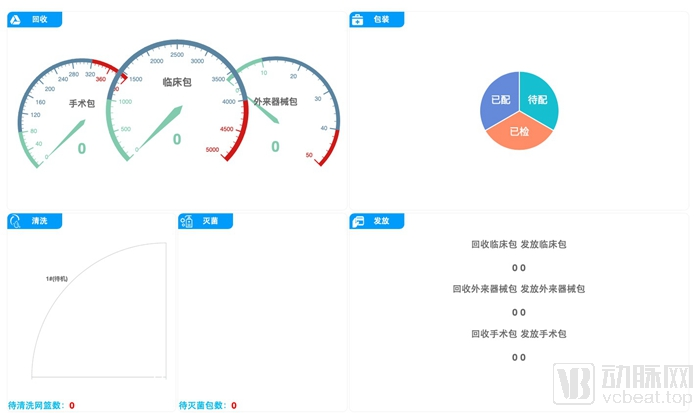
Nanjing Langdengjie Surgical Instrument Management Software Interface
Unique Identifier Management for Surgical InstrumentsFor patients and hospitals, the most tangible benefit lies in reducing the risk of healthcare-associated infections through precise identification and traceability. At the hospital management level, refined granularity facilitates data-driven procurement decisions for medical devices and optimizes resource allocation. Under the trend of DRG-based payment, this approach drives hospitals to transition from extensive to refined management practices.
Yet none of these benefits were the driving force behind Niu Zhenbei’s decision to specialize in the management of reusable medical instruments. Prior to founding Nanjing Langdengjie Technology, Niu worked for many years at a French surgical instrument supplier. This prolonged exposure allowed him to identify opportunities in this market. While surgical instrument management has been maturely applied abroad for many years, it remains largely unaddressed in Chinese hospitals. Niu believes that the greatest pain point in surgical instrument management is data acquisition; only through data can the disconnect between the application end and the production end be bridged.
“There are more than 20,000 types of surgical instruments, and no single manufacturer can provide the full product range; therefore, the surgical instrument supply industry is capital-intensive. However, a key challenge lies in the difficulty of effectively driving innovation at the production end through demand from the clinical frontline. The production side and the clinical frontline are disconnected, resulting in an excessively long industrial chain with each link being highly fragile.”
Niu Zhenbei ultimately discovered that the crux of the issue lay in a lack of data; only by acquiring the most difficult-to-obtain surgical instrument data could the entire process of industrial chain optimization be fully realized.
The horizontal flow of data has driven the rise of centralized electronic medical records and third-party imaging centers. Nanjing Langdengjie aims to refine the granularity of vertical data, enabling hospitals to gain true visibility into the movement of surgical instruments.