

Rongyu Tech's '4772 Nutritional Space' Achieves 93% Cure Rate for Sleep Disorders, Emerging as a Viable Alternative to Sleeping Pills
Kunlun Mountain Tunnel on the Qinghai-Tibet Railway, at an altitude of 4,772 meters, has an oxygen level in winter that is only 40% of that in inland China, with high-altitude sickness posing a constant life-threatening risk.
Here lies the “forbidden zone of life,” yet it is also the highest point where the Chinese People’s Armed Police Force maintains manned outposts.
In 2006, the Golmud-Lhasa section of the Qinghai-Tibet Railway opened to traffic. A unit under the Qinghai Provincial Corps of the Chinese People’s Armed Police Force was ordered to assume guard duties, becoming the only force in the entire military stationed in the dual extreme and harsh conditions of a “no-man’s land” at high altitude.
Under harsh duty conditions, many military personnel have developed severe sleep disorders accompanied by anxiety and depression, with a significantly higher incidence rate than in other high-altitude regions. In the vicious cycle of sleep disorders where physiological factors trigger psychological issues and psychological issues exacerbate physiological symptoms, conventional interventions such as hypnotics, oxygen therapy, and psychotherapy have proven ineffective.
Based on this, in 2007, the State Administration of Foreign Experts Affairs and the Chinese People’s Armed Police Force took the lead in organizing domestic and international research institutes and experts to launch the “Intelligence Introduction Project.” The initiative aimed to create a “microclimate” space, allowing officers and soldiers to undergo daily one- to two-hour immersive climate transitions, thereby improving their physiological and psychological states, alleviating sleep disorders, and reducing anxiety and depressive symptoms.
Wang Hui, then Director of the Publicity Department of the Qinghai Provincial Corps of the Chinese People’s Armed Police Force, was involved throughout the research and development process and large-sample trials of “4772.” “Comparative analysis revealed that troops subjected to ‘microclimate’ environmental equipment interventions demonstrated significantly superior outcomes in terms of sleep disorders, incidence rates of depression and anxiety, and overall physical and mental health indicators among officers and soldiers.”
After 2013, the research team began to organize data with the aim of applying these findings to all high-altitude military units. In 2014, the team simulated environments with similar factors in the Xining and Lanzhou regions and conducted testing and evaluation on 200 volunteers with insomnia. The results were consistent with those of Protocol 4772, verifying its applicability across different climatic regions. “This protocol can also be applied to the treatment of sleep disorders and depression in the general population.”
In 2016, Wang Hui founded Rongyu Technology in the Chengdu High-Tech Zone after his retirement. Building on nearly a decade of research into the mechanisms by which virtual climate interventions affect sleep, the company continued to explore applications of “microclimate” technology for sleep disorders and depression. A year later, a branch office was established in Bao’an District, Shenzhen.
Wang Hui stated that research and applications in this field are already at the forefront abroad. For instance, the United Kingdom has replaced pharmacological treatments for depression and anxiety with climatotherapy; in Japan, 45% of women have been cured of skin inflammation through this approach; and Germany has even included it in its national health insurance coverage. In contrast, research into the mechanisms of climatotherapy is still in its infancy in China.
“By 2018, the market size of China’s sleep industry reached RMB 300 billion, maintaining an annual growth rate of 8%,” said Wang Hui. Approximately 300 million people in China suffer from sleep disorders, among whom 75 million require long-term intervention with medications or medical devices. In first- and second-tier cities, the average annual per capita expenditure on sleep improvement by individuals with insomnia exceeded RMB 4,500. “The entire sleep industry exhibits the characteristics of a large market, a high number of patients, and substantial spending.”
In January 2019, Hainan Province released the “Hainan Province Health Industry Development Plan (2019–2025),” which proposed supporting major engineering projects such as research into the mechanisms of climatotherapy. With policy support, the climatotherapy market holds significant promise.
“Years of research have shown that we should not limit sleep issues to the mere ability to fall asleep; instead, we should place greater emphasis on the essential significance of sleep, such as its physiological functions and its role in chronic disease prevention. Comparing domestic and international approaches to sleep treatment, China’s sleep economy remains largely focused on monitoring, with solutions primarily centered on helping people ‘fall asleep,’” said Wang Hui.
Wang Hui also noted that the medical community has currently identified as many as 89 diseases associated with sleep disorders. “Methods such as the use of hypnotics may induce sleep, but they do not prevent or treat these underlying conditions; they address the symptoms rather than the root cause.”
The research team at Chengdu Rongyu Health Technology Co., Ltd. discovered that several biomarkers in the serum of patients with sleep disorders or depression were elevated compared to those in healthy individuals. Following “microclimate” intervention, these serum markers decreased, and the physiological manifestations of sleep disorders and depression subsequently resolved.
This is the therapeutic principle of 4772 Nutritional Space: it reduces users’ stress responses psychologically and exerts broad-spectrum anti-inflammatory effects physiologically, thereby reversing chronic inflammatory markers in the serum, alleviating neurotransmitter interference, lowering sympathetic nervous system excitability, and ultimately eliminating insomnia symptoms.
Currently, Rongyu Technology holds five invention patents related to climate therapy, along with 28 other utility model and design patents. It was the first in China to formulate and release enterprise standards for appropriate equipment in climate therapy. Moreover, it is the only company in China that has obtained clinical data for climate therapy equipment and submitted applications for National Medical Products Administration (NMPA) certification for the treatment of sleep disorders and depression, thereby establishing a robust industry barrier.
“4772 Nutrition Space” is the core product of Rongyu Technology, comprising a nutrition chamber (service platform) and a carrier (personalized regimen). The chamber occupies an area of one square meter and enables the regulation and sealed release of gas circulation, air pressure, temperature, humidity, oxygen concentration, auditory factors, and visual factors.
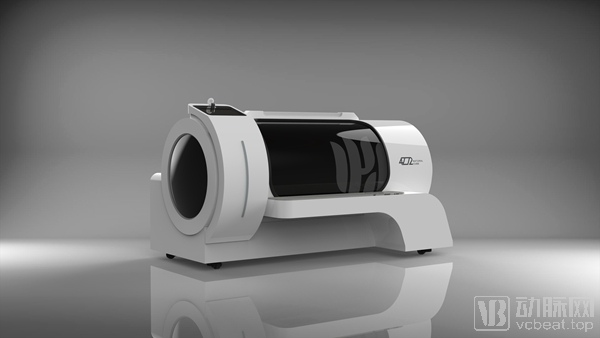
4772 Nutritional Space Capsule (Image provided by the interviewee)
The client conducts a sleep disorder screening for the user based on medical criteria. Based on the screening results, the type, stage, and characteristics of the user’s sleep disorder are determined to personalize the matching of a combination of 11 factor data sets, which are then stored on a carrier. The user inserts the carrier into the chamber to activate it and initiate therapeutic services. Once the user enters the chamber, the system adjusts oxygen concentration, air pressure, temperature, and humidity according to the data on the carrier, while creating a stress-relieving environment through aromatherapy, music therapy, and other modalities.
Wang Hui told VCBeat that Rongyu Health Technology is committed to maintaining “transparent engagement” with users through verifiable and visualized Pittsburgh Sleep Quality Index (PSQI) data. Monitoring systems are integrated throughout the early, middle, and late stages of treatment, providing an intuitive reflection of users’ baseline sleep status, mid-treatment improvements, and final therapeutic outcomes. To date, Rongyu Health Technology has served 6,000 patient visits, achieving a 93% success rate with its virtual climate therapy.
“The exceptionally high cure rate achieved by the ‘4772 Nutritional Space’ is attributable to the R&D team’s relentless pursuit of perfection,” said Wang Hui. During the research and development process, the greatest challenge lay in optimizing the combination of 11 climatic factors, including air pressure, oxygen concentration, temperature, and humidity. The precision of each indicator was controlled to within 1%, with eight of the eleven climatic factors requiring accuracy to a decimal place. This imposed stringent demands on R&D design, material selection, and manufacturing processes. “Moreover, monitoring every 100 patients with the same condition yields only an approximately 0.1% improvement in the precision of data application.”
Leveraging Zhejiang University’s core hardware R&D capabilities and Xiangya Hospital’s clinical monitoring and medical guidance, since 2016, Chengdu Rongyu Health Technology Co., Ltd. has simulated and recreated the virtual climate conditions of “4772” in cities including Beijing, Chengdu, and Shenzhen. The company has recruited over 3,000 volunteers and conducted more than 6,000 test evaluations, achieving an effectiveness rate exceeding 90%, thereby validating the value of the “4772” innovative achievements.
In October 2018, Rongyu Technology deployed five prototype units in Shenzhen's OCT (Overseas Chinese Town) area for semi-open testing. The devices served over 2,000 customers, with only two invalid assessments recorded. Equipment stability and efficacy met expected performance standards.
In May, the mature equipment from the 4772 Nutrition Space rolled off the production line, and the company has already received 14 invitations to deploy its devices in first- and second-tier cities. Wang Hui stated that Rongyu Technology expects to launch approximately 1,500 units into the market in the short term, with a goal of deploying 10,000 devices across first- and second-tier cities within three years. In the same month, a vice president of Audi’s global headquarters led an 11-member delegation on a special visit to Shenzhen for business negotiations.
Going forward, Rongyu Technology will also engage in industry-academia-research-training collaborations with institutions such as Zhejiang University; establish a Research Center for Climate Mechanism Therapy to investigate human physiological changes under different climatic conditions at the nuclear gene level, and carry out work on exercise-based climate therapy as well as the prevention and intervention of specific diseases. In addition, Rongyu Technology has signed an expansion cooperation agreement with Audi Germany.
To strengthen product R&D and marketing efforts, Chengdu Rongyu Health Technology Co., Ltd. is launching a new round of financing. Interested institutions please contact the financing assistant Xiao Yun: DongMai_Investent.