

Ascentage Pharma Soars Over 50% in Dark Pool Trading Ahead of Hong Kong Debut as First Homegrown Small-Molecule Innovative Drug Company
On October 28, 2019, VCBeat learned that Ascentage Pharma, an innovative drug R&D company, had listed on the Hong Kong Stock Exchange. Ascentage Pharma issued 12.1809 million shares in this offering, with a final pricing of HK$34.2 per share, at the high end of the indicative price range. It is understood that the Hong Kong public offering accounted for 10% of the total, while the international offering accounted for 90%, with an additional 15% over-allotment option.
In terms of issuance size, this is the smallest IPO since the Hong Kong Stock Exchange’s reforms for its biotechnology sector, yet it may set a new record for the highest oversubscription ratio in 2019. Earlier reports indicated that Ascentage Pharma had secured over 700 times oversubscription and introduced China Biologic Pharmaceuticals, the largest pharmaceutical blue-chip stock by market capitalization on the Hong Kong market, as a cornerstone investor with a US$20 million subscription.
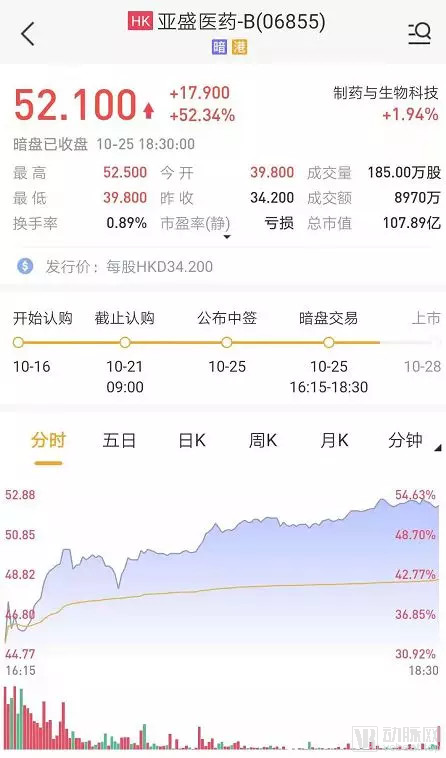
Ascentage Pharma’s Closing Price in the Grey Market on October 25, Image from Xueqiu
On October 25, Ascentage Pharma opened at HK$39.8 per share in the grey market, above its issue price, and continued to rise, ultimately closing at HK$52.1 per share, representing a gain of 52.34%. This has heightened expectations for the company’s performance on the Hong Kong Stock Exchange today.
Ascentage Pharma is a China-based, globally oriented clinical-stage biopharmaceutical company dedicated to developing innovative drugs in therapeutic areas including oncology, hepatitis B, and age-related diseases. Its predecessor was the R&D center established by Ascenta Therapeutics in Shanghai.
During their time at Georgetown University, Dr. Dajun Yang’s team discovered a novel small-molecule anticancer agent with a new mechanism of action, namely AT-101. In 2003, the team’s patent attracted investor interest, leading to the establishment of Ascenta Therapeutics, which raised approximately $90 million in total funding. In 2009, due to clinical trials failing to meet endpoints and the outbreak of the global financial crisis, Ascenta Therapeutics encountered obstacles in its U.S. initial public offering, and its Shanghai R&D center faced closure. Three experts—Dr. Dajun Yang, Dr. Shaomeng Wang, and Dr. Ming Guo—persuaded the company to transfer the Shanghai R&D center to them at no cost, and Ascentage Pharma was founded that year.
Ascentage Pharma has developed multiple core technologies in the field of drug design and optimization based on targeted protein structures. The company holds more than 40 international invention patents and has successfully developed nearly 10 original small-molecule targeted anti-tumor drugs. All drugs under development are original Class 1.1 new drugs with novel chemical structures.
In 2009, coinciding with the outbreak of the global financial crisis and an immature investment environment for innovative drugs in China, the company experienced significant instability during its early stages. In February 2010, Ascentage Pharma secured a $3 million financing round from 3SBio. Yang Dajun described this funding as “timely assistance in dire need”; prior to receiving this capital, the company had even resorted to a situation where “founders went without salaries and employees received only half pay.”
Despite the challenging circumstances, Ascentage Pharma gradually emerged from its difficulties by leveraging its robust technology and experienced team. In August 2015, the company secured RMB 96 million in Series A financing; in December 2016, it raised RMB 500 million in Series B financing; and in July 2018, it obtained RMB 1 billion in Series C financing. Over the course of ten years, Ascentage Pharma evolved from a struggling startup into a representative enterprise of Chinese original innovative drugs, with a valuation reaching RMB 5.5 billion.
One month after completing its Series C financing, Ascentage Pharma formally submitted its listing application to the Hong Kong Stock Exchange, presenting its track record to the public with eight products in clinical development and 28 ongoing clinical trials.
Ascentage Pharma’s core strategic focus is the research and development of innovative oncology therapeutics. However, unlike most companies that have flocked to develop immune checkpoint inhibitors, Ascentage primarily concentrates on the apoptosis pathway.
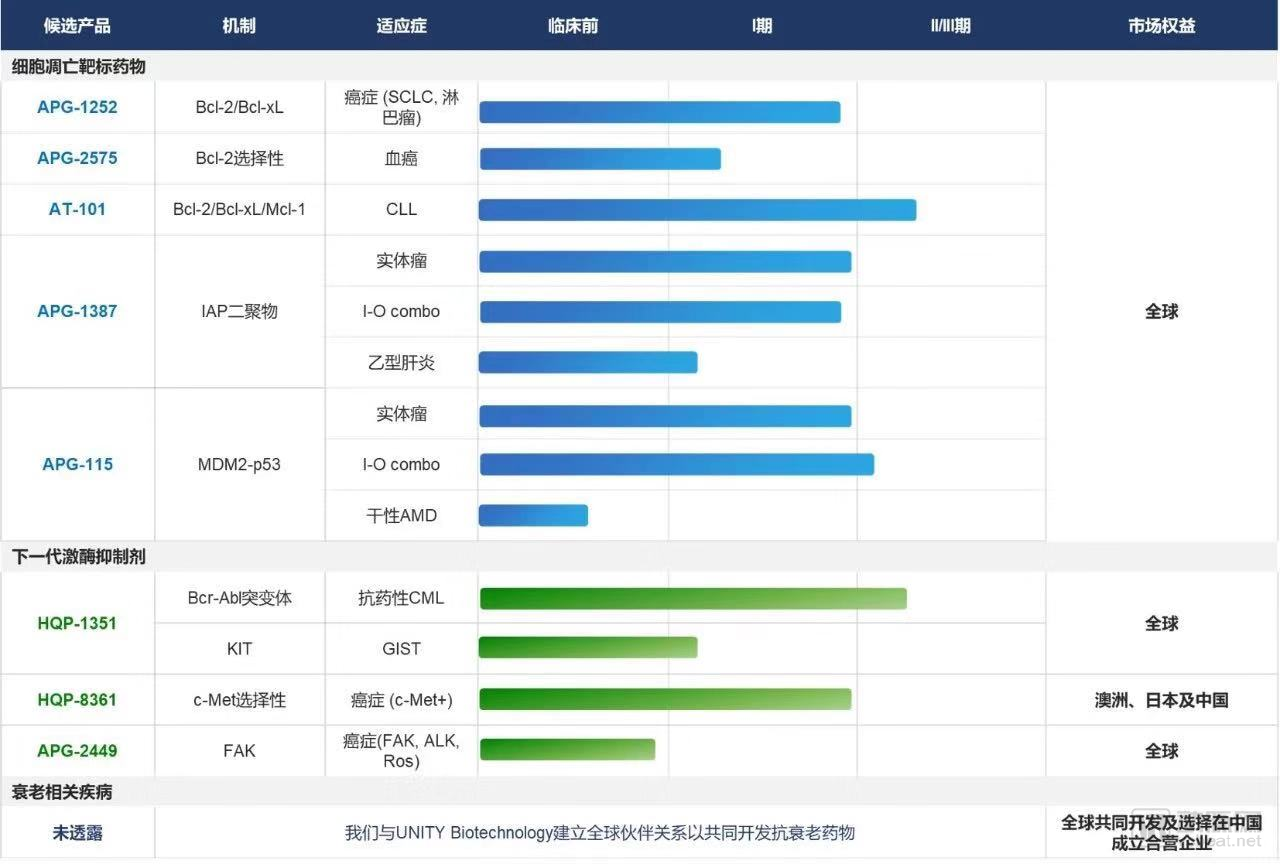
Image from the official website of Ascentage Pharma
Apoptosis is the process of programmed cell death, during which a series of specific biochemical reactions operating in a controlled sequence ultimately lead to cellular demise. The function of apoptosis helps prevent cancer development; for instance, when skin cells are damaged by ultraviolet radiation, apoptosis is typically triggered. However, if apoptosis fails to occur, these damaged cells can survive and evolve into cancer cells. Meanwhile, cancer cells are capable of evading apoptosis and continuously proliferating under abnormal conditions, subsequently metastasizing via the bloodstream or lymphatic system to invade new tissues, thereby driving tumor metastasis and progression. Experts have observed disruptions in normal apoptotic processes in various malignant tumors, such as small cell lung cancer (SCLC) and chronic lymphocytic leukemia (CLL).
Studies have found that multiple intracellular protein–protein interactions (PPIs) play a key role in regulating apoptosis. Therefore, selectively targeting specific PPIs within apoptotic pathways represents an innovative therapeutic approach for cancer and other diseases arising from dysregulated apoptosis, and many apoptosis-inducing drugs have entered the R&D pipelines of pharmaceutical companies. Multinational pharmaceutical giants such as AbbVie, Roche, and Novartis have also established apoptosis-targeted drug portfolios, among which AbbVie’s agent received approval from the U.S. Food and Drug Administration (FDA) in April 2016.
The Bcl-2 protein family, IAPs, and the MDM2-p53 axis are currently three commonly targeted pathways in apoptosis drug pipelines. Apart from venetoclax, a small-molecule PPI inhibitor for CLL developed by AbbVie, no other products have been marketed globally to date.
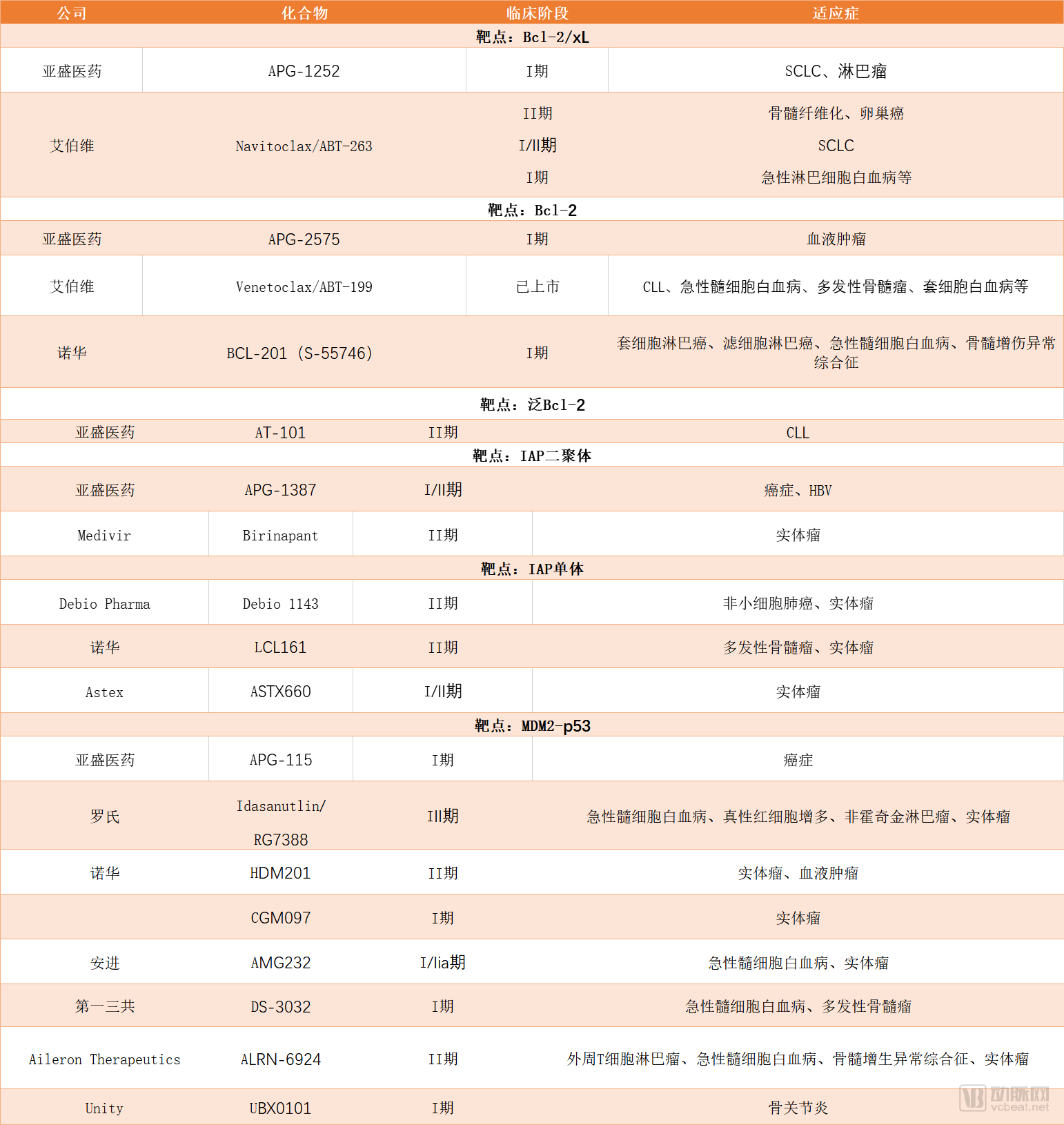
List of Apoptosis Pathway Drugs Under Development and Marketed Globally
Public information indicates that Ascentage Pharma is currently the only company actively advancing clinical programs targeting all three known key regulators of apoptosis. Specifically, the company’s current pipeline includes three clinical-stage compounds targeting Bcl-2 family proteins: APG-1252 (for small cell lung cancer [SCLC], other solid tumors, and lymphomas; currently in Phase I), APG-2575 (for B-cell malignancies; currently in Phase I), and AT-101 (for chronic lymphocytic leukemia [CLL]; currently in Phase II). In addition, two other apoptosis-targeting compounds are in Phase I or Phase II clinical trials: APG-1387 (a pan-IAP inhibitor) and APG-115 (an MDM2-p53 inhibitor). Beyond oncology, Ascentage Pharma is also evaluating a Phase I clinical trial of APG-115 (MDM2-p53 inhibitor) for the treatment of hepatitis B virus (HBV) infection in China.
Furthermore, Ascentage Pharma has successively entered into strategic cooperation agreements with two pharmaceutical companies possessing PD-1 immune checkpoint inhibitors, Innovent Biologics and Junshi Biosciences, to jointly explore the synergistic effects of combining apoptosis protein inhibitors with PD-1 immune checkpoint inhibitors in the treatment of solid tumors and hematologic malignancies.
In addition, Ascentage Pharma is also committed to the research and development of next-generation TKI drugs. TKIs are a class of clinically validated and approved targeted therapies that inhibit tyrosine kinases, which play an indispensable role in regulating cellular functions. When dysregulated, these kinases can promote the development and progression of diseases, including cancer.
Currently, the most renowned TKI inhibitor is the “miracle drug” Gleevec, a highly effective medication for treating chronic myeloid leukemia (CML) caused by Philadelphia chromosome mutations, which has indirectly transformed CML into a manageable chronic disease. However, resistance to Gleevec has been a persistent issue during its use; approximately 20%–30% of patients in the chronic phase experience treatment failure after long-term therapy. Among these cases, a small subset of patients exhibits primary insensitivity to the drug, while the majority develop acquired resistance due to selective pressure exerted by prolonged pharmacological treatment.
HQP1351 is the most important candidate drug among the TKI drugs under development by Ascentage Pharma. Unlike Gleevec, which belongs to first-generation TKI inhibitors, this product is a third-generation BCR-ABL inhibitor that targets different types of BCR-ABL mutants, addressing the issue of resistance to first-generation TKI inhibitors. Currently, HQP1351 is undergoing pivotal Phase II clinical trials in China for the treatment of patients with TKI-resistant chronic myeloid leukemia (CML). Additionally, since HQP1351 is also an effective inhibitor of the KIT receptor tyrosine kinase, colleagues at Ascentage Pharma are researching its use in treating gastrointestinal stromal tumors (GIST) that do not respond to current therapies.
In November 2018, Ascentage Pharma presented the Phase I clinical data of HQP1351 in an oral presentation at the American Society of Hematology (ASH) Annual Meeting, the most authoritative conference in the field of hematologic oncology, drawing significant attention from the industry. Preliminary data indicated that HQP1351 was well-tolerated and demonstrated significant efficacy.
Ascentage Pharma has also made frequent appearances at major international academic conferences. At the 2019 ASCO Annual Meeting, Ascentage Pharma was successfully included in the global Top 20 list of “Standout Companies at ASCO 2019,” thanks to the latest clinical trial data from its two investigational apoptosis-targeting products, APG-115 and APG-1387. It was the only Chinese innovative drug company focused on small-molecule drug development on the list.
As no products have yet entered the commercialization stage, Ascentage Pharma has not generated any revenue from drug sales. According to its prospectus, the company has been incurring annual losses. In 2016 and 2017, its net losses amounted to RMB 107 million and RMB 118 million, respectively (same unit applies hereinafter). Drug development is characterized by long cycles and substantial investment; therefore, early-stage losses are common for biopharmaceutical companies. The prospectus indicates that Ascentage Pharma’s R&D expenditure over the past three years totaled RMB 471 million, with R&D expenses of RMB 103 million in 2016 and RMB 119 million in 2017, accounting for 95.2% and 100.3% of the company’s net losses, respectively.
As of June 2019, Ascentage Pharma held cash and cash equivalents totaling RMB 761 million. The proceeds from this financing will be primarily allocated to ongoing clinical trials, with 42% designated for research and development and the commercialization of the core product HQP1351; 13% for continuing and planned clinical trials of APG-1252; 19% for continuing and planned clinical trials of APG-2575; 19% for continuing and planned clinical trials of APG-115; 6% for continuing and planned clinical trials of other clinical programs involving APG-1387 and APG-2449; and the remaining 1% for working capital and general corporate purposes.
With 28 ongoing clinical trials, most of which are being conducted globally in parallel, the company’s substantial R&D expenditures make it difficult to achieve profitability in the short term. However, in the biotechnology sector, a company’s value is never determined solely by its current profitability; the market places greater emphasis on its R&D capabilities and the future market potential of its products. The NASDAQ market is home to numerous biotech companies that still have products in the development stage and maintain small teams, yet command significant market valuations.
More than a year since the Hong Kong Stock Exchange opened its doors to biotech listings, despite the mixed price performance of mainland Chinese pharmaceutical companies in the early stages, firms such as BeiGene, Innovent Biologics, CStone Pharmaceuticals, and Junshi Biosciences have achieved substantial market capitalizations over time.
Ascentage Pharma’s founding team is among the earliest internationally to enter the field of developing small-molecule inhibitors targeting novel regulators of the dual pathways of apoptosis and autophagy. Dr. Dajun Yang previously served as an Associate Professor and Senior Investigator at the Lombardi Comprehensive Cancer Center, Georgetown University, and holds adjunct professor and doctoral supervisor positions at the Sun Yat-sen University Cancer Center. He is an author or co-author of 92 publications and holds 14 invention patents. Dr. Shaomeng Wang is a tenured professor at the University of Michigan and serves as Co-Director of the Experimental Therapeutics Program at the University of Michigan Comprehensive Cancer Center. Dr. Ming Guo has held various technical and managerial positions at Pfizer and previously served as an Independent Non-Executive Director at Porton Pharma Solutions Ltd.
In January 2019, the Company also entered into a five-year strategic collaboration with The University of Texas MD Anderson Cancer Center, a world-leading comprehensive cancer treatment institution. Led personally by Dr. Hagop Kantarjian, Chair of the Department of Leukemia at MD Anderson Cancer Center, this partnership will conduct joint research in oncology to advance the clinical development of five apoptosis-targeting and kinase-targeting drugs, including APG-1252. Furthermore, Ascentage Pharma established a Clinical Advisory Committee in January 2018 to guide and accelerate the clinical development of its proprietary apoptosis-targeting therapies and next-generation tyrosine kinase inhibitors. The Clinical Advisory Committee is chaired by Dr. Allen Lichter, former CEO of the American Society of Clinical Oncology (ASCO). Other members include several internationally recognized clinical oncology experts, such as Dr. Shaomeng Wang, Co-founder and Chief Scientific Officer of Ascentage Pharma; Professor Paul A. Bunn, Jr. of the University of Colorado; Professor James O. Armitage of the University of Nebraska; and Professor Arul Chinnaiyan of the University of Michigan. Both the team composition and product pipeline demonstrate the Company’s robust R&D capabilities.
Ascentage Pharma’s current pipeline is primarily focused on oncology, hepatitis B (HBV), and aging-related diseases, with the oncology market valued in the hundreds of billions of dollars. According to Frost & Sullivan, there were 18.1 million new cancer cases globally in 2018, equivalent to an average of 49,500 people diagnosed with cancer each day. Based on a compound annual growth rate (CAGR) of 2.4%, the number of new cancer cases worldwide is projected to reach 24.1 million by 2030. Correspondingly, the global anti-cancer drug market is expected to grow from $128.1 billion in 2018 to $390.4 billion in 2030, a growth trajectory primarily driven by innovative targeted therapies.
In China, the number of new cancer cases reached 4.3 million in 2018, accounting for approximately 23.7% of the global total. Research by Frost & Sullivan indicates that China’s oncology drug market lags behind other major industrialized nations due to the limited availability of new therapies. With increasing regulatory support for domestic anti-tumor drug development and the introduction of imported foreign drugs, China’s oncology drug market is projected to grow from $23.8 billion in 2018 to $99.8 billion by 2030.
In addition, Ascentage Pharma’s pipeline includes products targeting hepatitis B virus (HBV) and age-related diseases, both of which represent large and rapidly growing global pharmaceutical markets with significant unmet medical needs. HBV is an epidemic with particular prevalence in China. According to Frost & Sullivan, more than 260 million people worldwide were infected with HBV in 2018, approximately one-third of whom resided in China. The global market for HBV therapeutics was valued at approximately USD 3.5 billion in 2018. Based on a compound annual growth rate (CAGR) of 4.7%, this market is projected to reach USD 4.4 billion by 2023 and further expand to USD 5.9 billion by 2030. Similarly, the market for age-related diseases, such as dry age-related macular degeneration (dry AMD), presents substantial unmet therapeutic needs. To date, there are no effective treatments available globally for dry AMD. In 2018, the number of patients with dry AMD worldwide was approximately 179.5 million.
Among the eight products currently in clinical trials, HQP1351 is the one with the most advanced clinical progress. This product, known as the “upgraded version of Gleevec,” has now entered pivotal Phase II registration trials and is expected to file for new drug marketing approval in 2020.
References:
https://finance.qq.com/a/20191017/002412.htm
https://vcbeat.top/OTIxYjI4YWM2NzkxNDhjZDU3YTFhZjA2ZDk5ZjQxOTI=
https://vcbeat.top/MGY2MzZlYjRkZjY0ODg3NmFhNDE1YjgwMjdlZjJmOWM=
https://vcbeat.top/Mzc2ODY3NWU1YjhmYWQ2ZWQ0ZWJjNDU4MWVjYTkyMDU=
https://xueqiu.com/9573340019/134648123
Ascentage Pharma Prospectus