

Israeli Innovations in Ophthalmology: 12 Breakthrough Technologies Addressing Four Major Eye Conditions
The Human Eye’s Structure Is Exceptionally Complex. Within this intricate system, even the slightest structural anomaly can arise and ultimately impair normal vision.
Although much remains to be studied regarding the prevention and restoration of vision impairment, Israeli research institutions and innovative enterprises are leveraging technological innovations to address issues related to eye damage, disease, and loss of function.
Media outlets have summarized 12 revolutionary technologies related to ophthalmic treatment and diagnosis, launched by Israeli innovative enterprises across four fields: vision correction, corneal diseases, retinal diseases, and strabismus and amblyopia. This article was compiled by VCBeat (WeChat ID: vcbeat).
Vision Correction
Blurred vision caused by refractive errors (hyperopia, myopia, and astigmatism) is the most common correctable vision problem. Millions of people wear glasses or opt for laser surgery to address it. In Israel, other alternatives are being proposed.
Nano eye drops can correct any of the three aforementioned refractive errors. The entire procedure consists of three steps: first, using a smartphone to measure the human eye; second, imprinting a personalized optical pattern onto the cornea with a proprietary laser device based on the measurement results; and third, applying synthetic biocompatible protein-based nano eye drops to activate the imprinted optical pattern, thereby altering the path of light through the cornea to achieve vision correction.
Nano eye drops developed by the Institute for Nanotechnology and Advanced Materials at Bar-Ilan University have demonstrated the ability to correct 3.00 diopters of hyperopia and 2.50 diopters of myopia in preclinical animal studies. Dr. David Smadja, head of the Ophthalmology Research and Innovation Department at Shaare Zedek Medical Center in Jerusalem and a co-inventor, stated that two additional years of research and development are required before clinical trials can commence.
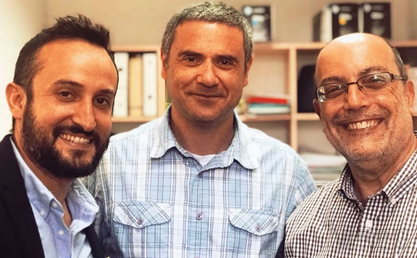
From left to right: Dr. David Smadja, developer of nano eye drops; Professor Zeev Zalevsky; and Professor Jean-Paul Moshe Lellouche.
Orasis Pharmaceuticals, based in Herzliya, has recently launched a Phase IIb clinical trial in the United States for its CSF-1 eye drops. This study aims to enable millions of individuals aged 45 and older with presbyopia to replace reading glasses with daily eye drop use. Presbyopia is a form of farsightedness caused by the loss of natural flexibility in the eye’s lens.
DeepOptics, based in Petah Tikva, is developing dynamic electronic multifocal glasses that utilize high-tech lenses capable of detecting viewing distance and automatically adjusting accordingly. In addition to vision correction, the company is collaborating with leaders in the augmented reality (AR) sector to integrate depth-tunable optical lenses into next-generation AR headsets.
Corneal Diseases
According to the World Health Organization, corneal diseases are the second leading cause of blindness worldwide, surpassed only by cataracts. There are approximately 2 million new cases of corneal diseases annually, affecting up to 30 million people, and corneal transplantation is the most common type of transplant performed globally.
EyeYon, based in Ness Ziona, has obtained CE and FDA approvals for its Hyper-CL therapeutic contact lens, indicated for the treatment of corneal edema and other corneal disorders, including those arising after cataract extraction and corneal surgery. This removable contact lens, when used in conjunction with hypertonic eye drops, reduces corneal thickness more effectively than other therapeutic contact lenses and improves visual acuity by more than threefold.
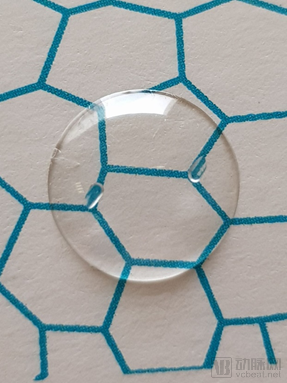
EndoArt is a revolutionary implant that will eliminate the need for human corneal implants.
EyeYon is also developing a polymeric implant called EndoArt, which can treat corneal edema without the need for human corneal transplantation. Currently, only one donor cornea is available for every 70 patients in need of a transplant. EndoArt has been implanted in two patients in Israel and is currently undergoing clinical trials at four centers in Israel, Spain, India, and Germany. “This will be a game-changer,” predicts Dr. Ofer Daphna, co-founder and inventor at EyeYon.
CorNeat Vision, based in Ra’anana, is developing CorNeat KPro, an artificial cornea that can be transplanted via a simple 30-minute surgical procedure. Dr. Gilad Litvin, the ophthalmologist who invented the implant, stated that following successful preclinical trials in rabbits, clinical trials are scheduled to commence in October at centers in Israel, France, the United States, and Canada, with trials in China beginning approximately six months later.
Retinal Diseases
The retina is the inner layer of the eye that captures the images we see and transmits them to the brain via the optic nerve. Retinal diseases, such as diabetic retinopathy, glaucoma, and age-related macular degeneration (AMD), are leading causes of blindness.
The FDA-approved ForeseeHome monitoring device, provided by Notal Vision, enables early detection of wet age-related macular degeneration (AMD) in patients with moderate dry AMD. Dry AMD can progress rapidly to wet AMD, and without timely diagnosis and treatment, it can lead to severe vision loss.
In the United States, ForeseeHome is available by prescription. It is covered by Medicare and most private insurance plans, and requires only three minutes per eye. Monitoring results are automatically transmitted to the Notal Vision Data Monitoring Center. When significant changes from the baseline are detected, an alert is sent to the physician’s office. The company recently received FDA approval for its Home OCT system, an AI-powered cloud-based optical platform designed for remote monitoring of retinal fluid changes in patients diagnosed with wet age-related macular degeneration (AMD).
Notal Vision is headquartered in Virginia, was founded in Israel, and maintains R&D, engineering, and manufacturing facilities in Tel Aviv.
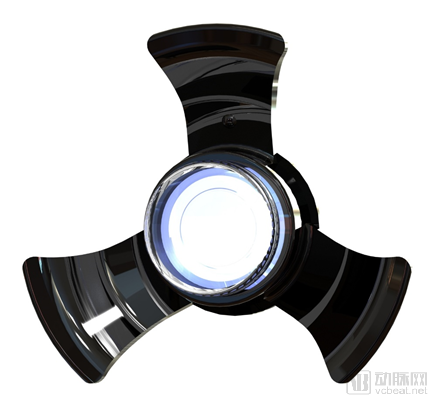
The implantable miniature telescope designed by VisionCare for patients with advanced AMD was invented by Dr. Isaac Lipshitz.
The implantable miniature telescope developed in Israel is VisionCare’s device for treating patients with end-stage age-related macular degeneration (AMD) aged 55 and older in Europe or 65 and older in the United States. Headquartered in California, VisionCare conducts most of its operations in Petah Tikva. The company has also obtained CE marking for a new type of silicone telescopic lens that enables smaller incisions and fewer sutures during surgery, as well as a novel injector system designed to simplify the surgical procedure.
This implant is the only surgical device for treating advanced macular degeneration that is covered by insurance and approved by the U.S. FDA. It has also been approved in Europe, Australia, Canada, Israel, and New Zealand.
Currently, in the United States and Europe, VisionCare products are indicated only for patients who have not yet undergone intraocular lens (IOL) implantation for cataract treatment. Since many patients with advanced age-related macular degeneration (AMD) have already received cataract surgery, the company is evaluating the safety and efficacy of exchanging previously implanted IOLs for telescope implants. This could increase the number of patients eligible for outpatient surgery.
AEye Health, with offices in Tel Aviv and New York, has invented a home-based retinal diagnostic screening system that leverages artificial intelligence, computer vision, and a database of 100,000 images of retinas and their internal structures.
As clinical trials are underway at several clinics and two major U.S. hospitals, AEye Health aims to become the first FDA-approved home-based retinal screening solution by 2020. Retinal imaging is a simple method capable of detecting a variety of diseases; however, in the United States, fewer than 25% of high-risk individuals undergo annual medical examinations, as such screenings are often impractical and costly.
Herzliya-based Nano Retina is developing an implantable chip to restore vision lost due to degenerative retinal diseases. The chip replaces the function of damaged photoreceptor cells and generates the electrical stimulation required to activate the remaining healthy retinal cells. Stimulation parameters can be calibrated and optimized postoperatively according to each patient’s individual needs. A pair of wireless, rechargeable glasses will power the Nano Retina implant, communicate with it, and allow patients to fine-tune different light settings with the press of a button.
BioTime, a California-based company, and its Jerusalem-based subsidiary, Cell Cure Neurosciences, recently received a $2.5 million grant from the Israel Innovation Authority for the OpRegen project. Its injectable retinal pigment epithelium (RPE) transplant therapy is currently undergoing Phase I/IIa clinical trials in Israel and the United States. OpRegen, developed for the treatment of dry age-related macular degeneration (AMD), has been granted Fast Track designation by the U.S. Food and Drug Administration (FDA). Its development has also been supported by the California Institute for Regenerative Medicine and the UK Cancer Research Institute.
Strabismus and Amblyopia
Nearly 3% of children suffer from amblyopia, the leading cause of vision loss in children. Although this condition is treatable, inaccurate diagnosis and outdated treatment methods often lead to vision deterioration.

CureSight treats amblyopia by tracking children's eye movements and providing corrective feedback as they watch animated short films.
Headquartered in Airport City, NovaSight aims to prevent childhood vision loss by integrating artificial intelligence and eye-tracking technology into its products. The company’s EyeSwift vision assessment system and CureSight amblyopia treatment system have received both CE marking and FDA clearance. NovaSight collaborated with a major eye care company to develop the EyeSwift system, with sales commencing in the second quarter of 2019.
Liran Adlin, Marketing Manager at NovaSight, stated: “Traditional amblyopia treatment involves wearing an eye patch. This can cause significant embarrassment and discomfort for children, leading to a 40% non-compliance rate and suboptimal outcomes.”
“With our CureSight device, treatment can be administered while children watch their favorite movies or TV shows at home, utilizing sophisticated real-time 3D image processing algorithms. The system monitors the patient’s treatment progress in real time and provides feedback to caregivers via telemedicine. Furthermore, CureSight leverages artificial intelligence and big data analytics to deliver personalized therapy tailored to the patient’s disease progression.”
Adlin added that a clinical study conducted at Sheba Medical Center showed significant improvements in visual acuity and stereoacuity in 20 children after 12 weeks of training, with 95% of the children meeting the criteria.
Neuvrion’s Medisim is striving to secure FDA approval for binocular video goggles designed to treat amblyopia in children. These binocular video goggles can convert any digital content—movies, cartoons, games, music videos, and TV shows—into engaging therapeutic modes by presenting distinct, independent images to each eye. The images displayed to the amblyopic eye are enhanced to stimulate the brain and improve its visual function.
A prototype test conducted by Dr. Chaim Stolovitch, Director of the Department of Pediatric Ophthalmology and Strabismus at Tel Aviv Medical Center, found that the goggles were more effective than eye patches or eye drops. The development of the final version of BinoVision is underway at the Rambam Health Care Campus in Haifa.

Summary of 12 Revolutionary Research Advances in Eye Health
Translation: Yan Ying
Source: https://www.israel21c.org/12-revolutionary-advances-for-your-eye-health/