

DXY Talent Files IPO Prospectus: Empowering Healthcare Institutions to Win the War for Talent with 650,000 Job Listings and 2.7 Million Resumes
Talent plays a critically important role in healthcare services. In recent years, with the development of the healthcare industry and the influx of social capital, the mobility of medical professionals has become increasingly active, and it is common for healthcare institutions to offer attractive packages to “poach” talent.
How to Better Attract and Retain Talent? This is a Challenge Facing Many Healthcare Institutions. On October 20, at the Heilongjiang Grand Health Talent Development Forum hosted by the Heilongjiang Health Industry Association and DXY Talent, numerous hospital administrators and healthcare human resources managers explored this issue.
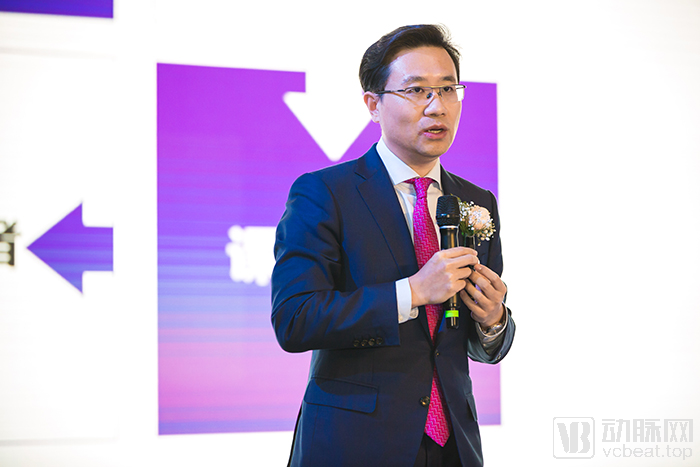
Li Tiantian, Founder and Chairman of DXY
As a professional healthcare human resources service platform under DXY, DXY Talent has spent 12 years evolving alongside the industry, providing specialized tools and channels to maximize the match between healthcare professionals and medical institutions. During the forum, VCBeat (WeChat ID: vcbeat) conducted an exclusive interview with Li Tiantian, founder and chairman of DXY, to explore how DXY Talent helps medical institutions address their challenges and gain a competitive edge in the war for talent.
12 years ago, DXY Talent went online. Its inception seemed somewhat serendipitous—the founding team accidentally discovered in the backend data that the most frequently searched keyword was “recruitment.” At that time, the concept of “big data” had not yet gained widespread popularity, but the team reasoned that where there are searches, there must be demand. Consequently, they decided to develop products and services focused on talent recruitment.
Over the past 12 years, DXY Talent has promptly identified industry shifts, continuously adjusting and refining its product portfolio to align with these changes. According to Li Tiantian, this adaptability is primarily reflected in three aspects:
First, there has been a shift in the profile of demanders. In the past, it was primarily private healthcare institutions that had needs for talent recruitment or brand promotion. In recent years, public healthcare institutions have shown increasingly strong demand for recruiting top-tier talent. Currently, among the healthcare institutions served by Dingxiang Talent, public and private entities each account for half.
Second, there is a shift in the geographic distribution of demand. Second-tier cities and economically developed third-tier cities are increasingly seeking high-caliber talent, including PhD holders, discipline leaders, or individuals with such potential, to strengthen their academic disciplines. These cities demonstrate considerable enthusiasm and commitment in investing in and supporting top-tier talent. This trend reflects the ongoing advancement of healthcare reform, characterized by the gradual decentralization of medical resources from major metropolitan areas to second- and third-tier cities, and from large tertiary Grade A hospitals to secondary hospitals.
“Medical institutions’ thirst for talent is no longer the exclusive domain of large hospitals in major cities,” said Li Tiantian.
Third, as industry demands evolve, many medical institutions lack sufficient professional competence in their recruitment processes. Some stakeholders remain stuck in the mindset that posting a job opening for physicians within the public system will automatically attract resume submissions.
However, in practice, two extreme scenarios may arise: for instance, highly reputable medical institutions may be inundated with a large volume of resumes—receiving 2,000 applications for just ten open positions—overwhelming their capacity to process them effectively. Conversely, some medical institutions may fail to fill a position even after listing it for three months, leaving them uncertain about how to proceed. In such situations, professional recruitment agencies can leverage various technical and operational strategies to address these challenges.
Dingxiang Talent has designed its products to address these pain points arising from industry changes. Its current main products include:
Mainstream talent recruitment is the most basic recruitment service. Annual membership services and graphic advertisements provide recruiting companies with more functional privileges and greater exposure. This year, the team has begun to focus on talent services for big health enterprises, offering new customers one year of free use to help companies in the big health sector solve their recruitment and staffing problems.
One-stop Recruitment Process Outsourcing (RPO) services provide resume screening, candidate recommendation, and interview scheduling for hiring organizations, primarily targeting medical institutions that are overwhelmed by high volumes of applications and unable to process them in a timely manner.
“Smart Campus Recruitment” leverages DXY’s advantage of 1.6 million student users to maximally meet the diverse talent acquisition needs of biopharmaceutical companies from pharmaceutical and medical colleges.
The “E-Academy” training service is primarily designed for healthcare HR managers, inviting distinguished HR experts from both China and abroad to deliver online and offline courses. This initiative aims to enhance the professional competence of healthcare HR managers, enabling them to design scientific recruitment and personnel systems that attract and retain talent.
The China Healthcare Human Resources Managers Symposium and the China Hospital Development Conference, two major events that have been held for many years, serve as platforms for healthcare human resources managers and hospital administrators to exchange insights on talent management and brand building.
Meanwhile, DXY Talent has also released a data research matrix, including evaluations of the Best Employers among Chinese Medical Institutions, surveys on job-seeking trends in the healthcare industry, studies on recruitment development in the medical sector, and compensation surveys for medical institutions, providing reference for talent-related decision-making in healthcare organizations.
As evident from the aforementioned development trajectory and current product composition, DXY Talent has established connectivity among multiple stakeholder groups, including medical students, healthcare professionals, healthcare HR managers, medical institutions, and enterprise executives, thereby forming a multi-node networked ecosystem. Within this system, each node presents distinct needs. How can optimal alignment be achieved among these diverse requirements? Addressing this challenge is a critical pathway to enhancing the product’s professional caliber.
“DXY has gathered a large pool of professional medical talent; approximately 70% of doctors in China are DXY users, giving us substantial coverage on the supply side,” introduced Li Tiantian. On this foundation, DXY Talent has accumulated ten years’ worth of data, making this big data extremely precious and valuable.
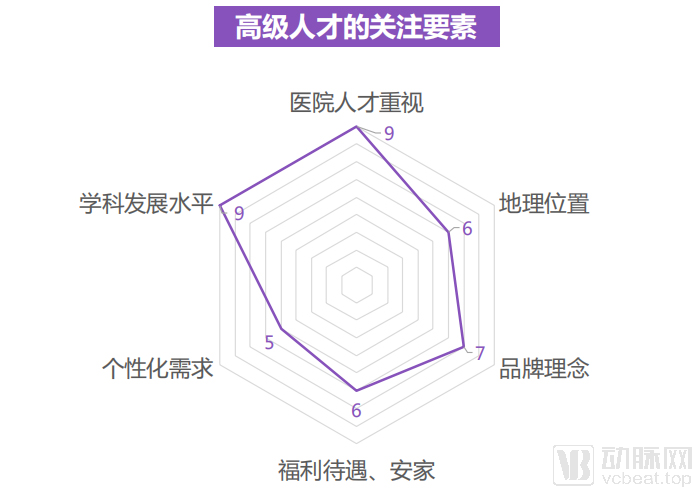
Dingxiang Talent Uses Big Data to Analyze Key Factors Influencing Senior Professionals’ Career Choices
Two years ago, DXY Talent began leveraging its years of accumulated data to develop corresponding decision-support tools for both the demand and supply sides of the talent market. For instance, these tools help employers attract and engage with talent while enhancing hospital brand visibility. On the supply side, the tools analyze resumes to identify weaknesses, score candidates based on the alignment between their expected compensation and job competency requirements, and assist job seekers in finding their optimal professional positioning.
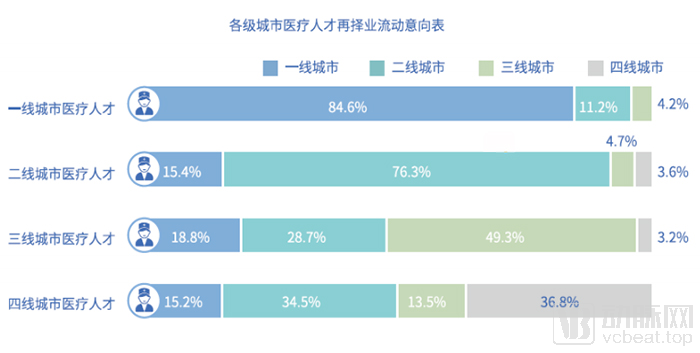
Distribution of Cities with Talent Job-Seeking and Mobility Intentions Analyzed by DXY Talent
Currently, the big data dimensions of DXY Talent include: a median salary map showing historical salary trends for physicians across various regions; recruitment statistics by department in healthcare institutions, highlighting specialties with the highest hiring volumes; and cross-provincial resume flow patterns. For instance, DXY Talent’s big data indicates that in 2018, Hunan Province experienced the largest outflow of medical talent, while Guangdong Province had the largest inflow.
“Dingxiang Talent’s strategy is ‘to make them more professional,’ with ‘them’ referring to all participants on both the demand and supply sides,” explained Li Tiantian.
The mobility of medical professionals is becoming increasingly active, and a healthy flow should be built on a substantial total number. However, there is currently an overall shortage of medical talent in China, with urgent deficits in general practice, pediatrics, obstetrics, psychiatry, pathology, nursing, midwifery, rehabilitation, and mental health. Taking general practitioners as an example, the Outline of the “Healthy China 2030” Plan stipulates that by 2030, China will have five general practitioners per 10,000 people. However, according to the latest Statistical Bulletin on the Development of Health Causes, there were only 2.22 general practitioners per 10,000 people in China in 2018.
To change this situation, it is imperative to continuously optimize national policies on talent systems, improve training frameworks in medical schools, and enhance career incentives by employers. Neither DXY Talent nor DXY belongs to any of these three categories, but Li Tiantian still hopes to contribute to the growth of healthcare professionals.
“‘More Health, Better Life’—this is DXY’s new vision,” said Li Tiantian. He noted that this vision targets both consumer-end users and physicians; DXY is not only taking action at the final stage of talent development but also advancing this visionary goal to earlier stages.
Li Tiantian hopes that DXY can provide such a scenario: doctors study on DXY’s corresponding platforms to continuously enhance their professional competence; after improving their expertise, they can share knowledge on these platforms, earn more transparent income, and enjoy better career opportunities, thereby improving both their professional trajectories and personal lives.
“With the support of many prestigious medical institutions, medical schools, and experts, we deliver a substantial volume of medical courses annually, building internet-based continuing education,” introduced Li Tiantian. In terms of specific products, key offerings include DXY Open Courses, DXY Broadcast Cafe, and DXY Garden’s “Time Series,” all of which have become essential companions in physicians’ professional development.
Only when doctors have better career pathways and personal lives will more people be willing to join this profession.
If the emergence of DXY Talent was a matter of chance, then its growth and expansion, viewed from its development trajectory, were an inevitability driven by industry trends.
At the Heilongjiang Forum on Talent Development in Big Health, DINGXIANG TALENT released a set of data: it has assisted more than 8,000 industry institutions in posting over 650,000 job openings; the platform hosts more than 2.7 million professional resumes, with 25% held by individuals with master’s or doctoral degrees, thereby continuously supplying skilled professionals to enterprises and institutions in the medical and big health sectors. This represents a commendable achievement.
Today, DXY Talent’s partner clients are primarily healthcare institutions, including public Grade 3A hospitals such as Xiangya Hospital of Central South University and Shenzhen People’s Hospital, as well as private Grade 3A hospitals like Dongguan Donghua Hospital. Among non-healthcare institution clients, there are publicly listed companies such as Shanghai Far East Horizon Healthcare Investment Group, and multinational corporations like General Electric.
Change in the industry never stops.
Li Tiantian believes that the primary task at this stage is to provide quality services to doctors and hospitals. In the future, DXY Talent will gradually penetrate various sub-sectors within the broader health industry, including pharmaceuticals, medical devices, nursing, rehabilitation and elderly care, and nutrition. “We anticipate that as the Healthy China 2030 initiative advances, a wave of entrepreneurship in the broader health sector will emerge, driving increased demand for specialized talent across these diverse fields.”
This August, DXY comprehensively upgraded its corporate vision, mission, and values. In an internal company letter, Li Tiantian stated, “The world is profoundly different with us than without us.” DXY Talent may once again bring about such “difference.”