

Ba Shusong: Assessing China's Economic Policy Direction Amid the Limited Scale of Emerging Sectors like Biotech

China Renaissance
Financial Services Investment Institutions
At the 7th China Renaissance Healthcare and Life Sciences Leadership Summit, which concluded earlier this month, more than 100 distinguished guests took the stage to share their insights, including Ba Shusong, Chief China Economist at the Hong Kong Stock Exchange; Chen Li, Founder and CEO of Hua Medicine; Wu Jinzi, Chairman and CEO of Ascletis Pharma; Ye Yuxiang, General Manager of Salubris Pharmaceuticals; and Yang Dajun, Co-founder, Chairman, and CEO of Ascentage Pharma. VCBeat attended the conference and reported on its highlights.
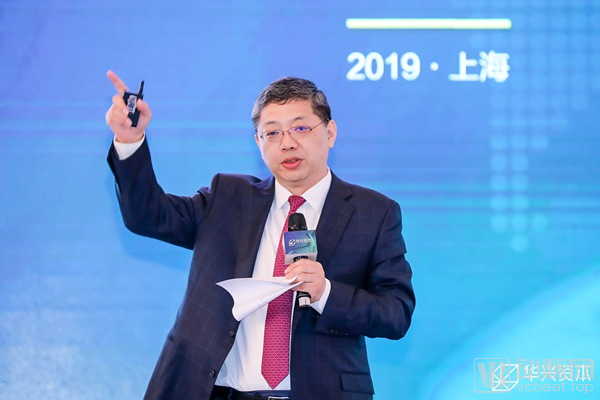
On the day of the forum, Professor Ba Shusong, Chief China Economist at the Hong Kong Exchanges and Clearing Limited and Executive Dean of the HSBC Business School Peking University Financial Research Institute, delivered a speech themed “Grounded in the Present, Reaching for the Stars.” He provided insights into China’s current economic investment landscape and the development of emerging industries such as healthcare. This article compiles the highlights of Professor Ba’s insightful address.

Keynote Speakers
Professor Ba Shusong | Chief China Economist of the Hong Kong Exchanges and Clearing Limited, Executive Dean of HSBC Business School Peking University
Amidst a myriad of complex and contentious debates, how should we assess the current economic conditions and policy trends? This is a matter of subjective interpretation. Today’s analysis will be structured around three dimensions:
First, from a temporal perspective, what stage are we currently at in the long river of history?
Second, from the spatial dimension and changes in geographic space, how are development layouts and supply chain distributions evolving?
Third, what lessons can we draw from Japan’s path of economic development and transformation?
From a temporal perspective, China’s economy is arguably in the late stage of its high-speed growth period, transitioning toward a phase of medium-speed growth. This transition is commonly described as “L-shaped.” At present, the economy is seeking to stabilize at a medium-speed growth plateau—that is, determining where the horizontal bar of the “L” will lie. Drawing on the economic development paths taken by Germany, Japan, and South Korea, if this medium-speed growth platform can be firmly established, it could last for five to ten years. This represents a critically important period of economic transition, as well as a phase of shifting from old to new growth drivers.
Why is this the case? Currently, some industries are booming while others are deeply pessimistic, which is a typical characteristic of an economic transition period. Why has overall economic growth slowed down? During this transitional phase marked by diverging growth drivers, the old drivers—primarily infrastructure and real estate in China—are continuously weakening, whereas new drivers, such as emerging sectors like biotechnology and domestic demand, are showing relatively strong growth. However, the share of these emerging and rapidly growing segments in the overall economy remains smaller than that of infrastructure and real estate. As the shrinking portion accounts for a larger proportion and the expanding portion accounts for a relatively smaller one, the overall growth rate is declining.
When the contraction in certain sectors is exactly offset by growth driven by new economic drivers, the “L-shaped” trajectory stabilizes. This represents our current stage of development—the transition from old to new growth engines. China’s economy will have truly stabilized only when this transition fully shifts toward the new economy and its growth can offset the decline in traditional sectors such as infrastructure and real estate.
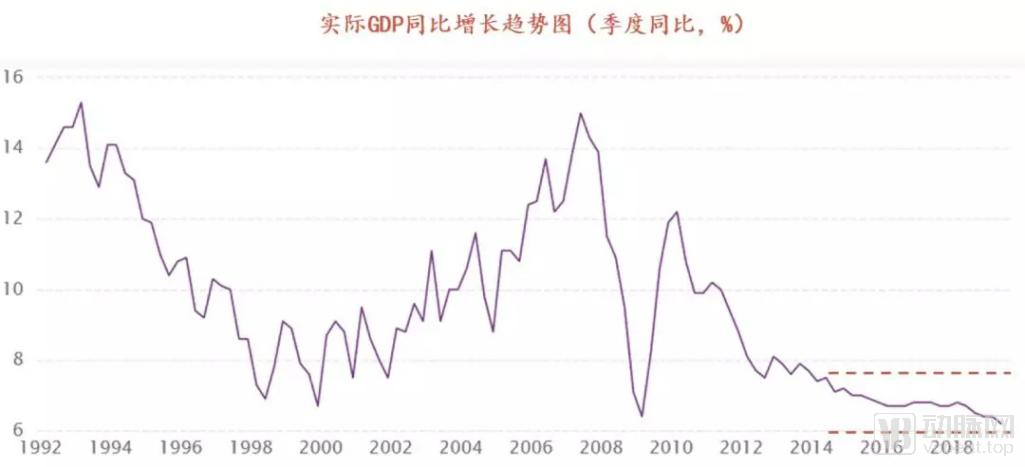
Source: Wind; data as of October 17, 2019.
In this sense, while the Hong Kong Stock Exchange’s far-reaching listing reforms for new economy enterprises in 2018 and the establishment of the STAR Market each have their own operational characteristics, their overall objective is consistent: to accelerate the reallocation of financial resources from the traditional economy to the new economy.
If we look back at the current economic transformation a decade or more from now, we will find that clues to China’s economic development trends in the coming years could already be discerned, to some extent, in 2019. I attempt to summarize these trends into several key aspects.
First, economic growth is increasingly shifting from being primarily driven by "incremental expansion" to "optimization of existing stock." During the past four decades of rapid growth, the economy expanded aggressively through extensive development, with urbanization mainly manifested in the rapid expansion of built-up urban areas—a phase characterized by incremental growth. Currently, as the economy undergoes transformation, the drivers of growth are changing. While the pace of incremental growth has slowed, the optimization and reshuffling of the existing stock are intensifying.
Taking the real estate market as an example, the urban built-up areas of most cities are no longer expected to expand significantly. Many cities have begun to focus primarily on optimizing and adjusting their existing stock of secondary housing. In the future, new population inflows will be concentrated mainly in certain dynamic urban clusters. Statistics show that in 2018, transactions of existing homes surpassed those of new homes in nearly 20 cities. This data indicates that the development of these cities is no longer driven by large-scale expansion of real estate inventory, but increasingly relies on the optimization of existing assets.
We have seen numerous analyst reports on Budweiser, which recently completed its successful listing on the Hong Kong Stock Exchange. Many of these reports, to varying degrees, raise a common question: Why did Budweiser relist its China business? A frequently cited answer is that the Chinese beer market is transitioning from a growth-driven phase to a mature, stock-based phase. Why is this happening? While the overall expansion rate of the beer market in China and across Asia has slowed significantly, internal consolidation is intensifying. Production of low-end beers has shrunk substantially, whereas the mid-to-high-end segment continues to grow. Similar trends, to varying extents, are also evident in the baijiu (Chinese white spirits), wine, consumer staples, real estate, automotive, and financial services sectors.
Second, the strong driver that previously fueled China’s economic growth was urbanization, but the room for further urbanization-led growth is narrowing. The large-scale migration of people from rural areas to cities represents, in economic terms, an improvement in production efficiency and a rise in land-use efficiency. The influx of large populations into cities boosts demand for infrastructure, thereby serving as a catalyst for economic growth. The past four decades have essentially been a period of comprehensive urbanization, from which cities of all sizes have benefited. However, future urbanization growth in China will become increasingly concentrated in a handful of major city clusters, such as the Yangtze River Delta, the Guangdong-Hong Kong-Macao Greater Bay Area, the Beijing-Tianjin-Hebei region, and the middle and lower reaches of the Yangtze River. In these regions, urbanization can basically account for 60%–70% of both new-home and secondary-home transactions.
Third, the drivers of growth are shifting from being led by exports and investment to being increasingly driven by domestic demand. Over the past four decades, from a global perspective, as developed countries faced rising land and labor costs, China promptly advanced its reform and opening-up policies. This encouraged developed nations to transfer these industries to China, where they were combined with the country’s vast labor supply, enabling China to build robust processing and manufacturing capabilities along its coastal regions and export products worldwide. China’s share of the global export market has likely surpassed that of the United States, making it the world’s largest exporter, which exemplifies an export-led economic development model. Looking ahead, the expansion of China’s domestic market will drive up import demand. Gradually, the China International Import Expo (CIIE) held in Shanghai may become an important barometer of China’s economy, as the growth engine shifts from export-led to domestically driven.
Fourth, from the perspective of technological advancement, China has primarily relied on imitation and learning over the past four decades. In the future, it is likely to shift more toward independent research and development (R&D) and indigenous innovation, while actively expanding new avenues for international cooperation. The prevailing trend indicates varying degrees of decoupling from the United States and other countries across different sectors. In the realm of goods, decoupling between China and the U.S. is highly unlikely, as many categories of manufactured products have been entirely outsourced by the U.S. industrial manufacturing sector over the past one to two decades, making a return to domestic production infeasible. However, partial decoupling in the fields of technology and finance may emerge as a medium-term trend, underscoring the growing importance of China’s investment in independent R&D and its efforts to broaden new spaces for international collaboration.
From a spatial perspective, several trends warrant attention. Viewed through the lens of economic geography, the distribution of global industrial chains follows a clear trajectory: the Industrial Revolution emerged in Britain, then spread to Europe, from Western Europe to North America, onward to Japan and the Asian Four Little Dragons, and further to China’s coastal regions. In the early stages of China’s reform and opening-up, the country capitalized on a rare four-decade window of development opportunity, leveraging advantages such as a youthful demographic structure and vast market potential. Currently, with gradual population aging, rising labor costs, increasing income levels, enhanced consumer purchasing power, and greater emphasis on quality of life, a significant portion of low- to mid-end manufacturing is being relocated. In the future, the center of gravity for low- to mid-end manufacturing will gradually shift from China’s coastal areas to Southeast Asia. The Sino-U.S. trade friction has accelerated this process, prompting some of China’s processing and manufacturing sectors to pursue global expansion, while China steadily advances its industrial upgrading toward services and high-end manufacturing.
Turning to the China-U.S. trade friction, current indicators suggest it may become a medium-term trend. Even if an agreement is signed, the trade friction between China and the United States is expected to persist, leading to a shift in the model of “globalization” toward “parallel globalization,” wherein China and the United States each establish their own industrial chains with their respective partners.
In the past, Chinese entrepreneurs could become highly successful simply by keeping pace with the domestic market, as China was one of the fastest-growing markets globally. Looking ahead, however, Chinese entrepreneurs must adopt a global perspective, given the shift in development stages. In terms of growth drivers, we should place significant emphasis on the opportunities arising from Southeast Asia’s growth potential and evaluate investment opportunities by considering developed economies such as Japan and South Korea alongside China and Southeast Asia.
Finally, let me offer some perspectives on the outlook for recent policies. I personally believe that among the world’s major developed economies, Japan is a case study we tend to underestimate. In other words, we have both the conditions and the necessity to learn from Japan’s economic policies for a third time—drawing on its experiences and heeding its lessons. The first instance of such learning occurred during the late Qing Dynasty, exemplified by figures like Dr. Sun Yat-sen, who was highly active in Japan. The second took place in the early stages of China’s reform and opening-up, notably marked by Comrade Deng Xiaoping’s request to Mr. Konosuke Matsushita that Japanese companies assist China. We may now be entering a third phase, for the following reasons:
First, if we assume that the China-U.S. trade friction is a medium-term trend, how should we engage with the United States? How can we effectively advance our own economic transformation against the backdrop of this trade friction? Our neighbor Japan has been dealing with this issue for one to two decades. As an Asian economy and a catch-up economy, Japan has considerable experience in responding to U.S. trade friction. Given the complementary industrial structures of China and Japan, we should learn from its approach.
Second, Japan has advanced further than us in addressing population aging. How should we respond to this demographic shift? What social issues will we encounter? And how can we make early strategic preparations?
Third, how can rational, market-oriented overseas investment be conducted when industrial chains begin to expand globally? Japan has accumulated considerable experience in this regard, along with numerous lessons learned and not a few misconceptions. Statistical data show that more than 80% of Japan’s overseas investments organized by enterprises have yielded substantial returns. Under conditions of limited global openness, GDP is the preferred metric for comparing economic growth; however, as openness continues to increase, GNP becomes a more appropriate indicator. If Japanese capital invested abroad is added back, it becomes evident that beyond Japan’s limited GDP, there exists another “Japan” overseas, sharing in the dividends generated by the vibrant economic growth in China and Southeast Asia. Rational, market-oriented expansion into overseas markets is influenced both by the China–U.S. trade friction and by the stage of industrial development.
With export growth constrained by trade friction, expanding domestic demand has become an inevitable choice for economic growth. In this regard, Japan serves as a cautionary tale. Uncontrolled injection of liquidity into the real estate market would inflict severe damage on the economy. I understand why China’s policymakers have maintained resolute, stringent, and sustained regulation of the real estate sector while stimulating domestic demand; they appear to have learned from Japan’s missteps in its efforts to boost domestic demand.
Fourth, opening doors wider and increasing openness is conducive to economic transformation. Openness will promote transformation, and I believe that Chinese entrepreneurs’ adaptability and learning capabilities are comparable to those of Japanese entrepreneurs.