

Tianyi Health: Leveraging a 10,000-Individual Microbiome Bank to Innovate Probiotic Solutions Tailored for the Chinese Population
In the refrigerated sections of supermarkets, a dazzling array of probiotic yogurts is on display. People are drawn to probiotics“Brainwashing” or Not: Do You Really Know What Probiotics Are? How Do They Work and What Are Their Effects? Experts state that probiotics must remain viable to confer health benefits; the higher their viability upon entering the human body, the greater the benefits.
Under the microscope, probiotics vary in size and appear transparent; their collective movement resembles a massive army charging in unison toward a single direction. Do not underestimate these probiotics. Recent scientific research has shown that diseases such as breast cancer, HIV/AIDS, kidney disease, arthritis, and diabetes are associated with abnormalities in the gut microbiota structure. Probiotics can help restore the balance of the intestinal flora, thereby contributing to the prevention of disease and the improvement of overall health.
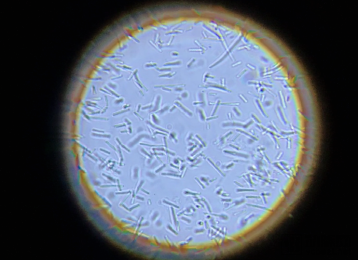
(Probiotics under a microscope; image provided by the company)
With the launch of research initiatives such as the Human Microbiome Project, attention has increasingly turned to the gut microbiota. As research deepens, the gut microbiota is even regarded as “the neglected human organ.” While overseas studies have achieved remarkable success, China has also made significant breakthroughs in this field.
Among them, there is a domestic enterprise that has long been dedicated to researching various microbial communities to benefit human health. It spent eight years collecting and exploring probiotic strains suitable for the Chinese constitution. By conducting independent sequencing, it assesses the strength and weakness of gut microbiota to avoid potential risks. The company has applied for 18 nationally archived strains and continues to develop new ones. This is Tianyi Health Industry Group (hereinafter referred to as "Tianyi Health").
After years of developing a Chinese microbial strain bank comprising tens of thousands of strains, the Yibeike brand was launched this year.
The gut microbiota is referred to as the human "second genome." The gut microbiota of a healthy individual comprises more than 1,000 species and 100 trillion bacteria, which is ten times the total number of human cells. These bacteria can be classified into beneficial, harmful, and neutral strains. Beneficial bacteria, also known as probiotics, are essential for maintaining human health. Probiotics can synthesize various vitamins, participate in food digestion, promote intestinal peristalsis, inhibit the growth of pathogenic bacteria, and decompose harmful and toxic substances.
If harmful bacteria proliferate excessively and their population becomes uncontrolled, they can cause various diseases, produce carcinogens and other toxic substances, or impair immune system function. Commensal bacteria are beneficial to health under normal conditions; however, if they overproliferate or translocate from the gut to other parts of the body, they can trigger a variety of problems.
In 2015, TY HEALTH released a study on the structure and typing of gut microbiota in the Chinese population. This research established the first gut microbiota database for mainland China and identified ten distinct gut microbiota profiles: healthy infant, healthy toddler, healthy adolescent, healthy young adult, healthy middle-aged adult, centenarian elderly, sub-health, early-stage disease, chronic disease, and severe disease. Experts have indicated that these findings provide a comparative data repository for basic medical research and clinical applications in China, holding significant importance for precision health management, as well as disease prediction and prevention among the Chinese population.
Why Invest Significant Time and Effort in Building a Strain Library of 10,000 Microbial Varieties? Li Junhu, Senior Researcher at Tianyi Health Science Research Institute and Founder of the Yibeike Brand, stated, “During his academic studies in Canada, our Chairman fortuitously connected with numerous microbial research and development teams. At that time, domestic research in this field was relatively limited. We aimed to introduce these technologies to China, integrating cutting-edge international microbial technology with gut microbiota data from the Chinese population, thereby providing more precise microecological health interventions tailored to the gut health of Chinese individuals.”
“Second, we have connected with numerous experts in the field, such as Gregor Reid, Chair of the Expert Committee of the World Health Organization’s Probiotic Association; Glenn Gibson, known as the ‘Father of Prebiotics’; and Kaiping Yang, a tenured professor at Western University in Canada. Accordingly, we invited this team of experts to China to guide us in establishing a gut microbiota database for the Chinese population. In 2015, in collaboration with institutions including the School of Public Health at Peking University, we jointly released the Chinese Gut Microbiota Database comprising data from 10,000 individuals.”
“With the establishment of a database, subsequent efforts in probiotic development, as well as microbiome testing and modulation, become significantly more manageable,” said Li Junhu. He offered an analogy: “Once a bomb is equipped with a guidance system, it becomes a missile, offering greater precision. Similarly, by building a large-scale microbiome database encompassing tens of thousands of individuals, our follow-up initiatives will be more precise, akin to having big data guide the application of probiotics.”
Li Junhu remarked with emotion, “Specialization is key; every task must be accomplished by professionals and requires significant effort and determination. For instance, Huawei has achieved industry leadership and gained global influence precisely because of its persistence. Therefore, perseverance is indispensable in any endeavor. We are committed to sustaining technological innovation, R&D, and product translation in the field of gut microbiota, striving to contribute to the gut health of the Chinese population.”
Integrated Development in R&D, Production, Testing, and Marketing Based on a 10,000-Strain Microbial Library
After establishing a microbial strain bank comprising tens of thousands of strains, TY HEALTH has focused its efforts on R&D, production, and testing, and has now completed the layout of its product manufacturing and testing services.
In the past, TY HEALTH primarily provided OEM services, processing probiotics for other companies. This year, however, TY HEALTH launched its own brand, Yibeike. The Yibeike brand offers a comprehensive range of probiotic and prebiotic products for all age groups. Li Junhu introduced, “For toddlers aged 0–3, we provide probiotics formulated for immature gut flora; for children aged 3–12, we offer children’s probiotics; for adults aged 12 and above, we provide general-purpose, broad-spectrum family probiotics; and for women, we offer specialized women’s probiotics.”
“Compared with similar products, Yibeike is built on a database of gut microbiota from Chinese individuals aged 0 to 100 years, enabling the development of formulas better tailored to the Chinese population. Leveraging this database, we have achieved personalized probiotic formulations for every age group within Chinese families.”
For probiotics to be effective, their viability must be ensured. Therefore, TY HEALTH employs a live-bacteria protection system to safeguard the activity of its probiotics. Additionally, while building a microbial library with tens of thousands of strains, TY HEALTH has simultaneously identified more than 60 probiotic strains derived from individuals, food, or environmental sources that are better suited to the gut microbiota of the Chinese population. Among these, 18 nationally curated probiotic strains were the first to be incorporated into its products.
In terms of testing, TY HEALTH’s hardware utilizes the MiSeq high-throughput sequencer, while its software employs a high-throughput paired-end sequencing method. The advantage of high-throughput paired-end sequencing lies in its ability to sequence bacterial genes from both the left and right ends, thereby generating double the amount of genomic data and yielding more precise results. Furthermore, sampling, sample recovery, sample processing, and data collection are all completed in a one-stop manner, ensuring consistency between the testing environment and the sample environment, thus guaranteeing data accuracy.
By comparing and analyzing the subject’s gut microbiota test data against a database, it is possible to evaluate the individual’s intestinal microbiota health status and trends. Based on the corresponding classification trends of the gut microbiota, TY HEALTH can provide precise health assessments and personalized health management plans, enabling each subject to understand their health status and adjust their microbiota balance under guidance, thereby safeguarding their health.
Experts have stated: “With the continuous advancement of research methods and techniques in gut microbiology, the gut microbiota is poised to become a biomarker for the prediction and diagnosis of various diseases. Meanwhile, many diseases can be managed and prevented through interventions targeting the gut microecology.”
TY HEALTH possesses comprehensive capabilities spanning technological reserves, product commercialization, marketing and promotion, and testing services. As an integrated entity encompassing R&D, manufacturing, testing, and sales, Li Junhu stated, “This is a strategic plan honed over ten years of dedicated effort. Our investments and planning in R&D, production, testing, and sales are all centered around the gut microbiota of the Chinese population. Therefore, our core competitiveness lies in our determination and the precision of our strategic direction. I believe that whether domestically or internationally, for individuals or institutions, achieving success requires choosing the right path and pursuing it with unwavering commitment.”
In addition, Li Junhu believes that the microbial technology support provided by world-class expert teams and internally cultivated talent is also one of its core advantages.
Driving Industry-Wide Development with Advanced Technology
Currently, public awareness of microbiome testing remains low, and the government has not yet established clear entry barriers for practitioners. In this context, it is imperative for conscientious, professional enterprises to leverage advanced technologies to drive the overall development of the industry.
As the technology introducer for gut microbiota in China and the builder of gut microbiota testing and comprehensive gut microbiota data for the Chinese population, TY HEALTH stated, “We will assume this responsibility. On one hand, we will continue to improve our gut microbiota testing technology; on the other hand, we will appropriately launch products or service formats with relatively higher recognition to drive industry development.”
In cultivating the market, TY HEALTH plans to leverage technology as a guide and rely on service transformation to help raise public awareness of gut microbiota testing, thereby encouraging broader participation. Currently, maternal and child health populations are the primary focus of attention regarding gut microbiota testing. Therefore, TY HEALTH is prioritizing the promotion of related services and products, such as probiotics for reducing “gut age” and gut microbiota testing for young children. Driving adoption among surrounding demographics through maternal and child health groups is also a key strategy for TY HEALTH. This is a gradual process that requires long-term persistence.
Regarding future plans, in addition to gut microbiota testing, TY HEALTH is currently exploring applications in other parts of the human body, such as the female reproductive tract, breasts, and nasal cavity. Meanwhile, TY HEALTH plans to leverage the National Nutrition Plan to establish a presence in the resident health industry, with microbiota technology as its core and multi-omics health testing platforms as its focus.