

InBeauty Raises Tens of Millions in Seed Funding from Dexun Investment to Transform Tier-3/4 City Beauty Salons
VCBeat (WeChat ID: vcbeat) has learned that InBeauty, a new platform focused on integrating independent beauty salons (referred to as “in Mei”), recently secured tens of millions of RMB in seed funding from Dexun Investment.
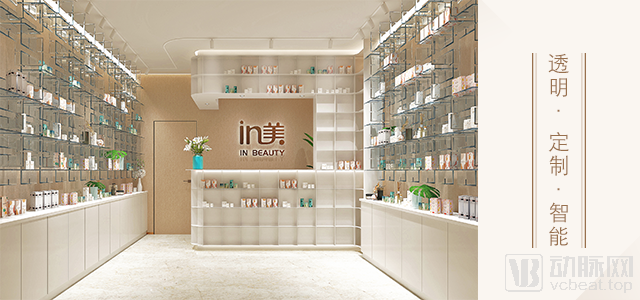
It is reported that InBeauty (hereinafter referred to as “In Mei”) was founded by Beijing Phoenix Meifu Network Technology Co., Ltd. In Mei is committed to building branded chains centered on small and medium-sized independent beauty salons in lower-tier markets, rejecting the traditional beauty salon practices of inflated pricing and deceptive sales tactics. The brand aims to rectify the prevalent issues of poor hygiene, disorder, substandard conditions, outdated facilities, dilapidation, and small scale among such independent establishments, thereby providing consumers with a new beauty consumption experience characterized by transparency, customization, and intelligence.
Mr. Jiang Zhihao, Founder and CEO of inBeauty, has been deeply engaged in the beauty industry for ten years. His experience includes six years focused on the beauty supply chain, during which he established the oral beauty brand “Jianmei”; four years managing retail stores, operating eight chain beauty salons under the brand “Rose Mountain” in Beijing; and four years developing SaaS products for the beauty industry, culminating in the creation of “InBeauty OS,” the largest SaaS system in the sector.
Mr. Jiang Zhihao stated that there are currently approximately 1.08 million beauty salons in China, but the chain affiliation rate is less than 5%. The annual closure rate for the numerous independent beauty salons in the market reaches 39%, with single-store profitability not exceeding 10%. Most owners of these establishments are former beauticians or store managers who possess strong customer service capabilities. However, the lack of high-quality products and the absence of comprehensive annual marketing planning are significant factors preventing independent beauty salons from achieving sustained profitability. With the development of the internet and the emergence of platforms such as Xiaohongshu (Little Red Book), Dianping, and Douyin (TikTok), the market has become more transparent, making it increasingly difficult for independent beauty salons that rely primarily on personal customer relationships to survive.
InMei currently focuses primarily on third- and fourth-tier cities. Relatively speaking, consumers in these lower-tier markets demonstrate stronger purchasing demand and greater potential for viral growth, diffusion, and word-of-mouth propagation. For standalone beauty salons integrated by InMei, the preferred floor area ranges from 100 to 300 square meters, with requirements including more than 30 members whose annual spending exceeds RMB 10,000, as well as a team possessing adequate service capabilities.
In the United States, fine-tuned renovations are carried out based on the actual conditions of the original beauty salons, ultimately categorizing the stores into three types: flagship stores, which require comprehensive remodeling; Star Select stores, which focus on refurbishing the foyer and storefront signage; and Experience stores, which only need standardized storefront signage.
After integrating the store image, inMei upgraded the services of beauty salons, aiming to enhance employees' service awareness, professional knowledge, and technical skills. In addition, inMei also empowers these independent beauty salons by providing support in operational strategies and techniques for online and offline marketing.
In terms of supply chain empowerment, inMei sources globally, with a preference for products that have not yet established distribution channels in offline malls or on Tmall. Its portfolio covers home-use beauty devices, professional-grade skincare products, and medical-aesthetic treatments, currently comprising over 300 SKUs.
inMei’s logic extends beyond merely selling products; it aims to provide solutions for high-end female users in the community, addressing issues such as hair loss, insomnia, dysmenorrhea, and sensitive skin. Currently, inMei has developed over 50 solutions, with plans to gradually expand this portfolio to 200–300 in the future.
Mr. Jiang Zhihao mentioned that inBeauty’s business model differs from the traditional franchising model. Traditional franchising primarily aims to generate revenue from franchise fees, with its core logic centered on inventory transfer. It often attracts inexperienced outsiders, and the franchising brands lack the capacity to provide adequate service support across China, resulting in a high failure rate for franchisees.
In Mei focuses on driving tangible performance improvements for existing stores with a certain level of capability, earning revenue through sales commissions. This is directly reflected in its profit model: while In Mei charges a one-time franchise fee, the amount is relatively low, ranging from RMB 60,000 to 100,000, intended to cover the costs of initial renovations and upgrades; its primary revenue sources are supply chain margins and a 3–5% commission on gross merchandise value (GMV).
As of October this year, InMei has integrated more than 100 stores in Hebei Province. The business model is still undergoing validation, but significant improvements have been observed in key metrics such as customer acquisition cost, procurement cost, and sales per square meter. The team’s primary plan is to expand to 500 stores in Hebei before extending its presence to third- and fourth-tier cities across China. InMei’s projected revenue for 2019 is RMB 20 million.
The team comprises over 40 professionals, with its headquarters located in Beijing. Founder and CEO Mr. Jiang Zhihao is a serial entrepreneur with ten years of experience in supply chain management, SaaS, and physical brand store operations within the beauty industry. Other core members possess extensive expertise across the beauty, daily chemicals, retail, and internet sectors.