

Multiple Global Firsts: Organoid-Based Innovative Drug Development Accelerates with Recent IPO Filing
SIGNET
Innovative Targeted Cancer Drug Developer
January 21, 2026
eMedClub News
Recently, SIGNET announced the completion of an 80-million-yuan Series A financing round. The funds will primarily be used to advance the global Phase II clinical trial of its lead pipeline SIGX1094, as well as the IND application and Phase I clinical trial of its second pipeline SIGX2649, further expanding the company's presence in the targeted treatment of malignant metastatic solid tumors. In addition to pipeline development, this round of financing will also actively promote the business expansion of its organoid platform for empowering drug innovation and research.
Notably, the company's first pipeline, the diffuse gastric cancer targeted drug SIGX1094, isThe World's FirstVia「Organoids + AI」Technology Platform PromotionTo the clinical stage drug pipeline,It is also the world's first FAK/SRC dual-target inhibitor to enter the clinical stage.. From the discovery of a new target to the approval of IND in both China and the United States, it only tookThree YearsMore, significantly breaking through the efficiency bottleneck of traditional drug research and development.
Why Organoids Can Become the "Accelerator" of New Drug Development: Three Key Advantages in the Experimental ProcessModel construction that is closer to human pathology, with a shorter cycle(Specific model construction usually takes only a few weeks to a month), R&D costs have been significantly reducedAccording to the FDA's estimation, the use of alternative methods such as organoids can reduce the research and development costs of monoclonal antibody drugs by more than 40%, and in the future, it is expected to increase to 60%.
At the policy level, 2025 will also mark a critical turning point. Internationally, in the U.S. "FDA Modernization Act 3.0," federal regulations"Non-clinical testing" fully replaces "animal testing",Clarify the Legal Equivalence of Non-Animal Models Such as Organoids and Organ-on-a-Chip with Traditional Animal Testing at the Legal Level, providing core evidence for the inclusion of organoid data in drug approval.
In China, "Technical Guidelines for Model-Informed Drug Development for Rare Diseases", for the first time clearlyInclude "Organoids, Organ-on-a-Chip" in the Scope of Non-Clinical Research Data`, paving the way for its direct use in drug applications.`
More milestone-like is the breakthrough in the regulatory practice aspect. In October 2025, Qureator Corporation's proprietary vascularized tumor immune organoid model(vTIME)The key preclinical efficacy data generated successfully assisted SillaJen in obtaining FDA IND approval in the United States for the combination therapy of BAL0891 and immune checkpoint inhibitors.
This isThe world's first FDA IND approval entirely based on efficacy data generated from human vascularized organoid co-research, without relying on traditional animal pharmacodynamics (POC) testing., marking a substantive step forward in the regulatory acceptance of organoid data.
With the maturation of technology and the clarification of policies, the capital market has also paid high attention to the organoid track. Since 2025, in addition to SIGNET, several enterprises focusing on different disease fields have successively completed financing, demonstrating the extensive application penetration of organoid technology.
In the field of neurotherapy, Huixin Yig Valley utilizes stem cell induction and differentiation for production.Brain Organoid Platform, which is used not only for drug target screening and development in diseases like Parkinson's, but also explores its potential in regenerative medicine as a transplantable material to repair brain tissue.
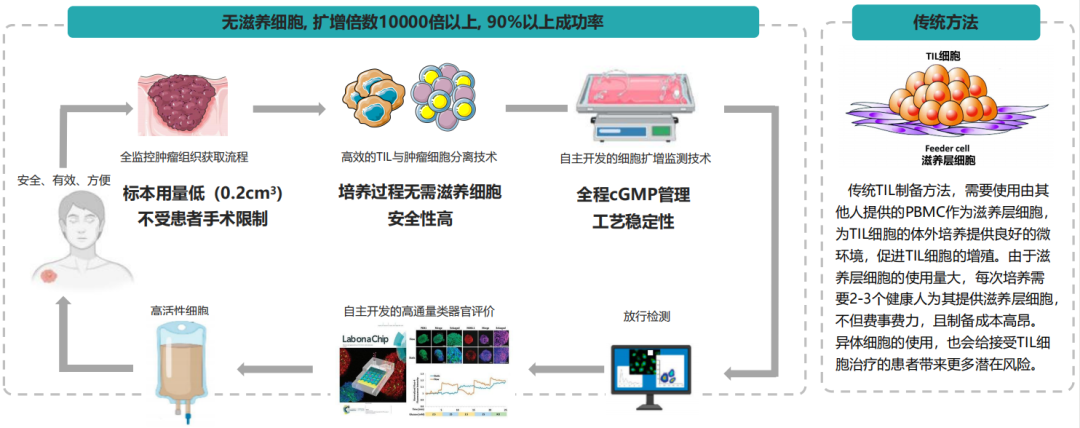
In the field of solid tumor treatment, Xunsheng Medicine, addressing the issue of TIL lacking an effective in vitro killing effect evaluation method, which leads to significant individual differences in efficacy after infusion, has pioneered an in vitro solution.High-Throughput Organoid Evaluation Method`, providing an effective evaluation method for precise treatment of patients.`
In the field of ophthalmic treatment, Mengmu Bio has established multiple platform technologies, including iPSC in vitro induction reprogramming and in vitro induction differentiation, as well as AAV vector optimization.Unique Eye OrganoidsModels and large and small animal disease models enable the company to evaluate the efficacy and safety of candidate drugs at an early stage, accelerating the development of the ophthalmology pipeline.
In the field of neuropsychiatric diseases, LanShan Bio relies on its independently developediPSC OrganoidsDrug Discovery Platform: Utilizes unique technology to develop and screen for new targets, with the capability to fully design compounds. The products are highly innovative and demonstrate exceptional potential in the field of neurological and psychiatric disease research in China.
HONGXING XIANGHE FULLY LAYOUTAI Platform, Biological Organoids PlatformIn drug research and development and evaluation, the focus is on building core capabilities in target and molecular druggability assessment, molecular and experimental design, as well as multi-dimensional outcome evaluation, effectively enhancing project initiation, decision-making efficiency, and R&D success rates. The first-wave pipeline targets indications including hematologic malignancies, advanced solid tumors, and autoimmune diseases, addressing multiple unmet clinical needs.
In the aspect of industrial ecosystem construction, SIGNET, a leading enterprise in the organoid field covering the whole industry chain, focuses on three strategic directions: precision medicine, new drug development, and intelligent manufacturing. It scales applications in the three fields of organoid tumor treatment, regenerative medicine, and synthetic biology, breaking through key bottlenecks in the industry and promoting the organoid industry towardsIntelligentization, Standardization, IndustrializationLeapfrog development in direction.
This shows that organoid technology has gone beyond the limitations of a single link or disease area, gradually building an ecosystem covering multiple disease types and multiple R&D stages, and is becoming one of the core infrastructures for the next generation of drug development and personalized medicine.
Of course, organoid technology still faces certain limitations, such as inSystem Physiology Simulation, Long-term Toxicity Assessmentin other aspects, it still cannot completely replace animal experiments. At the current stage, its core value is mainly reflected in target validation, preliminary efficacy screening, and other links, serving as an important supplement and optimization to animal experiments.
Looking ahead, with the deep integration of cutting-edge technologies such as AI and stem cells, organoids are expected to further advance drug development towards more precise, efficient, and cost-effective directions.
Editorial Responsibility | Ju
Proofread by Ju
References:
1.https://mp.weixin.qq.com/s/VgOP79QtwlpxY_Q4w70cOg
2.Official Websites of Various Companies

Exciting Events
Press and hold to scan the QR code to participate immediately ↓

DianDian "Share”、“Like" and "In View”
Give me a little recharge~