

Seizing Opportunities in the Restructured Biopharmaceutical Market: Tian士力's Strategic Layout under Yan Kaijing
Sun Bin, an ancient Chinese military strategist, once said: “A skilled commander guides the situation to their advantage by leveraging its inherent momentum.”
At the 3rd Health Investment Innovation Ecosystem Conference, Mr. Yan Kaijing, Executive Chairman of the Board of Directors of Tasly Holding Group and Chairman of Tasly Capital, outlined his strategy in these ten words.
This strategy reflects Tasly Pharmaceutical’s insights into the future. Amidst the “new normal” characterized by dramatic shifts in three key drivers of the biopharmaceutical industry—technological advancement, momentum transition, and model innovation—Tasly is proactively adjusting its business and investment directions, outlining an evolutionary blueprint centered on precise R&D, intelligent manufacturing, and the upgrading of smart health service platforms.
So, what strategies will Tasly Pharmaceutical adopt to respond to changes? And what will be the direction of future investments? This article will provide a detailed overview of Mr. Yan Kaijing’s views for our readers.
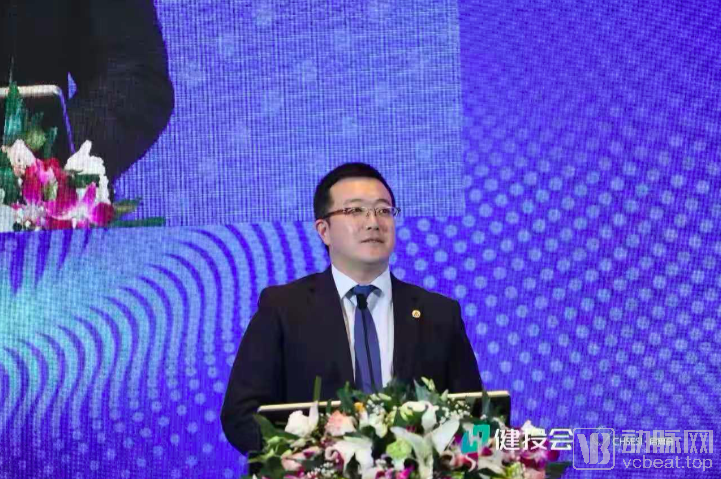
Yan Kaijing, Executive Chairman of the Board of Directors of Tasly Holding Group and Chairman of Tasly Capital
Recalling the establishment of Tasly’s first private equity fund in 2008, it coincided with the global financial crisis. What should one invest in during such turbulent times? Only industries capable of transcending economic cycles offer viable space for survival. At that juncture, Tasly set its sights on the biopharmaceutical industry.
However, the landscape today is markedly different. A review of recent data shows that the biopharmaceutical industry has entered a phase of sluggish growth, with periods of zero growth emerging intermittently. Under this “new normal,” new approaches are needed to unlock the industry’s potential, and practitioners must redefine the future of the health industry.
Where Does the Power of Restructuring Come From? How Can We Redefine the Future Health Industry? How Can We Rewrite the Core Content of the Biopharmaceutical Industry?
By examining the trajectory of commercial development over the past decade, we can find that technological evolution, network intelligence, and internationalization may be the answers to the aforementioned issues.
Technological evolution is redefining the essence of products.In the field of biomedicine, breakthroughs in gene technology and immunotherapy have promoted the development of precision medicine. Immunotherapy has led to better prognostic outcomes in tumor treatment, while stem cell therapy has made it possible to reverse degenerative diseases of the musculoskeletal system in the elderly. In the realm of digital health, with increased computing power and the maturation of edge computing technologies, an increasing number of medical devices are being embedded with AI chips. These technological advancements continue to enrich the value proposition of healthcare products and open up more emerging markets.
Network intelligence is redefining value models.As the core of network intelligence, technologies such as AI, blockchain, big data, and cloud computing have disrupted the entire process of value creation, circulation, consumption, and distribution, driving changes in business logic and models.
Patients now hold greater rights. To retain patients in the “new normal,” business models must be designed around patient needs. The value network, previously centered on insurers and payers, will gradually transition to a diversified, patient-centric value network.
Current internet hospitals adhere to this new model. With the growing demand for follow-up care among patients with chronic diseases, physicians serve as the central hub for organizing online consultations, thereby providing more personalized services to patients. Under this model, the entire internet-based system functions as a functional network organization, the market operates in accordance with the multi-sided allocation principles of multi-sided markets, and the Internet of Things (IoT) serves as the technological backbone of the entire system.
Internationalization is redefining market space.As China’s healthcare reforms deepen, homogeneous products are entering a period of structural clearance. To meet public demand and invigorate the market, pharmaceutical regulatory approval processes continue to be reformed to encourage the development of innovative products. Amid this transition toward higher-value offerings, companies must balance both domestic and international markets, such as by pursuing dual filings in China and the United States to unlock new market opportunities. The national “Belt and Road” Initiative has established a fast track for corporate development; however, this fast track will inevitably favor enterprises with cost advantages and compliance with international standards.
The sharp rise in the elderly population has driven an increase in the two-week hospitalization rate among residents. As medical costs surge, the proportion of hospitalization expenses will gradually rise with deepening population aging. Meanwhile, the ratio of over-the-counter (OTC) products to prescription drugs within the national medical insurance reimbursement catalog will undergo significant adjustment. In the future, prescription drugs are expected to account for 80%–90% of total medication usage, while the share of OTC products will continue to decline. Therefore, the government has introduced several policies aimed at reducing the proportion of prescription drug expenditures in overall healthcare spending.
Just as a coin has two sides, opportunities lie behind risks.
The baby boomer generation born in the 1960s, now entering old age, is not only large in population but also more affluent economically, with strong willingness and ability to consume. This signals the imminent opening of new markets. The medical aesthetics and anti-aging sectors are poised for robust growth. As these are out-of-pocket expense categories, pricing can be flexibly determined by market demand, offering substantial market potential.
The stem cell sector also aligns with the aforementioned characteristics and integrates cutting-edge technologies.
Yan Kaijing believes that the stem cell industry will develop into a “port economy” in the future, exhibiting significant regional disparities. With varying standards across different regions, if companies establish standardized clinical cell therapy centers throughout China at an early stage, it will be difficult for other enterprises to break into these already occupied markets.
Tasly Group has established multiple stem cell preparation centers in various regions across China and linked with relevant enterprises through investment. Its products will be rapidly deployed across Tasly’s various centers in the future.
While market analysis is undoubtedly critical, it is even more important to align with policy trends and seize opportunities within economic cycles.
A review of national policy formulation in the healthcare sector over the past two decades, particularly regarding the prevention and control of major diseases, can be broadly divided into three stages. The first stage spanned from 1998 to 2008, marking a period of building from scratch during which the state vigorously supported key basic research and encouraged technological innovation. The second stage, from 2009 to 2016, saw domestic technologies achieve significant breakthroughs based on existing accomplishments, striving to keep pace with international standards. The third stage, beginning in 2016, has witnessed China entering the first tier of global technological innovation. In this phase, solutions devised solely from the perspective of disease intervention are unsustainable; top-level designers must adopt a holistic, end-to-end approach, developing systematic solutions that extend to prevention and post-treatment rehabilitation.
Pharmaceutical companies of the future will differ significantly from those of today. The era of relying on a single blockbuster product for success has passed; in contrast, while diversified product portfolios offer greater revenue opportunities, they also demand precise identification of global therapeutic targets and the capability to rapidly translate technologies into commercialized solutions. To achieve breakthroughs during this phase, companies must build synergistic product portfolios focused on specific therapeutic areas, targeting critical treatment stages and addressing unmet medical needs, thereby widening their competitive moats. Looking ahead, enterprises should elevate their strategic perspective by establishing global, diversified business models centered on digital capabilities. These models should be driven by patient needs, self-organizing structures, functional networks, and value sharing, all enabled through data connectivity and innovation.
Based on the above analysis, Tasly Group has formulated its “Two Transformations and One Upgrade” strategy. The “Two Transformations” refer to the continuous promotion of transformation into a “technology-driven” and “smart service-oriented” enterprise. The “One Upgrade” entails building high-standard development resources and capabilities, and establishing a precision R&D platform led by artificial intelligence and international standards, an Industry 4.0 intelligent manufacturing platform, and a smart service platform.
Transforming into a technology-driven enterprise means that, within Tasly’s core industry—the broader biopharmaceutical sector—we will cultivate a new R&D system, build intelligent manufacturing capabilities, and create new products, all guided by an international perspective and high-standard positioning. Driven by technological evolution, we aim to establish a leading brand in the broader biopharmaceutical industry.
Why Formulate Such a Strategy? The Answer Lies in the Comprehensive Reshuffling of the Pharmaceutical Industry, with Drug Markets in Various Subsectors Undergoing Transformation and Development Along Their Own Trajectories.
The era when any “traditional Chinese medicine (TCM)” product could gain hospital access is over; the future direction for TCM lies in classified management. Specifically, substances that are both food and medicine should follow the health supplement pathway, traditional TCM products need to seek consumer favor in the OTC market, while modern TCM products with clear active ingredients, well-defined mechanisms of action, and proven efficacy should be positioned within hospitals.
In the realm of chemical drugs, the integration of imitation and innovation is the core direction for future development, with innovations required in formulations and routes of administration. The hidden risk lies in the fact that there are no clear classification guidelines for such innovations in formulations and routes of administration during the pricing process.
The development of biologics is still in full swing, but as a wave of biopharmaceutical companies list on the Hong Kong Stock Exchange and the STAR Market, it has become evident that target-specific therapeutic areas are equally crowded. For a company with a technological lead of several years, its enterprise value can vanish instantly if it lacks commercialization capabilities.
Based on the above analysis, Tasly Pharmaceutical has formulated a development roadmap centered on its core therapeutic areas. It strategically positions itself across the entire disease management continuum, targeting key nodes and addressing unmet clinical needs, to build a synergistic product portfolio and strengthen the company’s core competencies.
Meanwhile, Tasly Group is transforming into a smart service-oriented enterprise.
Enterprises cannot rely on product sales for profitability throughout their entire lifecycle; to achieve sustainable growth, they need to transition to a “product + smart services” model.
Moving forward, Tasly Pharmaceutical will adopt a patient-centric approach, leveraging its 4D tool platform to empower clients. Focusing on major disease areas, the company will build a functional network across key stages of prevention, treatment, and rehabilitation, thereby digitizing, online-enabling, and intelligentizing the diagnosis and treatment process to achieve scalable, customized health management.
Tasly Group aims to build two networks: the first network focuses on standardized treatment and management of major metabolic diseases, leverages national platforms and the expertise of academicians and experts, provides professional services, emphasizes big data, and establishes a functional network for chronic disease management featuring precision services and effective coordination.
The second network is an innovatively constructed integrated medical system. Guided by the holistic philosophy of Traditional Chinese Medicine, it applies new concepts, technologies, equipment, and methods to effectively regulate diseases and sub-health conditions, thereby forming a functional network for health management.
Tasly Capital’s influence is evident in the strategic formulation of Tasly Group, whether in gaining insights into current industry transformations or planning future industrial layouts. After more than a decade of practice and reflection, Tasly Capital has established unique competitive advantages, with its core framework comprising “strategic foresight and precise investment,” “industry + capital + strategic value enhancement,” and the “4D Ecological Functional Network.”
Tasly Capital has evolved into a specialized capital platform covering the entire health industry spectrum, with assets under management reaching RMB 12.5 billion, over 90 investment projects, 13 successful exits, and an internal rate of return (IRR) exceeding 30%.
Tasly Capital’s current priority is to expand into upstream sectors. With the progress of Tasly Bio’s listing in Hong Kong, Tasly is establishing an international biopharmaceutical M&A fund. Meanwhile, as the Group commits to developing a functional network for chronic disease management and health services, Tasly Capital is required to become more vertically integrated and specialized. Specialized funds will also be a key focus for Tasly Capital’s future growth.
Regarding future investment directions, Tasly Capital will continue to focus on the 4D sectors (Diagnostic, Device, Drug, and Digital Health), with particular emphasis on areas that offer superior efficacy in critical disease pathways and fill significant therapeutic gaps; urgent, life-threatening medical fields reliant on out-of-pocket payments; opportunities for import substitution; and platform-based enterprises capable of providing technological empowerment.
These sectors share two common traits: each boasts an annual output value exceeding RMB 100 billion, and none has yet seen the emergence of a clear market leader. A prime example is Zhiyun Health, which has recently attracted strong interest from private equity funds. The company has built a fully closed-loop business platform for chronic diabetes management that integrates “medical care, patients, pharmaceuticals, and medical devices,” and aims to upgrade its ecosystem into a comprehensive diabetes management network. Achieving this vision requires connectivity, empowerment, and networked collaboration enabled by a 4D tool platform. Accordingly, Tasly Capital will join forces with partners such as Zhiyun Health to establish a special fund focused on metabolic diseases.
Looking ahead, Tasly Pharmaceutical aims to collaborate with like-minded investors, scientists in specialized fields, and entrepreneurs in the medical and health industries to actively advance cooperation in innovation incubation, joint investment, fund operations, and post-investment empowerment. Together, we will drive a new paradigm for health investment, co-build a digital ecosystem for the broader health sector, and create greater value for consumers, investors, and enterprises.