

After 22-Year Journey, Peng Ai Medical Successfully Lists on Nasdaq; Founder Zhou Pengwu Addresses 12 Key Questions
VCBeat (WeChat ID: vcbeat) has learned that at 16:00 U.S. Eastern Time on October 25, Aesthetic Medical International Holdings Group Limited (hereinafter referred to as “Pengai Medical” or “Pengai”), a leading provider of aesthetic medical services in China, officially listed on the Nasdaq Stock Market under the ticker symbol “AIH.” The company publicly offered 2,500,000 American Depositary Shares (ADSs) at an offering price of $12.00 per ADS, with each ADS representing three ordinary shares of the company.
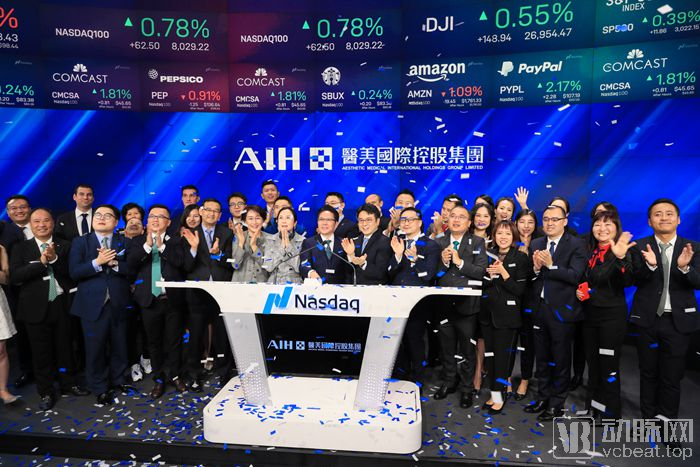
Pengai Medical Lists on NASDAQ
In the event that the underwriters do not exercise their over-allotment option, the total gross proceeds from this public offering are expected to be approximately $30.0 million. Subject to customary closing conditions, the offering is expected to close on October 29, 2019. Based on the offering price, the total market capitalization will be approximately $280 million.
Pursuant to the over-allotment option granted by the Company to the underwriters, the underwriters may purchase up to an additional 375,000 ADSs within 30 days from the date of the final prospectus at the initial public offering price less underwriting discounts and commissions. If the underwriters do not exercise their over-allotment option, the total gross proceeds from this public offering are expected to be approximately US$30.0 million. If the underwriters fully exercise their over-allotment option, the total gross proceeds from this public offering will be approximately US$34.5 million.
Cantor Fitzgerald & Co., Haitong International Securities Company Limited, and Prime Capital acted as joint bookrunners for this offering. Maxim Group LLC, Tiger Brokers, and Huasheng Capital Securities Company Limited served as co-managers for this offering.
The proceeds from this IPO will be primarily used for strategic acquisitions of additional medical aesthetic centers, upgrading existing facilities, redeeming convertible notes, and other general corporate purposes.
The prospectus shows that Pengai Medical was established in 1997 and is currently a leading medical aesthetics service provider in China. The group currently has 21 medical aesthetics centers, of which 19 are wholly-owned or majority-controlled beauty centers, spanning 15 cities across mainland China, Hong Kong, and Singapore. As of June 30, 2019, Pengai Medical Aesthetics had 567 medical personnel, including 203 doctors.
From 2011, Pengai Medical underwent audits by PwC for seven consecutive years. Reviewing the development history of Pengai Medical, from 2011 to 2018, it received equity investments from Andafu Capital, IDG, and Shanghai Chuangrui Investment (SCI). With the support of capital, Pengai achieved leapfrog development from 2016 to 2019.
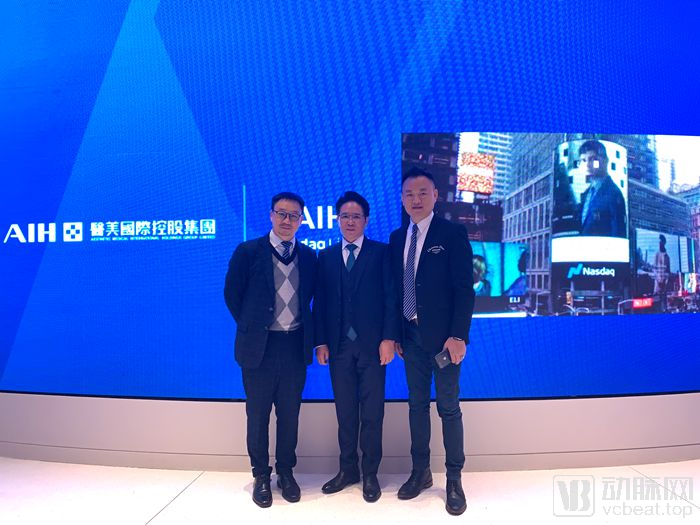
Tang Haofu of Chuangrui Investment (left) and Zhou Pengwu of Pengai Medical (center)
Amid Fierce Competition, How Did Pengai Medical Manage to Go Public Against the Backdrop of a Sluggish External Financing Environment? VCBeat (WeChat ID: vcbeat) Provided Full-Coverage Tracking Reports on Pengai Medical’s IPO. What Does Pengai Medical’s Listing Mean for the Company and Even for China’s Medical Aesthetics Industry? To Answer These Questions, Our Reporter Conducted Exclusive Interviews with Zhou Pengwu, Chairman of Pengai Medical, and Tang Haofu, Chairman of Chuangrui Investment.
The Aesthetic Medicine Industry Chain: Where Do the Profits Flow?
According to Frost & Sullivan data, the market size of China’s medical aesthetics industry grew at a compound annual growth rate (CAGR) of 23.6%, rising from RMB 52.1 billion in 2014 to RMB 121.7 billion in 2018, and is projected to reach RMB 360.1 billion by 2023, representing a CAGR of 24.2% from 2018 to 2023.
As one of the fastest-growing markets globally, China ranked second in the world in terms of market size in 2017. However, the penetration rate of the medical aesthetics services market in China remains extremely low. According to data from Frost & Sullivan, the average number of medical aesthetic procedures per 1,000 people in China was 11.7 in 2017, compared to 80.4 in South Korea, 50.1 in the United States, 43.6 in Brazil, and 27.0 in Japan. Therefore, the market holds substantial growth potential.
The medical aesthetics industry chain is primarily composed of upstream pharmaceutical and device manufacturers, midstream medical aesthetic institutions, and downstream ecosystem elements closely tied to industry development—such as O2O intermediary platforms and financial services—together forming the industry’s ecosystem.
Regarding the positioning and characteristics of various participants across the entire medical aesthetics industry chain, Tang Haofu from Chuangrui Investment, an investor in Pengai Medical, stated: “In the medical aesthetics industry, suppliers of materials and equipment—such as hyaluronic acid, botulinum toxin, and laser devices—operate in a market with relatively high concentration. However, due to the diversity of materials and equipment used in medical aesthetics, the impact of any single product or supplier on the overall market is limited. In contrast, the downstream segment comprising physical medical aesthetic hospitals exhibits low market concentration, presenting significant opportunities for consolidation.”
Specifically, upstream manufacturers benefit from relatively standardized industry regulations and a concentrated industrial landscape, resulting in higher profit margins for leading companies. In the future, these companies will continue to focus their new product development on two key areas: reducing the “cost” of cosmetic procedures for consumers and enhancing their aesthetic appeal (“beauty value”), with technological innovation driving industry growth.
Midstream end-user institutions have yet to see the emergence of nationwide chain monopolies. Classified by hospital nature, the midstream sector includes public and private hospitals. In terms of market share, private institutions account for nearly 80% of the total market, holding a dominant position. Public hospitals have a longer development history and benefited significantly from early policy advantages, such as policies facilitating technology introduction and physician welfare benefits. However, as the medical aesthetics service sector accelerates its market-oriented transformation, private enterprises—with stronger competitive awareness and boldness in market development—are poised to become leaders with superior resource integration capabilities.
In terms of quantity, China has over 10,000 mid-tier medical aesthetic institutions, which are still experiencing explosive growth at an annual rate of approximately 20%. These institutions are primarily dispersed in economically developed regions such as Beijing, Shanghai, Guangzhou, and Shenzhen, while markets in central and western China are gradually developing. In terms of scale, most institutions are small, resulting in a highly fragmented industry with significant room for consolidation and improvement. This sector is likely to become a key battleground for competition among various stakeholders. Large medical aesthetic hospitals that have already established branded identities are acquiring and integrating smaller hospitals, forming chain operations—a clearly visible trend.
Downstream internet platforms are leading a transformation in customer acquisition models within the industry. The medical aesthetics sector is highly market-driven, and consumer decision-making processes are lengthy. Leveraging internet-based advantages, these platforms have further increased the penetration rates among institutions, physicians, and users, enhanced information transparency across multi-sided supply and demand markets, and strengthened overall operational capabilities. In terms of efficiency, they serve as a link between supply and demand sides, improving decision-making efficiency and diversifying channels, thereby reducing customer acquisition and consumption costs. Among the standout performers, So-Young, the leading platform in the internet-based medical aesthetics sector, went public on the NASDAQ this May.
Regarding the potential of medical aesthetic hospitals and the rationale for investing in Pengai Medical, Tang Haofu stated, “Investing in Pengai Medical means securing the terminal end of the medical aesthetics industry chain, which is equivalent to controlling a critically important link in the entire value chain. Within the medical aesthetics industry chain, the terminal providers are currently the only participants with bargaining power. From the perspective of physician resources, access to high-quality doctors confers bargaining power. At present, the number of medical aesthetic hospitals far exceeds the number of physicians, particularly the number of high-caliber physicians. Therefore, if one seeks to invest in the medical aesthetics industry without starting from medical aesthetic institutions, it is impossible to acquire any valuable resources.”
When selecting medical aesthetic hospitals for investment, Chuangrui Investment comprehensively considers three key factors: regulatory compliance, encompassing hospital operations, equity structure, and financial status; growth potential, including revenue growth, sustained future expansion, and IPO plans, specifically whether there is a clear path to going public. In short, its investment logic can be summarized as focusing on scalable and compliant investment opportunities.
“After comprehensive consideration, Pengai Medical is the only investment opportunity that meets all three criteria within the next 3–5 years. Moreover, Pengai Medical can easily extend its operations upstream,” said Tang Haofu. “Our objective is not merely to invest in a single medical aesthetics clinic, but to invest in a comprehensive, large-scale medical aesthetics group.”
Why Pengai Medical?
According to the prospectus, Pengai Medical’s revenues from 2016 to 2018 were RMB 585 million, RMB 697 million, and RMB 761 million, respectively, with revenue for the first half of this year reaching RMB 393 million. In 2016, the group reported a profit of RMB 50.53 million, whereas it incurred losses of RMB 72.43 million in 2017 and RMB 253 million in 2018. From 2016 to 2018, its adjusted EBITDA (earnings before interest, taxes, depreciation, and amortization) amounted to RMB 96.06 million, RMB 112.1 million, and RMB 113.1 million, respectively. In the first half of this year, the group’s profit stood at RMB 80.2 million, representing a year-on-year increase of 374%.
In terms of revenue structure and profitability model, non-surgical medical aesthetics constitutes the largest source of revenue, derived from self-paying patients not covered by medical insurance. It accounted for 51.0%, 47.5%, and 49.1% of total revenue in 2016, 2017, and 2018, respectively. In the first half of 2019, surgical medical aesthetics, non-surgical medical aesthetics, and other medical aesthetic services contributed 40.1%, 51.2%, and 8.7% of total revenue, respectively.
It can be seen that as surgical medical technologies have gradually matured with relatively lower risks, and younger clients have increased their spending on minimally invasive therapies, the revenue ratio between non-surgical aesthetic procedures and surgical procedures has reached 6:4.
Although consumer awareness has increased and access to medical aesthetic treatments has become more convenient, information asymmetry and high marketing costs have resulted in the Chinese medical aesthetics industry being characterized by high gross profit margins but low net profit margins. As the market faces a turning point for transformation, achieving a sustainable expansion model has become a key priority for every medical aesthetics group.
Throughout its development, Pengai Medical has been committed to expanding its chain network layout. By establishing a centralized network management system, it has formed a three-tier structure comprising large flagship hospitals, medium-sized hospitals, and small satellite clinics.
For physical hospitals, the ability to form a chain directly determines their ultimate competitiveness. Through chain operations, medical aesthetic hospitals can better compete with small and medium-sized hospitals in the same industry. Zhou Pengwu stated that competitiveness is mainly reflected in the following aspects:
First, centralized group procurement. As a leading medical aesthetics enterprise in China, the Group can implement unified procurement of hyaluronic acid and botulinum toxin across its 20 hospitals, thereby basically ensuring the lowest procurement prices nationwide.
Second, the Group centrally allocates its expert physicians. Given that physician compensation constitutes a significant proportion of the operating costs for medical aesthetic hospitals, the unified deployment of expert physicians across the Group enables them to provide services at multiple facilities through multi-site practice arrangements. This approach not only effectively mitigates medical risks but also optimizes physician workload utilization, thereby reducing the fixed cost burden per physician.
Third, the continuous enhancement of national brand value helps boost consumer trust and loyalty, while alleviating concerns about medical safety.
In addition, the reporter learned that Zhou Pengwu, as the Vice President of the Institutional Branch of the Medical Aesthetic and Plastic Surgery Association, has a deep understanding of policies, maintains good relations with local medical regulatory authorities, and implements the latest policies, ensuring that compliance measures better meet the requirements of regulatory bodies.
China’s medical aesthetics industry has a history of nearly 30 years, marked by a period of unregulated growth, during which compliance and medical safety have remained persistent constraints on the development of hospitals.
Regarding the Pengai Medical team, Tang Haofu stated, “The Zhou Pengwu team is dedicated to excelling in a single focus: delivering high-quality medical services. Upholding a craftsman’s spirit consistently for over a decade, their reputation has been built through years of accumulation. Due to their rigor and strict adherence to medical quality standards, Pengai has maintained an industry-leading position in medical quality for many years. It is no exaggeration to describe Pengai as the most compliant enterprise in the entire industry. Its steadfast commitment to its original mission and operational philosophy has ultimately propelled Pengai to its initial public offering.”
Reviewing the development trajectory of Pengai Medical, its strategy has been driven by mergers and acquisitions. The revenue growth model for its medical aesthetic hospitals primarily stems from organic growth, new store openings, and the acquisition of existing clinics. Following its public listing, Pengai will leverage its capital and brand advantages to become a consolidator in the medical aesthetics market. This will lead to increased market concentration within the downstream segment of physical medical aesthetic hospitals, thereby enhancing bargaining power against suppliers. Future efforts will focus on the following areas:
Customer Acquisition.By concentrating on online marketing, the brand influence of Chinese medical aesthetics across China continues to expand, generating economies of scale; meanwhile, cooperation with high-cost channel partners such as beauty salons is being gradually reduced.
Product Development.Continue to develop new products and maintain differentiation from competitors; leverage the expertise of our mature medical team and their understanding of customer needs.
Acquisition.Acquire market share through acquisitions in a rapidly growing market; focus on profitable target companies with reasonable valuations (below 12x P/E ratio); Peng Ai successfully acquired four targets in 2017 (three in China and one in Singapore); and is continuing to engage with various target companies in China and overseas (the United States, South Korea, and Singapore).
Regarding the relationship between investment firms and enterprises, Tang Haofu stated, “Investment firms can help companies accelerate their growth. We are currently in an era of brand consolidation rather than a period for launching new medical aesthetic clinics. Opening a new clinic involves substantial costs, such as site selection and renovation. From an investment perspective, there is a stronger preference for directly acquiring existing clinics. For profitable yet non-compliant enterprises, the cost of independently achieving regulatory compliance and pursuing an initial public offering (IPO) is significant. Therefore, financial standardization can be directly achieved during the acquisition process.”
Through its initial public offering, Pengai’s industry-leading demonstration of high-standard compliance and the concept of safe aesthetic enhancement will gain greater visibility and recognition, helping to further improve the negative perceptions held by the public and certain regulatory authorities toward the medical aesthetics industry.
VCBeat Exclusive Interview with Zhou Pengwu: Q&A
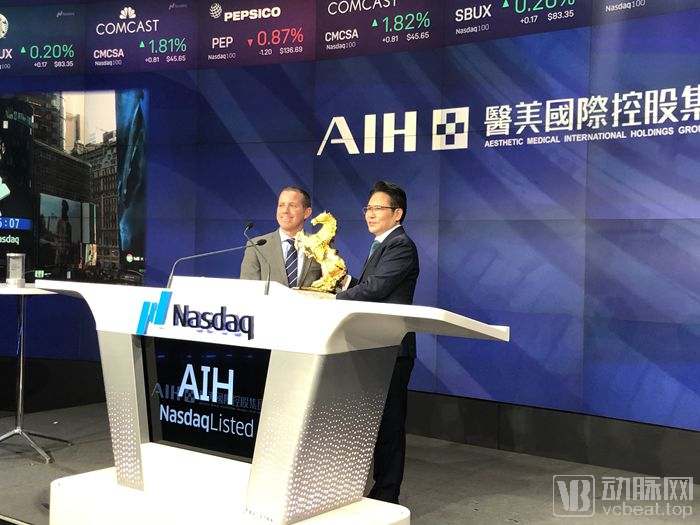
Peng Ai Medical’s Zhou Pengwu (right)
“The market will become increasingly concentrated among leading institutions with strong compliance records.”
VB: How to comment on the label of excessive profits in the medical aesthetics industry?
Zhou Pengwu:The medical aesthetics industry boasts relatively high gross margins, typically around 60%, which often leads to its characterization as an industry with exorbitant profits. However, due to intense market competition and high customer acquisition costs, net profit margins remain modest after deducting marketing expenses, generally falling below 10%.
The label of “exorbitant profits” attached to certain medical aesthetics institutions stems from historical issues of opaque pricing, where some companies achieved such profits by using non-compliant products and employing unlicensed practitioners. Leading enterprises like Pengai do not have such problems.
VB: In the early years, China’s medical aesthetics market was plagued by widespread irregularities and non-compliance. When do you think the industry began to turn for the better?
Zhou Pengwu:In recent years, the state has vigorously cracked down on non-compliant practices in medical aesthetic institutions, which is actually a positive development for the industry and constitutes a significant benefit for leading enterprises like ours.
Due to the large number of small and medium-sized enterprises in the industry, some cut costs by using raw materials from brands not approved by the National Medical Products Administration (NMPA), or even smuggled drugs, and by hiring physicians without practicing qualifications. With weak medical oversight, these entities have performed injections and surgeries in facilities lacking clinic or hospital licenses, leading to numerous severe incidents, including patient disability.
Over the past two years, the state has vigorously rectified non-compliant institutions within the industry, shutting down a large number of unlicensed and non-compliant clinics, and strictly investigating life beauty establishments for illegally providing medical aesthetic services. As a result, the market will increasingly consolidate around leading institutions with strong compliance records.
VB: How does Pengai Medical's medical safety compare to that of other aesthetic medicine chains or brands?
Zhou Pengwu:With 22 years of operational history, we are one of the few chain institutions founded by physicians among leading enterprises. We maintain one of the best medical safety records in the industry, with zero fatalities since our inception.
VB: How does Pengai Medical address compliance issues?
Zhou Pengwu:With a background in surgery, I place paramount importance on medical compliance. Given that the medical aesthetics industry is subject to stringent regulation, regulatory authorities closely scrutinize hospital compliance and conduct rigorous routine inspections. We also prioritize medical safety control measures, including preoperative patient assessments, compliance in the procurement channels for surgical materials and consumables, verification of physicians’ practice licenses, proper maintenance of medical records, and the readiness of emergency rescue facilities. These comprehensive daily inspections and safeguards have ensured that we have not experienced any major safety incidents since our inception.
“Leveraging the power of capital to achieve a nationwide footprint through mergers and acquisitions”
VB: When did Pengai Medical determine the direction of its chain expansion?
Zhou Pengwu:In 2003, Peng Ai Medical strategically upgraded its first comprehensive hospital within the group—Pengcheng Hospital. In 2005, it established the group’s first specialized hospital, Shenzhen Peng Ai Medical Aesthetic Hospital, adjusted its business strategy, engaged a Japanese consulting team, defined the development direction for specialized medical aesthetic hospitals and chain operations, and set a long-term goal of achieving an initial public offering (IPO).
VB: What is the pace at which Pengai Medical introduces capital?
Zhou Pengwu:Since 2011, Peng Ai has leveraged capital to achieve nationwide expansion across China through mergers and acquisitions, enabling rapid growth. In 2012, after declining multiple potential investors, the company selected IDG as its long-term capital partner. With a total investment of approximately USD 15 million, they clarified the pathway for an overseas main-board listing and initiated preparatory work, including the appointment of PwC as auditor, a role it continues to hold to this day.
In 2016, the company continued to bring in Series B investors, introducing ADV as a strategic shareholder with an investment of nearly $40 million. The funds were used to acquire five hospitals under the Yueji Group, elevating Pengai’s scale and development to a higher level. In 2018, it completed its Series C financing led by SCI. This journey has culminated in today’s IPO.
VB: How to expand into the national and international markets and build a chain network?
Zhou Pengwu:We have established a centralized network management system structured into three tiers: large flagship hospitals, medium-sized hospitals, and small satellite clinics. Pengai Medical exercises strong control over its subsidiary hospitals, holding majority stakes in most of them. The group maintains oversight across key functional areas, including human resources, medical quality control, compliance, procurement, marketing, and finance.
VB: What are the benefits of forming a hospital network?
Zhou Pengwu:Our extensive hospital network enables lower procurement costs. Sharing specialist physicians across the entire group reduces our average physician costs, while sharing medical devices within regional areas helps lower equipment depreciation expenses. Additionally, centralized online and offline advertising campaigns across the group reduce overall customer acquisition costs.
“Attracting Outstanding Chain Operation Talent Globally”
VB: How does Peng Ai Medical ensure the provision of standardized services?
Zhou Pengwu:We have implemented a standardized service protocol across the entire group, covering the entire patient journey from initial consultation and image design to treatment delivery and follow-up. We conduct regular training for mid-to-senior level hospital management and sales consultants to ensure uniformity in service processes.
Our ability to ensure the implementation of standardized services stems from the company’s controlling stakes in its subsidiary hospitals and its strong operational control capabilities.
VB: How can cross-regional chain enterprises address challenges in branding, management, customer acquisition, talent, and technology?
Zhou Pengwu:For cross-regional chain operations, we will implement unified management and brand marketing at the group level, centrally manage online and offline advertising placements, expand customer acquisition channels, and promote standardized service processes to enhance customer repurchase rates.
At the talent level, one of the objectives of this IPO is to attract more outstanding professionals in chain operations to join the company and bring advanced concepts in chain management.
From a technical perspective, by acquiring clinics in Hong Kong (China), Singapore, the United States, and other regions, and leveraging Dr. Zhou’s extensive frontline clinical experience, we are positioned to gain immediate access to and introduce cutting-edge global aesthetic medicine technologies. For many technologies or devices that have not yet received regulatory approval in the Chinese market, we can facilitate access by referring clients to receive services overseas.
VB: What does the post-IPO landscape mean for future development and strategic planning?
Zhou Pengwu:Following its listing, Peng Ai will have the opportunity to remain the only medical aesthetics company listed on the main board for an extended period. This status will significantly enhance the company’s brand value, help attract top-tier talent in chain operations globally, and provide strong advantages for future financing, mergers and acquisitions, and upstream-downstream integration.
VB: What is the strategic direction for the next 3-5 years?
Zhou Pengwu:Over the next three to five years, we will remain primarily focused on our core business in medical aesthetics, pursuing a strategy centered on establishing satellite clinics and strategic mergers and acquisitions. In the longer term, leveraging our robust sales channels to enter the upstream market for medical devices and consumables offers distinct advantages. Collaborating with upstream device manufacturers and pharmaceutical companies will secure distribution pathways for their products while reducing our overall procurement costs, thereby achieving a synergistic effect where 1+1>2.
Related Reading:
Annual Revenue Nears RMB 800 Million, 21 Stores: Pengai Medical to List on NASDAQ