

16 Cutting-Edge MedTech Projects Compete at Inaugural Zhongguancun 'Med-Engineering Valley' Innovation Roadshow in Beijing

ZhenFund
ZhenFund is an angel investment fund jointly founded by New Oriental co-founders Xu Xiaoping and Wang Qiang, along with Sequoia Capital China. It focuses on early-stage investments in industries such as TMT.
“Beijing, home to China’s top universities and hospitals, is the most fertile ground for pioneering “0 to 1” projects at the intersection of medicine and engineering.“The ‘Med-Eng Valley’ project roadshow and high-level forum will help innovation and entrepreneurship projects at the intersection of medicine and engineering establish opportunities for exchange and cooperation with capital and government, thereby facilitating project implementation and industrialization,” said Wang Tianmiao, Honorary Director of the Robotics Institute at Beihang University and Dean of the Zhongguancun Zhiyou Angel Research Institute.
On the afternoon of October 25, the inaugural closed-door roadshow and exchange meeting for innovation and entrepreneurship projects at Zhongguancun “Medical-Engineering Valley” kicked off in Beijing. The event was jointly organized by the Beijing Advanced Innovation Center for Biomedical Engineering, the Innovation and Translation Center of Peking University Third Hospital, and the Zhongguancun Zhiyou Angel Research Institute.Attendees included Zhao Xinliang, Director of the Beijing Overseas Scholars Pioneer Park; Zhang Ruijun, Founding Partner and CEO of Yarui Capital and Professor at the Renmin University of China Business School; Chen Gaopeng, Investment Vice President of ZhenFund; Ren Bobing, Investment Vice President of Baidu Ventures; Li Yang, Director at Puhua Capital; Shi Yonghui, Managing Director and Head of Corporate Venture Capital and Innovation Incubation at Medtronic China; and dozens of other experts specializing in project incubation, corporate investment, and industrial development.
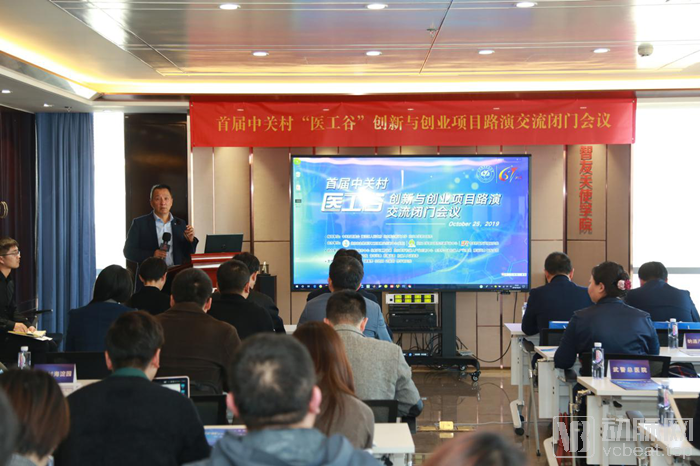
(Site Map)
The conference attracted over 50 innovation and entrepreneurship projects to register, and after rigorous screening,16 High-Quality Innovation and Entrepreneurship Projects Emerge as Standouts, made an appearance at this roadshow. The project primarily involves fields such as artificial intelligence, robotics, and 3D printing.
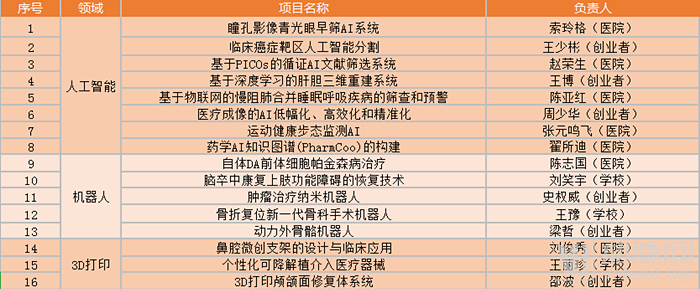
(Roadshow Project Image)
During the project pitch session, the distinguished panel of judges provided detailed evaluations of each project from multiple perspectives, including clinical value, technological and clinical competitiveness, the professional expertise of the scientists and physicians involved, and the maturity of clinical implementation.Ultimately, a total of 10 projects were selected through scoring.
Following the roadshow, VCBeat conducted an exclusive interview with Zhang Ruijun, one of the judges, who is the Founding Partner and CEO of Yarui Capital and a Professor at the Business School of Renmin University of China. She described the day’s roadshow as “very surprising” and expressed strong optimism about all 16 high-quality projects at the intersection of medicine and engineering.“Previous project roadshows might have only attracted the attention of venture capital funds. This time, however, the event drew interest not only from funds but also from hospitals, government entities, and leading industry players such as Medtronic,” said Zhang Ruijun.
The initiators of these 16 high-quality projects include physicians from Peking University Third Hospital, engineers dedicated to scientific research, and young scientists from Beihang University.Among the projects presented, VCBeat was particularly impressed by two medical-engineering interdisciplinary initiatives: “Deep Learning-Based 3D Reconstruction System for Hepatobiliary Structures” and “Nanorobots for Tumor Therapy.”
"Deep Learning-Based 3D Reconstruction System for Hepatobiliary Structures"It is a full-process AI clinical decision support system for surgery, developed by Beijing Jingzhen Medical Technology Co., Ltd. Based on the necessity of 3D preoperative liver planning in procedures such as hepatectomy, the system addresses current pain points in surgical practice, including low efficiency and imprecision in CT image processing and reconstruction. It provides surgeons with visualized, quantitative, and intelligent tools for surgical decision-making and assistance.
Mr. Wang Bo, the founder, holds a Ph.D. from the Department of Precision Instruments at Tsinghua University. As team leader, he won the First Prize in the national “Challenge Cup” competition and the Gold Award in the 3rd China International “Internet+” Innovation and Entrepreneurship Competition. In August 2018, he founded Jingzhen Medical Technology, which secured tens of millions of RMB in financing across two rounds within its first year of operation.
“Our team comprises experts in medicine and engineering. Our algorithm currently ranks fifth globally, offering high accuracy and world-leading performance. We have already partnered with six top-tier hospitals in China, covering thousands of surgical patients,” said Dr. Wang in an interview with VCBeat. He noted that the high-precision algorithm can replace the “annotation factories” operated by manual service providers. This service is already included in the pricing schedule, and Jingzhen’s costs are significantly lower than those of manual service companies.
“Nanorobots for Tumor Therapy”The “smallest medical nanorobot,” developed by the research team at the National Center for Nanoscience and Technology, has achieved, for the first time, precise in vivo transport and delivery using DNA origami-based drug loading technology. As an intelligent drug administration platform, it enables efficient targeted delivery of multiple therapeutic agents.
“Its advantage lies in the effective encapsulation and intelligent delivery of substances that are traditionally difficult to drug, such as toxins and snake venom proteins, thereby promoting the development of novel anti-tumor drugs and holding broad application prospects in the field of nanomedicine.” Dr. Shi Quanwei, a team member, introduced that the project is a global first and has recently attracted significant attention from many well-known investment firms.
In addition to the high-quality projects mentioned above, initiatives such as the “3D-Printed Dental Restoration System,” “IoT-Based Screening and Early Warning for COPD Comorbid with Sleep-Disordered Breathing,” and “Design and Clinical Application of Minimally Invasive Nasal Stents” have also attracted significant attention from investors.
Finally,Chen Gaopeng, Vice President of Investment at ZhenFundHe spoke highly of this innovation and entrepreneurship project, stating: “The integration of medicine and engineering has spawned numerous high-quality projects,From an investor’s perspective, when selecting projects, I prioritize whether the project addresses a critical pain point, whether the technology can effectively resolve these pain points, the strength of execution capabilities, and whether there is a full-time team capable of rapidly advancing the project.”
The 10 projects selected for this closed-door roadshow are: Design and Clinical Application of Minimally Invasive Nasal Stents; Personalized Biodegradable Implantable Medical Devices; Construction of PharmCoo, an AI Knowledge Graph for Pharmacy; IoT-Based Screening and Early Warning for COPD Comorbid with Sleep-Disordered Breathing; Autologous DA Precursor Cell Therapy for Parkinson’s Disease; Tumor-Blocking Therapeutic Nanorobots; Deep Learning-Based 3D Reconstruction System for Hepatobiliary Structures; Next-Generation Orthopedic Surgical Robot for Fracture Reduction; 3D-Printed Dental Restoration System; and AI-Driven Low-Dose, High-Efficiency, and High-Precision Medical Imaging.