

JunLian Healthcare Global Drug Pipeline Update – Issue 28
Oct 28, 2019 18:00
CST Updated
18:00

This week, there were 9 new drug data entries, including 4 in oncology, 1 in neurology, 1 in respiratory medicine, 1 in cardiovascular medicine, 1 in gastroenterology, and 1 in hematology.
❖ Biogen’s investigational Alzheimer’s disease therapy, aducanumab, has made a dramatic comeback following the termination of its clinical trials in March this year, with plans to submit a Biologics License Application (BLA) to the FDA next year. Spurred by this news, Biogen’s stock price surged by 40%, a rare volatility for a company with a $40 billion market capitalization. The Alzheimer’s disease (AD) field has long been regarded as cursed terrain, burying the dreams of countless new drugs; many companies that bet on this sector entered with ambitions to “go big” but were forced to accept the outcome of “going home.” Nevertheless, although aducanumab’s resurgence has been marked by significant momentum, many skeptics argue that the current results represent more of a victory in data analysis than a major breakthrough in therapeutic efficacy, leaving the future approval outlook uncertain. However, if approved, aducanumab is expected to be crowned the next generation’s blockbuster drug.
❖ Roche announced that the Phase 3 clinical trial of Tecentriq (atezolizumab) in combination with Avastin (bevacizumab) for the treatment of patients with previously treated hepatocellular carcinoma met both endpoints, demonstrating significant improvements in overall survival (OS) and progression-free survival (PFS) compared to sorafenib.This is the first first-line regimen to improve overall survival (OS) in liver cancer since sorafenib., which can be regarded as a historical milestone (indeed, lenvatinib only achieved non-inferiority in overall survival [OS]). The treatment of liver cancer was previously monopolized by sorafenib; although its efficacy was suboptimal, numerous challengers were defeated in head-to-head trials. In recent years, there has finally been a turning point. Shortly after lenvatinib became a first-line therapy, the combination of pembrolizumab (K) and lenvatinib raised the objective response rate (ORR) to approximately 45%, and now atezolizumab plus bevacizumab (T+A) has demonstrated significant overall survival (OS) benefit. In the future, for new drugs to make an impact in the field of liver cancer, it is no longer sufficient to merely compete against sorafenib.
Biogen Announces Submission of New Alzheimer’s Drug for Marketing Approval in Early 2020
Biogenand Eisai of Japan announced that in collaboration withFDAFollowing negotiations, the plan will be2020At the beginning of the year, toFDASubmit Alzheimer's Disease Drugaducanumabthe Biologics License Application for market approval, and will continue to engage in discussions with regulatory authorities in regions such as Europe and Japan.
aducanumabYesBiogenand with the Japanese pharmaceutical company Eisai (Eisai) company co-developed bioprotein therapy, targetingβ-Amyloid, a protein that forms plaque-like deposits in the brain, is considered to be the cause of this disease.
Analysis of a larger dataset from the Phase III clinical trial, including 3,285 patients, among whom 2,066 had the opportunity to complete the entire 18-month treatment course.
The study was considered to have met its primary endpoint, with a significant reduction in clinical cognitive decline among patients; analyses of the subgroup receiving high doses also supported these findings. ReceivedaducanumabTreated patients showed significant benefits in cognitive and functional domains, including memory, orientation, and language.
AducanumabMechanism of Action
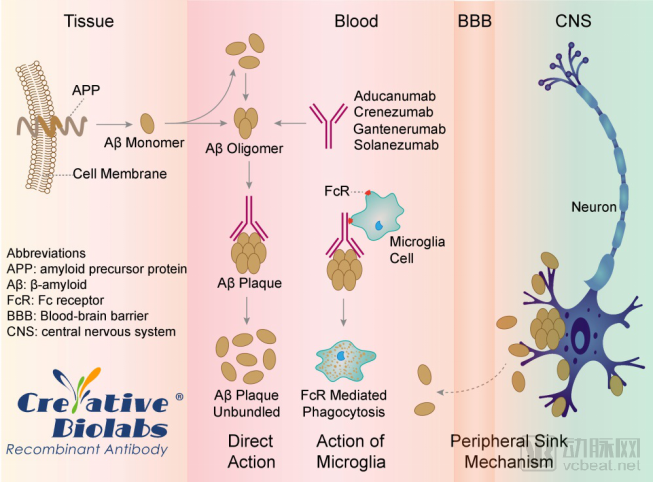
Data Source: Creative Biolabs
AstraZeneca’s Dapagliflozin Approved for New Indication to Reduce Heart Failure Risk
AstraZeneca announced that the FDA has approved dapagliflozin to reduce the risk of hospitalization for heart failure in adults with type 2 diabetes and other cardiovascular risk factors; the drug is currently under regulatory review in China, with a decision expected in the first half of 2020.
Dapagliflozin is an oral SGLT2 inhibitor. SGLT2 is a transporter protein in the kidneys that facilitates glucose reabsorption. By inhibiting the function of SGLT2, dapagliflozin promotes the excretion of more glucose in the urine, thereby lowering blood glucose levels.
A Randomized, Double-Blind, Placebo-Controlled, Multicenter Phase 3 Study to Evaluate the Effects of Dapagliflozin Versus Placebo on Cardiovascular Outcomes in Adult Patients with Type 2 Diabetes Mellitus at Risk for Cardiovascular Events
Compared with placebo, dapagliflozin significantly reduced the risk of the primary composite endpoint of heart failure or cardiovascular death by 17%, and significantly reduced the risk of heart failure by 27%, with consistent treatment benefits across all patient subgroups.
AlexionLong-actingC5Complement InhibitorsUltromirisApproved for the treatment of atypical hemolytic uremic syndrome
Alexion Announces FDA Approval of Ultomiris for the Treatment of Complement-Mediated Thrombotic Microangiopathy in Patients (Aged One Month and Older) with Atypical Hemolytic Uremic Syndrome, Marking the First Approval of Ultomiris for Pediatric Patients
Ultomiris is a long-acting C5 complement inhibitor that suppresses the activation of the complement signaling pathway by inhibiting C5, the effector protein of the complement cascade. Patients can effectively inhibit the activation of the complement signaling pathway with only one injection every 8 weeks.
Based on the results of two global, single-arm, open-label studies, including one clinical trial in adults and one clinical trial in pediatric patients
Following the initial 26-week course of treatment, complete remission of thrombotic microangiopathy (TMA) was achieved in 54% of adult patients and 71% of pediatric patients.
Janssen Stelar Receives FDA Approval for New Indication in Ulcerative Colitis
Janssen Announces FDA Approval of Stelara (Ustekinumab) for the Treatment of Adults with Moderately to Severely Active Ulcerative Colitis
Stelara is an IL-12/IL-23 biologic targeted therapy. It was the first approved treatment for ulcerative colitis to demonstrate improvement in the small intestinal lining, as assessed by the endpoint of mucosal improvement evaluated via endoscopy.
The regimen consists of two phases: during the induction phase, patients receive a single intravenous infusion of Stelara at 6 mg/kg; eight weeks later, they enter the maintenance phase, receiving subcutaneous injections of Stelara 90 mg every 8 weeks for 44 weeks.
During the induction therapy phase, 19% of patients in the study group achieved clinical remission after 8 weeks, with 58% of these patients also achieving symptomatic relief. During the maintenance therapy phase, 45% of patients achieved clinical remission after one year of treatment, and 43% of them no longer required glucocorticoid therapy.
Roche’s T+A Immunotherapy Combination Meets OS Endpoint
Roche’s official website first announced that the Phase 3 clinical trial IMbrave150, evaluating Tecentriq (atezolizumab) in combination with Avastin (bevacizumab) for patients with unresectable hepatocellular carcinoma (HCC) who had not previously received systemic therapy, met both primary endpoints.
Secuado is a transdermal patch formulation of the atypical antipsychotic asenapine. The transdermal drug delivery system (TDDS) developed by Noven can maintain therapeutic plasma concentrations over a 24-hour dosing period.
A total of 501 patients with unresectable hepatocellular carcinoma (HCC) who had not received prior systemic therapy were enrolled and randomized in a 2:1 ratio to receive combination therapy with Tecentriq plus Avastin or sorafenib, the current standard of care for HCC. The co-primary endpoints were overall survival (OS), independent review facility-assessed response (IRF), and progression-free survival (PFS). Secondary endpoints included objective response rate (ORR), time to progression (TTP), duration of response (DOR), patient-reported outcomes (PROs), safety, and pharmacokinetics.
Both primary endpoints were met, demonstrating that the T+A regimen achieved statistically significant and clinically meaningful improvements in overall survival (OS) and progression-free survival (PFS) compared with standard-of-care sorafenib.
Novartis’ New Asthma Drug Fevipiprant Fails in Phase 3 Clinical Trial
Novartis Announces That Its Asthma Relief Drug Fevipiprant Failed to Improve Patients’ Lung Function Compared With Placebo in Two Phase 3 Trials (ZEAL 1 and ZEAL 2)
Fevipiprant is a DP2 antagonist. DP2 is a receptor involved in driving the inflammatory process of allergic asthma, and this class of asthma medications can treat a small subset of patients with uncontrolled asthma.
Approximately 700 patients with inadequately controlled asthma were enrolled and randomly assigned to receive either once-daily fevipiprant or placebo, in addition to standard therapy. The primary endpoint was the change in forced expiratory volume in one second (FEV1) after 12 weeks.
Compared with placebo, fevipiprant failed to improve patients’ lung function. Novartis did not disclose whether the drug met its secondary endpoints in the trial, including measures such as daytime asthma symptom scores and quality of life.
Arvinas’ PROTAC Therapy Demonstrates Excellent Tolerability in Phase 1 Clinical Trial
Arvinas Announces Latest Data on Its PROTAC Therapies: Leading Candidates ARV-110 and ARV-471 Demonstrate Favorable Tolerability in Two Phase 1 Clinical Trials
PROTAC therapy is a protein degradation technology that utilizes small-molecule drugs to simultaneously target the protein of interest and recruit an E3 ligase into proximity with it, thereby promoting its degradation.
The Phase 1 clinical trial of ARV-110 aims to evaluate its potential biochemical and clinical activity through PSA levels and RECIST criteria; the clinical trial of ARV-471, in addition to assessing safety and pharmacokinetic data, is designed to investigate indicators such as estrogen degradation.
In the three dose-escalation cohorts (35 mg, 3 patients; 70 mg, 4 patients; 140 mg, 3 patients), the therapy was well tolerated, with no dose-limiting toxicities observed and no grade 2, 3, or 4 related adverse events reported.
PROTACMechanism of Action of Bispecific Molecules
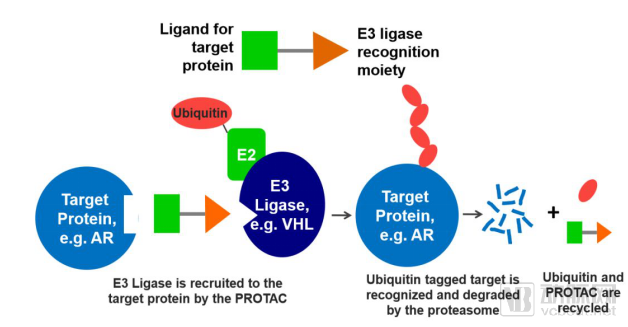
Data Source: Arvinas
Syros Pharmaceuticals’ Innovative AML Therapy Shows Positive Phase 2 Clinical Results
Syros Pharmaceuticals Announces Positive Data from Phase 2 Trial of SY-1425, a Selective Retinoic Acid Receptor Alpha (RARα) Agonist, in Combination with the Hypomethylating Agent Azacitidine for the Treatment of Patients with Newly Diagnosed AML
SY-1425 is a first-in-class selective oral retinoic acid receptor alpha (RARα) agonist that drives the expression of genes promoting cellular differentiation.
Forty AML patients ineligible for standard chemotherapy received combination therapy with SY-1425 and azacitidine; the median age was 76 years, including 13 RARA-positive patients and 4 IRF8-positive patients.
Among RARA-positive patients, the proportion achieving complete response (CR) and CR with partial hematologic recovery was 62%, while the rate of CR alone was 54%. The maximum duration of response (DOR) reached 344 days, and 82% of patients achieved or maintained transfusion independence.
GSK’s Niraparib Approved for the Treatment of Patients with Homologous Recombination Deficiency (HRD)-Positive Ovarian Cancer
FDA Announces Approval of GSK’s Niraparib for Expanded Indication in the Treatment of Patients with Advanced Ovarian Cancer Who Have Received More Than Three Prior Chemotherapy Regimens and Whose Tumors Are Homologous Recombination Deficiency (HRD)-Positive
PARP inhibitors induce cell death in tumors harboring BRCA gene mutations by inhibiting PARP-mediated DNA damage repair mechanisms, thereby leading to the accumulation of excessive DNA damage.
Global, multicenter, open-label, single-arm study enrolling 463 patients with advanced recurrent ovarian cancer who had previously received at least three lines of chemotherapy, all treated with niraparib
Niraparib demonstrated efficacy not only in patients with BRCA gene mutations (with an overall response rate of 29%) but also in patients without BRCA gene mutations who exhibited homologous recombination deficiency (with an overall response rate of 15%).
❖ Johnson & Johnson’s Janssen Pharmaceuticals’ Actelion recently announcedOPTIMAResearch data.OPTIMAThe results of the study confirmed thatOpsumitInitial oral dual therapy combined with tadalafil forPAHthe efficacy and safety in patients, and supplemented the evidence supporting combination therapy as the standard of care
❖TrovageneThe Company Announces Its PipelinePLK1Inhibitoronvansertib, withFolfiri,Avastin(bevacizumab) combination, as a second-line therapy for treating carriers ofKRASPatients with Metastatic Colorectal Cancer Harboring Gene Mutations1b/2In the Phase clinical trial, positive initial data were obtained.
❖ Sigrid TherapeuticsThe company announced the breakthrough therapy developed by itSiPore15NamedSTARachieved positive results in clinical trials. In prediabetes and newly diagnosed2in patients with type diabetes,SiPore15Significantly reduces glycated hemoglobin levels
❖ Seattle GeneticsThe company announced that itsHERSpecific Oral Small-Molecule Tyrosine Kinase Inhibitortucatinib, in the treatment of locally advanced or metastaticHER2Key Considerations for Patients with Positive Breast Cancer3Phase TrialHER2CLIMB, achieving the primary and key secondary endpoints of the trial.Seattle GeneticsThe company plans to2020Q1 of the year to the United StatesFDASubmit New Drug Application