

Weimai Builds Local Doctor-Patient Trust Through Internet-Enabled Continuity of Care
One year ago, a question was posted online: Are you satisfied with the medical conditions and doctors' services in third- and fourth-tier cities?
Interestingly, many patients did not completely dismiss their experiences: “After comparing with tier-1 cities, I found that the quality of medical care in my hometown (a tier-3 or tier-4 city) leaves room for improvement, but the doctors’ attitudes were excellent.” “My hometown is a tier-3 city; while the medical facilities are far from ideal, the attitude of most healthcare professionals was impeccable.” “The service was ten thousand times better than in tier-1 cities; only the facilities were somewhat inferior.” “The medical conditions in tier-3 and tier-4 cities are actually not as bad as one might think.” …
Healthcare professionals in third- and fourth-tier cities possess the same sincere dedication to medicine and patients, yet they often lack the platforms and conditions necessary to fully utilize their medical expertise. Against the backdrop of China’s healthcare reform, how to accelerate the implementation of “Internet + Healthcare” has become a issue of significant concern to both government authorities and grassroots patients. Evidence shows that the key to truly addressing the challenges of “Internet + Healthcare” lies in unleashing doctors’ service capabilities to supplement the deficiencies in primary care services.
Both a challenge and an opportunity. As China’s leading localized entry point for healthcare services, Weimai has, through years of exploration, built a platform that enables physicians to extend the boundaries of their practice. By leveraging this internet-based platform to overcome temporal and spatial barriers, doctors can apply their extensive clinical expertise—accumulated over many years—in more diverse ways to serve patients with increasingly varied needs, thereby accelerating the implementation of “Internet + Healthcare” within medical institutions.
Not long ago, the “2019 Internet + Healthcare Services Popular Doctor Selection,” jointly organized by Weimai, VCBeat, and Sina Medicine, came to a close. The event attracted participation from over 6,000 doctors across 19 cities in China, with more than 2.8 million users casting likes for their supported physicians, bringing the total number of votes to over 30 million. Recently, several frontline doctors who participated in the campaign shared with Health World the stories that unfolded on the Weimai platform, embodying the commitment: “You entrust your life to us; we will safeguard it with all our might.”
No sooner had the plane touched down than Tan Zhanguo, Deputy Director and Head of Neurosurgery at Luohe Central Hospital in Henan Province, opened his smartphone to find a notification from the “Weimai” app: a long-time patient was seeking his advice. From describing current physical conditions to discussing future rehabilitation management, the patient’s barrage of questions was met with an equally prompt series of responses from Dr. Tan. Before he had even left the airport, Dr. Tan had already provided complete answers.
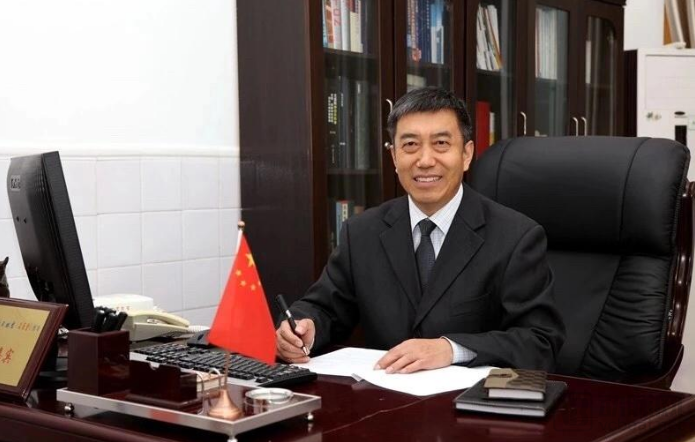
Tan Zhanguo, Vice President and Director of the Department of Neurosurgery at Luohe Central Hospital in Henan Province
The ability to fully leverage fragmented time to answer patients’ questions and address their concerns anytime, anywhere is what Tan Zhanguo and his hospital colleagues have found most impactful after nearly two years of using “Weimai.” This also reflects the corporate mission that “Weimai” established at its inception in 2015: “To make healthcare services more accessible.”
“Weimai” CEO Qiu Jialin once described the following scenario: You visit a hospital, receive a prescription, and take the medication at home. If you experience discomfort afterward, what should you do? Is it serious? Typically, you might return to the hospital for consultation, but the physician who treated you during the day may not be available. Now, however, you can promptly consult them through “Weimai.”
Frontline doctors in smaller cities can also shine, thanks to the unique nature of Weimai’s strategic layout. Unlike other companies that choose to “conquer” first- and second-tier cities, Weimai adopted a distinctive approach from its inception: “encircling the cities from the countryside,” as envisioned by its founder, Qiu Jialin. According to his statistics, China has 334 prefecture-level administrative divisions, with approximately 300 cities boasting populations of over one million. Among these, only about 20 are first- and second-tier cities, while roughly 190 are third- and fourth-tier cities, many of which have yet to widely adopt Internet-plus-healthcare services.
At the same time, he identified a key point: “The current and future development landscape of enterprises must align with the direction and logic of healthcare reform.” Qiu Jialin further elaborated that the logic behind tiered diagnosis and treatment, as well as the objective of healthcare reform, is to “strengthen primary care and ensure basic services,” which constitutes the baseline set by the government. While adhering to this baseline, Weimai has leveraged new technologies and models in practice to innovate and improve medical and health services, thereby meeting the public’s demand for more diverse and enriched services beyond basic medical and healthcare needs.
Leveraging a steady and reliable service model and robust operational capabilities, Weimai has waged a speed-focused campaign. It rapidly penetrated the healthcare service entry points in China’s major third- and fourth-tier cities, providing users with a suite of precise internet-based services, including online appointment registration, report inquiries, end-to-end payment processing, online doctor consultations and diagnoses, medical record and health file management, prescription circulation and medication delivery, maternal and child health and chronic disease management, tiered diagnosis and treatment, remote medical care, and family doctor services.
If Weimai’s localized service scenario were to be described in one sentence, Qiu Jialin would say: “Shop on Taobao, seek medical care via Weimai.” This slogan has now taken deep root in the public consciousness. “In pilot cities where Weimai operates intensively, 35%–40% of daily hospital visitors register for appointments through Weimai, while 40% of local hospitals’ medical payments are processed via mobile or QR-code scans through Weimai’s unified payment platform.”
There are currently dozens of such model cities on Weimai. To date, more than 80 cities have been launched on the Weimai app, most of which are third- and fourth-tier cities. The number of launched cities is expected to exceed 100 within this year, achieving what Qiu Jialin described as the first-phase target.
In the eyes of Wang Jianguo, Chief Physician in the Department of Urology at Jingzhou Central Hospital in Hubei Province, Weimai has become a channel for him to enhance his medical skills. “At times, this platform poses a challenge for me. Because patient feedback is more direct, I need to provide them with more comprehensive advice, whether in terms of medical knowledge or service quality.” Wang Jianguo has been using Weimai for only half a year, and approximately 300 users have clicked “+Follow” on his profile page. “In the future, we will further expand our capabilities through this platform.”
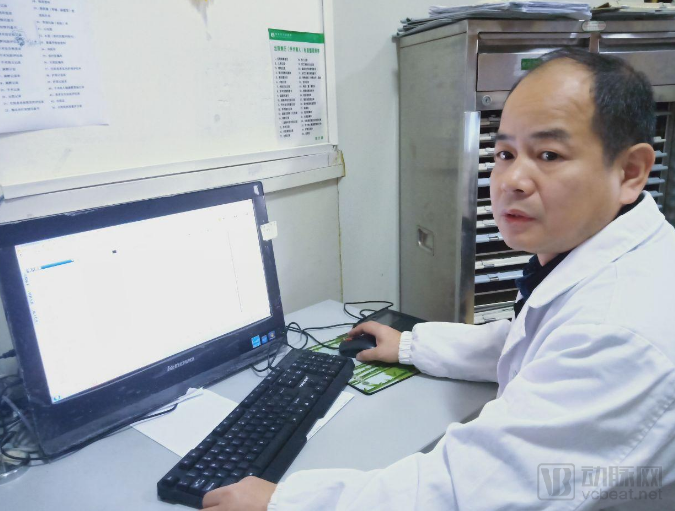
Wang Jianguo, Chief Physician, Department of Urology, Jingzhou Central Hospital
Beyond establishing a full-process service system encompassing registration, appointment scheduling, payment, report inquiry, prescription issuance, medication dispensing, and post-consultation physician follow-ups, “Weimai” has also become the last “lifeline” for some patients.
Speaking of the plea for help from the mother of a sick child in Daliangshan, Sichuan Province, Liao Gui, Associate Chief Physician of the Department of Pediatrics at Yunnan Third People's Hospital, was deeply moved.
She recalled that around the Spring Festival this year, her mother took the child to the hospital for a trace element test. To facilitate future access to the results for family members, Liao Gui recommended that they download the “Weimai” app. A month after returning home, the child suddenly developed severe pustular dermatitis with significant infection. Despite visiting nearly all four other Grade 3A hospitals in Kunming, they were refused treatment at each one. In desperation, the mother contacted Liao Gui through the “Weimai” app.
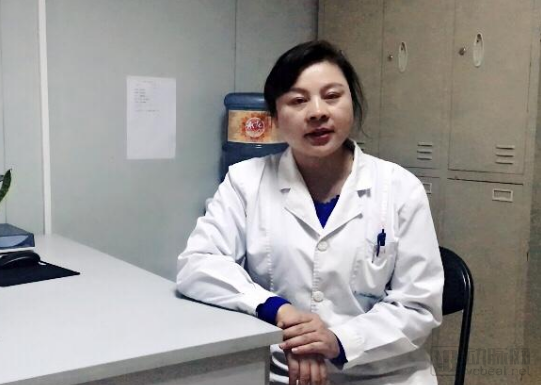
Liao Gui, Associate Chief Physician, Department of Pediatrics, The Third People's Hospital of Yunnan Province
"When Liao Gui saw the child, 'the entire face and nasal cavity were almost completely necrotic,' with clinical manifestations resembling Staphylococcal Scalded Skin Syndrome (SSSS), also known as Ritter's disease. 'The appearance was terrifying, and the child’s condition was critically severe.' She immediately initiated emergency treatment. The child was discharged after seven days of hospitalization, with medical costs totaling only approximately 2,000 yuan."
“Now, both the mothers and their children are my fans.” Liao Gui’s tone radiated happiness. “Whenever they have questions, they usually reach out to me on Weimai.” A search for “Liao Gui” on the Weimai platform shows that, to date, she has handled 6,039 consultations, maintaining a 100% response rate and a 100% positive rating. These figures sufficiently demonstrate the recognition and trust she has earned from pediatric patients and their families.
“Trusted Healthcare” is the core concept proposed by Qiu Jialin as Weimai strives toward its 4.0 model. He has categorized internet healthcare into four stages and models: the 1.0 “Floating Cloud Model” that emerged a decade ago, the 2.0 “Floating Ice Model” that appeared seven to eight years ago, the current 3.0 “Iceberg Model,” and the future 4.0 New Healthcare Era. The 4.0 era will truly achieve a “patient-centric” approach, delivering continuous, precise, and trusted personalized healthcare services through a family doctor model.
“During the evolution from 3.0 to 4.0, we have often reflected on the core of healthcare service operations: trust. Healthcare services built on trust foster high patient adherence, which naturally facilitates recovery—this is the value of ‘trust.’ Therefore, Weimai is committed to establishing a medical and health service system grounded in doctor-patient trust,” emphasized Qiu Jialin.
Now, Qiu Jialin is one step closer to the envisioned 4.0.
The story also takes place at the Third People's Hospital of Yunnan Province. The appearance of a familiar long-term patient filled Zhang Fan, Chief Physician of the Department of Gastroenterology, with a heartfelt sense that “being a doctor is truly rewarding.” In late 2013, Dr. Zhang was transferred to her current hospital. Due to the hurried nature of her departure from her previous institution, she did not bid farewell to anyone and consequently lost contact with this patient.
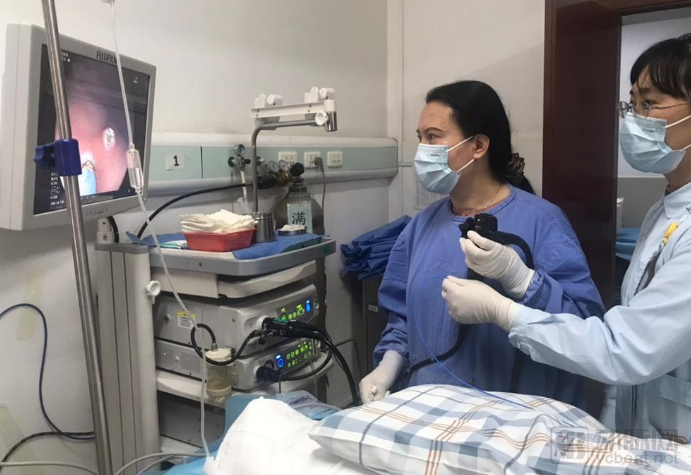
Zhang Fan, Chief Physician of the Department of Gastroenterology at Yunnan Third People's Hospital
“To my surprise, he suddenly appeared before me during an outpatient consultation this year,” said Zhang Fan, visibly moved. It turned out that the patient had inquired about Zhang at his former workplace several times, hoping to obtain his contact information, but was repeatedly declined. Just as he was about to give up his search, the patient stumbled upon Zhang’s profile on Weimai and was overjoyed. “The patient’s recognition gives me a strong sense of professional fulfillment. Without Weimai, those patients who trust me might never have been able to find me again,” Zhang remarked.
By establishing trust-based connections between doctors and patients, medical consultations are no longer constrained by time or location. Zhang Fan has actively promoted the use of “Weimai” within his department, even assigning dedicated staff to manage it. Tan Zhanguo told Health界 that the hospital has specifically set up two online consultation rooms to facilitate physicians in providing services to patients via “Weimai”...
In 2019, the Weimai platform hosted over 100,000 physicians from public hospitals. The majority of these professionals came from primary and secondary care institutions, yet they remained at the forefront of modern healthcare development. By fully leveraging the advantages of internet-based platforms, they collaborated with Weimai to build trust-based doctor-patient relationships and facilitate the continuous improvement of accessible local medical and health services.
Weimai’s goal is to ensure that every family has its own family doctor, which requires starting with localized services to build “trust-based healthcare.”
In fact, “Weimai” does not follow the traditional internet healthcare model of shifting doctors’ services from offline to online; instead, it is led by hospitals, with enterprises responsible for its development and in-depth operations.
“We have moved the ‘3+1’ functions of all hospitals in a city online (with ‘3’ representing services, payments, and data, and ‘1’ representing doctors). Assuming that 10,000 people seek medical care at a hospital each day, there will be 10,000 interactions between doctors and patients daily. Weimai can thus consolidate these ‘trust-based connections’ from doctor–patient interactions onto an online platform,” said Qiu Jialin.
With doctor-patient relationships built on “trust connections,” a large cohort of outstanding physicians driving industry progress emerged from the voices of tens of millions of patients during the 10-day “2019 Weimai Internet + Healthcare Services Popular Doctor Selection” campaign.
Ideals are becoming a reality. Through Weimai’s dedicated efforts to implement the “Internet + Healthcare” model at the grassroots level, an increasing number of physicians are leveraging their own practices to inspire and mobilize colleagues across China to embrace digital tools for improving healthcare services. Their experiences serve as valuable references for other hospitals and medical professionals striving for progress. By empowering healthcare through technology, they are serving the health needs of a broader population and directly driving the overall improvement and sustained positive development of primary healthcare standards nationwide.