

Chongqing Institute of Precision Medicine, Wholly Owned by DiAn Diagnostics, Advances Precision Diagnosis and Personalized Healthcare
Each individual is unique, with variations in their genomic profile, external growth environment, and lifestyle habits. Consequently, even when two patients suffer from the same disease and receive the same treatment regimen, they may exhibit different responses due to individual differences.
Precision medicine is an emerging healthcare approach that encompasses both precision diagnosis and precision treatment. Its core focus lies in “precision,” which involves accounting for inter-patient variability by stratifying patients into distinct subgroups, and then tailoring therapeutic strategies, medication regimens, and medical products to each patient category, thereby enhancing treatment efficacy.
Since the concept was first proposed, the development of precision medicine in China has spanned just over a decade. In 2006, China pioneered the concept of “precision surgery,” which, after gaining recognition from both domestic and international medical communities, was extended to other medical fields such as radiation oncology and gynecology. Compared with traditional diagnostic and therapeutic approaches, precision medicine holds great promise for significantly improving the treatment experience and outcomes for cancer patients, indicating substantial potential for future development.
In this context, on July 6, 2018, the Chongqing Institute of Precision Medicine Industry Technology (hereinafter referred to as the “Institute”) was established in Dadukou District, Chongqing. Focusing on the research and development of new technologies and industrial translation in the field of precision medicine, the Institute has successfully applied for and been designated as a National Postdoctoral Workstation, a New-type R&D Institution, a Graduate Student Innovation Training Base, and a China-US Science and Education Cooperation Base.
The research institute is a wholly-owned subsidiary of Dian Diagnostics, China’s first publicly listed third-party medical diagnostic service provider. As Dian Diagnostics’ inaugural research base in the field of precision medicine, it aims to build a “bridge” between medical scientific research supply and demand in the big health industry, establish a “platform” for the development of common technologies in industrial medical diagnostics, and thereby create a “hub” for knowledge flow and the translation of scientific achievements.
What are the institute’s key operational priorities and its roadmap for future development? To find out, VCBeat traveled to Dadukou District and conducted an interview with Professor Yi Yuanxue, Executive Dean of the institute.
Yi Yuanxue, Executive Dean of the Research Institute and Director of Chongqing Dian Laboratory (Photo provided by the interviewee)
During an interview with reporters, the Research Institute was hosting advanced and international training courses on new technologies in precision medicine laboratory diagnostics. As Executive Dean of the Research Institute and Director of Chongqing Dian Diagnostics Laboratory, Yi Yuanxue shared his experience in building specialized testing platforms for next-generation sequencing, mass spectrometry, and liquid biopsy at the training sessions. He also elaborated on talent development and discipline construction in precision medicine from the perspectives of large-scale laboratory platforms and Chongqing’s shared scientific research platform.
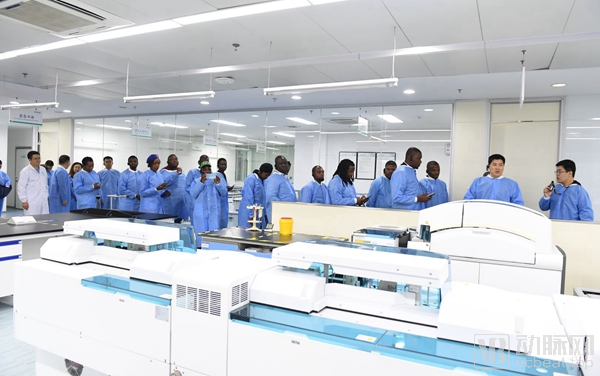
Trainees Visit the Laboratory of Chongqing Precision Medicine Industry Technology Research Institute (Photo provided by the interviewee)
This training workshop was hosted by the Chongqing Municipal Human Resources and Social Security Bureau, and co-organized by the Dadukou District Human Resources and Social Security Bureau, Chongqing Dian Diagnostics, and the Research Institute. It aims to promote theoretical knowledge and clinical applications in laboratory medical diagnostics and translational medicine.。This year, while continuing to host the Chongqing Advanced Seminar on Precision Medicine, the Institute is actively applying to host national-level advanced seminars and continuing medical education programs in precision medicine.
During the tea break, Yi Yuanxue shared with VCBeat the story behind the establishment of the research institute.
From a policy perspective, on March 11, 2015, the Ministry of Science and Technology convened China’s first expert meeting on precision medicine strategy, deciding that the government would invest RMB 60 billion in the field of precision medicine by 2030. Of this amount, RMB 20 billion would be funded by the central government, with an additional RMB 40 billion provided through matching funds from enterprises and local governments. In 2016, China’s Precision Medicine Initiative was included as a major national science and technology project under the 13th Five-Year Plan. The precision medicine market holds significant promise.
“Each individual has a unique constitution and etiology, necessitating varying treatment modalities and pharmaceutical regimens. Although patients require personalized therapy, such care is often unattainable in clinical practice due to constraints on physicians’ energy, time, and diagnostic expertise. Therefore, the Chongqing Municipal Government plans to establish an institution dedicated to advancing precision medicine research, with the aim of enhancing the caliber of precision medicine professionals and alleviating patients’ concerns during medical consultations.”
At this time, Dian Diagnostics responded to the call for investment and construction of a Precision Medicine Research Institute in Chongqing. Under the leadership of the Chongqing Municipal Science and Technology Commission and the Party Committee and Government of Dadukou District, the institute was successfully established after two years of preparation.
The Research Institute employs six integration strategies—university-enterprise, research-enterprise, institute-enterprise, military-civilian, government-enterprise, and Party-enterprise integration—as its operational methodology. It has established six bases: an Academician Workstation, a Postdoctoral Workstation, a Graduate Student Training Base, an Overseas Student Entrepreneurship Park, an Overseas Science and Education Base, and a Translational Medicine Center. With academicians providing guidance, postdoctoral fellows serving as incubation team leaders, current graduate students acting as the main force for incubation, the Overseas Student Entrepreneurship Park functioning as an incubation catalyst, the Overseas Science and Education Base serving as the source of incubation seeds, and the Translational Medicine Center providing a green channel for incubation, the Institute has built a fully licensed demonstration center for discipline construction, thereby accelerating the research and development of key technologies and products in precision medicine.
According to Yi Yuanxue, the research institute’s team currently comprises nearly 200 members, with expertise spanning clinical medicine, medical laboratory science, pathological examination, cold-chain logistics, and selected disciplines in science and engineering. The institute has signed cooperation agreements with various research institutes, universities, and medical institutions in Chongqing, establishing stable industry-academia-research collaborations. It has been approved to establish a National Postdoctoral Research Workstation and a Graduate Student Innovation Training Base, focusing on cultivating high-level technical talent in the field of precision medicine while introducing cutting-edge precision medicine projects and entrepreneurial teams.
Given the current domestic healthcare landscape, the Research Institute has primarily focused its business activities on oncology, chronic disease management, maternal and child genetics, and autoimmune diseases.
The Global Cancer Annual Report indicates that China records 3.804 million new cancer cases and 2.296 million cancer-related deaths annually, ranking first globally in both incidence and mortality. This highlights the severe challenges facing cancer prevention and control efforts in China. Additionally, with accelerating population aging and increasing life stress, chronic diseases have become a major threat to the health of middle-aged and elderly individuals, with a trend toward affecting younger populations. Yi Yuanxue also noted that the gradual implementation of the two-child policy has made maternal and child healthcare genetics a key focus for medical institutions.
The benefit of precision medicine lies in enabling physicians to rapidly identify effective medications for patients through precision medicine approaches, thereby avoiding the use of ineffective drugs or the occurrence of adverse effects. This achieves optimal therapeutic outcomes while reducing healthcare costs for patients.
In Yi Yuanxue’s view, there are three major issues hindering the development of precision medicine in China at present. First, China faces significant bottlenecks in technical capabilities for precision diagnosis and precision medicine; in the short to medium term, the technological advancement of domestic biotechnology companies will remain constrained by overseas upstream suppliers. Second, after screening is completed using these technologies, substantial challenges persist in interpreting the results and determining appropriate treatments, necessitating accelerated development of bioinformatics and genetic counseling systems. Third, China needs to vigorously promote the establishment of industry organizations, standards, and regulations within the precision medicine sector.
Data serves as the foundation for precision medicine research. “China’s large population base and comprehensive spectrum of diseases confer a volume advantage in precision medicine data.”
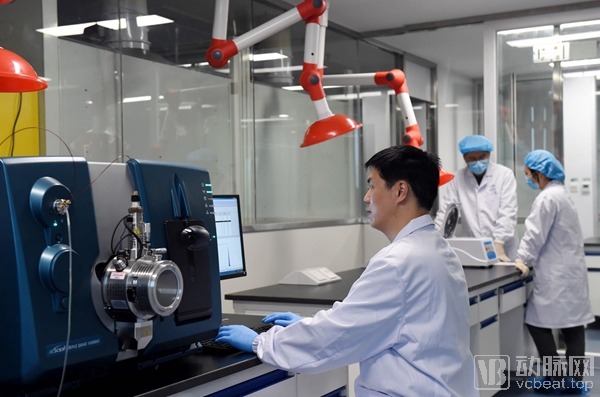
Currently, the Institute has established three major technical platforms: gene sequencing, mass spectrometry analysis, and liquid biopsy. Moving forward, the Institute will pursue a two-step strategy. First, it will assist hospitals in conducting theoretical research on precision medicine and cultivate talent in this field. Second, it will initiate product development to achieve domestic substitution of precision medicine equipment with Chinese-made alternatives.
Currently, the Research Institute has secured 10 national invention patents, developed 29 high-tech products, and obtained 7 medical device licenses, while establishing industry-academia-research collaborations with 490 medical institutions. Yi Yuanxue stated that the institute is leading the establishment of a Precision Medicine Alliance and a Postdoctoral Innovation Alliance, and will focus on promoting precision medicine, personalized treatment, and personalized health management in the future.