

Biotech Is the Next Wave: Professor Xu Tian on Deep Incubation for Scientist-Led Startups
At the recently concluded Fosun Global Health VC Investor Summit, VCBeat held an in-depth dialogue with Professor Xu Tian, Vice President of Westlake University and Chief Scientific Advisor to Fosun Pharma. In the interview, Professor Xu outlined the current stage of development in biotechnology and shared his experience in enterprise incubation during his tenure at Yale University.
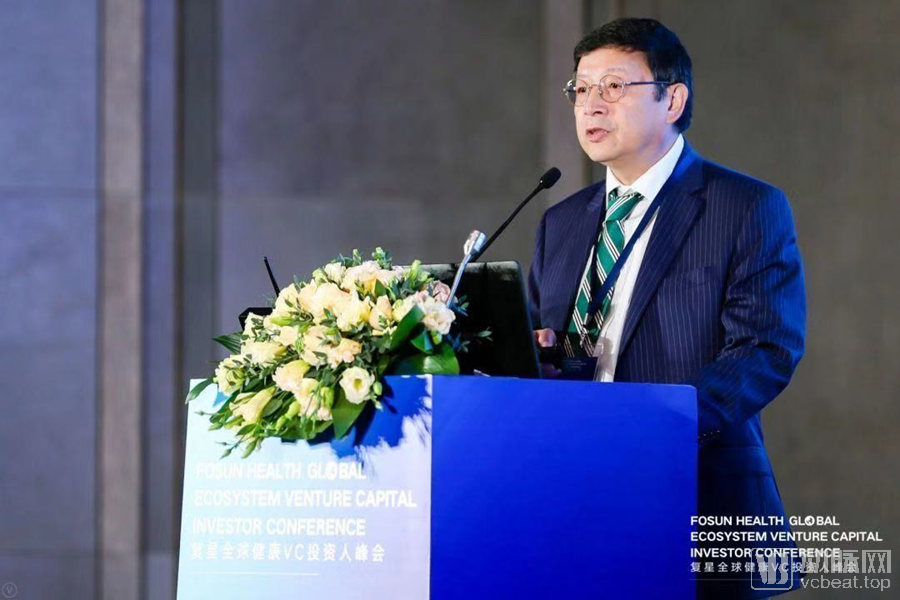
Professor Xu Tian, Vice President of Westlake University and Chief Scientific Advisor of Fosun Pharma
Xu Tian summarized the technological revolutions that have occurred over the past few centuries and concluded that when a technology first emerges, it undergoes a slow incubation period. During this phase, the emerging technology has limited application scenarios. As the technology gradually matures, it enters a period of rapid output, which typically lasts for 50 to 60 years, before eventually declining.
Xu Tian believes that the new wave of technological revolution is precisely the burgeoning field of biotechnology: “Molecular cloning in 1972 marked the beginning of biotechnology. Since then, biotechnology has undergone a 30-year period of slow incubation and has now entered a phase of rapid growth, with many new application scenarios beginning to emerge.”
As the world’s most populous country, China boasts a vast healthcare market. Where there is a market, there are opportunities. Coupled with the economic strength accumulated over four decades of reform and opening-up, as well as the diligence of the Chinese people, Xu Tian believes that China holds significant potential for development in the wave of biotechnology.
“We can describe the process of securing funding to publish papers as turning ‘money into paper,’ and the transformation of scientific achievements into core technologies and products as turning ‘paper into money.’ Only by keeping this cycle of ‘money to paper to money’ in motion can technological strength be effectively linked to economic strength. China has already made significant progress in the ‘money to paper’ phase, becoming the second-largest producer of scientific research papers globally. The key challenge now is how to turn ‘paper back into money,’” said Xu Tian.
For enterprises, incubation is a highly personalized endeavor. Xu Tian told us that in the process of industrial commercialization, there are potentially more influencing factors than in scientific research, making it difficult to adopt a standardized approach. Scientific research primarily focuses on exploring the unknown and identifying commonalities, whereas incubation involves a multitude of factors, including science, engineering, and market dynamics. Only by organically integrating these elements can scientific achievements be ultimately transformed into products.
In the industrial translation of scientific research achievements, there are two key challenges to be addressed. First, whether the research outcome can be transformed into core technologies and products within a certain timeframe and with a specific amount of capital investment; second, whether scientists can drive the smooth operation of industrialization projects.
Regarding the first challenge, Xu Tian believes that neither scientists nor investors are well-positioned to make sound judgments: “Scientists naturally claim that their technology is the most advanced and viable. However, they are not the best judges, as they lack familiarity with the market, overall management, and commercialization processes. Investors are also not the best judges, because their scientific expertise is insufficient, making it difficult for them to accurately assess the application value of scientific achievements. Therefore, incubation in the biopharmaceutical sector has long been a global challenge.”
Regarding the second challenge, the process of commercialization differs significantly from scientific research. A scientist’s technological foundation constitutes only one part of the equation; a series of other issues must also be addressed, including financing, product development, intellectual property protection, and public relations. Scientists are generally unfamiliar with these matters, which require resolution by professionals.
During his tenure at Yale University, Professor Xu Tian gained valuable experience in technology transfer, concluding that the key lies in selecting outstanding scientific achievements for deep incubation. By “deep incubation,” he means active, hands-on involvement: maintaining continuous communication with scientists throughout their entrepreneurial journey and assisting them with areas outside their expertise.
To address the first challenge, since neither scientists nor investors can succeed on their own, it is essential to form a joint force comprising both parties by recruiting scientists with experience in industrial translation and investors skilled in communicating with scientists. Only such a team can accurately assess the feasibility of successful project commercialization and develop practical, viable business plans.
To address the second challenge, it is necessary to expand the team by recruiting experts in relevant fields, as well as building out management, technical, public relations, product design, and legal teams. This will result in the formation of two major groups: a technical team and a business services team. Subsequently, the interests of these two groups must be aligned to fully mobilize the enthusiasm of the entire organization.
Xu Tian said, “Many of these teams offer services that can simultaneously benefit multiple enterprises. Therefore, through our in-depth incubation model, we have established a comprehensive soft-support infrastructure to help teams design their products, ensure logistical support, and address legal issues. This allows the core founding teams to focus exclusively on the technical challenges within their areas of expertise. Meanwhile, we continuously monitor project development and provide ongoing guidance to help them adjust their strategic direction. Previously, while at Yale, we incubated over a dozen projects using this model, nearly all of which achieved success.”
Fosun Pharma and Professor Xu Tian have been collaborating since 2017 to establish a technology innovation incubation platform. Recently, Fosun Lingzhi, a biomedical sci-tech innovation incubation platform jointly established by Fosun Pharma and Professor Xu Tian, was officially launched in Shanghai. Fosun Lingzhi will seek out, identify, and nurture new projects on a global scale, drawing extensively on domestic and international experience in R&D investment and entrepreneurial innovation, while gradually exploring a “deep incubation” model with its own distinctive characteristics.