

JD Health Unveils New 'Health Management-Centric' Strategy at Partner Conference, Detailing Three Major Initiatives Ahead of IPO
This year has seen frequent major moves by JD.com and JD Health to refine their industrial layout for “Internet + Healthcare.”
In May, JD Health was established. In July, JD.com announced the appointment of Xin Lijun as CEO of JD Health and unveiled its strategic plans across four core business segments: pharmaceutical and healthcare e-commerce, internet-based medical services, health services, and smart solutions.
On October 28, JD Health held the “Co-Creating a New Era of Health – 2019 JD Health Partner Conference,” where CEO Xin Lijun shared for the first time his insights into demand-side dynamics in the “New Era of Health,” and presented supply-side strategic plans and solutions addressing current pain points. VCBeat attended the event and analyzed the strategic intentions articulated by JD Health.
At the conference, JD Health put forward the proposition of “health management as the core,” committing to connecting and integrating the entire industry chain, merging medical resources from all parties, and providing users with products and services that span the full life cycle and cover all health scenarios. Xin Lijun, Vice President of JD Group and CEO of JD Health, stated that the “health management as the core” proposition can help address the current imbalance in the distribution of medical resources in China in a targeted manner.
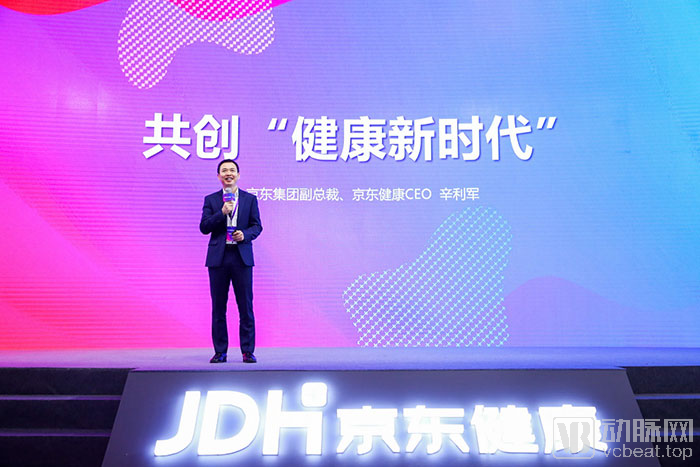
Xin Lijun, Vice President of JD.com and CEO of JD Health
Under the core philosophy of “health management,” JD Health focuses on three key areas: pharmaceutical supply chain, medical services, and chronic disease management. Leveraging its existing capabilities and advantageous resources, JD Health has launched the “New Pharmaceutical Poverty Alleviation Program,” the “New Barefoot Doctor Program,” and the “New Chronic Disease Prevention and Control Program” to comprehensively improve drug accessibility in impoverished regions, strengthen primary healthcare service capacity, and promote the implementation of an ecosystem-based chronic disease management system.
Xin Lijun provided a detailed explanation of the new plans corresponding to the three major sectors:
“New Drug Poverty Alleviation Program” in the Pharmaceutical Supply Chain Sector
JD.com has established its B2C business, JD Pharmacy, and its B2B business, Yaojingcai, in the pharmaceutical supply chain sector, connecting over 100,000 offline pharmacies and individual clinics. Services provided to users include same-day delivery, one-hour delivery, and next-day delivery, while integrated in-hospital and out-of-hospital supply chain services are offered to pharmaceutical companies.
Xin Lijun stated that JD Health will soon launch a new pharmaceutical poverty alleviation program to respond to the requirements of the "Healthy China Action" regarding the enhancement of grassroots drug supply guarantee capabilities. Under this initiative, JD Health will provide a RMB 1,000 drug subsidy per person to impoverished populations to address the issue of high medication costs. Meanwhile, it will leverage its supply chain advantages to ensure drug availability in grassroots and remote areas, thereby comprehensively improving drug accessibility.
"The New Barefoot Doctor Program" in the Medical Services Sector
Xin Lijun introduced that, to enhance the medical skills of primary care physicians, JD Health has partnered with Professor Hu Dayi, a renowned cardiovascular specialist and medical educator, to jointly propose the “New Barefoot Doctor Initiative,” also known as the General Practitioner Program. Targeting primary healthcare workers across China, the program leverages internet capabilities to deliver skills training and remote assistance, aiming to improve the diagnostic and treatment standards and quality at the grassroots level, thereby helping rural residents access convenient, affordable, and safe healthcare services.
Regarding JD Health’s “New Barefoot Doctor Initiative,” Professor Hu Dayi stated that as healthcare reform deepens, shifting medical resources upstream requires strengthening primary care, establishing a new barefoot doctor system, and implementing supporting tiered diagnosis and treatment mechanisms. Only by creating comprehensive systems, talent pipelines, and implementation frameworks for both barefoot doctors and general practitioners can the tiered healthcare system be effectively realized, thereby delivering medical services to the grassroots level.
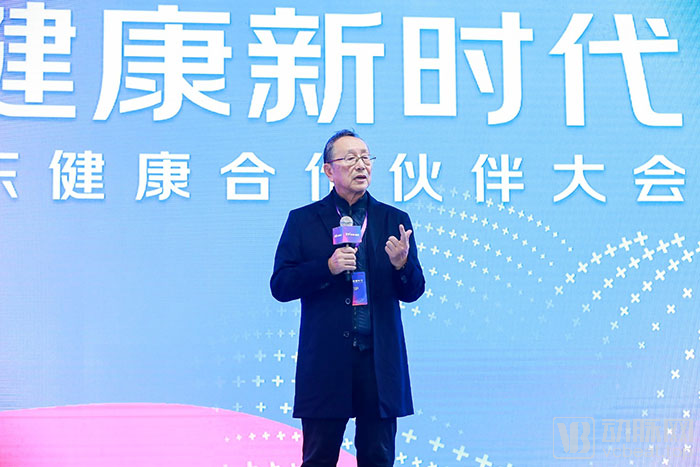
Professor Hu Dayi, a renowned expert in cardiovascular diseases and medical educator
The “New Chronic Disease Prevention and Control Plan” in the Field of Chronic Disease Management
The “Healthy China 2030” Planning Outline points out that by 2030, chronic disease health management covering the entire population and the full life cycle will be achieved. “Chronic diseases are sometimes referred to as ‘diseases of affluence’ in China. Each year, more than 10 million people develop chronic diseases, with the proportion exceeding 80%. Meanwhile, chronic diseases account for 68.6% of the disease burden. I believe this figure will continue to rise,” said Xin Lijun.
Meanwhile, mental disorders are also classified as chronic diseases, with outpatient visits showing a year-on-year upward trend. In response to the growing demand for chronic disease management, Xin Lijun announced that JD Health has partnered with leading specialty departments of major public hospitals across China to launch the “New Chronic Disease Prevention and Control Plan.” This initiative integrates internet technology with high-quality medical resources to provide specialized chronic disease management for conditions such as cerebrovascular and cardiovascular diseases, diabetes, and mental disorders. Currently, JD Health has collaborated with multiple Grade A tertiary hospitals to deliver health management services for specific specialties and is gradually establishing an ecosystem for chronic disease management.
Regarding the chronic disease management of mental disorders, Li Jie, President of Tianjin Anding Hospital, stated that medical resources for mental health are scarce. There are only 500 child psychiatrists and 40,000 psychiatrists nationwide in China, with varying levels of professional competence. He expressed hope to leverage “Internet Plus” technology to improve the accessibility of social resources for mental health care.
Leveraging the technological and resource advantages of JD.com, along with close collaboration among its partners, JD Health maintains the coordinated development of its major business segments. Its products and services have initially achieved coverage across the entire pharmaceutical industry chain, the full medical care process, all health-related scenarios, and the entire user life cycle, thereby establishing a comprehensive “Internet + Healthcare” ecosystem.
JD Health Pharmacy has become the largest pharmaceutical retail channel in China.
For brand merchants engaging in pharmaceutical and healthcare retail partnerships, JD Health has established a distinctive business ecosystem in the pharmaceutical and healthcare retail sector, featuring comprehensive models, full-lifecycle support, and all-category coverage. Jin Enlin, General Manager of the Pharmaceutical Division at JD Health, stated,JD Pharmacy surpassed the four largest pharmaceutical retail chains in just three years to become China’s largest pharmaceutical retail channel. JD Health Retail accounts for over 15% of the national pharmaceutical retail market, contributes more than 60% of specialty drug sales, and ships over half of its medications to cities below the third tier.JD Health’s core product, JD Pharmacy, became the largest pharmaceutical retail enterprise in China in just three years, while also pioneering the industry’s first “medical + pharmaceutical” closed loop to provide users with more professional medical consultation and medication services.
For supply chain and channel partners, JD Health is committed to creating new B2B scenarios, eliminating intermediaries, and enhancing efficiency. Zhou Xinyuan, General Manager of the Channel Innovation Department at JD Health, stated that JD Health can assist brand owners in defining product strategies by leveraging industry data and analyzing JD user behavior patterns, while also supporting their promotion across channels such as traditional retail, social commerce, and enterprise services. Among its offerings, “Yaojingcai,” a product designed to improve the efficiency of traditional channels, has become one of the largest third-party pharmaceutical wholesale platforms in China within nearly three years since its establishment. It currently covers 21 provinces and over 400 cities, with its distribution network already extended to the township level and planned for further expansion into lower-tier markets.
Internet Hospital Connects 30,000 Doctors and Will Launch Two Major Initiatives
As the flagship product of JD Health’s internet medical services, JD Internet Hospital has become one of the fastest-growing online healthcare platforms. It boasts a network of over 30,000 physicians from 327 cities across 32 provinces, municipalities, and autonomous regions in China. Among these doctors, 62% are affiliated with Grade 3A hospitals, and 80% hold the title of attending physician or higher. The platform delivers a comprehensive suite of medical services tailored to patient needs, including appointment scheduling, e-prescription consultations, telephone consultations, online examination rooms, post-diagnosis management, vaccine appointments, disease education and popularization, and health service packages.
At the conference, Xiao Jianbo, General Manager of JD Health’s Internet Medical Division, unveiled two major initiatives: “JD Internet Medical Service Upgrade” and “JD Internet Medical Platform Openness.” These initiatives are designed to cater to consumer-facing (C-end) and business-facing (B-end) markets, respectively. The former aims to connect individual users with a wider variety of higher-quality medical services, while the latter provides enterprises with integrated online-to-offline solutions that address the diverse healthcare needs of their customers and employees.
Smart Healthcare: “Four-Medical” Integration for Building Smart Healthy Cities
In the field of smart healthcare, JD Health will work with numerous partners to break down “information silos,” achieve interconnectivity, and jointly build a smart health ecosystem. Leveraging informatization powered by AI, big data, and the Internet of Things (IoT), JD Health will adopt an integrated strategy across medical care, pharmaceuticals, health insurance, and elderly care—the “Four Medical Sectors”—to develop smart healthy cities.
Wang Dongyuan, General Manager of the Medical Innovation Department at JD Health, stated that the “Regional Medical Consortium + Internet Hospital” model, powered by AI and 5G, will accelerate the development of tiered diagnosis and treatment as well as chronic disease management, driving healthcare into a new era of health.
This conference demonstrates JD Health’s strong capability in resource integration, marking a strategic shift from pharmaceutical e-commerce sales to a “health management-centric” model. This transformation is grounded in years of practical experience and a deep reflection on the current pain points within the healthcare industry.
VCBeat believes that by pursuing more diversified collaborations, JD Health has the opportunity to develop additional solutions that reduce costs and enhance efficiency, thereby enabling omnichannel health management services through connecting the entire industry chain and integrating comprehensive medical resources.