

Weilang Bio Submits IPO Prospectus: Focused on Sample Pre-Processing Automation with Customized Solutions
As early as the 1980s, Zymark Corporation in the United States introduced robotic arms and automation into biological laboratories. In recent years, automation and robotics have been increasingly applied in laboratory testing to enhance stability and reduce operational errors.
Wang Jian, founder and general manager of Chongqing WeLang Biotechnology Co., Ltd. (hereinafter referred to as “WeLang Bio”), stated, “Although laboratory automation technology has a long history, China’s laboratory automation market still faces pain points such as low levels of automation, a lack of comprehensive solutions, and high costs, particularly in the field of pre-analytical sample processing.”
Addressing these pain points, WeLang Bio has developed a series of laboratory robots, offering automated biological laboratory equipment tailored to specific needs, as well as modular cluster-integrated automation solutions capable of fully executing complex tasks. This innovation transforms experimental research workflows, freeing researchers from tedious and repetitive work.
Transforming the “Tech Laborer” Phenomenon to Enhance Sample Pre-treatment Efficiency
In 2015, Wang Jian, who had studied and worked in the United States for many years, observed the booming development of China’s life sciences sector and conceived the idea of co-founding a startup with his university classmate, Zhou Jianzhi.
Wang Jian graduated with a degree in Clinical Medicine from the Third Military Medical University, while Zhou Jianzhi is an expert in pharmacology. Logically speaking, developing IVD reagents would have been a more fitting entrepreneurial venture given their respective professional backgrounds. However, Wang Jian believes, “As a critical component of the IVD industry, laboratory automation equipment still suffers from numerous pain points, and consequently, there are greater market opportunities for startups in this field.”
Wang Jian remarked, “There is a phenomenon in laboratories where graduate and doctoral students spend the majority of their time on repetitive tasks, leaving very little time for actual scientific research. This situation has been jokingly referred to as ‘tech migrant labor.’” Wang Jian also highlighted that the monopoly of imported products in the automation equipment sector is another major pain point. Imported equipment is expensive, and the costs associated with maintenance and upkeep are prohibitively high, which is the primary reason for its limited adoption in laboratories.
Furthermore, sample pretreatment is the biggest bottleneck to improving laboratory testing efficiency. It is understood that laboratory sample testing includes steps such as sample collection, sample pretreatment, sample analysis, and data processing.
Among these steps, sample pretreatment is the most difficult to highly automate due to its cumbersome procedures and time-consuming nature. According to a survey conducted by LC-GC magazine involving more than 1,000 laboratories, actual instrumental analysis accounts for only 6% of the time in chromatographic analysis, while sample pretreatment consumes as much as 61%.
Therefore, Weilan Bio focuses on enhancing the automation of sample pre-processing and developing automated laboratory equipment for biological research that addresses specific needs.
After more than half a year of preparation, WeLang Bio was officially established in 2016. The company’s name draws inspiration from the saying, “Wind rises from the tips of duckweed; waves are formed from subtle ripples,” reflecting the principle that every enterprise grows from small to large, and then to strong. Wang Jian hopes that the company will grow from these subtle ripples into towering waves.
Currently, WeLang Biotech is based at Chongqing Tian’an Digital City. Wang Jian stated, “WeLang Biotech’s primary clients include research institutions, third-party medical testing laboratories, and IVD companies. As Tian’an Digital City has established a dedicated IVD industrial park, locating our operations here enables us to connect with more IVD enterprises and institutions and foster collaborative partnerships.”
From Customization to Mass Production: R&D of Robots for Sample Pre-treatment
In June 2018, WeLang Biology's first product, the ReadyGo laboratory robot, was launched.
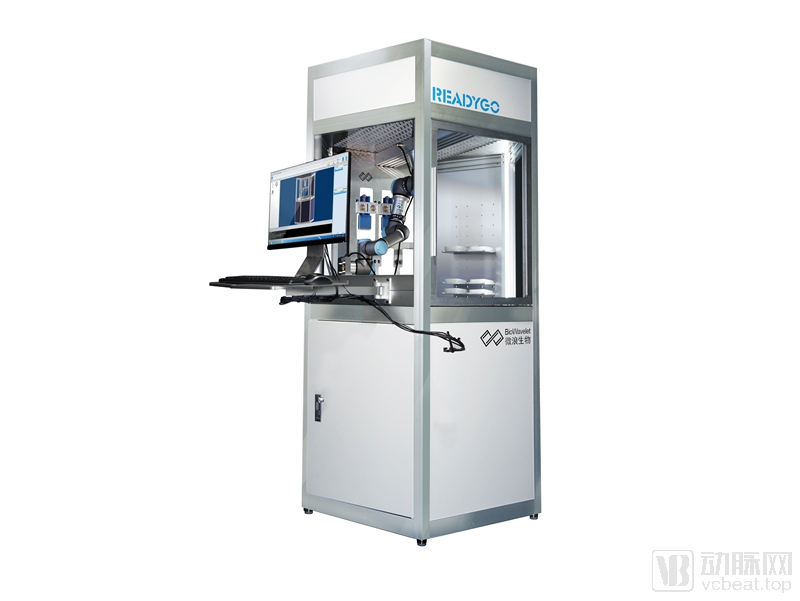
ReadyGo is a multifunctional robotic system for biological experiments. It employs a six-axis collaborative robotic arm for motion control and flexibly expands its functional applications through an accessory-to-tool converter. The system can easily perform various experimental operations, such as pipetting, cap opening, and plate transfer. By sharing laboratory application modules via the cloud, it simplifies the design of automated experimental workflows, thereby promoting the widespread adoption of laboratory automation in scientific research, clinical testing, drug development, and biotherapy.
ReadyGo focuses on streaming sample processing, characterized by its flexibility and rich functionality. However, through customer feedback, Wang Jian also identified certain shortcomings in the product’s practical application. “Although it offers a wide range of features, customers typically only need a few of them, leaving many functions unused. Moreover, because users must write experimental protocols before operation, they find the system insufficiently user-friendly.”
In response to customer feedback, WeLang Bio developed its second product, UItron. UItron is an automated laboratory workstation capable of processing 48 samples in parallel per run, designed for flow cytometry applications in both research and clinical settings.
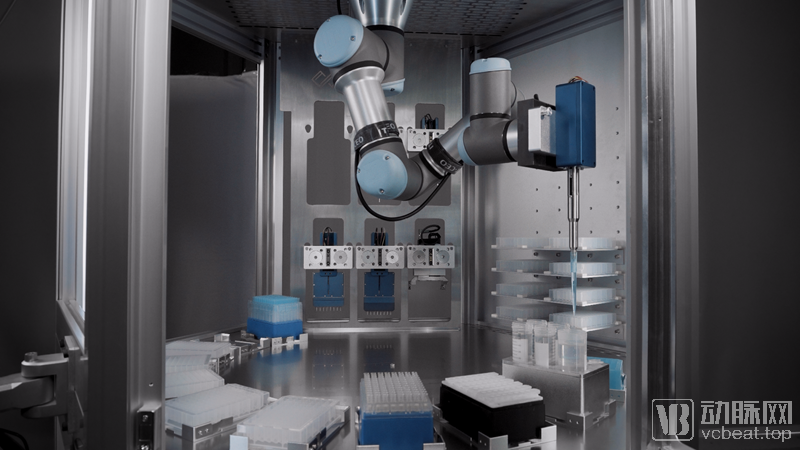
According to Wang Jian, cell washing is typically performed using centrifuges; however, the cumbersome operation of centrifuges makes it difficult to achieve high-efficiency automation. Therefore, cell washing has long been a major bottleneck in realizing full-process automation of flow cytometry.
UItron employs its proprietary patented microfluidic buffer exchange technology, enabling centrifugation-free cell washing. Equipped with multiple modules for pipetting, temperature control, and cartridge handling, it automates various flow cytometry sample processing steps—including antibody staining, cell incubation, and cell washing—thereby achieving end-to-end automation of flow cytometry sample preparation.
Compared with the centrifugal washing method, microfluidic buffer exchange technology preserves a significantly higher proportion of cells and achieves greater cell viability than traditional centrifugation. Meanwhile, it retains stronger positive signals without increasing background fluorescence, resulting in a higher staining index for prepared samples.
In addition, the UItron operating software comes with preset common test items and provides customers with customization capabilities. Once the operator completes the program setup, no further manual intervention is required, significantly reducing manual processing time and yielding more stable and accurate test results.
Wang Jian stated, “Weilan Bio adopts a model of customization followed by mass production.” Flow cytometry is widely used in scientific research and clinical practice, resulting in substantial market demand; therefore, ReadyGo and UItron have both achieved mass production. Weilan Bio has also customized automated equipment, such as protein microarray spotters and qPCR dispensers, to meet customer requirements.
Adopt a cluster-based architecture to build diverse automated service platforms
Wang Jian stated, “Each time we develop a customized device, we encounter different challenges; nevertheless, the company remains committed to developing various automated equipment to address customers’ personalized needs.”
Wang Jian does not position WeLang Bio merely as an R&D enterprise for automated equipment. He stated, “In addition to developing a diverse range of automated devices to meet customer needs, we are building various automated service platforms for scientific research applications.”
WeLang Bio’s automated service platform has already launched high-throughput Easy-RNASeq transcriptome sequencing, AutoArray detection services, and customized qPCR detection services, while automated platforms for NGS, TCR library construction, and cell culture are currently under development.
With these automated service platforms, Microlang Biotech can automate testing operations, minimize human interference, improve experimental accuracy and stability, and reduce reaction volumes. Additionally, Microlang Biotech supports a professional customer service management system that enables clients to track project progress in real time, monitor experimental quality, download experimental data, and receive professional analytical reports on experimental results.
Regarding future plans, Wang Jian stated that WeLang Bio will continue to expand its product portfolio, including automated cell preparation equipment, striving to become a leading domestic brand in the research and development of laboratory automation for biological applications.