

Shanghai-Based Brain-Computer Interface Firm Shuli Intelligence Secures Hundreds of Millions in New Funding

Arfysica Innovation
Brain-Computer Interface Technology Researcher

Recently, Multi-source informationShows, Shanghai Shuli Intelligent Technology Co., Ltd.(Hereinafter referred to as "Arfysica Innovation") has completed a new round of financing. The company completed a B+ round of funding amounting to several hundred million RMB in January this year, with participation from the National SME Development Fund, Oriental Fortune, and some existing shareholders. The funds raised will be mainly used for the continuous research and development of core brain-computer interface technologies, as well as the construction of an industrial ecosystem around medical and multi-scenario applications.
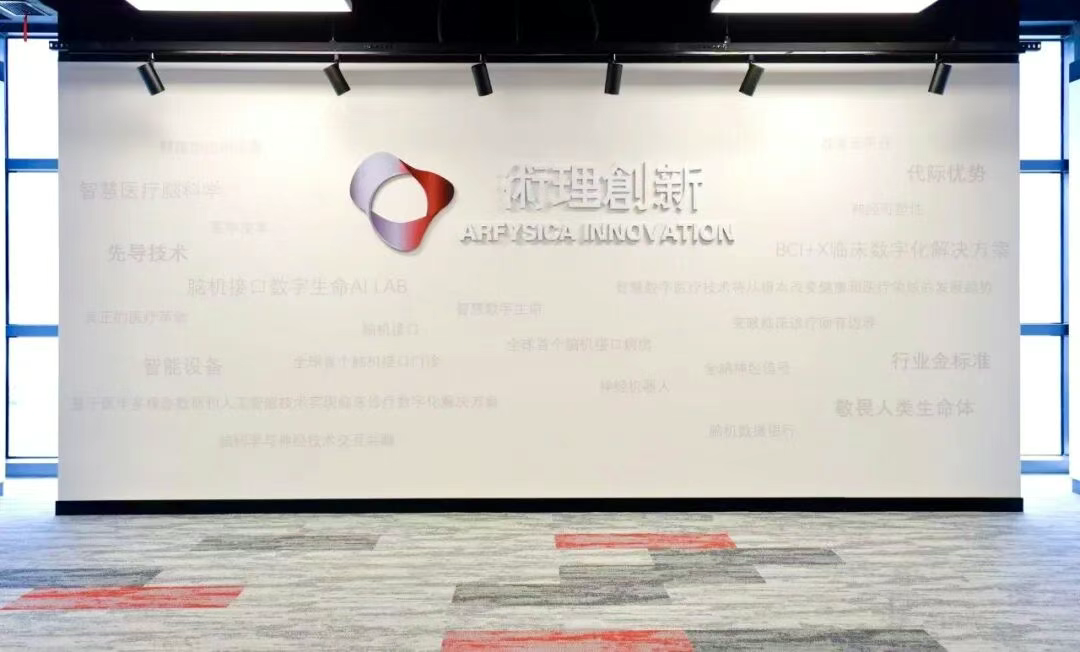
As one of the more active companies in China's non-invasive brain-computer interface field in recent years, Arfysica Innovation was established in August 2015, with its registered office located in Fengxian District, Shanghai. The company initially focused on computational simulation and digital life-related technologies, but in recent years has gradually shifted its focus to the engineering implementation of non-invasive brain-computer interfaces in medical scenarios. In 2025, Arfysica Innovation was recognized as a national-level specialized, refined, and innovative "little giant" enterprise.
Technical Route: Non-invasiveSystem Engineering with Embedded Core
From the publicly available information, Arfysica Innovation has chosen a relatively clear technical path: focusing on non-invasive brain-computer interfaces, emphasizing the integration of software and hardware and system integration capabilities, rather than breakthroughs in single-point algorithms or individual devices.
The artificial intelligence multimodal brain-computer interface platform currently built by the company integrates EEG acquisition, motor imagery paradigm, virtual reality (VR), and artificial intelligence algorithms to achieve real-time acquisition, decoding, and feedback of human multimodal signals. At the specific product level, its layout mainly focuses on three types of systems:
Active Electrical Stimulation System for Brain-Computer Interface: A wearable EEG device that identifies the patient's motor intention and converts it into electrical stimulation signals, used to assist in the activation and remodeling of neural pathways, primarily targeting rehabilitation training scenarios after central nervous system injury.
Brain-Computer Interface Intelligent Exoskeleton System, which combines brain-computer interface with mechanical exoskeletons, is used to assist patients with lower limb or limb movement disorders in gait training and functional recovery.
Digital medical data management platforms represented by U-Resmart provide underlying support for data collection, storage, and analysis in clinical processes, aiming to establish a long-term reusable data infrastructure beyond hardware.
From the perspective of application direction, Arfysica Innovation's product pipeline mainly covers limb motor disorders, consciousness and cognitive disorders, as well as some mental illnesses and neurodevelopmental disorders. It is also exploring consumer-grade and educational scenarios based on non-invasive technologies. These directions are relatively mature in current brain-computer interface medical applications in China, with clearer regulatory pathways.Clear Field.

Source: Arfysica Innovation
The development of Arfysica Innovation is closely related to the personal background of its founder, Wang Wei. Public information shows that Wang Wei graduated from the University of Southampton in the UK with a degree in Biomedical Engineering and holds a doctorate, as well as dual bachelor’s degrees in Biomedical Engineering and Economic Law. In the early part of her career, she worked at Siemens Healthineers for many years, serving as a global core expert and a member of the IEC International Medical Equipment Standards Committee, participating in the research and development and clinical application of large medical equipment and system platforms.
In 2016, Wang Wei returned to China to establish Arfysica Innovation and simultaneously expanded related operations both in China and overseas, including setting up an overseas branch in Frankfurt, Germany. Currently, she holds over a hundred patents under her name and concurrently serves as an expert committee member of the China Brain-Computer Interface Industry Alliance and as a member of the Fengxian District Committee of the Chinese People's Political Consultative Conference in Shanghai.
From the resume, their strengths are more reflected in large-scale medical system engineering, understanding of standard systems, and cross-disciplinary organizational capabilities, rather than single algorithms or cutting-edge neuroscience research. This background has also shaped Arfysica Innovation's "engineering-first, system-oriented" development path to a certain extent.
For academic sharing only. If there is any infringement, please leave a message and it will be deleted immediately!
Welcome to the Brain-Computer Interface AI Planet
Access more knowledge and resources in the fields of brain-computer interface + AI.

For group communication and business cooperation, please add WeChat: RoseBCI [Note: Name + Industry/Major].
Welcome to submit articles
1. Welcome to submit articles. For submission inquiries, please contact WeChat: RoseBCI
Click to Submit:Submission Guidelines for Academic News in the Brain-Computer Interface Community
2. To join the community as a part-time creator, please contact WeChat: RoseBCI

One-click triple action: "Share," "Like," and "Read"
Don't miss any cutting-edge developments in brain-computer interface