

Zhengxin Medical Files IPO Prospectus: AI-Powered Wearable ECG System Screens 12 Categories and 54 Types of Arrhythmias for Cardiac Risk Prevention
“On one occasion, a rehabilitation physician in his mid-40s experienced a sudden onset of malignant arrhythmia at home. Without immediate intervention, his condition would have been life-threatening. Fortunately, he was using our proprietary product—the Zhengxin CardioGuard smart wearable ECG monitor. Through real-time monitoring, our medical team detected his abnormal readings, promptly contacted him by phone, and advised him to call 120 for emergency medical assistance. After timely treatment at the hospital, he ultimately recovered from the critical condition.”
Dr. Zhao Wei, founder of Zhengxin Medical, told reporters, “In fact, we have encountered many such cases. The number of patients with heart disease is increasing and affecting younger individuals, yet many remain unaware of their cardiac conditions. Early detection and timely treatment can effectively reduce the risk of sudden events, such as sudden cardiac death.”
Zhengxin Technology is an intelligent healthcare company that provides heart disease patients with user-friendly, efficient, and long-term screening and monitoring services through medical-grade wearable devices integrated with smart terminal software, big data platforms, and intelligent algorithms, while also offering clinical diagnostic evidence and health management solutions.
Why Choose the Field of ECG Monitoring? In fact, before entering the field of ECG monitoring, the Zhengxin team was already highly optimistic about the wearable devices sector and conducted research on continuous monitoring of blood pressure, blood oxygen, blood glucose, and sweat. Ultimately, they decided to enter the ECG monitoring market. Dr. Zhao Wei told reporters that there were mainly three reasons for this decision.
First, ECG monitoring holds immense practical value and carries significant social implications. China has 290 million patients with cardiovascular diseases, and approximately 3.8 million people die from these conditions each year—nearly twice the number of cancer-related deaths. Recent clinical studies indicate that long-term ECG monitoring can help doctors and patients detect cardiac abnormalities in advance, thereby allowing sufficient time for treatment. Research shows that 72% of patients experience noticeable discomfort before cardiac arrest occurs, and among them, 70% have warning symptoms lasting more than 15 minutes. Real-time ECG monitoring can effectively reduce the severe consequences caused by cardiovascular and cerebrovascular diseases, lowering both disability and mortality rates.
Dr. Zhao Wei stated, “With this knowledge, we aimed to develop a portable device for continuous, real-time monitoring. If it can provide on-demand access and long-term ECG monitoring, it will help many patients detect issues in a timely manner and prevent tragedies. This is the most important reason.”
Secondly, the technological value of ECG monitoring is substantial. Dr. Zhao Wei stated, “I have long been engaged in research on medical data and recognize that ECG data constitutes a critical type of clinical data. If sufficient volumes of ECG data are available, they will yield unprecedented value. On one hand, massive datasets can be used to train artificial intelligence algorithms for ECG analysis, significantly reducing the cost of ECG monitoring and facilitating its widespread adoption. This approach will also fundamentally address the shortage of professional electrocardiographers in China.”
“On the other hand, big electrocardiogram (ECG) data can help doctors and researchers discover medical patterns that are not yet fully understood. For example, some possible associations between certain diseases and early ECG abnormalities have been observed in individual patients, but conclusive evidence has been lacking due to insufficient data. With a sufficiently large dataset, thorough analysis can be conducted to confirm these associations, thereby improving the prediction and early warning of cardiac diseases.”
Finally, the ECG monitoring market holds substantial value. Currently, China sees approximately 200 million routine electrocardiogram (ECG) examinations and 35 million ambulatory ECG monitoring procedures annually, representing an existing market valued in the tens of billions of RMB. Meanwhile, the markets for home-based and long-term ECG monitoring remain largely untapped. Overall, the future potential of China’s ECG monitoring market is estimated to exceed one hundred billion RMB. Furthermore, ECG data carries significant value in sectors such as insurance and internet healthcare. We have already partnered with several leading internet companies to jointly promote market expansion.
After determining the direction, the Zhengxin team began the research and development of a wearable ECG monitoring system in the United States in 2013. The ability to develop technologically leading products is inseparable from Zhengxin Medical's scientific research team, medical team, and advisory team.
Currently, Zhengxin Medical employs over 20 R&D personnel. The early U.S. R&D team continues its work in Seattle, while the domestic team conducts research in Suzhou, Beijing, and Yantai. The Zhengxin Medical R&D team comprises professionals specializing in hardware, software, intelligent algorithms, and medicine. Founder Dr. Zhao Wei, a graduate of the University of Washington, is an expert in the field of medical data. The head of hardware R&D previously worked at Lenovo Research, where he participated in the development of the first generation of ultra-low-power laptops and low-power Bluetooth systems. The head of software R&D also brings more than a decade of experience from major software companies.
After three years of research and development by the Zhengxin US doctoral team, the technologically advanced smart wearable ECG system—CardioGuard—has finally been developed. Weighing only half as much as comparable foreign products, it features a flexible patch design that enables long-term continuous monitoring and can detect 54 types of arrhythmias across 12 major categories.
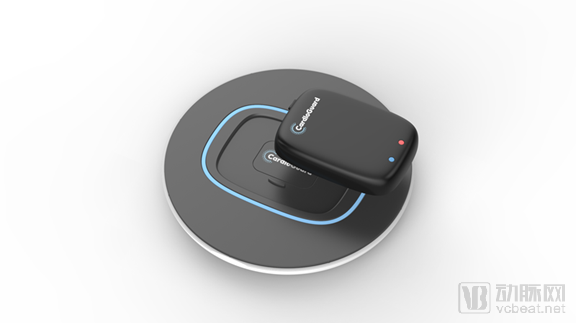
(Smart Wearable ECG System CardioGuard, photo provided by the company)
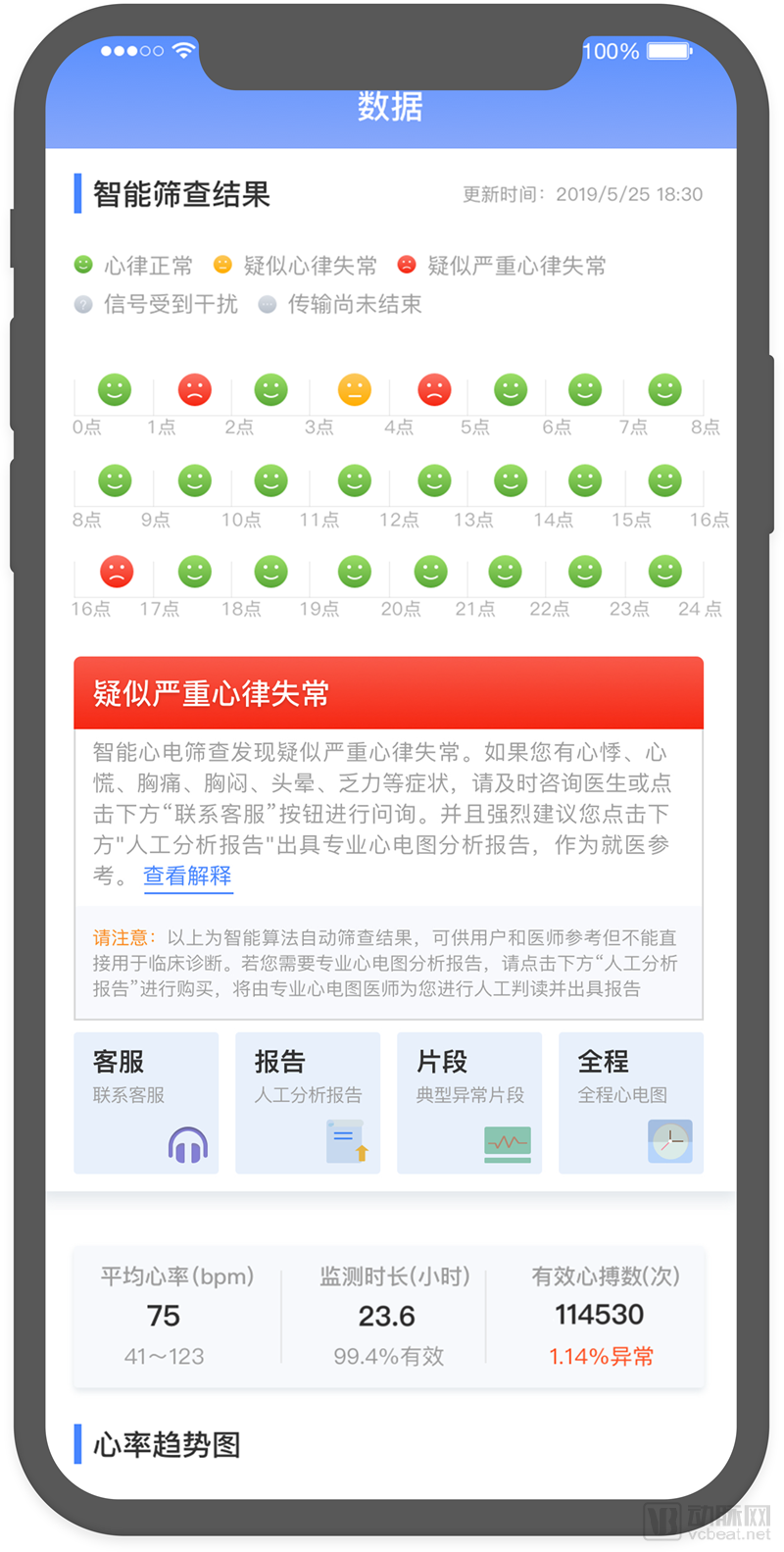
This product is a professional medical device that has obtained Class II medical device certification from the national regulatory authorities. After use, the monitored data is first screened by artificial intelligence to determine whether there are suspected cardiac abnormalities. If suspected abnormalities are detected, professional physicians from partnered Grade A tertiary hospitals can review the data and issue clinical-grade analysis reports. “Compared with traditional examination equipment, the Zhengxin CardioGuard ECG monitor is compact and comfortable. Users hardly feel it while wearing it, and it does not interfere with daily activities such as sleeping, bathing, or exercising, thereby facilitating convenient daily monitoring.”
(Photo provided by the company)
Dr. Zhao Wei stated, “The key to diagnosing heart disease lies in capturing an electrocardiogram (ECG) during abnormal cardiac episodes; therefore, the duration and timeliness of monitoring are critical. The standout feature of the Zhengxin product is its ability to provide continuous monitoring for 14 days on a single use. It also marks the world’s first achievement in transmitting complete ECG data via wireless networks, breaking through the previous bottleneck where remote ECG devices could only transmit fragmented data snippets wirelessly. Our patented algorithm, trained on a big dataset of 15 million ECG records, can precisely analyze 54 types of arrhythmias, with a comprehensive accuracy rate exceeding 95%. Utilizing intelligent algorithms for disease screening can significantly save physicians’ time and reduce costs, lowering expenses by 90% compared to traditional hospital examinations.”
“Since 2017, we have conducted pilot trials and subsequent promotion in hospitals. To date, we have partnered with more than 400 hospitals, including Fuwai Hospital and the 301 Hospital (Chinese PLA General Hospital), earning their high recognition. We have also engaged in comprehensive collaborations with over a dozen top-tier experts, such as Professor Hu Dayi, Professor Fang Pihua, and Professor Wang Yutang, covering areas including scientific research, public health initiatives, and healthcare promotion,” added Dr. Zhao Wei.
In its product promotion strategy, Zhengxin Medical adopted a flexible sales and leasing model. In simple terms, Zhengxin Medical collaborates with hospitals and other institutions, where the partners sell or lease the products to end users.
In addition to profits from product sales or rentals, Zhengxin Medical also provides value-added services. After purchasing a product, users can engage in long-term monitoring and share its use with family members. During the monitoring process, intelligent algorithms automatically screen for arrhythmias, and an AI screening report is issued upon completion. If potential arrhythmia cases are detected, the artificial intelligence system will automatically alert the user. Users also have the option to purchase clinically validated manual analysis reports. These manual analysis reports are prepared by professional electrocardiogram physicians at Grade A tertiary hospitals and hold clinical validity.
“The core value of our product lies in providing an entry point to ECG big data. Through our solution, high-quality, clinical-grade data can be collected rapidly and at low cost, with feedback and annotations generated during service delivery to users. Doctors and users can leverage this data gateway to promptly assess cardiac health status. Furthermore, the value of this data entry point becomes even more pronounced when our system integrates with other healthcare services, such as insurance, chronic disease management, and internet-based healthcare,” explained Zhao Wei.
Regarding future plans, Zhengxin Medical aims to continuously enhance its service capabilities, with monitoring services covering over 50% of China by 2020. In addition, Zhengxin will collaborate with medical institutions to provide users with a broader range of derivative services, including remote consultations, rehabilitation training, and chronic disease management.
Zhao Wei stated, “In addition to disease screening and assisted diagnosis, chronic disease management is also a very important focus for us. Chronic disease management has demonstrated significant efficacy in cardiovascular diseases, making it one of the areas that best reflects the value of cardiac monitoring. Currently, our collaboration with Dr. Hu Dayi’s Physician Group on cardiac rehabilitation represents a highly effective approach to chronic disease management. We are also partnering with other institutions to promote additional chronic disease management solutions.”
Regarding the future direction of product research and development, Zhao Wei stated, “We plan to continuously update and iterate on both hardware and algorithms. In terms of hardware, we will strive for further miniaturization of devices and longer monitoring durations to enhance user experience. Meanwhile, we will integrate additional sensors to monitor a variety of physiological indicators. On the other hand, we will expand application scenarios, such as sports monitoring, cardiac monitoring during pregnancy, and fetal electrocardiogram (ECG) monitoring. Regarding algorithms, we will continuously train our models using collected data to steadily improve accuracy, ultimately achieving automated analysis capabilities comparable to those of cardiologists.”
Zhao Wei concluded by stating, “Zhengxin Medical is currently conducting its Pre-A round of financing, seeking to raise between RMB 30 million and RMB 50 million. The primary uses of the funds will be for research and development, marketing, and enhancing service operational capabilities.”