

Ensartinib, China's First Domestically Developed ALK Inhibitor, Nears Market Launch as Betta Pharmaceuticals Enters a Harvest Phase of Innovation
Betta Pharmaceuticals
Innovative Drug Developer
VCBeat has learned that, on the eighth anniversary of the launch of Conmana (icotine), Betta Pharmaceuticals announced that its second independently developed innovative drug, ensartinib, is about to hit the market.
On November 2, the Academic Summit Celebrating the Eighth Anniversary of the Achievement Release of Conmana (Icotinib)—a Major New Drug Creation Special Project under China’s 11th and 12th Five-Year Plans and a First-Class National Science and Technology Progress Award—and the Launch Event for Beimeina (Ensartinib), jointly hosted by the China Pharmaceutical Innovation Promotion Association and Betta Pharmaceuticals, was held in Beijing.
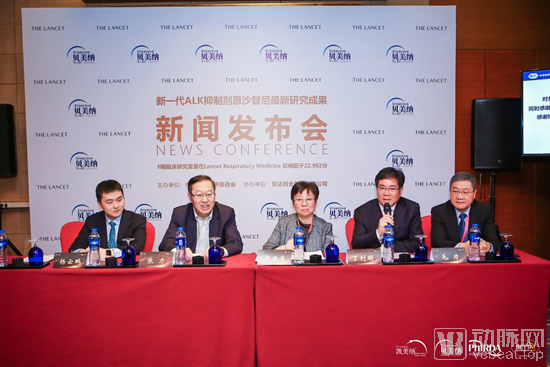
Photos from the Press Conference
As one of the day’s highlights, Betta Pharmaceuticals announced the Phase II clinical trial results of ensartinib, its second independently developed novel drug. It is reported that the study was published in full online on October 16 in The Lancet Respiratory Medicine (impact factor: 22.992), a prestigious international medical journal.
This also marks that Chinese researchers, represented by Professor Zhang Li from Sun Yat-sen University Cancer Center (the lead investigator of the ensartinib Phase II clinical study), have reached an internationally advanced level in the research and treatment of related diseases. It further demonstrates the efficacy and safety of ensartinib, enhances the international influence and visibility of China’s innovative drugs, and fully showcases Betta Pharmaceuticals’ capabilities in new drug development.
As the first China-originated novel drug among ALK (Anaplastic Lymphoma Kinase) inhibitors, ensartinib submitted its marketing application last December and received priority review for drug registration this February. This also means that, following “Conmana,” Betta Pharmaceuticals’ second independently developed novel drug is expected to be launched on the market as soon as possible.
According to the introduction, ensartinib is a novel small-molecule compound with fully independent intellectual property rights, jointly developed by Betta Pharmaceuticals and its controlling subsidiary, Xcovery Holdings, Inc. It is a new-generation, potent, and highly selective ALK inhibitor that demonstrates high activity in patients with a broad range of crizotinib-resistant ALK mutations and central nervous system (CNS) metastases.
The ensartinib Phase II clinical study is a single-arm, multicenter, registrational Phase II clinical trial conducted in China. Led by Professor Zhang Li from Sun Yat-sen University Cancer Center, the study was completed by 27 research centers across China, including Sun Yat-sen University Cancer Center and The First Affiliated Hospital of Zhejiang University. The study aims to evaluate the efficacy, safety, and biomarkers of ensartinib in patients with ALK-positive non-small cell lung cancer (NSCLC) who have progressed after crizotinib treatment.
According to the full-text publication of the Phase II clinical study results of ensartinib in The Lancet Respiratory Medicine, ensartinib demonstrates superior efficacy compared with imported drugs, particularly exhibiting a higher response rate in patients with intracranial metastases, along with a more favorable safety profile. Furthermore, additional biomarker analysis from the study revealed that ensartinib possesses potent activity against a broad spectrum of secondary resistance mutations. The findings suggest that ensartinib has potential inhibitory effects on the G1202R point mutation, which holds significant implications for subsequent treatment strategies involving ALK inhibitors.
Domestic and international peers have highly affirmed this research achievement. Professor Ross Camidge from the University of Colorado, USA, published a commentary stating that ensartinib has definite efficacy and safety, requiring only once-daily administration of 225 mg, thus representing a new second-line treatment opportunity for patients with advanced non-small cell lung cancer (NSCLC) harboring ALK mutations.
Currently, ensartinib has been included in the priority review list of the National Medical Products Administration (NMPA), and Betta Pharmaceuticals is making full preparations for its market launch to provide patients with a new and effective treatment option. According to statistics from the National Cancer Center, lung cancer ranks first among malignant tumors in China, with approximately 787,000 new cases reported in 2015. The positivity rate of ALK fusion genes in patients with non-small cell lung cancer (NSCLC) ranges from 2.9% to 11.6%, and is more commonly observed in younger patients with lung adenocarcinoma who are non-smokers or light smokers. Currently, all targeted therapies for ALK-positive NSCLC available in China are imported drugs. Ensartinib is expected to be approved for marketing in 2019, becoming the first domestically developed innovative drug in this field.
As a national high-tech enterprise centered on the research and development of innovative drugs with independent intellectual property rights, Betta Pharmaceuticals has always adhered to its mission of “unwavering commitment to innovation and creating more affordable, high-quality medicines for the Chinese people,” continuously advancing on the path of developing innovative drugs.
In 2011, Icotinib (brand name: Conmana), China’s first small-molecule targeted anticancer drug independently developed by Betta Pharmaceuticals, received approval for market launch from the National Medical Products Administration. This milestone not only marked the emergence of another major scientific and technological achievement in China’s pharmaceutical sector but also signaled the end of an era when small-molecule targeted anticancer drugs were entirely dependent on imports.
For many years, Betta Pharmaceuticals has continuously consolidated the differentiated advantages of icotinib, enhanced recognition of its products among experts and patients, and built a strong brand image for icotinib. As a result, the product’s sales have achieved continuous breakthroughs, marking a transition from a market follower to a leader. To date, icotinib has benefited more than 220,000 lung cancer patients.
According to the latest third-quarter report, sales of icotinib increased by 33.15% year-on-year from January to September 2019. With the gradual implementation of medical insurance coverage across various regions, the widespread adoption of genetic testing, and the company’s expanded outreach to primary care hospitals, icotinib is expected to sustain its volume growth. Driven by icotinib, Betta Pharmaceuticals reported operating revenue of RMB 1.24 billion from January to September 2019, a year-on-year increase of 34.05%; net profit attributable to shareholders of the parent company amounted to RMB 199 million, up 34.37% year-on-year; and net profit after deducting non-recurring gains and losses reached RMB 181 million, representing a year-on-year increase of 42.87%.
As its core products gain market recognition and benefit the public, Betta Pharmaceuticals is continuously increasing its investment in R&D innovation to address major diseases that severely impact human health, such as malignant tumors and diabetes, resulting in an increasingly robust pipeline. Currently, Betta Pharmaceuticals has more than 30 small-molecule drug candidates in development, with 11 products having entered clinical trials.
Multiple registration-enabling clinical studies, including the Phase II trial of BPI-D0316, the Phase III trial of CM082 for renal cell carcinoma, the Phase III trial of MIL60 for lung cancer, and the postoperative adjuvant therapy study of icotinib, are all progressing as planned. Betta Pharmaceuticals has also established strategic collaborations with leading domestic and international pharmaceutical companies, such as Amgen (US), Xcovery (US), Tyrogenex (US), Merus (Netherlands), TianGuangShi, and Yifang Biopharma. The publication of the Phase II clinical results for ensartinib, coupled with its impending market launch, may mark the beginning of a harvest period for Betta Pharmaceuticals’ new drug R&D efforts, contributing new revenue growth and propelling the company into a new stage of development.