

Neusoft Wanghai CEO Duan Chenghui: China Is Building the World's Most Complex DRG System
On October 23, the National Healthcare Security Administration issued the Notice on Printing and Distributing the Technical Specifications and Grouping Scheme for the National Pilot Program of Diagnosis-Related Groups (DRG) Payment (Yi Bao Ban Fa [2019] No. 36), which includes the “Technical Specifications for DRG Grouping and Payment under the National Healthcare Security System” and the “Grouping Scheme for Diagnosis-Related Groups under the National Healthcare Security System (CHS-DRG).”
The “Notice” requires that all pilot cities carry out relevant work in accordance with unified technical specifications and grouping schemes, fostering a coordinated approach to piloting while ensuring precise “localization,” so that CHS-DRG becomes the “common language” in China’s national healthcare security sector. It emphasizes that healthcare security departments in pilot cities must uniformly adopt five categories of information business codes—namely, codes for medical insurance disease diagnoses and surgical procedures, medical service items, pharmaceuticals, medical consumables, and medical insurance settlement lists—and effectively undertake corresponding tasks such as information system development, personnel training, monitoring and evaluation, and intelligent monitoring.
Meanwhile, at the recently held Global Hospital Lean Operations Forum and the 2nd HIA Big Data International Summit, the HIA Data Service Platform, developed by Neusoft Wanghai, was officially launched. This signifies that, with the comprehensive implementation of DRG-based payment policies, big data-driven enhancement of hospital lean operations will inevitably become a key strategic direction for hospital development and serve as a fundamental guarantee for the advancement of value-based healthcare.
As an industry professional who has been deeply engaged in the DRG field for many years, Ms. Duan Chenghui, Founder and CEO of Neusoft Wanghai, also accepted an exclusive interview with a reporter from VCBeat (WeChat ID: Vcbeat), providing insightful explanations on various aspects of DRG. We have summarized her key points as follows.

Duan Chenghui, Founder and CEO of Neusoft Wanghai
DRG is a Fair and Transparent Payment Tool
The primary driver behind the development of Diagnosis-Related Groups (DRG) in China is the increasing difficulty in raising social security funds in the future. China’s demographic structure represents a unique model: from the founding of the People's Republic of China until the 1960s, childbirth was encouraged, while strict family planning policies were enforced starting in the 1980s and 1990s. Projections indicate that after 2030, it may become common for one working-age individual to support five to six non-working individuals.
With advances in medicine, the average life expectancy of Chinese citizens has been increasing, leading to a longer period of living with chronic diseases. This has further exacerbated the severity of healthcare financing challenges. Not only in China but also in other countries and regions, there is significant pressure and impetus for social security funding. Therefore, the trend toward value-based healthcare is unstoppable.
Both healthcare institutions and insurance payers are facing immense challenges at this stage. Duan Chenghui believes that practitioners in the healthcare industry should possess a strong sense of responsibility, recognize the severity of these issues or difficulties, and assist payers in addressing the increasingly challenging problem of cost containment.
“I feel a sense of responsibility and mission in implementing DRG. I believe that DRG is not merely a payment issue; this revolution actually pertains to the lives and quality of life of the Chinese people,” stated Duan Chenghui, expressing her views on DRG.
She believes that the essence of Diagnosis-Related Groups (DRG) is a payment tool, with performance assessment serving merely as a process rather than an objective. The fundamental basis of reimbursement lies in payment rates, which are derived from the actual costs of medical services. Consequently, DRG-based payment exhibits distinct characteristics of value-based care. Value-based care refers to delivering appropriate diagnosis and treatment for diseases at a given cost.
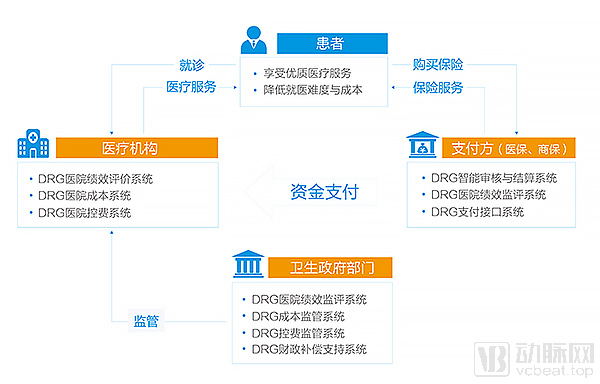
The goal of DRG is to provide a fair and relatively transparent evaluation tool for patients, insurance payers (social or commercial), and healthcare institutions. Previously, the cost of medical care varied across different hospitals and even among different physicians within the same hospital. With the implementation of DRG, reimbursement for the same condition has become significantly more equitable.
This fairness is reflected in three aspects:
First, under the same DRG system, the bundled payment for identical cases is the same, regardless of whether they are treated in public or private hospitals.
Secondly, patients can choose medical institutions with better treatment service guarantees while paying the same price.
Third, the service efficiency of healthcare institutions themselves has become increasingly important. Hospitals that excel in cost management, operational efficiency, and medical technology can achieve surpluses within the same diagnosis-related group (DRG). Conversely, if a hospital fails to effectively manage clinical pathways, exhibits low surgical proficiency, or experiences infectious complications that prevent timely patient discharge, or if treatment costs exceed normal levels, the hospital will not generate a surplus and may even incur losses.
Under the current mechanism, there are significant variations in costs among hospitals. However, because these costs are fully passed on to patients and insurance payers, hospitals have no inherent incentive to manage this situation.
Thus, DRG has evolved into a tripartite constraint mechanism. Under the pressure of fixed-payment quotas, healthcare institutions strive to enhance diagnostic and therapeutic standards while eliminating overtreatment. In scenarios where reimbursement rates are standardized for identical diagnoses, hospitals must balance cost reduction with quality assurance. Physicians are compelled to continuously optimize surgical, nursing, diagnostic, and pharmacological regimens to achieve patient cure at minimal cost. Consequently, the objectives of healthcare providers gradually align with those of patients and insurance payers.
Duan Chenghui pointed out that the true essence of DRG is to spend money wisely and operate in compliance. Hospitals aim to serve patients well through the most appropriate clinical care pathways. Patients hope to be cured with minimal therapeutic intervention. Payers also seek to achieve more with less expenditure.
The Maturation of DRG Is a Process of Continuous Deepening Reform
Looking at the implementation history of DRGs in other regions around the world, China will implement its DRG system in phases, and this will be a continuous process of deepening reform.
The first phase is the pilot program. There are significant variations across different regions in terms of the granularity of DRG grouping, the specifics of payment management, and the extent of evaluation applied to healthcare institutions. Consequently, the duration of pilot programs also varies. Germany and Australia, whose DRG systems are similar to China’s, each took approximately five years to complete their pilot phases. Drawing on their lessons learned, and leveraging China’s institutional advantages, the pilot period is expected to be shortened.
However, the significant deficiencies in China’s existing informatics and data infrastructure will pose a major challenge during the initial implementation of DRG.
The second phase is comprehensive implementation. Compared with other regions, China enjoys significant policy advantages and government-led advantages in the nationwide rollout of Diagnosis-Related Groups (DRG). On one hand, China’s healthcare sector is typically driven by policy initiatives; on the other hand, public hospitals account for as high as 90% of service volume, and social insurance plays an absolutely dominant role in healthcare expenditure. This will ensure the full implementation of DRG in China through administrative and institutional safeguards.
Nevertheless, Duan Chenghui believes that the maturation of the DRG payment system will encounter complexities not seen in certain developed countries or regions. China’s vast territory leads to significant disparities in healthcare environments and financing systems across different areas due to varying levels of economic development. Even in affluent provinces like Guangdong, there are substantial differences between northern and southern regions.
Therefore, Duan Chenghui believes that China will not adopt a single nationwide DRG rate standard for payment line items; rather, the approach should be localized. This localization should extend beyond the provincial level to the city level, with dynamic rate standards based on national grouping and classification systems. This is precisely the work currently being actively promoted by the National Healthcare Security Administration in pilot cities.
Since social health insurance funding in China has always been organized at the city level, this will facilitate the localization of DRG-based payments. The ultimate hallmark of DRG maturity will be achieved when each city establishes its own rate standards, ensuring uniform pricing for the same medical conditions within the city.
As a pioneer, Neusoft Wanghai has deeply penetrated the grassroots hospital system. Among the more than 3,000 medical institutions currently served by Neusoft Wanghai, approximately 1,100 are community hospitals, around 900 are secondary hospitals, and over 900 are large tertiary hospitals.
According to Duan Chenghui, grassroots hospitals, including those at the county level, were previously preoccupied with surviving the siphoning of resources and patients by large tertiary hospitals. However, starting this year, the National Health Commission has emphasized primary healthcare and promoted the development of county-level hospitals and medical consortia, coupled with the effects brought about by the pilot implementation of Diagnosis-Related Groups (DRG). As a result, the number of patient visits to grassroots medical institutions has seen a significant increase.
“I believe it is highly likely that China will create the largest and most complex DRG system in the world,” she said.
DRGs will make the "4+7" centralized procurement an active consensus rather than a mandate.
Duan Chenghui also noted that with the implementation of DRG, hospital medical services will return to their true value, and the situation where profits primarily rely on markups for drugs and materials will change significantly.
DRG implements fixed-amount payment. For instance, the payment rate for a disease with a specific code is RMB 30,000. If a hospital’s procurement costs for drugs and medical supplies are high, its profits are naturally captured by pharmaceutical companies and consumable manufacturers. Without any surplus, the hospital cannot provide salary bonuses or achieve sustainable development. The implementation of DRG has transformed drugs and consumables from revenue sources into costs, giving every hospital an incentive to reduce procurement prices. In the past, markups were passed on to patients and payers, serving as the primary source of hospital profitability.
With the implementation of Diagnosis-Related Groups (DRGs), the interests of hospitals, payers, and patients have shifted from a zero-sum game to a consensus. This will empower hospitals with greater autonomy in participating in centralized volume-based procurement, while healthcare institutions will also be more inclined to engage in joint purchasing initiatives. As hospital management transitions from passive regulatory compliance to proactive cost control, the ability to secure high-quality supplies at reasonable prices has become a core competency in modern hospital administration.
Duan Chenghui emphasized that the rational selection of medical materials and pharmaceuticals is a highly specialized matter, and no third party can substitute for physicians’ clinical decisions. The optimal policy approach is to assign responsibility, authority, and pressure directly to hospitals. Medications are not necessarily better simply because they are cheaper or more standardized; for instance, maintaining a certain level of diversity in antibiotic use may be advisable. Otherwise, long-term centralized volume-based procurement could lead to homogeneous antibiotic usage, potentially creating risks of population-level antimicrobial resistance in certain regions. Meanwhile, high-value medical consumables also exhibit significant individual variability.
What Insights Does the “Yuxi Model” of DRG Offer?
Duan Chenghui further stated that Neusoft Wanghai has participated in DRG payment pilots in certain regions across China, with Yuxi City in Yunnan Province being a representative case.
Yuxi City has a relatively small population of just over 2 million, and its case mix for common diseases is less complex than that of major metropolitan areas, making it well-suited for DRG pilot programs. Neusoft Wanghai spent approximately two to three years conducting joint surveys with hospitals under the unified coordination of the local Healthcare Security Administration, continuously refining the system. With expert guidance, they achieved localized optimization of DRG grouping rules and established Yuxi’s rate schedule standards based on the actual costs of local medical institutions. More than two years since the pilot’s inception, the entire process has stabilized. Today, Yuxi City has become the first in China to implement full-scope DRG-based payment.
The pilot implementation of DRG in Yuxi has yielded many insightful results. First, after the implementation of DRG, tiered diagnosis and treatment in Yuxi truly produced direct effects.
Regardless of hardware and software, human resources, or brand reputation, large tertiary Grade A hospitals are superior, but this also entails high costs. Following the implementation of Diagnosis-Related Group (DRG) payment systems, the cost structures of tertiary hospitals may no longer support reimbursement rates for certain common and basic disease groups, potentially leading to financial losses on a per-case basis. Furthermore, DRG payment rates for common conditions tend to align with reimbursement levels at primary care institutions, thereby encouraging the management of basic and common diseases to shift toward primary care settings.
In the case of Yuxi, it is evident that the DRG payment reform has promoted tiered diagnosis and treatment. When encountering these disease groups, large hospitals refer patients to county-level or community hospitals, preferring to provide care through downward deployment of specialists for consultations. As a result, although the patient volume at large hospitals has decreased, the complexity coefficient of the case mix has increased, leaving their revenue unaffected. Meanwhile, county-level hospitals have seen an increase in patient volume for common and basic diseases.
On one hand, this will provide substantial support to primary healthcare, driving double-digit growth in patient volume at grassroots hospitals and concurrently elevating the standard of medical care. On the other hand, patients will no longer need to endure the burden of traveling long distances for treatment, as common and chronic conditions can be managed effectively within their local communities. Under the financial leverage of the Diagnosis-Related Group (DRG) payment system, tertiary hospitals are incentivized to actively support grassroots institutions, including through specialist consultations. This is particularly significant for patients in economically underdeveloped regions, which often face transportation challenges.
Meanwhile, tertiary hospitals in Yuxi City have enhanced their capacity and proficiency in diagnosing and treating complex and critical cases, without a decline in their surplus rates. Local social security funds have also remained at safe levels over the past two years. It can be said that the implementation of Diagnosis-Related Groups (DRG) in Yuxi has achieved a win-win outcome for all stakeholders. This has bolstered confidence in the nationwide rollout of DRG across China.
16 Years of Dedication Forge Neusoft Wanghai’s Core Competitive Advantages
“I don’t think we can talk about competitive advantages yet, because this market has just opened up,” said Duan Chenghui when asked about Neusoft Wanghai’s advantages in DRG.
She stated that Neusoft Wanghai established the HIA platform, inviting experts from commercial insurance companies and social security agencies to participate, as well as engaging influential medical institutions with regional representation. These efforts reflect the team’s profound understanding of DRG developed over many years—as a fair and transparent payment tool, DRG can foster consensus among patients, insurance payers, and hospitals. It is for this reason that Neusoft Wanghai recognized from the outset that the DRG ecosystem should be collaboratively built.
On the one hand, without sufficient hospital participation, there is no foundation for DRG coding rules, the rationality and accuracy of case grouping, or the establishment of appropriate payment rates.
On the other hand, she emphasized that the rate basis for DRG grouping should by no means be based on historical cost levels. This is because China’s current medical service pricing is shaped by specific historical factors. In the past, medical service prices were decoupled from actual costs. For example, the fee for a neurosurgical procedure averaging more than five hours in duration was only around RMB 2,000, far insufficient to cover direct costs. This discrepancy was one of the key reasons why hospitals primarily shifted their revenue generation to pharmaceuticals and medical consumables.
Therefore, DRG-based payment must change this status quo; it is imperative not to layer another flawed rule atop previously erroneous reimbursement standards. By conducting grouping model analysis and matching using data from regions and hospitals with effective cost management, a cost rate database based on activity-based costing can be established. This constitutes the true essence of DRG-based payment.
Ultimately, DRG payments are fixed amounts, with these fixed rates derived from actual healthcare costs. Neusoft Wanghai holds an irreplaceable first-mover advantage in this area. Since its establishment 16 years ago, Neusoft Wanghai has been providing cost accounting services to hospitals. Nearly 1,000 large medical institutions accumulate real-world data on a daily basis. Leveraging this data, Neusoft Wanghai actively collaborates with insurance associations and government healthcare security administrations to convert more healthcare service costs into reasonable fee-for-service payment rates, thereby aligning DRG payment standards more closely with the true costs of medical care.
“Neusoft Wanghai is the only service provider in China that has persisted for 16 years in implementing activity-based costing for medical procedure service costs and disease-specific costs. With more than 1,500 medical institutions jointly building the HIA platform, we are well-positioned to support the exploratory efforts of the national DRG pilot cities,” said Duan Chenghui.