

Junlian Healthcare Global Drug Pipeline Update – Issue 29
Nov 04, 2019 18:00
CST Updated
18:00

This week, there were 11 new drug data entries, including 4 in oncology, 3 in immunology, 1 in neurology, 1 in anti-infectives, 1 in vaccines, and 1 in liver disease.
❖ Mannose Oligosaccharide Diligate (GV-971), jointly developed by Green Valley Pharmaceuticals, Ocean University of China, and the Shanghai Institute of Materia Medica, has received formal approval for the treatment of mild-to-moderate Alzheimer’s disease. It becomes the first new drug globally targeting the gut-brain axis for Alzheimer’s disease, filling a 17-year gap in which no new therapies were launched in this field. However, the mechanism of action (MoA) of GV-971 remains unclear. Meanwhile, aspects of its experimental design and results have sparked considerable curiosity among observers—for instance, why the trial duration was 36 weeks rather than the 18 months used in aducanumab studies, why the control group’s condition deteriorated sharply at 36 weeks, and how patients fared during follow-up. Nevertheless, the availability of a new therapeutic option for Alzheimer’s disease is ultimately positive news, and there is anticipation that the National Medical Products Administration (NMPA) and the company will disclose more comprehensive and in-depth data in the future.
❖ mMirati Therapeutics has released the first clinical data for its KRAS inhibitor, MRTX849. Previously, Amgen reported that its KRAS G12C inhibitor, AMG 510, achieved a disease control rate (DCR) of 90% (9/10) and an objective response rate (ORR) of 50% (5/10) in patients with non-small cell lung cancer (NSCLC). The newly disclosed data for MRTX849 show a DCR of 100% (3/3) and an ORR of 50% (3/3), largely validating the significant potential of KRAS as a therapeutic target in NSCLC. However, KRAS inhibitors have demonstrated modest efficacy in colorectal cancer, with an ORR of only around 10%. Meanwhile, Amgen has begun exploring combination strategies involving KRAS inhibition. Current evidence suggests that combining KRAS inhibitors with PD-1 inhibitors, chemotherapy, or MEK inhibitors can significantly enhance therapeutic efficacy. Following the wave of enthusiasm for immuno-oncology (IO), a new cornerstone therapeutic target may finally be emerging.
Green Valley Pharmaceuticals’ New Alzheimer’s Drug GV-971 Approved for Market Launch
The National Medical Products Administration has approved the market launch of Shanghai Green Valley Pharmaceutical’s new drug for Alzheimer’s disease, sodium oligomannate capsules (code name: GV-971), under the brand name Jiuqi Yi.
GV-971 is a marine oligosaccharide molecule extracted from algae. It can capture β-amyloid (Aβ) in a multi-site, multi-segment, and multi-state manner, inhibit the formation of Aβ fibrils, and depolymerize existing fibrils into non-toxic monomers. It also suppresses neuroinflammation by regulating amino acid metabolism. By reshaping the balance of gut microbiota, it reduces the accumulation of related metabolites, phenylalanine and isoleucine, alleviates neuroinflammation in the brain, thereby improving cognitive impairment and achieving therapeutic effects.
Based on the results of the Phase I/II clinical trial MRTX849-001, which enrolled 17 patients with advanced solid tumors, including 10 with non-small cell lung cancer (NSCLC), 4 with colorectal cancer, 2 with appendiceal cancer, and 1 with duodenal cancer. 59% of the patients had previously received PD-1/PD-L1 immunotherapy, among whom 90% of the lung cancer patients had undergone immunotherapy.
GV-971 significantly improves cognitive impairment in patients with mild-to-moderate Alzheimer’s disease. Compared with the placebo group, it demonstrated significant improvement in the primary efficacy endpoint of cognitive function, with a 2.54-point improvement in the Alzheimer’s Disease Assessment Scale–Cognitive Subscale (ADAS-Cog) score (p < 0.0001).
GV-971Mechanism of Action in Inhibiting Alzheimer's Disease
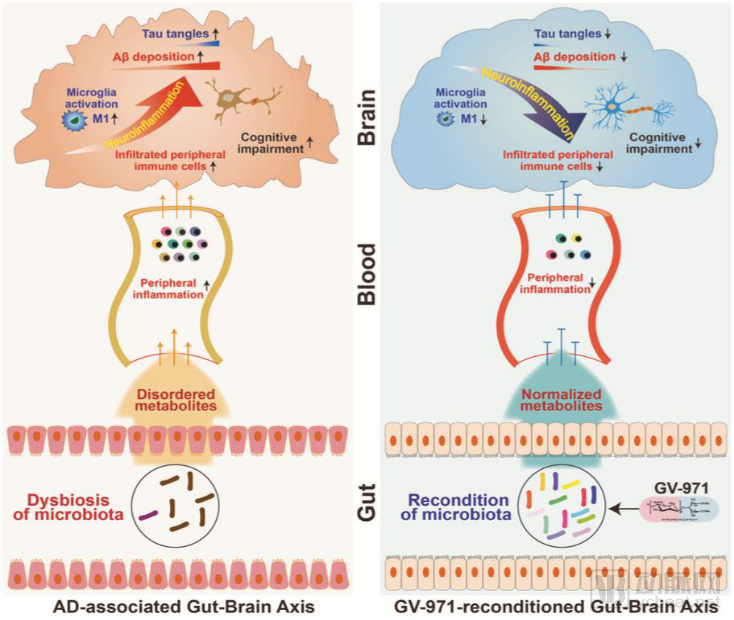
Data Source: Cell Research
AbbVie’s JAK1 Inhibitor Rinvoq Meets Phase 3 Clinical Endpoints
AbbVie Announces That Its JAK1-Selective Inhibitor Rinvoq (upadacitinib) Met Primary and Key Secondary Endpoints in the Phase 3 SELECT-PsA 2 Trial in Adult Patients with Active Psoriatic Arthritis
Rinvoq is a once-daily oral small-molecule JAK1-selective inhibitor that modulates the JAK signaling pathway, thereby preventing the phosphorylation and activation of STATs.
A randomized, double-blind, placebo-controlled Phase 3 trial enrolling patients who had an inadequate response to treatment with one or more biologic disease-modifying antirheumatic drugs (bDMARDs)
After 12 weeks of treatment, the proportions of patients achieving an ACR20 response among those receiving two different doses of Rinvoq (15 mg or 30 mg) were 57% and 64%, respectively, compared with 24% in the placebo group, thereby meeting the primary efficacy endpoint of the trial.
Alkermes and Biogen’s New Multiple Sclerosis Drug Vumerity Approved by FDA for Market Launch
Alkermes and Biogen jointly announced that the U.S. FDA has officially approved their novel oral fumarate drug, Vumerity (diroximel fumarate), for the treatment of patients with relapsing forms of multiple sclerosis (MS).
Vumerity is an oral prodrug of fumarate. It is rapidly converted in the body to monomethyl fumarate, which reduces oxidative stress–induced damage by activating the transcription factor Nrf2.
Based on two Phase 3 clinical trials: one was a single-arm, open-label, two-year safety study primarily evaluating the treatment of patients with relapsing-remitting multiple sclerosis (RRMS); the other was a randomized, double-blind, active-controlled, five-week study designed to assess the gastrointestinal (GI) tolerability of diroximel fumarate compared with Tecfidera in patients with RRMS, including the duration and severity of GI events.
The proportion of patients who withdrew from the trial due to adverse events (AEs) was 1.6% in the treatment group and 6.0% in the active control group receiving the approved dimethyl fumarate therapy, Tecfidera; the proportion of patients who withdrew due to gastrointestinal (GI) adverse events was 0.8% in the treatment group and 4.8% in the active control group.
Roche’s IL-6 Antibody Marketing Application Accepted by FDA/EMA
Genentech, a member of the Roche Group, announced that the U.S. FDA has accepted its Biologics License Application (BLA) for satralizumab, an IL-6 antibody, for the treatment of patients with neuromyelitis optica spectrum disorder (NMOSD); the European Medicines Agency (EMA) has also accepted its marketing authorization application and granted it accelerated assessment status.
Satralizumab is a fully humanized monoclonal antibody against IL-6 that inhibits the IL-6 signaling pathway, thereby suppressing inflammation and the production of AQP4-targeting autoantibodies.
Based on the positive results from two pivotal Phase 3 clinical studies, which evaluated the efficacy and safety of satralizumab as monotherapy and in combination with standard therapy in patients with neuromyelitis optica spectrum disorder (NMOSD), respectively.
Compared with the placebo group, patients receiving satralizumab monotherapy had a 55% reduction in the risk of relapse. Furthermore, in the subgroup of patients positive for AQP4 autoantibodies, those receiving satralizumab monotherapy experienced a 74% reduction in the risk of relapse.
TG Therapeutics’ PI3Kδ Inhibitor Umbralisib Meets Key Clinical Endpoint
TG Therapeutics Announces That Its Innovative Oral PI3Kδ Inhibitor Umbralisib Met the Primary Endpoint in the Follicular Lymphoma (FL) Patient Cohort of a Pivotal Phase 2b Clinical Trial
Umbralisib is a next-generation PI3Kδ inhibitor that does not inhibit PI3Kγ. It enhances drug tolerability by inhibiting the protein CK1-ε, thereby preventing disruption of regulatory T cell function.
Open-label, multicenter, Phase 2b study in a cohort of patients with follicular lymphoma receiving once-daily umbralisib, who had previously received at least two prior lines of therapy, including an anti-CD20 agent and an alkylating agent; the primary endpoint was the overall response rate as assessed by an independent review committee.
The Independent Review Committee (IRC) determined that the overall response rate (ORR) in these patients met the prespecified criterion of 40–50%. Importantly, umbralisib monotherapy demonstrated favorable tolerability and safety.
Y-mAbs Therapeutics Reports Positive Clinical Results for Novel Therapy in Refractory Pediatric Brain Tumors
Y-mAbs Therapeutics Announces Positive Efficacy and Safety Data from Clinical Trials of Naxitamab, a Humanized Monoclonal Antibody Targeting the GD2 Antigen, in Combination with GM-CSF for the Treatment of Pediatric Patients with Neuroblastoma and Osteosarcoma
Naxitamab is a humanized monoclonal antibody targeting the GD2 antigen. By binding to GD2 antigens on the tumor surface, it induces antibody-dependent cellular cytotoxicity and activates the complement system of the immune system, thereby achieving tumor cell killing.
Phase 1/2 Clinical Trial: Twenty-eight patients with relapsed/refractory high-risk disease who were ineligible for induction chemotherapy received combination therapy with naxitamab and GM-CSF; more than half of these patients were also unsuitable for second-line chemotherapy.
This combination therapy achieved an objective response rate (ORR) of 78% and resulted in a progression-free survival (PFS) of 24 months in 50% of patients.
GSK Initiates Phase 3 Clinical Trial of Gepotidacin, an Antibiotic with a Novel Mechanism of Action
GSK Announces First Patient Dosed in Phase 3 Trials of Gepotidacin, an Investigational Triazaacenaphthylene Antibiotic with a Novel Mechanism of Action, for the Treatment of Uncomplicated Urinary Tract Infections (uUTI, also known as Acute Cystitis) and Urogenital Gonorrhea
Gepotidacin is an oral triazaacenaphthylene antibiotic with a dual mechanism of action. It selectively binds to and inhibits both DNA gyrase and topoisomerase IV, inducing single-strand breaks in replicating DNA, thereby killing pathogens.
It includes two studies: one enrolling patients with urogenital gonorrhea, comparing the regimen with ceftriaxone plus azithromycin over a 21-day period, with the primary endpoint being the bacterial eradication rate of Neisseria gonorrhoeae (NG) in the urogenital tract; the second enrolling patients with uncomplicated urinary tract infections, comparing the regimen with nitrofurantoin over a 28-day period, with the primary endpoint being the therapeutic response rate in patients whose urinary pathogens have been normalized.
Previously, gepotidacin demonstrated favorable efficacy in two Phase 2 trials targeting gonorrhea (GC) and acute bacterial skin and skin structure infections. In adult patients with uncomplicated GC, gepotidacin achieved a 95% cure rate against Neisseria gonorrhoeae.
GSK’s Tuberculosis Vaccine Shows Positive Results in Phase 2b Trial
GSK and the International AIDS Vaccine Initiative jointly announced that GSK’s investigational vaccine, M72/AS01E, significantly reduced the incidence of pulmonary tuberculosis among HIV-negative adults with latent tuberculosis infection in a Phase 2b clinical trial, demonstrating 50% vaccine efficacy within three years post-vaccination.
M72/AS01E contains the M72 recombinant protein derived from two Mycobacterium tuberculosis antigens (Mtb32A and Mtb39A) and the AS01 adjuvant system, which can stimulate specific lymphocyte proliferation and/or interferon-gamma production, thereby preventing pulmonary tuberculosis.
In a randomized, double-blind, placebo-controlled Phase 2b trial, 3,573 HIV-negative adults with latent tuberculosis infection were randomly assigned to two groups to receive either the M72/AS01E vaccine or placebo, and were followed for three years to monitor for the occurrence of active tuberculosis disease.
In the vaccine group, 13 individuals developed tuberculosis. In the placebo group, 26 individuals developed tuberculosis. This indicates that the vaccine efficacy of M72/AS01E is 50%.
Mirum Pharmaceuticals’ Selective ASBT Inhibitor Maralixibat Receives Breakthrough Therapy Designation
Mirum Pharmaceuticals Announces FDA Grants Breakthrough Therapy Designation to Maralixibat, a Selective ASBT Inhibitor, for the Treatment of Pruritus in Pediatric Patients Aged 1 Year and Older with Alagille Syndrome (ALGS)
Maralixibat is an oral, selective inhibitor of the apical sodium-dependent bile acid transporter (ASBT) that promotes the fecal excretion of bile acids, prevents their excessive accumulation, and controls severe pruritus associated with cholestatic liver disease.
Based on data from the ICONIC Phase 2b, double-blind, placebo-controlled clinical trial in pediatric patients with Alagille syndrome (ALGS)
Compared with placebo, serum bile acid (sBA) levels in pediatric patients with Alagille syndrome (ALGS) treated with maralixibat decreased significantly from baseline. Furthermore, patient-reported outcomes such as the ItchRO score and the Chronic Scratch Scale (CSS) also showed improvement.
AstraZeneca’s PD-L1 Inhibitor Combination First-Line Therapy Meets Phase 3 Endpoints
AstraZeneca announced that its combination therapy consisting of the PD-L1 monoclonal antibody Imfinzi and chemotherapy, as well as the triple-combination regimen with the addition of the anti-CTLA-4 antibody tremelimumab, met the primary and key secondary endpoints in a Phase 3 clinical trial for the first-line treatment of patients with stage IV non-small cell lung cancer.
Imfinzi is a humanized PD-L1 monoclonal antibody that binds to PD-L1 and blocks its interaction with the PD-1 and CD80 receptors, thereby inhibiting the suppressive effect of PD-L1 on the immune response.
A randomized, international, multicenter Phase 3 clinical trial enrolled patients with metastatic non-small cell lung cancer (NSCLC), including both squamous and non-squamous histologies, who expressed PD-L1 but did not harbor EGFR or ALK gene mutations. The primary endpoints were progression-free survival (PFS) and overall survival (OS) for Imfinzi combined with chemotherapy; the secondary endpoints included PFS and OS for the triple therapy regimen of Imfinzi plus tremelimumab and chemotherapy.
Compared with chemotherapy alone, both the combination therapy of Imfinzi plus chemotherapy and the triplet therapy adding tremelimumab significantly improved patients’ progression-free survival (PFS), meeting the primary endpoint and key secondary endpoints of the trial.
Mirati Therapeutics Announces Initial Clinical Trial Results for KRAS Inhibitor MRTX849
Mirati Therapeutics Announces Initial Clinical Trial Results of KRAS Inhibitor MRTX849, Demonstrating Preliminary Safety and Therapeutic Activity in Patients with Non-Small Cell Lung Cancer (NSCLC) and Colorectal Cancer (CRC)
PARP inhibitors induce cell death in tumors harboring BRCA gene mutations by inhibiting PARP-mediated DNA damage repair mechanisms, thereby leading to the accumulation of excessive DNA damage.
Phase I/II Clinical Trial: Enrolled 17 patients with advanced solid tumors, including 10 with non-small cell lung cancer (NSCLC), 4 with colorectal cancer, 2 with appendiceal cancer, and 1 with duodenal cancer. Fifty-nine percent of the patients had previously received PD-1/PD-L1 immunotherapy, among whom 90% of the lung cancer patients had undergone immunotherapy.
Among the 5 NSCLC patients who received the highest dose of MRTX849, 3 (3/5) achieved a partial response; among the 2 CRC patients, 1 (1/2) achieved a partial response.
KRASAffected Signaling Pathways
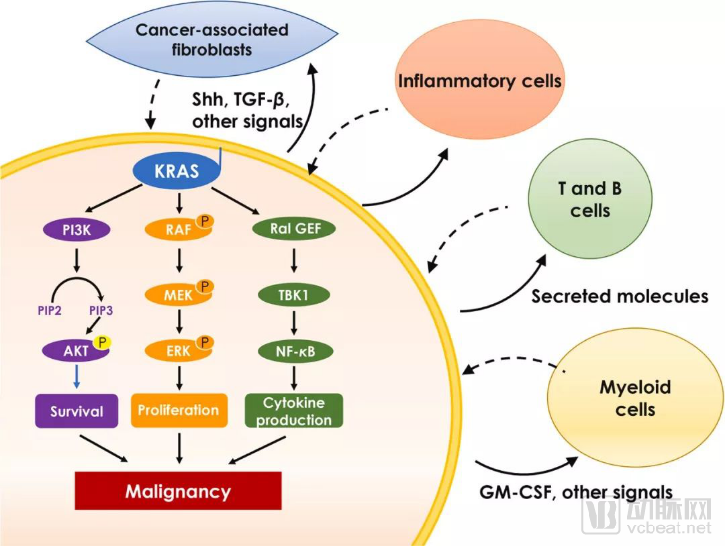
Data Source: Acta Pharmaceutica Sinica
❖ Takeda Pharmaceutical Announces EvaluationTAK-721(Budesonide Oral Suspension,BOS) treatment of eosinophilic esophagitis in two pivotalIIIAchieved the co-primary and key secondary efficacy endpoints in the first study of the phase trial, demonstrating statistically significant improvements compared with placebo
❖Iveric bioAnnouncementZimuraIn the clinical treatment of dry age-related macular degeneration with geographic atrophyIIbachieved the primary endpoint in the phase trial, compared with the sham group (control group), treatment12months later,4 mgand2 mg ZimuraThe rates of geographic atrophy lesion progression were reduced in the respective patient groups.27.81%and27.38%
❖ MerusAnnounced its bispecific antibodyMCLA-128(zenocutuzumab) in the treatment of carriersNRG1Preliminary Clinical Results in Cancer Patients with Gene Fusions. Data indicate that,MCLA-128In3Achieved the effect of tumor volume reduction in patients receiving treatment
❖ According toCDELatest Announcement: Roche“Tumor-Agnostic” TherapyEntrectinib(Entrectinib) Capsules, Proposed for Development in Patients HarboringROS1Positive locally advanced or metastatic non-small cell lung cancer, orNTRK1/2/3Clinical Trial Implicit Approval Granted for the Treatment of Patients with Locally Advanced or Metastatic Solid Tumors Harboring Gene Mutations