

Zhang Meng, VP of Tencent Healthcare: Four Pillars of New-Generation Medical Science Communication; Tencent Medpedia to Launch Two New Initiatives

Tencent
Internet Comprehensive Service Provider
Medicine is advancing at a breakneck pace, with rapid progress in the study of pathogenesis, the evolution of treatment methods, vaccine upgrades, and the development of new drugs. However, public understanding has failed to keep pace with these medical advancements, and many misconceptions persist. What has caused this gap? How can it be bridged?
On November 4, at the inaugural Tencent Medical ME Conference (hereinafter referred to as the “ME Conference”), Zhang Meng, Vice President of Tencent Healthcare, shared his insights and perspectives. In his keynote address titled “New Popular Science in Medicine: Illuminating the Lighthouse of Health,” he argued that science communication is one of the most effective ways to bridge the gap between cutting-edge medical advances and public understanding.
Tencent Medical Dictionary, a platform under Tencent Healthcare dedicated to providing innovative online medical science popularization, will collaborate with NEJM Frontier of Medicine to launch two new initiatives: the “New Therapies, Good News” science popularization column and the “Young Physicians’ Short-Video Science Popularization Contest.” These initiatives aim to enable experts to disseminate the latest, rigorous clinical diagnostic and treatment concepts and advances, while attracting more young physicians to participate in innovative medical science communication efforts.
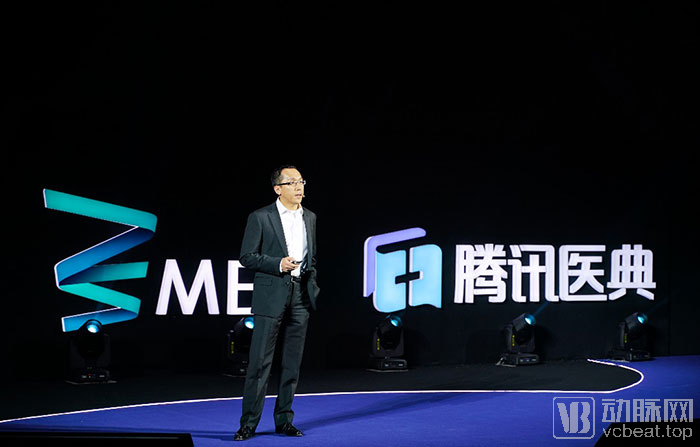
Zhang Meng, Vice President of Tencent Medical, Shares the Significance of New Popular Science in Medicine at the ME Conference
At the conference, Zhang Meng presented the following data: In the 14th century, the Black Death erupted in Europe, wiping out one-third of the continent’s population within three years. It was only by cutting off the transmission routes of plague through rat eradication and flea control that people emerged from this catastrophe. In 1918, the most severe influenza pandemic in history broke out; the “Spanish Flu” claimed more than 50 million lives. Since the 1970s, swine flu and avian influenza have continued to emerge, leading people to gradually recognize that influenza is vastly different from the common cold and to progressively adopt influenza vaccination.
“Most people’s understanding of disease knowledge is passive; they only take it seriously when faced with significant threats,” Zhang Meng noted. With advances in technology, people have come to recognize that proactively learning about diseases can lead to a healthier lifestyle and greater longevity.
Studies have shown that in the field of cardiovascular care, heart disease patients who received rehabilitation education experienced a 13% reduction in all-cause mortality, a 26% reduction in cardiovascular mortality, and a 31% reduction in hospitalization risk. Therefore, authoritative and professional medical science popularization helps to actively prevent diseases and facilitates faster patient recovery.
Generally, there are some common misconceptions about diseases. For example, Alzheimer’s disease is incurable, lupus erythematosus is a terminal illness, leukemia is equivalent to a death sentence, and depression is not a real disease...
Are these perceptions accurate in the context of modern medicine? Not necessarily. The truth is that early detection can slow the progression of Alzheimer’s disease, lupus is becoming a chronic and manageable condition, T-cell immunotherapy enables complete cures for certain types of leukemia, and depression is indeed a medical condition requiring active treatment.
In light of these realities, Zhang Meng believes that medicine is in an era of rapid development, with research into pathogenesis, the evolution of treatment methods, vaccine upgrades, and the development of new drugs all advancing by leaps and bounds. However, public awareness still lags behind medical advancements, and many misconceptions persist.
“On another front, we have also witnessed the public’s curiosity and eagerness for cutting-edge medical knowledge,” said Zhang Meng. He introduced that Tencent Yidian conducted a survey and compiled a list of the “Top 10 Frontier Medical Topics of Greatest Public Interest.” These topics span a wide range, from genomic mapping and editing, the ultimate questions surrounding human lifespan, and cancer immunotherapy, to brain-computer interfaces and 3D organ printing, reflecting everyone’s profound curiosity about new explorations into life.
On one hand, medical advances remain largely unknown to the general public; on the other, there is a strong public desire for such knowledge. What has caused this gap? Can a bridge be built to span it? In response to these questions, Zhang Meng believes that popularizing medical science should be a key approach to bridging this divide.
Zhang Meng presented a case study via live video, demonstrating that science communication can tangibly resolve patients’ issues and equitably bring hope and confidence to lives.
“Zhu Zi Ge,” a 28-year-old young woman, was diagnosed with non-Hodgkin lymphoma with bone marrow and visceral metastases. After her initial diagnosis in October 2018, she created a “Self-Rescue Guide for Cancer Fighting” through Tencent Yidian to confront her impending cancer journey. The guide comprises four major sections and 224 entries. The complete version includes the following four parts: Part I: Accepting the Reality of Illness and Building Psychological Resilience; Part II: Deconstructing Specific Issues for Targeted Response and Planning; Part III: Medium- to Long-Term Strategy; and Part IV: Facing It Alone.
This guide became a viral article across the internet last year, enabling “Brother Zhuzi” to navigate his cancer journey with scientific rigor and composure, while also helping many others. “Brother Zhuzi” believes that ordinary people can overcome unnecessary fears through access to information; the more they understand, the more at ease they become.
With 3.8 million new cancer cases diagnosed annually in China, “Brother Zhuzi” believes that patients should acquire a comprehensive, map-like understanding of their disease upon diagnosis, thereby enabling them to plan their cancer journey effectively. Limited financial resources should not be spent on unnecessary folk remedies, nor should limited energy and trust be wasted on unfounded hearsay.
This case demonstrates that patient education and disease-related knowledge can be systematized, structured, and integrated across the entire care continuum, enabling patients to understand the full course of treatment through a systematic knowledge framework.
“How can medical science communication help patients understand diseases and reduce their fear of them?” Zhang Meng pointed out that this is a key consideration for Tencent Medical Encyclopedia.
The internet is a major source of medical information for the general public. According to a survey by Tencent Big Data, in recent years there have been over 40,000 self-media accounts focused on healthcare in China, with weekly readership exceeding one million and daily searches for health-related questions reaching 60 million. However, in the past, much of the online medical content was of mixed quality, with some materials being simply compiled from unclear sources by non-professionals.
On one hand, "rewritten" popular science articles pose a significant threat to public health. Some individuals, suffering from persistent low-grade fever, have relied solely on online information, self-diagnosed with terminal illnesses, and consequently committed suicide. Others have missed the optimal window for treatment due to misinformation. On the other hand, bad money drives out good; many professional physicians, maintaining their integrity, are reluctant to disseminate their expertise via the internet.
Under such circumstances, internet-based medical science popularization is undergoing a reshaping. By featuring authoritative physicians as authors, centering on cutting-edge knowledge, upholding professionalism as its core principle, and grounding itself in rational thinking, it aims to make authentic medical knowledge accessible to the public and enhance individuals’ self-management of their health.
Zhang Meng believes that “professionalism, systematicity, ease of use, and openness” are the four key points of new Internet-based medical science popularization.
First, replace “content editors spinning articles” with “physicians writing drafts.” High-quality science communication should be written or reviewed word-for-word by medical experts to ensure content quality.
Second, establish a systematic framework for popular science education. Currently, the disease spectrum among Chinese residents is continuously evolving, with chronic diseases, including cancer, accounting for more than 70% of the total disease burden. For chronic diseases, prevention, diagnosis, treatment, and rehabilitation constitute an integrated system that requires systematic learning. Medical popular science should also cover early prevention, symptom recognition, preliminary diagnosis, treatment options, and lifestyle management, thereby empowering patients to make informed health decisions at every stage.
Furthermore, rich media such as short videos, comics, and 3D visualizations should be employed to make “hardcore knowledge” accessible and easy to understand.
Finally, the promotion of medical science popularization cannot be a solitary effort; it requires coordinated action across society to establish a knowledge loop among individuals, healthcare institutions, the government, and the broader community.
“Only doctors and medical professionals can break down the high barriers of medicine, guide the general public through the gateway of medical knowledge, and unlock the complex mechanisms and structures of the human body,” said Zhang Meng. He emphasized that, in the doctor-patient relationship, there is no better means of communication than popular science education.
“Everyone is the primary person responsible for their own health.” This is the core philosophy of Healthy China. Doubling the national health literacy level among residents by 2030 is a formidable task. Zhang Meng stated that this process urgently requires the joint participation of physicians and the internet, leveraging the internet’s efficient dissemination to amplify physicians’ professional expertise, and using new forms of online medical science communication to bring more hope and warmth to patients.
According to VCBeat, Tencent Medical Encyclopedia, a new medical science popularization platform under Tencent Healthcare, has achieved a series of accomplishments in online medical education. Adhering to the principle that all educational articles are authored or reviewed by authoritative experts, Tencent Medical Encyclopedia had established collaborations with 3,000 medical experts as of October 2019. Among these experts were over 100 academicians from the Chinese Academy of Sciences and the Chinese Academy of Engineering, as well as leading figures in their respective disciplines. The platform covers more than 10,000 disease types, encompassing not only common conditions but also critical illnesses such as cancer and chronic diseases.
Furthermore, Tencent Medical Encyclopedia has constructed in-depth, structured medical knowledge graphs for various diseases, covering content from symptom identification and preliminary diagnosis to treatment and rehabilitation management. Among these, the rich medication guidance information tailored to different populations and diseases provides strong support for the subsequent implementation of national science popularization initiatives.
At the ME Conference, Zhang Meng also announced two initiatives launched through a collaboration between Tencent Medical Dictionary and NEJM Frontiers of Medicine. The first is the joint launch of the “New Therapies, Good News” popular science column, which aims to deliver the latest, rigorous clinical diagnosis and treatment concepts and advancements directly to users through expert-led storytelling.
Second, we jointly launched the “Young Doctors’ Short-Video Science Popularization Contest.” By leveraging diverse short-video dissemination, we help young doctors open the door to medical science communication. Through cash prizes and traffic support, we grow together with emerging stars in medical science popularization, jointly delivering high-quality medical science content to the public.
“We hope more young doctors will join the effort to build a new wave of medical science communication, using their expertise and creativity to make medical knowledge more vivid and accessible,” said Zhang Meng.