

OST to Launch International Speech Therapy Assistant Certification Program and Expand Online Rehabilitation Services
A 12-year cycle of the Chinese zodiac, also known as one's Ben Ming Nian (zodiac year of birth).
November 2019 marked the 12th anniversary of the founding of Open Speech. Over the past twelve years, Open Speech, a professional institution dedicated to children’s speech and cognitive development, has established more than 30 directly-operated centers in 18 cities and regions across China, cumulatively serving over 200,000 families in need.
Based on data from the Second National Sample Survey on Disability, it is estimated that the number of individuals in China with speech disabilities, including those with co-occurring speech disabilities, exceeds 30 million. Yao Qiuwu, founder of Ostlin (Dongfang Qiyin), provided reporters with a calculation: currently, each session lasts 50 minutes, and each therapist can conduct at most six one-on-one sessions per day, thereby serving six children. Since each child requires a minimum of 30 sessions, and there are 365 days in a year, each therapist can serve a maximum of 73 children annually through one-on-one therapy. Ostlin currently employs more than 1,000 therapists, a figure that far surpasses that of other domestic institutions.
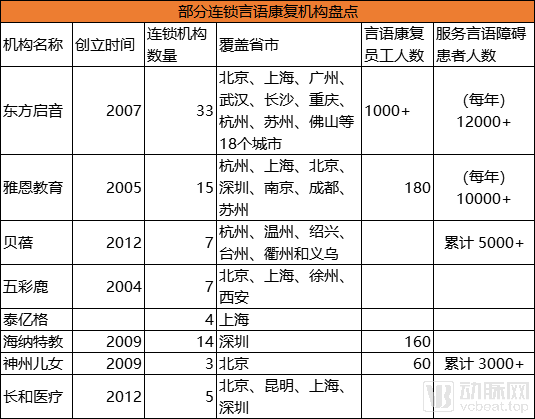
Source: VCBeat article “An Overview of China’s Speech Rehabilitation Industry: Tier-1 and Tier-2 Markets Are Gradually Maturing, Leading Companies Generate Over RMB 200 Million in Revenue with Growth Rates Exceeding 100%”
A severe shortage of speech-language pathologists has constrained the expansion of speech rehabilitation institutions in China. Against this backdrop, there are insufficient speech rehabilitation facilities, incomplete regional coverage, and limited service reach for children. To address these two critical issues, Otolingua, with twelve years of deep expertise in speech rehabilitation, has officially launched the International Speech Therapy Assistant (STA) training program and online pediatric rehabilitation training courses.
To gain a deeper understanding of OST’s development over the past twelve years, as well as its speech-language pathologist training programs and online rehabilitation courses for children, VCBeat (WeChat: vcbeat) conducted an exclusive interview with Yao Qiuwu, founder of OST.
Speech and language abilities play a crucial role in children’s future communication and social development. In foreign countries, the population served by speech-language therapy is not limited to children with disabilities; it also includes typically developing children with intellectual or articulation weaknesses. According to statistics, 5% of children aged 3–17 in the United States require speech-language therapy. Another statistic indicates that 8%–10% of the U.S. population has specific types of speech disorders, further demonstrating the broad application of speech-language therapy.
The population with speech disorders includes individuals with autism, hearing and speech impairments, cerebral palsy, Down syndrome, cleft lip and palate, developmental delays, and other causes. Although the clinical presentations may be similar, rehabilitation approaches differ fundamentally depending on the underlying cause of the speech disorder. Since its founding in 2007, Eastern Speech Therapy (Dongfang Qiyin) has been developing courses focused on children’s cognitive enrichment and logical expression. Over the years, these curricula have been progressively refined, currently forming two major categories: the OMP (Oral Motor Placement) program for oral motor positioning training, and the STAR (Strategies for Teaching Based on Autism Research) program.
Its OMP curriculum is designed for children with speech and cognitive developmental disorders in both fine and gross motor skills, such as cerebral palsy, Down syndrome, and developmental delays, who require high-frequency, intensive intervention. It is further divided into three modules: Module A focuses on speech articulation; Module B on cognitive enlightenment and logical expression; and Module C on sensory integration and motor development. Its STAR curriculum targets children with autism spectrum disorder (including those with developmental delays). It comprises three levels, covering skills across six major instructional dimensions.
All children enrolled at Dongfang Qiyin undergo a comprehensive evaluation by an expert team, resulting in a holistic, individualized, and targeted instructional plan. Yao Qiuwu emphasizes that Dongfang Qiyin also focuses on training teachers accordingly based on these assessment dimensions. For instance, if a child is assessed as having poor speech articulation, they will be matched with a teacher specializing in OMP A courses.
Regarding faculty, Dongfang Qiyin recruits professional speech therapists from the United States, Australia, the United Kingdom, and other regions to personally deliver instruction, conduct assessments, and participate in training. Within its domestic therapist team, 80% hold backgrounds in medicine or clinical psychology, while 20% specialize in education; currently, clinicians with graduate-level training account for 20% of the total staff.
It is understood that therapists at Oriental Speech undergo a structured career progression from onboarding to assistant therapist and then to full therapist. This path requires one year of theoretical and practical training, along with 1–2 years of clinical experience. Only after becoming a certified lead therapist are they authorized to independently develop treatment plans. Advancement through the ranks—from junior therapist, senior therapist, and supervising therapist to assessor and director—requires passing rigorous evaluations at each level. Promotion is contingent upon meeting specified standards for both the quantity and quality of clinical teaching hours.
“Most of today’s therapists are homegrown, relying on clinical experience and self-directed learning within our knowledge framework and methodologies,” said Yao Qiuwu. “We have been actively seeking collaborations with universities to recruit speech rehabilitation talent across China, only to find that there is no standalone major in speech rehabilitation in the country. It is typically offered as just one or two courses under the broader discipline of rehabilitation science, lacking a systematic curriculum.”
Since 2007, Ostomy (Dongfang Qiyin) has explored regions with well-developed speech rehabilitation, including the United States, Taiwan, China, Hong Kong, China, and Germany. In 2015, it ultimately partnered with the University of Newcastle in Australia. It is understood that the University of Newcastle offers a comprehensive speech therapy curriculum for training speech therapists.
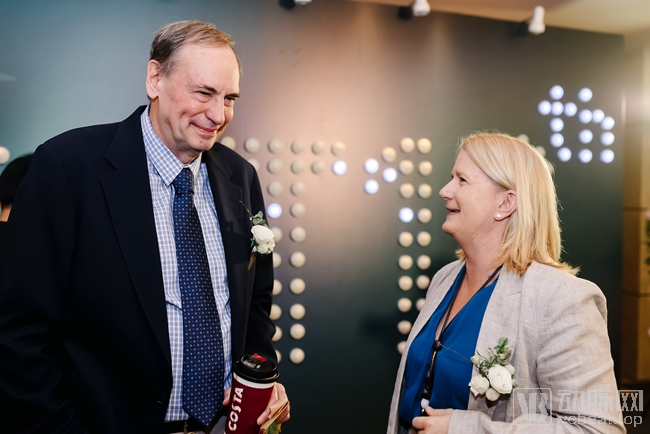
STAR founder Dr. Joel Arick (left) and Sally Hewat, Head of the Department of Speech Pathology at the University of Newcastle, Australia
(Image source: Provided by the company)
Since 2015, Sally Hewat, Dean of the Speech Pathology Department at the University of Newcastle, Australia, has led graduates from the department to complete internships at DST’s centers across China. This initiative aims to facilitate academic research by examining cultural differences in speech rehabilitation practices, while also promoting the development of China’s speech rehabilitation industry.
After four years of collaboration and refinement, the STA (Speech Therapy Assistant) program—a practical, professionally oriented course jointly developed by Oringal Speech & Language and the University of Newcastle, Australia, specifically tailored for the Chinese market—was launched earlier this year. This program, also known as the International Speech Therapist (Entry-Level) Training Course, is reported to be the first of its kind in China. It is built upon internationally leading rehabilitation theories and integrates local case studies, offering a speech therapy curriculum specifically designed for Chinese students.
Yao Qiuwu told reporters that this curriculum was developed based on Oriental Speech’s 12 years of clinical experience in China, combined with the teaching system of the University of Newcastle through continuous refinement. STA strictly follows the Quality Assurance System (QA) of the University of Newcastle in Australia to construct its course framework, covering aspects such as instruction and assignments, assessments and end-of-course questionnaires, and the ratio of expert team members to administrative staff.
The STA program combines online theoretical coursework with offline clinical practice, delivered in Chinese. Upon successful completion and assessment of the online courses, participants proceed to the clinical practice component. The earned credits (*up to 20 credits) may be applied toward corresponding undergraduate degree programs at the University of Newcastle. Participants will receive both the STA International Training Certificate issued by the University of Newcastle and the Dongfang Qiyin STA Training Certificate.
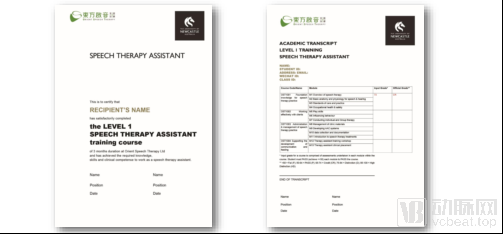
Currently, all 300 students in the first cohort of the STA program have graduated (100% completion rate) and are employed across various branches of Eastern Speech. It is understood that the STA program is currently available exclusively to internal employees of Eastern Speech. “Our staff require systematic training. We prioritize equipping our own employees with comprehensive skills first. In the future, we plan to open the course to external participants and collaborate with institutions and universities to jointly advance the field of speech rehabilitation in China,” said Yao Qiuwu.
It is worth noting that the collaboration between Speak & Spell and Newcastle University extends beyond this. Each year, Newcastle University sends international students to China for internships, where they observe classes, design and participate in lesson delivery, conduct assessments, receive therapist training, and work alongside mentors to help Speak & Spell optimize its assessment processes and tools. “Although these interns are still students, they have undergone four years of specialized study. They help our teachers gain a more systematic understanding of international speech therapy expertise, thereby continuously providing comprehensive services to patients undergoing speech rehabilitation.”
“Traditional speech rehabilitation institutions merely expect the outcome of being able to speak,” said Yao Qiuwu. “At Dongfang Qiyin, we not only aim to enable children to speak but also to facilitate their social integration and equip them with social skills.”
In fact, inclusive education for children with autism is a topic of significant societal concern, as these children may face expulsion by school authorities or social exclusion by their peers. Inclusive education adapts to the learning needs of children with diverse characteristics through “specially equipped environments and teaching methods,” enabling the majority of children with disabilities to study in “regular classrooms” and “reintegrate into mainstream educational practices.”
It is understood that OSTO is actively implementing and exploring new inclusive education support models, including inclusive education training for teachers in early childhood education and care institutions, dispatching speech therapists to these institutions, and establishing inclusive education classes. In the future, OSTO speech therapists will regularly visit kindergartens and early education institutions to provide online and offline support at multiple levels—school-wide, teachers, students, and parents. This initiative aims to enhance children’s speaking abilities, address parents’ needs for professional support, improve teachers’ professional knowledge and skills, and refine the overall educational services of the institutions.
Yao Qiuwu candidly stated that inclusive education is a broad topic that cannot be accomplished by a single institution. In this process, Dongfang Qiyin has been collaborating with numerous experts, schools, and institutions to promote inclusive education, aiming to facilitate school enrollment for more children with autism and address the challenges associated with accessing education. Meanwhile, it helps more children enhance their communication and social skills, enabling them to better integrate into schools and society.
“According to Maslow’s hierarchy of needs, they should not only have the right to speak but also the rights to social interaction, respect, and self-actualization.” Yao Qiuwu cited an example of a student from Eastern Speech Therapy for the reporter:
A boy began receiving therapy at Eastern Speech Therapy when he was eight years old. Initially, he was unable to swallow and had virtually no verbal language. After four to five years of training, including chewing exercises, articulation therapy, and cognitive training, he gradually learned to express himself. He currently works as a receptionist at Eastern Speech Therapy. This year, the center conducted a reassessment with the aim of providing social rehabilitation. “We hope to help him find a wife,” said Yao Qiuwu with a smile.
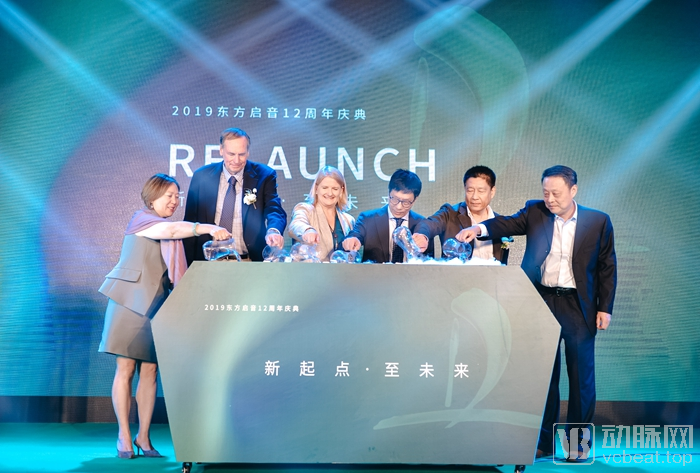
12th Anniversary Celebration of Dongfang Qiyin (Image source: Provided by the company)
With advancements in technology and the application of artificial intelligence and big data, Dongfang Qiyin has expanded its reach into the online space by launching the “Qiyin Online” platform. Through remote, one-on-one customized instruction, Qiyin Online uses game-based engagement to spark children’s interest in learning, enabling parents to conduct training sessions at home. Meanwhile, a team of experts conducts regular phased assessments of each student. Based on individual abilities and learning progress, they adjust and develop tailored, targeted teaching plans to further enhance children’s expressive communication, cognitive, and social skills.
It is understood that Qi Yin Online’s PC-based system went live in April 2018, and its APP 1.0 version—Lang Lang Learns to Speak—was officially released on the day of the company’s 12th anniversary celebration.
In terms of future planning, in addition to steadily expanding its market presence through new store openings, Oriental Speech will continue to deepen its international speech therapist training programs and online tutoring courses.