

Pfizer Partners with Hainan Boao Lecheng International Medical Tourism Pilot Zone at CIIE 2019 to Showcase Innovative Medicines and Vaccines
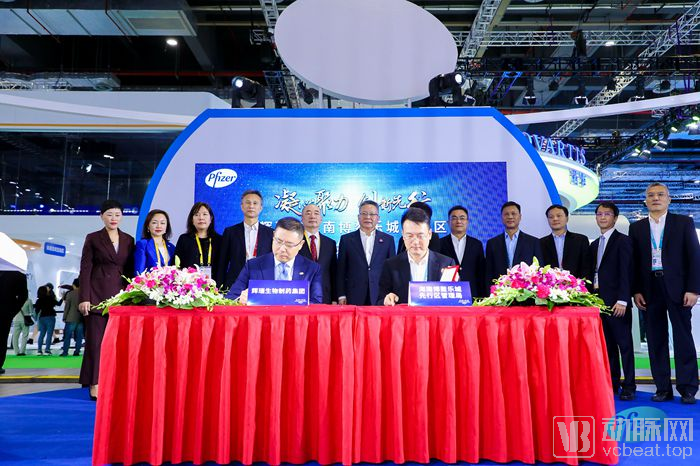
VCBeat (WeChat ID: vcbeat) reported live from the site of the Second China International Import Expo (hereinafter referred to as the “CIIE”) on November 6,Pfizer Biopharmaceuticals Group and the Administration of Hainan Boao Lecheng International Medical Tourism Pilot Zone (hereinafter referred to as “Lecheng Pilot Zone”) signed a cooperation agreement at Pfizer’s exhibition booth.
Mr. Wu Kun, General Manager of Pfizer Biopharmaceuticals Group China, and Mr. Gu Gang, Director of the Hainan Boao Lecheng International Medical Tourism Pilot Zone Administration Bureau, signed the agreement on behalf of their respective parties. The signing ceremony was jointly witnessed by leaders from both sides, including Mr. Shen Xiaoming, Governor of Hainan Province, and Mr. Miao Tianxiang, Country Manager of Pfizer China.
The two parties have reached a framework agreement on project cooperation in the Boao Lecheng International Medical Tourism Pilot Zone. First, Pfizer will participate in the pilot zone’s special import drug exhibition, using it as a window to showcase its innovative pharmaceutical and vaccine products. Known as the “never-ending medical device and pharmaceutical exhibition,” the event is scheduled to complete its setup in December, with the preliminary design for the international pharmaceutical and medical device trade fair already finalized. The pilot zone provides a long-term exhibition platform for cutting-edge international innovative drugs and medical devices, with no restrictions on display formats. Participating companies are free to design their own exhibition areas, highlighting imported drugs and medical devices that are not yet marketed in China.
In the future, Pfizer’s pneumococcal polysaccharide conjugate vaccine approved by the FDA (U.S. Food and Drug Administration) and EMA (European Medicines Agency) for adult indications; meningococcal ACWY conjugate vaccine and group B meningococcal vaccine; Kangxinbo®, a novel antifungal agent for the treatment of invasive aspergillosis and mucormycosis in patients unsuitable for amphotericin B therapy; lorlatinib for the treatment of ALK-positive metastatic non-small cell lung cancer in patients who have progressed after prior ALK inhibitor therapy; and inotuzumab ozogamicin, an antibody-drug conjugate for the treatment of relapsed or refractory precursor B-cell acute lymphoblastic leukemia in adults.
Also on display at Boao will be glasdegib, for the treatment of newly diagnosed acute myeloid leukemia (AML) in patients aged 75 years or older who are ineligible for intensive induction chemotherapy; Staquis® (crisaborole ointment), for the treatment of mild-to-moderate atopic dermatitis (eczema) in patients aged 2 years and older; tafamidis meglumine soft capsules (Vyndaqel®), for the treatment of stage I symptomatic adults with transthyretin-mediated amyloidosis polyneuropathy (ATTR-PN); and tafamidis free acid soft capsules (Vyndamax™), for the treatment of cardiomyopathy caused by wild-type or hereditary transthyretin-mediated amyloidosis (ATTR-CM) in adults.
Secondly, both parties will collaborate to organize international academic seminars on vaccines and disease prevention. The Boao Lecheng International Medical Tourism Pilot Zone is committed to building a high-end international exchange platform and health summit centered on the themes of health policy and action.
The two parties plan to collaborate in organizing an international academic symposium on vaccines and disease prevention in Boao, inviting experts from both China and abroad to jointly discuss key topics such as the latest advances in vaccine research, immunization policies, and vaccine-preventable diseases. The inaugural conference is scheduled to be held in the second half of 2020.
Hainan Province is an important window for China’s reform and opening-up. With the advancement of establishing a pilot free trade zone across the entire island and building a free trade port with Chinese characteristics, the development of the Boao Lecheng International Medical Tourism Pilot Zone in Hainan has been continuously accelerating.
According to available information, on September 10, 2019, four departments—the National Development and Reform Commission (NDRC), the National Health Commission (NHC), the National Administration of Traditional Chinese Medicine (NATCM), and the National Medical Products Administration (NMPA)—jointly issued the Implementation Plan for Supporting the Construction of the Boao Lecheng International Medical Tourism Pilot Zone, aiming to accelerate the high-standard, high-quality development of the zone. The Administrative Bureau of Hainan Boao Lecheng International Medical Tourism Pilot Zone was established in August 2019. Under the direct leadership of the Hainan Provincial People’s Government, and in accordance with the Provisions on the Establishment and Operation of the Administrative Bureau of Hainan Boao Lecheng International Medical Tourism Pilot Zone, the Bureau is committed to adhering to the fundamental principles of corporate-style and professionalized operations aligned with international standards, thereby comprehensively promoting the high-standard, high-quality development of international medical tourism and premium healthcare services within the Lecheng Pilot Zone.
Gu Gang, Director of the Hainan Boao Lecheng International Medical Tourism Pilot Zone Administration, stated: “Under the direct leadership of the provincial government, the Lecheng Pilot Zone Administration adheres to the fundamental principles of corporate and professional operations and alignment with international standards. Through coordinated planning and comprehensive promotion, it is committed to achieving high-standard, high-quality development of international medical tourism and premium healthcare services in the Lecheng Pilot Zone, thereby realizing”"Medical Technology, Equipment, and Pharmaceuticals Synchronized with International Advanced Standards"’, transforming the Jiale City Pilot Zone into a key pioneer area for the construction of the Hainan Free Trade Pilot Zone and the Hainan Free Trade Port with Chinese characteristics. We warmly welcome globally leading pharmaceutical companies such as Pfizer to showcase their most advanced international pharmaceutical and vaccine products within the Pilot Zone.”
Mr. Wu Kun, General Manager of Pfizer Biopharmaceuticals Group China, stated that the successful signing with the Boao Lecheng International Medical Tourism Pilot Zone at the China International Import Expo (CIIE) has enabled Pfizer to introduce its latest pharmaceutical products to the Chinese market in the shortest possible time and obtain first-hand clinical feedback, thereby facilitating a better understanding of the specific needs of Chinese consumers. In the future, Pfizer will introduce more innovative medicines and vaccines already marketed in Europe and the United States into China, significantly improving the accessibility of advanced international pharmaceutical and vaccine products for Chinese patients.
At the signing ceremony of the China International Import Expo, Professor He Lixian from the Department of Respiratory Medicine at Zhongshan Hospital, Fudan University, stated in an interview with reporters: “Streptococcus pneumoniae can easily cause a series of life-threatening diseases, including pneumonia, meningitis, bacteremia, and otitis media. Children under two years of age and the elderly are susceptible populations. Clinical resistance to Streptococcus pneumoniae has also increased the difficulty of treatment. The World Health Organization (WHO) has listed pneumococcal diseases as conditions requiring ‘very high priority’ for vaccine prevention.”
According to reports, the current clinical treatment for pneumococcal diseases primarily relies on antibiotics. However, in recent years, with the widespread use of antibiotics, the issue of antibiotic resistance in Streptococcus pneumoniae has become increasingly prominent.
Antibiotic resistance has made the treatment of pneumococcal diseases more difficult, prolonged the course of illness, and increased treatment costs accordingly. This not only subjects the elderly and young children to significant suffering but also imposes a dual mental and financial burden on their families. “Pneumococcal diseases are essentially respiratory infectious diseases with high case-fatality and disability rates,” emphasized Professor He Lixian. “Vaccination is the only feasible specific preventive measure.”
Pneumococcal disease affects not only children but also adults, particularly those with pre-existing respiratory conditions and older adults with weakened immunity. Every autumn and winter, Professor He Lixian reminds his patients: “Take precautions against influenza and pneumococcal infection. Each acute exacerbation or worsening of airway diseases can adversely affect disease progression and prognosis. During seasons with a high incidence of respiratory infectious diseases, it is crucial to prevent related illnesses and reduce the frequency of exacerbations.”
It is reported that pneumococcal conjugate vaccines have been approved for marketing in more than 160 countries worldwide, among whichOver 125 countries have incorporated it into their national immunization programs., 112 countries have approved pneumococcal conjugate vaccines for use in the general population. CurrentlyPneumococcal conjugate vaccines are approved in China only for use in infants and young children under 2 years of age., with the emergence of more evidence based on domestic clinical use in the future, it is expected that its application in the elderly population will be promoted.
At the conference, media representatives from VCBeat and other outlets also interviewed Professor He Lixian of the Department of Respiratory Medicine at Zhongshan Hospital, Fudan University. The following are the main highlights:

The signing ceremony between Pfizer and Hainan Boao at the China International Import Expo,Professor HeWhat benefits do you think Pfizer stands to gain?
He Lixian:From Pfizer’s perspective, this facilitates the rapid introduction of its products already marketed in developed countries across Europe and the United States to the Boao Lecheng International Medical Tourism Pilot Zone in Hainan. This enables Chinese patients to receive corresponding treatments at this location on a priority basis, thereby advancing and accelerating the approval and market launch process in other cities across China. As a result, more patients can gain access to therapies in sync with international standards, significantly improving drug accessibility for patients.
Among all pathogens that can cause infectious pneumonia in children, Streptococcus pneumoniae is the most common. So, what is Streptococcus pneumoniae? How is it transmitted? What harms can it cause to children if not treated promptly after infection?
He Lixian:Due to their weak immune systems, infants and young children are highly susceptible to infection by Streptococcus pneumoniae, also known as pneumococcus. This common pathogen, which can cause respiratory tract infections, frequently colonizes the human nasopharynx. It is primarily transmitted via respiratory droplets in a subtle yet widespread manner. Carriers can disseminate pneumococcus-laden droplets through coughing, sneezing, or even speaking, often without arousing notice. Under normal circumstances, S. pneumoniae does not cause disease and can coexist harmoniously with the human body.
Infants are protected at birth by maternal antibodies, but these antibodies gradually wane as the baby grows and are nearly depleted by six months of age. Since it takes approximately five years for a child’s immune system to fully mature, this gap creates an opportunity for Streptococcus pneumoniae invasion. The period from birth to one year of age is a high-risk window for invasive pneumococcal disease in children. During this time, the infant’s immune system is not yet fully developed, resulting in reduced immunity against pathogens and increased susceptibility to pneumococcal invasion, which can lead to invasive diseases such as bacteremic pneumonia and meningitis.
Pneumococcal disease is a group of infectious diseases that can lead to serious consequences. It can invade multiple sites in the body, causing a range of invasive or non-invasive pneumococcal diseases. When Streptococcus pneumoniae crosses the mucosal barrier, it causes non-invasive diseases such as otitis media, sinusitis, and mild pneumonia. When Streptococcus pneumoniae enters the bloodstream, it leads to severe invasive diseases such as meningitis, bacteremia, and bacteremic pneumonia. Streptococcus pneumoniae is one of the major pathogens causing severe pneumonia in children under five years of age in China.
It is estimated that China ranks second globally, after India, in the number of children under five years of age infected with pneumococcal diseases. The number of deaths caused by pneumococcal infection in China ranks sixth worldwide. According to World Health Organization estimates, approximately 1.6 million people die from pneumococcal infections globally each year, including about 480,000 infants and young children. In China, nearly 2 million people contract pneumococcal infections annually, resulting in approximately 30,000 child deaths, predominantly among children under five years of age.
Currently, what are the most common causative pathogens of community-acquired pneumonia (CAP) in adults? Apart from timely symptomatic treatment, can these infections be prevented? In addition to CAP, chronic obstructive pulmonary disease (COPD) is also a very common respiratory condition among the elderly. With flu season already here, how should this group of older adults manage their health and take preventive measures?
He Lixian:Community-acquired pneumonia (CAP) is currently a public health concern of global attention and one of the diseases posing the greatest threat to the health of the elderly population. Severe CAP, a subset of community-acquired pneumonia (CAP), remains a significant medical challenge due to its poor prognosis and high mortality rate. The primary pathogens responsible for CAP are bacteria and viruses, with Streptococcus pneumoniae being the most common bacterial cause. For pneumonia caused by pneumococcal infection, vaccination is the most effective preventive measure.
Vaccination is currently a highly effective strategy for preventing pneumococcal pneumonia, and from a health economics perspective, it represents the optimal approach for society. For key populations targeted for prevention, vaccination against both pneumococcal disease and influenza is strongly recommended; indeed, co-administration of these two vaccines is also feasible.
For pneumococcal disease, prevention is more important than treatment. Currently, vaccination is the most economical and effective measure for controlling and eliminating infectious diseases.
China has a large population of patients with chronic respiratory diseases, the majority of whom are elderly. Elderly individuals who already suffer from chronic conditions such as asthma, chronic obstructive pulmonary disease (COPD), pulmonary interstitial fibrosis, or bronchiectasis, or those with heart disease or renal insufficiency, are in greater need of vaccination to prevent pneumonia and reduce the risk of complications associated with co-infections.
In addition to the elderly and children, young and middle-aged adults with immunodeficiency should also be highly vigilant against pneumococcal infection; these special populations should be prioritized for vaccination. Regardless of age, patients with chronic obstructive pulmonary disease (COPD) should receive pneumococcal and influenza vaccines for prevention.
In addition, key populations for vaccination include patients with chronic obstructive pulmonary disease (COPD) and asthma among those with respiratory diseases; patients with chronic heart disease; individuals with diabetes; patients with chronic liver disease and cirrhosis; and patients with chronic renal failure or nephrotic syndrome. Also included are immunocompromised individuals living with HIV, patients with hematologic malignancies or widespread malignant tumors, as well as organ and bone marrow transplant recipients.
The 2016 edition of the “Guidelines for the Diagnosis and Treatment of Community-Acquired Pneumonia (CAP) in Chinese Adults,” revised by the Respiratory Branch of the Chinese Medical Association, serves as a technical guideline to standardize clinical diagnosis and treatment. The section on prevention specifically states: “Pneumococcal vaccines can reduce the risk of pneumonia in specific populations. The 13-valent pneumococcal conjugate vaccine covers 70%–80% of Streptococcus pneumoniae serotypes prevalent in China and demonstrates good immunogenicity.” The guidelines also note that “combined administration of pneumococcal and influenza vaccines can reduce mortality among elderly patients.”
It can establish herd immunity within populations, effectively preventing the occurrence and transmission of pneumococcal diseases, thereby reducing their incidence and ultimately achieving disease eradication. Additionally, it can save substantial medical expenditures for both the nation and individual households, holding long-term strategic significance for the healthy development of the country’s overall public health sector.
What are the main challenges currently facing China in the prevention and control of pneumococcal diseases?
He Lixian:Currently, the clinical treatment of pneumococcal diseases is primarily based on antibiotics. However, in recent years, with the widespread use of antibiotics, the issue of antibiotic resistance in Streptococcus pneumoniae has become increasingly prominent.
Antibiotic resistance has increased the difficulty of treating pneumococcal diseases, prolonged the course of illness, and correspondingly raised treatment costs. This not only subjects patients to significant suffering but also imposes both psychological and financial burdens on their families. Research data indicate that the rate of multidrug-resistant Streptococcus pneumoniae in China reaches 83.3%, posing a substantial challenge to clinical treatment.
Given the severe threat posed by pneumococcal diseases to human health, as well as the array of problems triggered by antibiotic resistance, the World Health Organization (WHO) has classified them as diseases for which vaccination should be prioritized at the “very high” level. However, due to the insidious nature of pneumococcal transmission, many members of the public lack adequate awareness of pneumococcal diseases and generally fail to proactively adopt preventive vaccination measures.