

Embracing the Spring of Small Molecule Drugs: Advantages, Breakthroughs, and Strategic Outlook

China Renaissance
Financial Services Investment Institutions
Recently, the 7th China Renaissance Healthcare and Life Sciences Leaders Summit was held in Shanghai. More than 100 distinguished guests, including Ba Shusong, Chief China Economist at the Hong Kong Stock Exchange; Chen Li, Founder and CEO of Hua Medicine; Wu Jinzi, Chairman and CEO of Ascletis Pharma; Ye Yuxiang, General Manager of Salubris Pharmaceuticals; and Yang Dajun, Co-founder, Chairman and CEO of Ascentage Pharma, took the stage to share their insights.
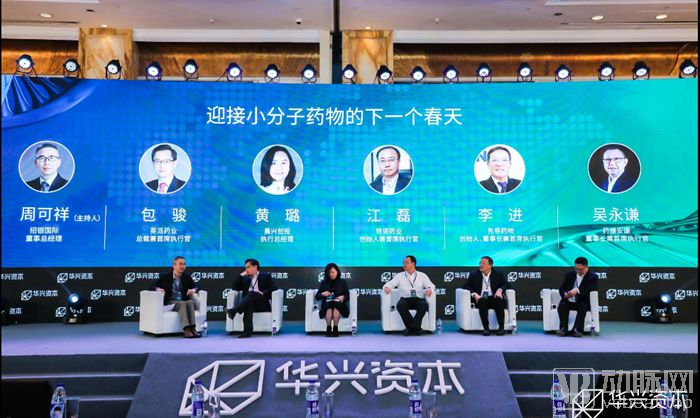
At the roundtable forum titled “Returning to Needs, Integrating Innovation, and Welcoming the Spring of Small-Molecule Drugs,” panelists discussed the landscape of the small-molecule drug sector from perspectives including their advantages, development directions, and investment and financing. The participants generally agreed that, compared with large-molecule drugs, small-molecule drugs continue to maintain distinct advantages in multiple areas, and that there have been numerous breakthroughs in small-molecule drug research and development in recent years.
This forum was moderated by Zhou Kexiang, Managing Director of CMB International.
Participating guests include
Bao Jun, President and CEO of Imabio
Huang Lu, Executive General Manager of Morningside Venture Capital
Jiang Lei, Founder and CEO of Yinuo Pharmaceutical
Li Jin, Founder, Chairman, and CEO of Lead Therapeutics
Wu Yongqian, Chairman and CEO of Adagene
Eight of the ten best-selling drugs worldwide are large-molecule therapeutics, suggesting that small-molecule drugs appear to be losing ground under the sustained pressure from their larger counterparts. However, panelists hold a more optimistic view of small-molecule drugs. They generally believe that, compared with large-molecule therapeutics, small-molecule drugs continue to maintain their advantages in multiple areas, including target selection, formulation, and cost.
Bao Jun believes that, from a broader market perspective, two-thirds of the drugs approved by the FDA last year were still small-molecule drugs, and some recent major deals valued at over $5 billion have also involved small molecules. In addition, most small-molecule drugs are formulated as oral preparations, which helps improve patient adherence.
Huang Lu analyzed the advantages of small-molecule drugs from the perspective of drug targets: “Many innovative targets are located intracellularly, or even within specific organelles such as mitochondria. These compartments are inaccessible to large-molecule drugs. From this standpoint, small-molecule drugs present greater opportunities.” Li Jin added that, in addition to intracellular disease areas, there is also a significant unmet need in the central nervous system (CNS) field, where small-molecule drugs offer distinct advantages.
Jiang Lei highlighted the cost advantages of small-molecule drugs here. In terms of R&D speed, identifying candidate compounds for large-molecule drugs during the preclinical phase may appear faster than for small-molecule drugs; however, the Chemistry, Manufacturing, and Controls (CMC) stage for large-molecule drugs is significantly more complex and costly. “Process development for small-molecule drugs is relatively mature. We often say that as long as a molecule can be drawn, it can always be synthesized, which is not quite the case with large-molecule drugs,” he said.
As the moderator of the roundtable discussion, Zhou Kexiang provided a pertinent summary of the topic: “There is no fundamental rivalry between small-molecule and large-molecule drug development pathways; the key lies in whether differentiated products that meet clinical needs can be developed. For complex diseases such as cancer, it is nearly unrealistic to expect exceptional efficacy from a single therapeutic agent. Therefore, combining small-molecule and large-molecule drugs may represent a more optimal strategy.”
Small-molecule targeted therapies have undergone continuous iteration in recent years. Taking epidermal growth factor receptor (EGFR) inhibitors for lung cancer as an example, there are now fourth-generation agents, evolving from the first generation. Will this pattern of iterative development continue indefinitely? Meanwhile, these increasingly iterated targeted drugs are becoming more specifically directed against different subtypes of their targets. However, this R&D direction addresses only certain specialized issues rather than common underlying problems. Tumors share certain common biological characteristics. Can small-molecule drugs be developed to target these shared features, thereby yielding agents with a broader range of indications?
Wu Yongqian, Chairman and CEO of Advenchen Laboratories, believes that in the face of resistance to multiple generations of targeted therapies and the increasing variety of target protein mutations, researchers need to shift their strategic approach. For cancer types with high heterogeneity, strategies such as immuno-oncology combinations, drugs with different mechanisms of action, or small-molecule multi-target inhibitors may prove more effective.
Li Jin believes that certain mutant targets are considered key factors contributing to this disease. Developing drugs targeting these mutant targets is not entirely misguided, as they have at least been proven to offer therapeutic benefits. On the other hand, some researchers are exploring common underlying mechanisms; addressing these could potentially yield treatments targeting shared characteristics across many types of tumors.
Li Jin also noted in the discussion that irreversible covalent molecules have recently begun to deliver significant breakthroughs in target identification, such as AstraZeneca’s EGFR kinase inhibitor Tagrisso and Amgen’s clinical-stage KRAS inhibitors. “Platform technologies are creating new molecular entities. In particular, the encoded chemical libraries we have helped develop in recent years have indeed opened up new possibilities, enabling the generation of diverse molecular formats within a relatively short timeframe and at generally acceptable investment levels, followed by rapid screening and identification of their applications,” he said.
Amid the prevailing macroeconomic climate, institutional investors in innovative drugs have become increasingly cautious, exercising greater selectivity in choosing investment targets and demonstrating heightened sensitivity to valuations. In this context, how should companies and investors effectively manage their financing and investment activities?
Huang Lu believes that early-stage investment in the innovative drug sector requires striking a balance between "people" and "projects." The so-called "projects" refer to investing in innovative technologies. Highly innovative concepts are not necessarily the newest technologies; emerging technologies often harbor undiscovered issues and entail high uncertainty during clinical translation. Greater attention should be paid to next-generation technologies that have been thoroughly studied and have reached a mature stage suitable for translation. The term "people" refers to the need for innovative drug R&D to involve a multidisciplinary team, whose members ideally have prior experience working together and have undergone team integration. Only by achieving a proper balance between people and projects can one succeed in innovative drug investment.