

GE Healthcare Showcases Breakthrough Intelligent Imaging Technologies and Digital Solutions at the 2019 China International Import Expo
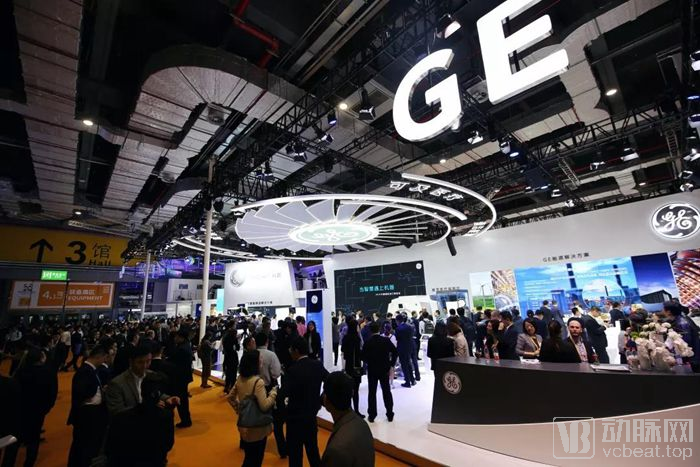
At the second China International Import Expo (CIIE), GE Healthcare showcased a range of innovative imaging equipment equipped with revolutionary technologies and a series of digital health applications. Together with GE’s advanced products in aviation, energy, oil and gas, and intelligent manufacturing, it made a joint appearance in the Intelligent Manufacturing and Solutions Pavilion. This presence highlighted how GE leverages global expertise and deep industrial heritage to meet diverse needs in areas such as accessible healthcare in China through continuous digital innovation, technological advancement, and ongoing exploration of business models, thereby accelerating the transformation and upgrading of the healthcare industry and benefiting the Chinese people.
During the exhibition, GE Healthcare showcased a series of its latest innovations centered on “digitalization and intelligence.”
Among these, in the realm of high-end intelligent imaging equipment, GE Healthcare showcased the APEX CT, the world’s first AI-powered CT system with a deep learning-based reconstruction algorithm to receive FDA clearance; the SIGNA™ Architect 3.0T, a premium MRI system featuring the groundbreaking AIR Technology™ platform and equipped with blanket-thin lightweight coils; and the LOGIQ E20, a dual-engine ultrasound system that delivers clearer imaging of minute lesions, enables automatic delineation and identification via AI technology, and offers flexible connectivity to mobile devices such as smartphones and tablets.
In the realm of digital healthcare applications, GE Healthcare comprehensively showcased its latest achievements from three perspectives: intelligent hospital management, cloud computing, and artificial intelligence (AI). These advancements include the APM Intelligent Medical Asset Management Platform and its new Radiology Command Center (RCC) application; cloud-based ECG and medical imaging solutions; as well as the latest AI-powered products developed on the Edison platform, such as the “MURAL Intensive Care Command Center” (under development) and the “Coronary Medical Imaging AI Analysis System.”
Zhang Yihao, President and Chief Executive Officer of GE Healthcare China, stated, “Over the past 40 years of being deeply rooted in China, GE Healthcare has continuously witnessed and participated in the deepening development of China’s healthcare system reform. We have fulfilled our value as a ‘Healthy China Partner’ and contributed to the sustainable development of China’s healthcare sector. In China, we have always closely aligned with the actual needs of three key markets: high-end healthcare, primary care, and private healthcare. We continue to invest, accelerate localization, and expedite the R&D and market launch of more innovative products. Furthermore, we are driving digital applications and promoting the ‘Intelligent Manufacturing in China’ of high-end medical devices, helping the Chinese healthcare industry address its most challenging issues. We are committed to putting ‘Care First’ into practice—in China, for China, and for a Healthy China.”
Why Is the AI-Powered CT System, APEX CT, Drawing So Much Attention?
Leveraging this year’s China International Import Expo (CIIE), GE Healthcare made its global debut of the APEX CT, a groundbreaking innovation in the medical field. As the first artificial intelligence-based CT system to receive U.S. FDA clearance and utilize deep learning reconstruction algorithms, the APEX CT ushers in the inaugural year of AI in medical imaging reconstruction technology.
Over the years, advancements in computed tomography (CT) technology have primarily focused on increasing detector width, reducing radiation dose, and optimizing iterative reconstruction algorithms. Although high-end CT systems have continuously improved diagnostic performance through a series of hardware enhancements and optimized image reconstruction techniques, they have yet to overcome the technical limitation of excessive image smoothing. This results in images that are overly “beautified,” leaving physicians with a sense of unreality akin to “viewing flowers through fog” when making diagnoses.
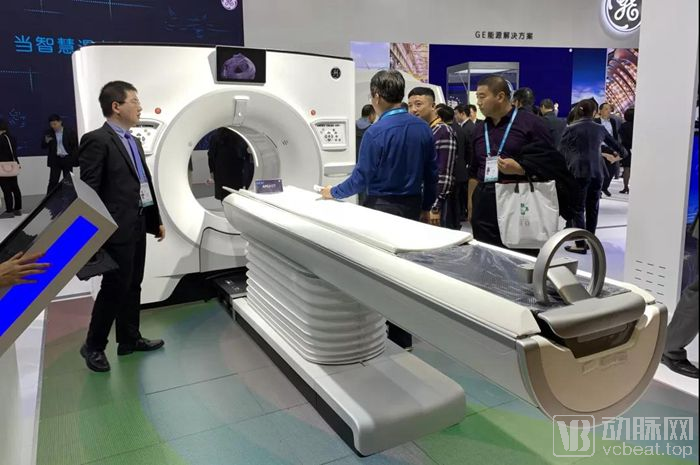
APEX CT Disrupts Traditional Iterative Reconstruction Algorithms in CT
Building on a foundation of over 30 years of global CT installations and vast imaging data, APEX CT revolutionizes traditional iterative reconstruction algorithms by developing TrueFidelity™, an AI-powered CT image processing technology based on deep neural network training. As the industry’s first deep learning-based CT image reconstruction algorithm to restore original images, it continuously learns from high-definition, real-world imaging data acquired under high radiation dose conditions to reconstruct images scanned under low radiation dose conditions. When combined with leading hardware technologies such as the QUANTIX™ high-energy X-ray tube and detectors, it delivers higher-quality images that closely approximate the original anatomy. The resulting image fidelity is akin to the true-to-life detail captured by a multi-megapixel camera, providing physicians with information that facilitates more precise diagnosis.
For patients, it enables precise diagnosis with lower radiation doses, reduces the likelihood of missed diagnoses, and delivers image clarity in every scan that is unmatched by previous CT systems. It has been reported that the APEX CT is currently under review and approval by the National Medical Products Administration (NMPA).
In addition to innovations in algorithms and the core imaging chain, APEX CT also integrates applications based on the Edison digital health intelligence platform. Within medical consortia or hospital groups with multiple campuses, scanning quality synchronization can be ensured through automatic protocol distribution. Furthermore, the intelligent subscription feature enables timely software protocol updates via edge computing, allowing users worldwide to simultaneously benefit from the latest technological advancements.
Specifically, what are the clinical benefits of algorithms based on deep neural network learning technologies and artificial intelligence platforms? First, they can significantly reduce X-ray dosage, potentially by up to approximately 60%. Additionally, they substantially improve image clarity, providing clinicians with precise diagnostic data. Of course, high-quality imaging serves as a critical foundation for data analysis and precise computations in modern medicine, all of which represent the future development direction of large-scale medical equipment.
Huang Yi, General Manager of GE Healthcare’s CT Business in China, stated, “As the inventor of CT, GE has continuously pushed its own boundaries in recent years, committed to driving revolutionary innovations in CT technology to their fullest extent. The new APEX CT is no longer merely a CT scanner; it encompasses everything from foundational hardware technological innovations and re-architected image reconstruction algorithms to intelligent distribution protocols integrated with the Edison digital health intelligence platform. This forms a comprehensive, digital CT ecosystem that unites an innovative imaging chain with clinical and research applications, delivering cutting-edge technology to accelerate the digital transformation of China’s healthcare industry.”
Huang Yi revealed to reporters that prior to obtaining U.S. FDA clearance, any medical device must undergo extensive clinical validation. The APEX CT system utilized approximately 25,000 carefully curated clinical images from more than 10 medical centers worldwide, covering various anatomical regions such as the head, heart, and coronary arteries. These images served as the benchmark for machine self-learning, a process that previously relied on manual parameter setting by operators. In the Chinese market, similar data collection and validation were conducted at research and teaching hospitals during the early stages to better support future clinical applications.
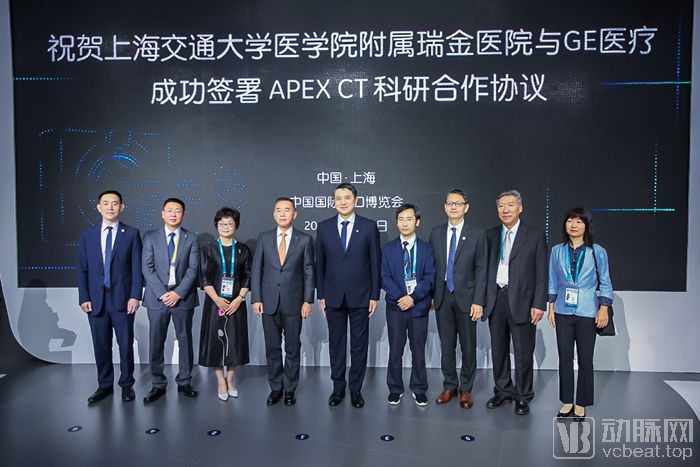
Ruijin Hospital, Shanghai Jiao Tong University School of Medicine, and GE Healthcare LaunchAPEX CTScientific Research Collaboration
At the GE booth, the launch of the APEX CT garnered significant attention from healthcare industry professionals. Ruijin Hospital, Shanghai Jiao Tong University School of Medicine, signed a memorandum of understanding for scientific research collaboration with GE HealthCare at the booth, under which joint research projects on major diseases will be conducted using the APEX CT platform.
In addition, the leading magnetic resonance imaging (MRI) systems and high-end ultrasound equipment showcased in the healthcare section of the GE booth also drew significant attention:
The SIGNA™ Architect 3.0T, equipped with AIR coils, is the only new large-bore research-dedicated MRI in China to feature the AIR Technology™ platform. The AIR coil technology overcomes the limitations of traditional coils—namely their heavy weight and restrictive feel—achieving a 60% reduction in weight.
Compared to the nearly 3 kg weight of traditional coils, the AIR coil weighs less than 2 kg and can be folded arbitrarily. It is suitable for various positioning scenarios, providing optimized solutions for special cases that were previously difficult to manage, such as pediatric MRI examinations, lateral-position MRI for pregnant women, and patients with fractures who cannot bend their limbs.
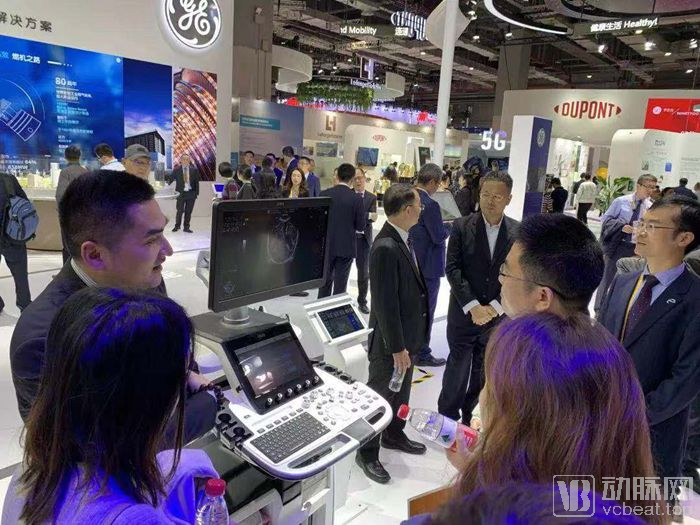
LOGIQ E20
As GE Healthcare’s latest “dual-engine” whole-body ultrasound system, the LOGIQ E20 is equipped with GE’s leading “cSound+™ Imaging Engine” and “AI Lesion Recognition Digital Engine.” It not only enables intelligent front-end screening and processing of raw image data, but also provides AI-assisted identification of lesions and tissue boundaries, delineation of regional structures, and segmentation-based measurements. This liberates physicians from labor-intensive image optimization and measurement tasks, allowing them to focus more on clinical diagnosis and treatment.
By connecting with mobile devices such as smartphones and tablets, the LOGIQ E20 can also capture multimodal data, including patient positioning information and case images during examinations, enabling cloud-based interaction and instant access. This facilitates comprehensive review and analysis of various diagnostic data by physicians, thereby improving diagnostic efficiency.
Digital Medical IoT Upgrade: Smart Hospital Transformation Reduces Costs and Enhances Efficiency in Healthcare Services
Leveraging its massive global installed base and deep insights into equipment management needs, GE Healthcare launched its first localized digital application, “Asset Cloud Manager APM,” in 2016.
As an intelligent medical equipment management platform based on big data analytics, APM achieves full lifecycle management of medical devices, enabling data visualization, platform standardization, and refined management. It fosters the integration of standardization, quality, and efficiency, and has been deployed in over 1,700 hospitals across China, safeguarding more than 450,000 devices.
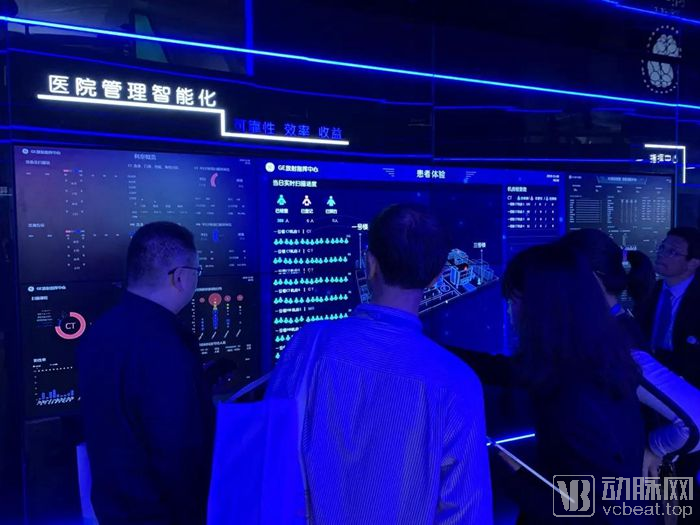
IoT-Enabled APM
At the exhibition, the Affiliated Hospital of Jiangnan University (Wuxi No. 4 People’s Hospital) signed a strategic cooperation agreement with GE Healthcare to formally introduce the IoT-enabled APM—APM Large Imaging Equipment IoT Performance Solution. By integrating the hospital’s existing Equipment Cloud Manager platform, this initiative will enable connectivity for large-scale medical devices, in-depth operational data analysis, and flexible resource allocation. This not only facilitates unified management of multi-brand large medical equipment and on-demand access to multidimensional data, but also intelligently aligns with clinical department needs by dynamically allocating equipment. These measures further enhance asset utilization and operational efficiency, supporting the development of smart hospitals.
Located in the heart of Jiangnan, Wuxi is a core representative of Jiangsu Province’s vigorous development of the Internet of Things (IoT) industry. The deep application of IoT in the healthcare sector has further accelerated Wuxi’s efforts to establish itself as a benchmark city for IoT.
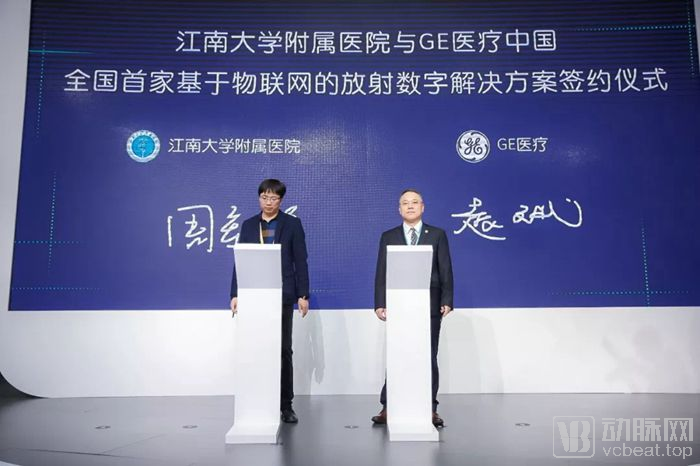
Jiangnan University Affiliated Hospital Signs Strategic Cooperation Agreement with GE HealthCare
As a model healthcare institution leveraging information technology and intelligent tools to achieve “smart management” while reducing costs and improving efficiency, the Affiliated Hospital of Jiangnan University began deploying a digital medical equipment management platform two years ago. Currently, based on GE Healthcare’s APM (Asset Performance Management) solution, the hospital has achieved visualized management, operational data analysis, and end-to-end tracking of maintenance for over 2,600 medical devices across the entire facility. This includes routine functionalities such as real-time queries, spare parts entry, and result feedback analysis, laying the foundation for further upgrades toward IoT-based smart management.
After more than two years of stable operations, the hospital has recognized the immense potential brought by digital management and “big data,” and has begun actively preparing for further IoT upgrades.
With the implementation of the comprehensive upgrade solution at the Affiliated Hospital of Jiangnan University, hospital-wide biomedical engineering staff will no longer need to manually scan device QR codes to access data. Instead, they can remotely retrieve equipment data in real time, significantly improving timeliness, accuracy, and comprehensiveness. Detailed information such as scanning duration and anatomical regions for imaging devices is also updated synchronously, providing a robust data foundation for more precise clinical decision-making.
Meanwhile, GE Healthcare has a dedicated global team for the research and development and management of its APM digital platform, as well as extensive expertise in IoT data analytics. It can continuously provide in-depth mining and precise analysis of operational data without requiring additional sensors or reliance on external network environments, thereby enabling data collection, mining, and analysis while significantly ensuring the security and stability of the overall operational environment.
In terms of equipment operation management, this solution will create three major values for the Affiliated Hospital of Jiangnan University: “enhancing operational performance, supporting procurement decisions, and managing equipment cost control.” Reporters have learned that its main values are reflected in the following aspects:
1、Improve Operational PerformanceEfficiency can enable performance management precise to individual devices, preventing a scenario in which patient wait times continue to increase despite excessive overtime work in the medical imaging department;
2、Supporting Procurement DecisionsIt can clarify the utilization rates of existing equipment, thereby simplifying the justification processes for equipment procurement, cost analysis, and related aspects;
3、Device Management and Cost ControlEffectively ensure the normal operation of equipment, guide clinicians in ordering imaging examinations, and further improve the utilization efficiency of medical devices.
In this regard, Gao Yufeng, Vice President of the Affiliated Hospital of Jiangnan University, stated: “The hospital’s ‘smart management’ is a crucial component of deepening healthcare reform. Leveraging digital tools to monitor overall hospital operations and reduce costs while improving efficiency is central to achieving lean management. Meanwhile, Jiangsu Province is vigorously developing its Internet of Things (IoT) industry, forming an integrated industrial layout with Wuxi as the core and Suzhou as the supporting pillar, fully promoting IoT applications across various sectors. We are greatly encouraged that our hospital can represent the healthcare service sector at the forefront of IoT implementation. More importantly, by leveraging digital management technologies and platforms upgraded through IoT, we can further enhance asset utilization efficiency, fully unlock data value, and achieve more precise matching between resources and demands.”
Dai Ying, Chief Innovation Officer of GE Healthcare China, stated, “GE Healthcare is meeting the industry’s evolving management and service demands through comprehensive digital solutions, setting a benchmark for smart healthcare. The first IoT-based performance upgrade solution for large imaging equipment, built on the APM platform, has been successfully implemented at the Affiliated Hospital of Jiangnan University in Wuxi. This deployment will not only optimize equipment utilization workflows and enhance operational efficiency but also provide robust technical support for refined hospital operations, thereby contributing to the development of smart hospitals.”
In a nutshell, the ultimate goal of digital solutions is to enable the public to access safer medical devices and receive more efficient and practical healthcare services. Meanwhile, these solutions help hospitals transition from their previously passive, paper-based operational models to intuitive, real-time digital approaches driven by data analytics, thereby guiding hospitals in delivering better patient care in the future.
GE has been committed to the research and development of technologies such as artificial intelligence, the Internet of Things, and big data. Dai Ying revealed to reporters that, in addition, GE works in close collaboration with hospitals, extensively soliciting their needs. Based on this feedback, GE develops foundational modules, which are then further customized through secondary development at individual hospitals to better align with their specific requirements. Only by integrating hospital needs can products be developed that truly help hospitals improve efficiency and enhance patient experience.
At the Digital Health Experience Center of the GE booth, the new Radiology Command Center (RCC) application has also become a major highlight, drawing significant attention from attendees. Leveraging Internet of Things (IoT) technology, the RCC solution directly connects to large-scale hospital imaging equipment, enabling real-time monitoring of overall data on equipment utilization and operational status, akin to NASA-style management. It simultaneously integrates all relevant influencing factors, including imaging appointment data and predictive analytics for emergency department demands. Through lean process management, the system quantifies patient experience and performance metrics, significantly optimizing hospital operational efficiency and imaging workflows. This is particularly effective in addressing the high patient volume and continuously rising examination loads at large tertiary hospitals, thereby helping these institutions enhance overall service efficiency and patient satisfaction.
As a global leader in medical imaging, patient monitoring, biomanufacturing, and cell and gene therapy technologies, GE HealthCare is committed to enabling comprehensive precision medicine—from disease diagnosis and treatment to monitoring—by providing intelligent devices, data analytics, software applications, and services.