

Innovative AI-Powered Clinical Decision Support System for Hepatocellular Carcinoma Launched, Backed by Real-World Data from West China Hospital
Artificial intelligence has become a national development strategy, with tumor prevention and treatment being a key area for AI research and application. VCBeat (WeChat ID: vcbeat) has learned that on November 9, at the 10th National Summit Forum on Hepatobiliary and Pancreatic Diseases held in Chengdu, Sichuan Province, Professor Yan Lvnán, Chairman of the Hepatobiliary Branch of the Chinese Medical Promotion Association and affiliated with West China Hospital of Sichuan University, and Professor Zhang Qunhua, CEO of Yiku Cloud, jointly launched the “AI Clinical Decision Support System for Liver Cancer” and the “AI Clinical Decision System for Liver Transplantation.” More than 500 experts from across China witnessed the innovative development of AI in the field of hepatobiliary healthcare.
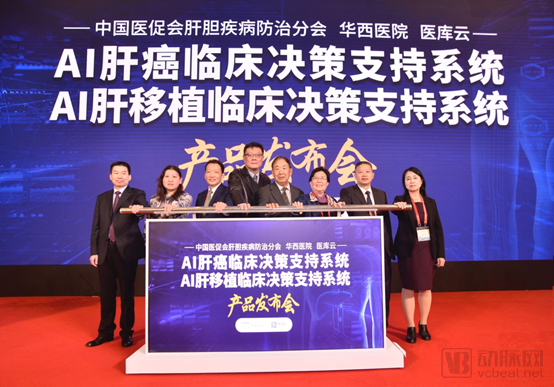
(From left to right: Professor Wen Tianfu, Professor Li Xiaoshi, Professor Zhang Qunhua, Vice President Cheng Nansheng, Professor Yan Lünan, Professor Tian Deying, Professor Cheng Shuqun, Professor Xing Huichun)
On October 28, 2018, the “National AI R&D Platform for Liver Cancer” was launched at the 9th National Summit Forum on Hepatobiliary and Pancreatic Diseases held in Chengdu. West China Hospital of Sichuan University took the lead in collaborating with Yiku Cloud to develop clinical AI applications for liver cancer. After one year of joint development, the globally leading “AI Clinical Decision Support System for Liver Cancer” and “AI Clinical Decision System for Liver Transplantation” emerged as standout achievements. Liver cancer, commonly known as the “king of cancers,” sees more than 400,000 new cases annually in China, accounting for 50% of the global total. However, the prognosis remains poor, with a five-year postoperative survival rate of only around 30%.
Professor Yan Lünan of West China Hospital emphasized, “Currently, the treatment modalities for liver cancer in China include surgical resection, liver transplantation, local ablation, interventional therapy, radiotherapy, targeted therapy, and immunobiological therapy. The various treatment pathways are complex and intertwined. Although relevant clinical practice guidelines have been issued both domestically and internationally, actual clinical decision-making still relies heavily on the clinical experience and judgment of attending physicians. This is particularly true for grassroots hospitals and young doctors, whose lack of therapeutic experience can hinder their ability to make optimal decisions, thereby affecting patient prognosis. On the other hand, hospital data systems accumulate vast amounts of case data, embodying the collective experience and wisdom of clinicians. If these resources can be leveraged effectively to support clinical decision-making, they would undoubtedly offer substantial value. In response to clinical needs, the development of an AI-based clinical decision support system for the treatment of primary liver cancer holds significant clinical value and practical relevance.”
China possesses a vast amount of big data in the field of liver cancer diagnosis and treatment, providing the data foundation necessary for AI technologies to replicate the clinical decision-making processes of human physicians. Professor Zhang Qunhua, CEO of Yiku Cloud, stated that high-quality artificial intelligence outputs were achieved only after West China Hospital provided standardized and regulated big data comprising nearly 10,000 complete liver cancer cases. Addressing numerous concerns of both physicians and patients, a feasible solution has been developed through big data analytics and AI computation. This solution includes functionalities such as treatment regimen recommendation, regimen comparison, survival period prediction, recurrence rate and recurrence interval prediction, similar case recommendation, medication recommendation, treatment history tracking, and clinical guideline recommendation. These tools assist physicians in addressing patient concerns, serving as a perfect illustration of how “AI + Healthcare” benefits humanity.
1) How should it be treated? Two sets of recommended protocols are provided: one data-driven and the other guideline-based. The former is built upon extensive medical data, leveraging big data analytics and AI algorithms to train on and learn from historical physicians’ treatment experiences, thereby generating corresponding therapeutic recommendations. The latter is grounded in the latest clinical practice guidelines and expert consensus for the treatment of primary liver cancer; by establishing a logical knowledge framework for liver cancer management, it enables automated treatment decision-making based on patient-inputted data.
2) How effective is the treatment? Leveraging extensive medical follow-up data, big data analytics, and AI algorithms, we provide predictive estimates of survival duration, recurrence probability, and time to recurrence under different treatment regimens, thereby helping patients form realistic expectations regarding their prognosis.
3) Are there any patients similar to “me,” and how were they treated? By employing dimensionality reduction algorithms, high-dimensional patient data is mapped into a low-dimensional space to calculate inter-patient similarity, thereby enabling the recommendation of similar patients.
4) How to administer medication after treatment? Establish a knowledge graph for medication in primary liver cancer, automatically identify inference pathways based on patient-inputted information, and provide recommendations for disease-specific pharmacotherapy.
5) How has the condition progressed? Automatically compare the patient's historical medical data to enable longitudinal observation and comparison of the patient's historical data.
Professor Song Sen, an AI scientist at Tsinghua University, participated in and guided the research and development of this project. He concluded that the system extensively employs advanced algorithms for decision support. It utilizes a pioneering “GBDT + Siamese-Net” hybrid model for intelligent prediction of treatment plans, achieving an accuracy of 95.03%. For survival duration and recurrence prediction, it adopts an ensemble model based on decision trees, with an average classification accuracy of 85% and an average root mean square error (RMSE) for regression within 0.5 years. In similar case recommendations, the system employs a “dimensionality reduction + similarity calculation” approach to map patients’ high-dimensional information into a low-dimensional space and compute distances. As a result, an AI-based clinical decision support system for liver cancer has been developed, designed for clinicians and providing auxiliary functions for both doctors and patients.
Professor Wen Tianfu, Director of the Department of Liver Surgery at West China Hospital, stated, “After nearly a year of in-depth communication and continuous R&D through the cross-disciplinary collaboration between Yiku Cloud and West China Hospital, the AI-based clinical decision support system for liver cancer has been significantly enhanced. It now provides evidence-based, personalized, multi-level, long-term, and prioritized treatment plans and strategies, thereby assisting hepatologists and clinical teams in making faster and more precise treatment decisions. Once grassroots hospitals integrate this system in the future, it will be akin to introducing an expert with domestically leading technologies in the field of liver cancer, thereby benefiting liver cancer patients. Moreover, this will have a profound impact on the development pathways of commercial health insurance.”
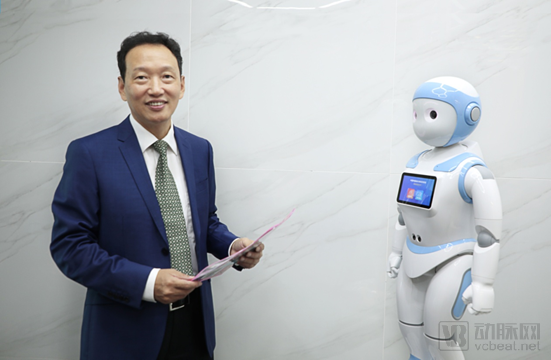
(The image shows the AI-powered oncologist assistant robot for liver cancer, independently developed by Yiku Cloud)
According to data from the Annual Report on Cancer Registration in China, published by the National Cancer Center, malignant tumors rank first in mortality within China’s disease spectrum, with rates exceeding the global average. The annual cost of cancer-related medical care in China amounts to RMB 220 billion. Approximately 3.09 million new cases of malignant tumors are diagnosed each year, resulting in 1.96 million deaths; lung cancer, gastric cancer, esophageal cancer, liver cancer, and colorectal cancer rank as the top five most prevalent types. In terms of the proportion of healthcare and public health service expenditures and resource allocation, cancer has become one of the largest investment areas in government health initiatives, while also imposing a long-term economic burden on patients’ families.
The latest issue of The New England Journal of Medicine published a commentary that synthesizes viewpoints from experts at the National Cancer Institute and other institutions, examining 40-year trends in cancer incidence: these findings suggest overtreatment in cancer care.
IBM Watson Health addressed this clinical pain point by investing heavily in the development of the IBM Watson for Oncology AI system. This system aims to assist physicians in decision-making by continuously updating professional knowledge, thereby ensuring appropriate treatment for patients. In China, however, less than 50% of county-level hospitals have established dedicated oncology departments. Even among those that do, the diagnostic and therapeutic capabilities fall far short of meeting current demands, making the scientific prevention and control of cancer an even more urgent task. Yiku Cloud has benchmarked itself against IBM Watson, leveraging its strengths while addressing its limitations. In addition to covering the 46 indicators included in Watson, Yiku Cloud has incorporated markers specific to liver cancer in China, such as alpha-fetoprotein (AFP), hepatitis B, and hepatitis C, along with a vast repository of case studies and five-year survival follow-up data for early-stage liver cancer. This makes it better aligned with the clinical pain points and critical needs in China than the Watson for Oncology liver cancer system, pioneering the development of AI-driven oncology solutions with distinct Chinese characteristics.
This September, Yiku Cloud and Academician Ma Ding of the Chinese Academy of Engineering, who also serves as the Chairman of the Women’s and Children’s Health Care Branch of the China Medical Promotion Association, jointly launched the research and development of AI for gynecologic oncology. This initiative marks Yiku Cloud’s comprehensive expansion into the field of AI-driven cancer prevention and treatment R&D, laying the foundation for its plan to complete China’s first AI-based Clinical Decision Support System for oncology within three years. At this conference, Professor Zhang Qunhua, CEO of Yiku Cloud, unveiled for the first time the company’s key strategic layout of “One Axis, Three Horizontal Dimensions.”
The “One Axis” refers to a vertical domain focused on AI-empowered oncologists, covering ten major cancers—lung cancer, gastric cancer, liver cancer, esophageal cancer, colorectal cancer, breast cancer, cervical cancer, ovarian cancer, and brain tumors—which account for 76% of all malignant tumors. By promptly capturing the latest trends in oncology, we aim to develop a comprehensive Chinese AI-based clinical decision support system for cancer care, grounded in international oncology treatment guidelines and expert consensus while tailored to China’s specific context. The “Three Horizontal Strands” entail: first, leveraging AI technology to implement refined, full-lifecycle chronic disease management for cancer patients; second, relying on AI data platforms to collaborate with pharmaceutical companies and other stakeholders on AI-driven drug research and development; and third, building an AI-powered scientific research platform that enables physicians to utilize cutting-edge AI technologies to explore unknown scientific frontiers. These efforts aim to facilitate the commercialization of integrated R&D products in cancer prevention and treatment, thereby advancing the Healthy China initiative.