

Capsule Endoscopy Holds Promising Future as Global Experts Converge in Chongqing to Discuss Innovative Clinical Applications for the Digestive Tract
On November 9, 2019, the 2nd Global Summit on Capsule Endoscopy opened at the Jinshan Technology International Conference Center in Chongqing, China. The summit was jointly hosted by the World Endoscopy Organization (hereinafter referred to as WEO), the Chinese Society of Digestive Endoscopology, the National-Local Joint Engineering Research Center, the National Capsule Endoscopy Research Center, and Jinshan Science & Technology Group, with co-organization by the Global Capsule Endoscopy Alliance.
Themed “The Future of Capsule Endoscopy,” the summit focuses on the application and development of artificial intelligence and robotics in capsule endoscopy, showcases the latest achievements worldwide in clinical applications, academic research, early cancer screening, and health management, and strengthens international exchange and collaboration in capsule endoscopy products, services, R&D, talent, and intelligent industrial support systems.
More than 1,000 medical experts, scholars, political leaders, industry leaders, and elites from over 100 countries and regions across Europe, the Americas, the Middle East, and the Asia-Pacific gathered at this summit. Shen Jinqiang, Deputy Director of the Standing Committee of the Chongqing Municipal People’s Congress; Jean-Francois Rey, Chairman of WEO and Co-Chair of the Summit (International); Professor Zhang Shutian, Immediate Past Chairman of the Chinese Society of Digestive Endoscopology, President of Beijing Friendship Hospital affiliated with Capital Medical University, and Co-Chair of the Summit (China); and Wang Jinshan, Chairman of the Board of Directors of the National-Local Joint Engineering Research Center and Chairman of Chongqing Jinshan Science & Technology (Group) Co., Ltd., attended the summit and delivered speeches.
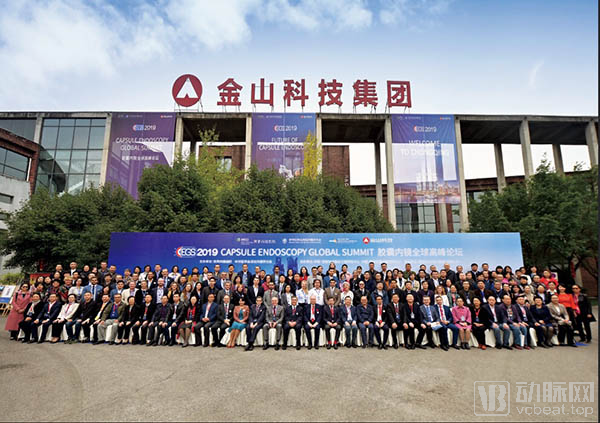
Seventeen leading global experts in gastroenterology delivered on-site keynote presentations on the latest clinical application achievements of capsule endoscopy both domestically and internationally. Chinese and foreign experts engaged in a virtual dialogue on the future of capsule endoscopy, discussing dimensions such as artificial intelligence, big data, expansion of indications, and technical parameters.
Meanwhile, Jinshan Technology unveiled new products on-site, including the RC100 fully automated intelligent navigation capsule robot, the SC100 high-definition small bowel capsule, the CC100 dual-head colon capsule, and an intelligent image reading system.
The summit also made progress in industry collaboration. The Global Capsule Endoscopy Alliance established capsule endoscopy training bases at two medical institutions in China, leveraging the country’s extensive case data to advance research on structured case documentation and standardized diagnosis and treatment for capsule endoscopy. At the Health Management Sub-forum of the summit, renowned Chinese health management experts shared with the global community the technical advantages and application experience of capsule endoscopy in early cancer screening and health management in China.
From Traditional to Intelligent: Endoscopic Innovation Between History and the Future
Zhang Shutian, President of Beijing Friendship Hospital, Capital Medical University, and Immediate Past Chairman of the Chinese Society of Digestive Endocrinology of the Chinese Medical Association, provided a comprehensive overview of the 40-year evolution of digestive endoscopy in China—from conventional endoscopy to patient-friendly endoscopy—and outlined the current research achievements in the application of artificial intelligence in digestive endoscopy in China.
The application of Western artificial intelligence technology in capsule endoscopy is also gaining momentum. Jean-Francois Rey, Chairman of the World Endoscopy Organization (WEO), shared Western application experiences by providing a clear and accessible explanation of advances in advanced algorithms and automated detection technologies for capsule endoscopy to optimize AI-assisted examinations. He further elaborated on how capsule endoscopy systems based on deep learning models have improved their capability in identifying gastrointestinal diseases, thereby advancing intelligent diagnosis.
Not limited to artificial intelligence, MEMS engineering research on capsule endoscopy in Western institutes is also at the cutting edge of science fiction. Professor Tassos Koulaouzidis from the Royal Infirmary of Edinburgh delivered a speech that brought the summit to a minor climax by exploring frontier technologies in capsule endoscopy, including biopsy-specific capsules, vibratory capsules for treating constipation, levitating navigation within body cavities, 3D-printed capsules, and micro-batteries.
Through the efforts of gastroenterology and medical engineering experts from China and abroad, capsule endoscopy, once confined to science fiction, has gradually moved from possibility to reality.
Big Data Construction for Capsule Endoscopy and Robotic Clinical Mapping: A Promising Future for Capsule Endoscopy
Every step toward realizing the intelligent evolution of capsule endoscopy technology relies on the meticulous validation by medical experts.
Professor Mei Zechuan from the Second Affiliated Hospital of Chongqing Medical University interpreted the crucial role of capsule endoscopy big data in reducing image reading time, as well as in the development of remote platforms and smart healthcare. He also elucidated the foundational basis for the formation of capsule endoscopy big data and the challenges it faces.
The development of big data for capsule endoscopy requires Capsule Endoscopy Structured Terminology (CEST) as its foundation. Miguel Mascarenhas Saraiva from ManopH in Portugal, a renowned expert in structured terminology, presented examples of reporting structures and standardized diagnostic terminology for capsule endoscopy at the summit. He also conducted multiple experiments to verify that CEST facilitates the organization and computational analysis of big data in gastrointestinal cases.
What Will Future Endoscopic Technology Look Like? Dr. Wang Xinke from Nanfang Hospital, Southern Medical University, introduced the hospital’s technological achievements to domestic and international guests: intelligent image analysis for diagnosis. This innovation will enhance the efficiency of capsule endoscopy diagnosis, thereby facilitating the development of an intelligent system for early cancer detection.
It is worth noting that the RC100 fully automated intelligent navigation capsule robot, released by Chongqing Jinshan Science & Technology (Group) Co., Ltd. at the summit, has entered the stage of clinical application research. Professor Yang Shiming from the Second Affiliated Hospital of Army Medical University pioneered the research trials and pointed out in his summit report that the fully automated capsule robot achieved a higher detection rate for gastric and intestinal lesions in clinical trials compared to previously machine-controlled systems, while also reducing examination time.
Clinical studies by medical experts have laid a rational foundation and injected vitality into the future development of capsule endoscopy.
Expanding Clinical Applications and Emerging Achievements of Capsule Endoscopy
To alleviate the discomfort associated with patient examinations, medical experts have been actively exploring the clinical applications of capsule endoscopy. This technology has been comprehensively implemented for diagnosing gastrointestinal diseases, spanning from the stomach and small intestine to the colon, with numerous new research findings published annually. At the event, Professor Kong Jing from the Second Hospital of Lanzhou University shared clinical cases involving the use of capsule endoscopy for the examination and diagnosis of various types of gastritis.
Capsule endoscopy has also demonstrated robust clinical applications in the small intestine. At the summit, Helmut Neumann from the University Medical Center of Mainz, Germany; John Plevris from the Royal Infirmary of Edinburgh, UK; Jiang Xueliang from the Second Affiliated Hospital of Shandong University of Traditional Chinese Medicine; and Asad Dajani from the Asad Dajani Specialist Clinic in the United Arab Emirates delivered presentations on “Indications for Small Bowel Endoscopy,” “Evaluation of Gastrointestinal Bleeding,” “Applications in Inflammatory Bowel Disease,” and “Applications in Diagnosing Small Bowel Diseases Induced by Non-Steroidal Anti-Inflammatory Drugs (NSAIDs),” respectively. These burgeoning research findings underscore the increasingly prominent advantages of capsule endoscopy as a clinical diagnostic tool for small bowel diseases.
Victoria Alejandra Jimenez Garcia of Virgen Macarena University Hospital in Spain is a renowned expert in colonic diseases. At the summit, she pointed out that the dual-lens colon capsule endoscopy is painless and non-invasive, more thorough than conventional colonoscopy, and more helpful in assessing UC inflammation.
The clinical applications of capsule endoscopy have not only expanded comprehensively throughout the gastrointestinal tract from top to bottom, but also extended from adult examinations to pediatric diagnosis, and from clinical disease management to health maintenance. Professor Zhao Hong from the Children’s Hospital Affiliated to Zhejiang University School of Medicine and Professor Ouyang Ping from Nanfang Hospital of Southern Medical University delivered keynote speeches on “Application of Capsule Endoscopy in the Diagnosis of Small Bowel Diseases in Children” and “Application and Prospects of Capsule Endoscopy in Health Management,” respectively, drawing significant attention in the field of expanded applications of capsule endoscopy.
From Clinical Application to Quality Control Management: A Practical Guide to Capsule Endoscopy Facilitates Technology Adoption
From the clinical application of magnetically controlled capsule gastroscopy to capsule colonoscopy, and further to advances in optimizing capsule endoscopy technology, Professor Shi Ruihua from Zhongda Hospital Affiliated to Southeast University provided foreign experts with a comprehensive overview of the current fundamental understanding of capsule endoscopy among Chinese gastroenterologists. This offers young physicians who have never encountered capsule endoscopy a window into understanding this technology.
The robust vitality of capsule endoscopy has made it highly sought after by medical institutions. How should hospitals that have introduced capsule endoscopy systems implement quality control and management for this technology and equipment? Professor Zhao Qiu from Zhongnan Hospital of Wuhan University shared his experience and standardized management protocols derived from his practice. The practicality of his presentation drew close attention and high acclaim from both Chinese and international experts in attendance.
Cloud Dialogue, Roundtable Insights: AI + Big Data + Indication Expansion + Technical Parameters
In this dialogue session, where Eastern and Western perspectives sparked dynamic exchanges, six Chinese and international medical experts gathered on-site to discuss the future of capsule endoscopy. From leveraging big data technologies to delving deeper into the Internet of Things (IoT), the experts engaged in in-depth discussions on the integration scenarios of digestive healthcare and technology.
Experts have stated that building a big data platform for health and medical care, enabling interoperability of medical information, data sharing, and analysis of remote diagnosis and treatment data, thereby facilitating data analysis of human health status, is the current and near-future focus for improving diagnostic and therapeutic efficiency in gastroenterology. The experts highly praised Chongqing Jinshan Science & Technology (Group) Co., Ltd. for its breakthroughs in AI-assisted clinical decision-making and smart outpatient services, which have significantly advanced the “intelligentization” of healthcare.
Professor Bai Yang from Nanfang Hospital of Southern Medical University, Professor Jiang Xueliang from the Second Affiliated Hospital of Shandong University of Traditional Chinese Medicine, WEO President Jean-Francois Rey, Professor Tassos Koulaouzidis from the Royal Infirmary of Edinburgh in the UK, and Professor Miguel Mascarenhas Saraiva from ManopH in Portugal participated in this roundtable forum, which was moderated by Professor Helmut Neumann from the University Medical Center of Mainz in Germany.
Four Major New Technologies Make a Grand Debut, Led by the RC100 Fully Automatic Capsule Robot
After conducting a clinical study involving 20 volunteers on the RC100 Fully Automated Intelligent Navigation Capsule Robot developed by Jinshan Technology, Professor Yang Shiming from the Second Affiliated Hospital of Army Medical University preliminarily verified the effectiveness, safety, and superior detection rate of gastrointestinal lesions associated with the RC100 capsule robot.
At this global summit, in order to more authentically showcase the preliminary technical and clinical application achievements of the RC100 capsule robot to medical experts worldwide, Professor Xie from the Second Affiliated Hospital of Army Medical University conducted a live demonstration of volunteer examinations using this technology, which was broadcast to the summit venue. The RC100 capsule robot comprehensively examined six regions of the stomach within 15 minutes without any manual intervention, earning rounds of applause from the medical experts present at the summit.
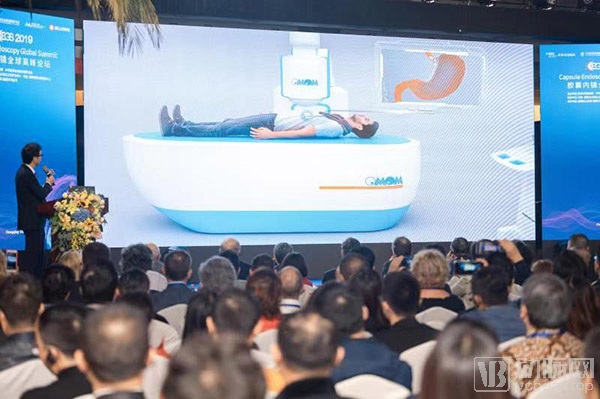
Jinshan Technology Chairman Wang Jinshan Personally Launches New Product RC100 (Magnetically Controlled Capsule Endoscopy for Stomach + Intestine)
Wang Jinshan, Chairman of Jinshan Technology, pointed out that the RC100 fully automated capsule robot, in addition to navigating through the stomach for examination like an unmanned spacecraft, can continue into the intestines for a comprehensive check-up thanks to its robust battery life. Finally, artificial intelligence is employed to assist in diagnosing the captured images.
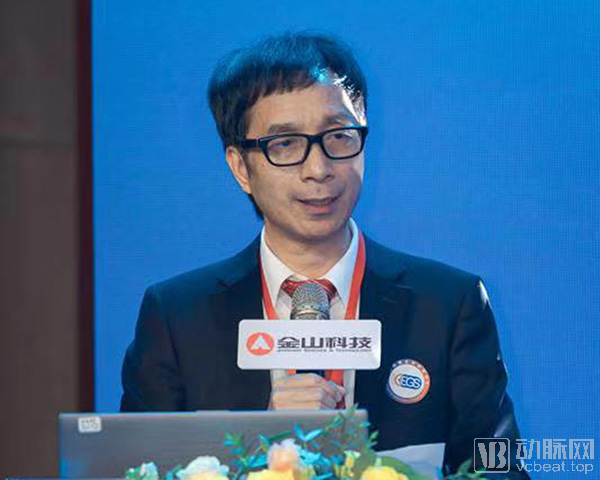
Wang Jinshan, Chairman of Jinshan Technology
All six innovative technologies involved in the entire examination and diagnostic process of the RC100 fully automated capsule robot are globally leading: capsule control technology, capsule localization technology, artificial intelligence control algorithms, dual-control magnetic field technology, medical big data technology, and parallel anomaly detection algorithms.
In addition to the RC100 fully automated capsule robot on display, Jinshan Technology’s years of accumulated technological prowess have also burst forth in its other new products.
The SC100 HD small bowel capsule, equipped with a dedicated image sensor, features 0.3-megapixel resolution, an industry-leading 172° field of view, and a macro long depth of field exceeding 30 mm. Meanwhile, the CC100 dual-lens colon capsule, fitted with four ultra-wide-angle optical lenses at both ends, offers a wider field of view and a higher frame rate. These advancements demonstrate that Jinshan Technology currently holds a leading position in the capsule endoscopy industry.
Meanwhile, Jinshan Technology’s intelligent image review system has been upgraded again. The new system filters out 84% of redundant images, with artificial intelligence assisting in the diagnosis of the remaining 14%. This significantly improves the efficiency and accuracy of manual diagnosis, gradually freeing medical experts from large volumes of repetitive diagnostic tasks that require intense concentration.
Global Capsule Endoscopy Consortium Establishes Capsule Endoscopy Training Base in China
At the summit, the Global Capsule Endoscopy Consortium, in conjunction with the National Capsule Endoscopy Research Center, conferred the title of “Capsule Endoscopy Training Base” upon ten hospitals: Zhongnan Hospital of Wuhan University, the First Affiliated Hospital of Zhengzhou University, the Second Hospital of Lanzhou University, Tangdu Hospital of Air Force Medical University, Henan Provincial People’s Hospital, Heilongjiang Provincial Hospital, the Affiliated Hospital of Beihua University, PLA No. 923 Hospital, Hefei First People’s Hospital, and the Second Affiliated Hospital of Zunyi Medical College.
Since its establishment at the inaugural summit, the Global Capsule Endoscopy Alliance has been committed to promoting the clinical application of capsule endoscopy through research on standardized operational procedures and diagnostic protocols. At this summit, the Alliance will put into practice and promote its previous research achievements in standardized examination and diagnosis models by establishing a Capsule Endoscopy Training Base in China. The establishment of this training base in China will further accumulate clinical case data, thereby enriching and advancing research on structured case databases and standardized diagnosis and treatment for capsule endoscopy in China.
Torch Relay Ceremony for the National Capsule Endoscopy Skills Competition
The finals of the South China Division of the First National Capsule Endoscopy Skills Competition concluded in Guangzhou on November 2. The second leg of the competition (Southwest China Division) will be held in Chongqing. Subsequent regional divisions will take place successively in East China, Central China, and North China, with two winners advancing from each division. The winners from each region will compete in the national finals of the Capsule Endoscopy Skills Competition at the Annual Meeting of the Chinese Society of Digestive Endoscopology, Chinese Medical Association, to be held in Tianjin in 2020.
To enhance the clinical application of capsule endoscopy and ensure the continuous传承 of standardized operational skills among medical professionals, a national capsule endoscopy skills competition torch relay ceremony was specially held at this summit to spread the influence of the event across China. Professor Zhang Jie, Director of the Training Department at the National Capsule Endoscopy Research Center and Nanfang Hospital of Southern Medical University, along with South China region award winners Chen Bijuan and Peng Qianqian, passed the competition torch to representatives from the Digestive Endoscopy Branch of the Chongqing Medical Association, representing the Southwest China region. This torch relay embodies the spirit of integrating medicine and engineering, while strengthening participants’ sense of engagement and mission.
Summit Health Management Sub-Forum: Sharing China’s Advanced Experience in the Application of Capsule Endoscopy for Early Cancer Screening with the World
The summit also featured a sub-forum on health management, during which dozens of medical and health management institutions in Southwest China, including Guizhou Provincial People’s Hospital, were designated as “participating research units” for the “Special Research Project on Early Gastrointestinal Cancer Screening with Capsule Endoscopy” (hereinafter referred to as the “Early Gastrointestinal Cancer Screening Project”) under the National Capsule Endoscopy Research Center.
At the Health Management Summit held at the Second Xiangya Hospital on November 2, the Gastrointestinal Early Cancer Screening Project was officially launched to actively respond to the "Healthy China 2030" Planning Outline, reduce the incidence and mortality rates of cancer among the population, and basically achieve regular cancer-preventive check-ups for high-risk groups. A total of 30 medical and health management institutions from Hunan and Jiangxi provinces became the first batch of "participating research units" in this project.
The awarding ceremony for the “Participating Research Institutions” in Southwest China marks the second phase of the phased rollout of the “Early Gastrointestinal Cancer Screening Project.” Wang Wei, Director of the Health Management Center at the Second Xiangya Hospital of Central South University and Chair of the National Engineering Center’s Sub-center for Early Gastrointestinal Cancer Screening and Health Management, presented an overview of the development of the “Early Gastrointestinal Cancer Screening Project” to medical and health management experts from abroad and from Southwest China.
To highlight the technical support for this project, Professor Yang Zhaoxia from the Department of Gastroenterology at the Second Affiliated Hospital of Chongqing Medical University delivered a keynote speech titled “Application of Magnetically Controlled Capsule Endoscopy in Early Gastric Cancer Screening.” Professor Zhang Jie, Director of the Training Department at the National Capsule Endoscopy Research Center and affiliated with Nanfang Hospital of Southern Medical University, shared Nanfang Hospital’s experience in quality control and management of magnetically controlled capsule gastroscopy. Zhang Xiaojin, former Vice President of Beijing Jishuitan Hospital and Deputy General Manager of Medical Management at iKang Healthcare Group, highly praised the significance of the “Early Gastrointestinal Cancer Screening Project” and affirmed the important role played by magnetically controlled capsule endoscopy in early cancer screening. Other attendees at the sub-forum included Professor Li Hongling from Guizhou Provincial People’s Hospital, Wang Xiaoli, Director of the Medical Quality and Safety Department of the Health Checkup Division at Rich Healthcare Group, and Professor Jiashan Yi from Chongqing Third People’s Hospital.
Experts and scholars from around the world attended the Health Management Sub-forum on-site, unanimously affirming that China’s technology, experience, and management standards in the application of capsule endoscopy for early cancer screening and health management have reached a globally leading level.