

Stem Cell Therapy: A Profit Engine or a Medical Savior? Over 10 Products Approved, Commercialization Still Pending
In recent years, stem cells have been a constant feature in the series of policies issued by the state for the biopharmaceutical industry. This sector carries the aura of a Damocles’ sword: it appears immensely powerful at first glance, yet closer scrutiny reveals that risks are intertwined with opportunities at every turn.
Much like CAR-T therapy a decade ago, breakthrough medical technologies often require careful validation when they first emerge. In this regard, industrialization and regulatory processes have advanced more rapidly abroad. More than a dozen stem cell therapy products have been successively approved for market launch in numerous countries and regions worldwide, led by the United States, the European Union, Japan, and South Korea. Regardless of their pricing and sales performance, these emerging biotechnological products have indeed provided patients with new treatment options and helped many regain normalcy in their lives.
Stem cell therapy is not a medical technology that has only emerged in recent years; one stem cell treatment regimen has even achieved a high degree of marketization, namely hematopoietic stem cell transplantation for the treatment of blood disorders.
Hematopoietic stem cell transplantation (HSCT), formerly known as bone marrow transplantation, involves the intravenous infusion of hematopoietic stem and progenitor cells from a donor into patients with hematologic disorders such as leukemia or aplastic anemia, thereby reconstituting the patient’s hematopoietic and immune systems. Driven by technological advancements, sources of hematopoietic stem cells have expanded beyond bone marrow to include umbilical cord blood and peripheral blood mobilized by hematopoietic growth factors. Consequently, the term “hematopoietic stem cell transplantation” has largely replaced “bone marrow transplantation” in current clinical practice.
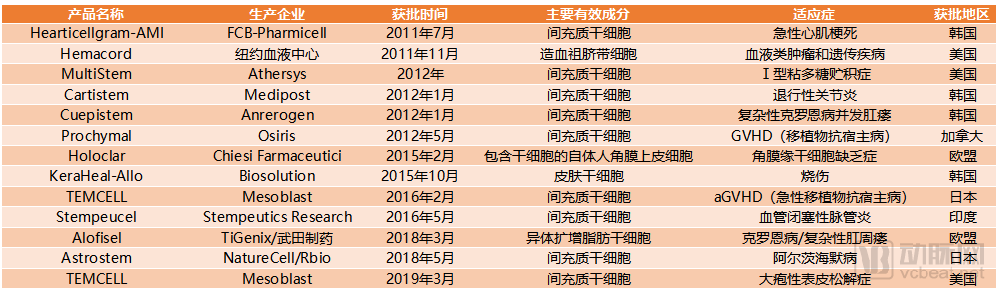
Globally Approved Stem Cell Therapy Products
In addition to hematopoietic stem cell transplantation, more than a dozen stem cell therapy products have been approved in numerous countries and regions worldwide, the majority of which are based on mesenchymalStem Cell Therapy. Although nearly a decade has passed since the approval of the first commercialized drug utilizing human stem cells, most products have remained confined to their country or region of initial approval, with only a few exceptions gaining multi-regional approvals (such as Prochymal, which has been approved in the United States, Australia, Canada, and other countries and regions). This also indicates that stem cell therapy is still in an exploratory stage of global commercialization.
In China’s stem cell therapy sector, apart from hematopoietic stem cell transplantation, no stem cell therapy has yet truly gained approval.Approved by relevant national authorities and launched for sale.Therefore, stem cell therapy conducted in China falls under the category of clinical trials. In 2011, the Ministry of Health and the State Food and Drug Administration launched a one-year campaign to regulate stem cell clinical research and applications, prompted by the fact that therapeutic products provided by some domestic enterprises or clinical institutions failed to meet relevant standards.
On May 30, 2016, the National Health Commission’s official website published a list of the first 30 stem cell clinical trial institutions that had completed filing. To date, this list has expanded to 116 institutions. The chaotic landscape surrounding stem cell therapy in China is being gradually rectified, and as the commercialization of stem cell therapeutic products accelerates, such irregularities are expected to diminish further.
The remarkable efficacy of stem cells has also created new business opportunities in the medical aesthetics sector. Amidst a myriad of promotional claims, stem cell infusion is touted as a panacea capable of addressing a wide range of systemic issues, including wrinkle prevention, improved skin elasticity, repair of damaged organs, and restoration of bodily functions. Medical aesthetics clinics often partner with overseas medical institutions to conduct such business, with Japan being the most frequently cited country.
However, to date, no specific studies have conclusively demonstrated that stem cell infusion improves human physiological functions. As early as 2012, fraudulent companies in the stem cell medical aesthetics sector were exposed. In our conversations with industry professionals, they indicated that, mechanistically, stem cell infusion may improve the health status of some individuals, but current marketing claims undoubtedly exaggerate this effect.
Among approved products, mesenchymal stem cells (MSCs) are the most widely used. MSCs are a type of multipotent stem cell with multidirectional differentiation potential. The therapeutic applications of MSCs are primarily reflected in three aspects:
First, mesenchymal stem cells can differentiate into cells of the corresponding tissue through their own differentiation capability, thereby exerting a replacement effect;
Second, mesenchymal stem cells can secrete cytokines through paracrine effects, which can promote the self-repair of tissues;
Third, mesenchymal stem cells can suppress immune rejection responses. For instance, co-transplantation of mesenchymal stem cells in hematopoietic stem cell transplantation can significantly reduce the incidence of graft-versus-host disease (GVHD) or chronic rejection.
June 2018–Present, among the nine stem cell new drug registration applications accepted by the CDE, their main active ingredients are all mesenchymalStem cells.
However, certain issues have emerged in the development of mesenchymal stem cells (MSCs). In September 2018, Nature published an online commentary noting that a U.S. Food and Drug Administration (FDA) study found little consistency in the molecular characteristics of MSCs among investigational new drug applications submitted to the FDA. Additional studies have also demonstrated that distinct cell populations from different tissues, all classified as MSCs, exhibit markedly different profiles in terms of gene expression and differentiation potential.
Furthermore, in most treatment regimens, the differentiation potential of mesenchymal stem cells (MSCs) has not been effectively leveraged; instead, their paracrine functions are primarily utilized to facilitate self-repair and reconstruction of damaged tissues. Due to these functional characteristics, although MSCs have demonstrated favorable safety and tolerability profiles in clinical applications, their therapeutic efficacy has consistently failed to break through existing bottlenecks.
Consequently, the landscape of stem cell therapy has gradually evolved in recent years. Umbilical cord blood-derived mesenchymal stem cells are progressively replacing autologous mesenchymal stem cells due to their superior therapeutic efficacy. Therapeutic regimens involving other stem cell types are also advancing into clinical stages, such as neural stem cell transplantation for post-stroke sequelae and pancreatic islet stem cell transplantation for diabetes mellitus. Among various stem cell types, induced pluripotent stem cells (iPSCs), which garnered a Nobel Prize, have emerged as a focal point of intense interest.
iPSCs refer to pluripotent stem cells, similar to embryonic stem cells, generated by inducing dedifferentiation of differentiated somatic cells through the introduction of exogenous genes. This was first achieved in 2006 by the team of Japanese scientist Shinya Yamanaka, who introduced four genes—Oct4, Sox2, c-Myc, and Klf4—into mouse fibroblasts. In 2012, the Nobel Prize in Physiology or Medicine was awarded to British scientist John B. Gurdon and Japanese scientist Shinya Yamanaka in recognition of their research on “the reprogramming of mature cells into pluripotent cells.”
Given the limited efficacy of mesenchymal stem cells, the emergence of induced pluripotent stem cells (iPSCs) has ushered in new directions for research and development in the field of stem cell therapy. Researchers are attempting to induce iPSCs to differentiate into specific tissue cells for transplantation into the human body, aiming to treat corresponding diseases such as heart failure, post-stroke sequelae, and diabetes. Influenced by Nobel laureates, Japan has taken a pioneering role in this area, successively approving six clinical trials, including the world’s first iPSC-based treatment for Parkinson’s disease, the world’s first cardiac therapy using an iPSC-derived myocardial patch, and the world’s first treatment for spinal cord injury using iPSC-derived cells.
The U.S. FDA has recently approved clinical trials for Fate Therapeutics’ iPSC-derived NK cell therapy targeting various solid tumors. Other companies leveraging iPSCs for stem cell therapeutic development are also making rapid progress: BlueRock Therapeutics’ iPSC-derived dopaminergic neuron progenitor therapy for Parkinson’s disease has completed early-stage development and is poised to enter clinical trials, while Semma Therapeutics’ iPSC-derived beta-cell therapy for diabetes has just completed preclinical proof-of-concept studies.
With the maturation of stem cell banks, embryonic stem cells (ESCs) have gradually emerged as a new option in stem cell therapeutic applications. Similar to induced pluripotent stem cells (iPSCs), ESCs possess multilineage differentiation potential and can be induced to differentiate into nearly all cell types. China has achieved numerous breakthroughs in ESC research in recent years. In September 2017, the world’s first clinical trial using neural cells derived from embryonic stem cells for the treatment of Parkinson’s disease was officially launched in China. In February 2019, the Chinese Society for Cell Biology published“Human Embryonic Stem Cells” Standard. This is China’s first product standard specifically for embryonic stem cells, marking China’s entry into the global forefront in the translation of embryonic stem cell products.
As stem cell technology matures, certain challenges are gradually emerging. The route of administration represents a major technical hurdle in stem cell therapy. Most indications targeted by stem cell therapy involve well-defined pathological sites. Furthermore, stem cells must precisely reach the target site to achieve optimal therapeutic efficacy. Therefore, unlike chemical drugs and non-cellular biologics, stem cell therapy is not well-suited for systemic administration routes such as oral delivery or intravenous injection.
Among the products currently approved for market launch, with the exception of a few indicated for circulatory system diseases and graft-versus-host disease (GVHD), most are administered via direct injection into the patient’s affected area. For induced pluripotent stem cell (iPSC)-based stem cell therapies, the prevailing approach involves surgical implantation of stem cells directly into the corresponding target site. This method enables closer integration of stem cells with the diseased tissue, thereby enhancing therapeutic efficacy.
Therefore, considerations regarding the route of administration must be addressed early in the research and development cycle of stem cell therapies. In particular, close collaboration with clinicians is essential to assess the operational feasibility of the treatment regimen in clinical practice, thereby enabling timely adjustments to the product development strategy.
Industrialization challenges may be a common issue currently faced by frontier biotechnology in the commercialization process. While stem cell technology has matured primarily within the research domain, the field of stem cell therapy requires more extensive and in-depth technical support to achieve large-scale industrial production.
For specialized biological products such as stem cells, new monitoring systems are required for various aspects, including cell source, manufacturing processes, quality control systems and standards, GMP management, supporting clinical-grade reagents, storage, packaging, transportation, and cost. Moreover, there are significant differences in the industrialization pathways required for cells of different sources and types. Therefore, under the current regulatory framework that is not yet fully comprehensive, most companies choose to explore technical pathways tailored to their specific characteristics while ensuring compliance with cGMP standards.
In the broader field of cell therapy, leading global biopharmaceutical solution providers, such as GE Healthcare and Thermo Fisher, have already introduced a range of cell therapy solutions. However, in the specific domain of stem cells, these offerings address only certain aspects of industrialization. Researchers must still substantially optimize isolation and culture methods based on their specific cell sources and cell types to meet clinical standards.
In 2015, the then National Health and Family Planning Commission (NHFPC) and the China Food and Drug Administration (CFDA) jointly issued the Administrative Measures for Clinical Research on Stem Cells (Trial). This was China’s first normative document specifically regulating clinical research on stem cells, marking the formal alignment of the domestic stem cell therapy industry’s translational development with regulatory standards. The Guiding Principles for Research and Technical Evaluation of Cell Therapy Products (Trial), released in December 2017, and the Administrative Measures for Clinical Research and Translational Application of Somatic Cell Therapies (Trial), issued in January 2019, also contain provisions related to stem cell therapy. However, to date, the Administrative Measures for Clinical Research on Stem Cells remains the only regulatory policy specifically targeting stem cell therapy.
As a pioneer in China’s healthcare industry, Boao, Hainan has driven the rapid development of the domestic biotechnology sector under an open policy environment. When the State Council approved the establishment of the Boao Lecheng International Medical Tourism Pilot Zone in 2013, it explicitly stated that the zone could apply to conduct research projects on cutting-edge medical technologies, such as clinical studies on stem cells, based on its technical capabilities. Therefore, the stem cell industry has always been one of the core focuses in Boao, Hainan.
In January 2019, Hainan Province formulated the Administrative Measures for Access to Stem Cell Medical Technologies and Clinical Research and Translational Applications in the Boao Lecheng Pilot Zone, as well as the Project Application Form for the Construction of a Base for the Transfer and Transformation of New Drug Development Achievements in Hainan Province, to explore pilot initiatives for stem cell therapies and new drug translation within the Boao Lecheng International Medical Tourism Pilot Zone. By late July, China’s only dedicated stem cell hospital was also completed in Boao, Hainan.
Hainan is about to release the first implementation policy for stem cell therapy in China. Many related companies contacted by VCBeat are closely monitoring this development and have stated that they have conducted multiple site visits to Hainan. Regarding this policy, the Hainan Provincial Health Commission responded to inquiries from members of the Chinese People’s Political Consultative Conference in July, indicating that the official document would be issued in the near future.
At a signing ceremony for the provincial co-construction of national regional medical centers this September, the National Health Commission announced its support for Zhejiang Province to pilot innovative policies on stem cells and immune cells. Previously, Beijing had also explicitly stated in its reform measures that it encourages medical institutions in the city to carry out clinical frontier medical technology research projects on stem cells in accordance with relevant national regulations, based on their technical capabilities. Recent signals suggest that pilot programs for stem cell therapy are poised for comprehensive rollout.
1. Knee Osteoarthritis
Knee osteoarthritis is primarily caused by degenerative changes, trauma, and excessive strain. Currently, there are no highly effective treatment options available in clinical practice. Joint replacement surgery remains a last resort for patients with advanced-stage disease.
As early as 2012, the South Korean Ministry of Food and Drug Safety (MFDS) approved CARTISTEM for marketing to treat knee osteoarthritis, with its primary active ingredient being neonatal umbilical cord blood-derived mesenchymal stem cells. CARTISTEM is also the world’s first approved allogeneic stem cell therapy. In April 2013, The Sun in Hong Kong reported that within one year of its launch, CARTISTEM had achieved over 400 successful cases in Hong Kong. Prior to its market release, some patients participating in clinical trials experienced complete resolution of their condition without requiring secondary treatment. Currently, Shandong Yuansheng Pharmaceutical is advancing the registration and marketing approval process for this product in China.
2. Critical Limb Ischemia
Critical limb ischemia, also known as severe limb ischemia (CLI), is a serious form of peripheral artery disease that typically causes pain or ulcers and, in severe cases, may lead to amputation of the affected limb. Patients with this condition also have an elevated risk of myocardial infarction and stroke.
As early as 2001, a Japanese team reported relevant clinical studies on the treatment of lower limb ischemia using autologous bone marrow stem cell transplantation, which initially demonstrated clinical safety and efficacy. In 2003, Professor Gu Yongquan from Beijing Xuanwu Hospital also reported favorable therapeutic outcomes in his clinical trials.
In this field, Saiska Medical, a subsidiary of Boya Holdings Group, is at the international forefront. Its Phase III clinical trial for the treatment of lower limb ischemia, based on an intraoperative rapid infusion system, has been approved by the U.S. FDA. In 2017, relevant articles were published in International Stem Cell Research, indicating that Saiska Medical’s products demonstrated favorable safety and efficacy.
3. Stroke
Stroke, commonly known as apoplexy, has become one of the leading causes of death among the Chinese population. However, in contrast to the rising mortality rate, there is a scarcity of effective treatment options. This shortage is manifested not only in delays in emergency care but also in limited efficacy during patient rehabilitation. There is a concept in stroke management known as the “golden four hours,” which refers to the critical window within four hours of symptom onset during which timely intervention can significantly improve subsequent neurological recovery. In practice, however, because strokes often occur at night, patients frequently miss this optimal therapeutic window due to delayed medical attention.
The application of stem cell therapy in ischemic stroke is becoming increasingly mature, with MultiStem being the most advanced among them.
MultiStem first received FDA approval in 2012 for the treatment of Mucopolysaccharidosis Type I. Post-marketing studies have indicated that MultiStem may also be effective in treating conditions such as stroke, acute myocardial infarction, and hematologic malignancies. Among these, the clinical trial for stroke treatment has progressed the most rapidly and has currently entered Phase III.
The primary active component of MultiStem is mesenchymal stem cells isolated from the patient’s bone marrow. As previously mentioned, mesenchymal stem cells can promote patients’ self-repair mechanisms but may not achieve a complete cure. Consequently, neural stem cell–based therapeutic approaches have become a hot topic of discussion in the field of stroke treatment over the past two years.
In the field of neural stem cells, ReNeuron’s CTX cells, developed in the United Kingdom, are currently the most commercially advanced neural stem cell product globally. The CTX cell-based therapeutic regimen demonstrated good tolerability in Phase I clinical trials, with treated patients showing a 1-point improvement on a 6-point scale after 90 days of treatment. In China, Renji Hospital affiliated with Shanghai Jiao Tong University has also initiated relevant clinical studies, and companies such as Huade Bio have begun to enter this field.
4. Heart Disease
Stem cell therapy for heart disease primarily focuses on the treatment of myocardial infarction and heart failure. In this regard, South Korea’s Ministry of Food and Drug Safety has also taken a global lead. In July 2011, South Korea approved Hearticellgram-AMI, a stem cell drug, for the treatment of acute myocardial infarction. This product involves extracting mesenchymal stem cells from the patient’s own bone marrow and transplanting them via injection into the coronary arteries, classifying it as an autologous stem cell therapeutic product. Its primary efficacy stems from the reparative functions provided by the mesenchymal stem cells.
Currently, a prominent approach in the field of stem cell therapy for heart failure involves the use of cardiomyocytes differentiated from induced pluripotent stem cells (iPSCs). These iPSCs are induced to differentiate into cardiomyocytes in vitro and then surgically implanted onto the patient’s heart to compensate for damaged or missing cardiac tissue. BlueRock Therapeutics, which was recently acquired by Bayer at a $1 billion valuation, is developing products in this area, and research teams at Osaka University and Washington University School of Medicine are also conducting related studies.
1. Boya Holdings Group
Boya Holdings Group has multiple subsidiaries providing stem cell services or engaged in the research and development of stem cell-related products. Boya Stem Cell, a subsidiary of Boya Holdings Group, was established in 2010 and operates as an integrated service provider specializing in stem cell isolation, storage, and clinical application research. It is the first and only clinical-grade stem cell bank in China to have obtained accreditation and laboratory proficiency testing under the AABB standards (American Association of Blood Banks), the World Health Organization NRL standards, and the CAP standards (College of American Pathologists). Through its clinical collaboration platform for stem cells, Boya Stem Cell has partnered with nearly 40 top-tier (Grade III Class A) hospitals across China to conduct clinical research collaborations.
In February 2017, Boya Holdings acquired Cesca Therapeutics, a company listed on the NASDAQ. As a core global manufacturer of automated stem cell separation equipment, Cesca Therapeutics holds over 60% of the global market share and is a worldwide leader in automated cell processing and point-of-care autologous cell therapy. Furthermore, its products targeting critical limb ischemia and acute myocardial infarction are progressing smoothly through clinical trials, positioning the company favorably within the competitive landscape.
2. Aipu Regenerative Medicine
Founded in 2017, Aierpu Regenerative Medicine is a leading domestic company leveraging stem cell and regenerative medicine technologies to address refractory and degenerative diseases. The company’s core technology utilizes induced pluripotent stem cell (iPSC) technology to regenerate human cells, tissues, and organs, replacing aged tissues with functional “engineered” counterparts to reverse or even cure organ failure. Aierpu Regenerative Medicine currently focuses its research efforts on the regeneration of cardiomyocytes and neurons. The company has established multiple core R&D product lines centered on the cardiovascular and nervous systems, with ongoing projects including therapies for heart failure, pediatric cerebral palsy, stroke, and Parkinson’s syndrome. At present, Aierpu Regenerative Medicine collaborates with more than 50 major Grade-A tertiary hospitals across China, having established cardiovascular and neurological iPSC cell lines that cover over 300 iPSC disease models spanning more than 50 disease types. These resources support downstream differentiation studies, providing abundant clinical resources for the development of iPSC-based cell therapies.
The company has developed targeted differentiation technologies for iPSC-derived cardiomyocytes, neurons, and immune cells, and possesses large-scale manufacturing capabilities to meet the demands of clinical research and future therapeutic applications. Currently, the company’s heart failure project has received approval from the hospital’s ethics committee and is recruiting patients in preparation for clinical trials.
3. Zhejiang Huode Biotech
Zhejiang Huode Bioengineering Co., Ltd. was jointly founded in Hangzhou in January 2017 by neuroscientists and stem cell scientists from Johns Hopkins University in the United States. Leveraging its expertise in neural differentiation of human iPSCs/ESCs and cell engineering, as well as its independently developed patented technologies, the company develops functional cell-based therapeutic solutions for various central nervous system diseases and in vitro drug screening platforms.
Currently, the company has completed GMP manufacturing and quality control of its first therapeutic product, neural precursor cells for brain therapy. It is conducting preclinical animal studies to evaluate efficacy and safety in ischemic stroke, with plans to submit Investigational New Drug (IND) applications in both China and the United States in 2020 and simultaneously file for clinical trial registration, thereby initiating Phase I trials or clinical studies in collaboration with hospitals affiliated with partnered clinical stem cell centers. In addition to progressively advancing eight cell therapy pipelines, Huode Biology is also positioning itself in the midstream segment by providing iPSC-derived neural cells and brain organoids to pharmaceutical companies and research institutions for disease research and drug screening.