

Eli Lilly's Psoriasis Biologic Taltz (Ixekizumab) Launches in China Amid Booming Biologics Market

Lilly (China) R&D
High-Quality Pharmaceutical Developer
2016Year3Month, Eli Lilly's New-Generation Anti-Inflammatory DrugTaltz(Tuozhi®, ixekizumab injection) after completing the largest-scale study conducted in a population with moderate-to-severe plaque psoriasisIIIphase clinical trials, and after obtaining robust data evidence, it receivedFDAIts approval for the treatment of adult patients with moderate-to-severe plaque psoriasis who are candidates for systemic therapy or phototherapy has drawn international attention.
In September 2019, three years later, TopConsult®Approved by the National Medical Products Administration (NMPA) for marketing in China through the channel for the first batch of overseas new drugs urgently needed for clinical use, it took only six months from the submission of the marketing application to approval. On November 7, Eli Lilly and Company (China) held a signing ceremony for strategic commercial partnerships and the launch of Taltz during the second China International Import Expo.®Distributor Launch Event: Reached Purchase Intentions for Multiple Products Worth Over RMB 3 Billion with 17 Domestic Pharmaceutical Distribution Enterprises
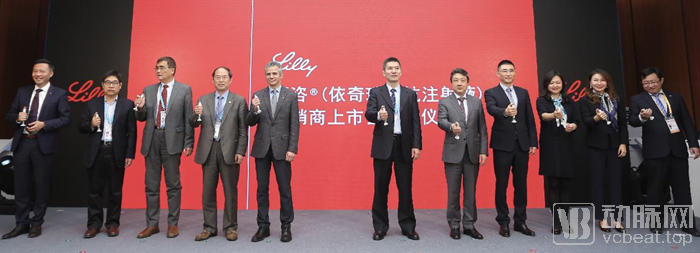
Strategic Business Partnership Signing Ceremony & Tuozhi®Distributor Launch Event
VBInsight®It is an IL-17A inhibitor and the second monoclonal antibody anti-inflammatory drug targeting this pathway to be marketed globally. In patients with psoriasis, IL-17A plays a crucial role in driving the hyperproliferation and activation of keratinocytes (skin cells). Experimental studies have demonstrated that Taltz®It exhibits high affinity and specificity for the pro-inflammatory cytokine interleukin-17A (IL-17A), inhibiting the binding of IL-17A to the IL-17 receptor, and does not bind to the cytokines IL-17B, IL-17C, IL-17D, IL-17E, or IL-17F.
Psoriasis is a chronic, recurrent, inflammatory, and systemic immune-mediated disease triggered by the interplay of genetic and environmental factors. Once contracted, it currently has no cure. At present, there are approximately 6.5 million psoriasis patients in China. According to the "Global Report on Psoriasis" released by the World Health Organization (WHO) in 2016, 93% of patients aspire to achieve complete clearance of skin lesions. In the past, traditional treatment modalities struggled to deliver robust and stable efficacy, leaving many therapeutic needs of psoriasis patients in China unmet.
Clinically, psoriasis is classified into guttate, plaque, inverse, erythrodermic, pustular, and arthropathic types. Among these, the first three are collectively referred to as psoriasis vulgaris in traditional treatment. There are significant differences among the various types of psoriasis in terms of etiology, clinical manifestations, treatment, and prognosis. The onset and progression of psoriasis follow a spectrum from mild to severe. Taking plaque psoriasis as an example, pediatric patients often experience a prolonged lesion-free interval between the guttate and plaque stages, whereas adult patients tend to transition rapidly from guttate to plaque psoriasis. Therefore, early screening, early diagnosis, and standardized treatment are crucial in the management of psoriasis.
According to VBInsight®Professor Zheng Jie, Department of Dermatology, Ruijin Hospital, Shanghai Jiao Tong University School of Medicine, former Chairman of the Chinese Society of Dermatology and Venereology under the Chinese Medical Association, and national lead for Phase I and Phase III clinical research projects in China, stated that the Psoriasis Area and Severity Index (PASI) is internationally recognized as the standard for evaluating treatment efficacy in psoriasis. A reduction in the PASI score of more than 75% is considered indicative of an effective treatment. In other words, from the perspective of therapeutic efficacy, there is currently no cure for psoriasis.
Traditionally, psoriasis has been treated clinically via oral and topical routes. Prior to the 20th century, methotrexate, cyclosporine, and retinoids were the mainstream international pharmacotherapies for psoriasis. Professor Zheng Jie pointed out that methotrexate remains the predominant therapeutic agent for psoriasis in China at present. Optimizing psoriasis treatment has long been an urgent clinical need. On one hand, traditional drugs have poor safety profiles, forcing some patients to discontinue treatment due to severe side effects; on the other hand, patient satisfaction with and adherence to conventional treatment regimens are both low.
According to Julio Gay-Ger, President and General Manager of Eli Lilly China, Trulicity®Administered via subcutaneous injection, the medication allows patients to self-administer at home with ease. Clinical data show that the use of Taltz®Subsequently, patients with plaque psoriasis can achieve up to 100% improvement in PASI, thereby leading to an increase in another evaluation metric for psoriasis treatment—the Dermatology Life Quality Index (DLQI).
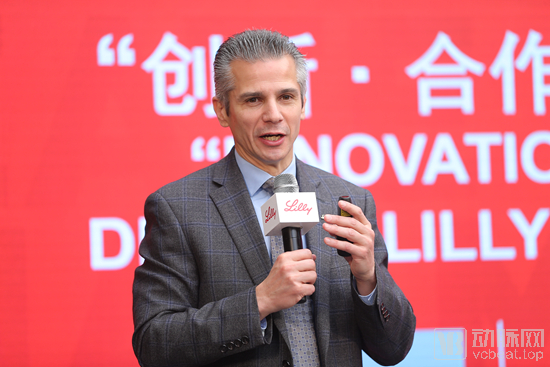
Julio Gay-Ger, President and General Manager of Eli Lilly China
Professor Zhang Xuejun, Director of the Institute of Dermatology at Fudan University, told VCBeat that as early as Tuozi®Prior to its formal approval for marketing in China, researchers had already incorporated it into the Guidelines for the Diagnosis and Treatment of Psoriasis in China based on preliminary findings.
In 2004, Amgen’s ENBREL (etanercept), a drug for moderate-to-severe rheumatoid arthritis, received FDA approval for an additional indication: moderate-to-severe plaque psoriasis in adults, thereby ushering in the era of biologics for psoriasis treatment. Subsequently, infliximab (2006), adalimumab (2008), ustekinumab (2009), and secukinumab (2015) were successively approved for the treatment of moderate-to-severe psoriasis. This ancient and stubborn human disease has become a new battleground for multinational pharmaceutical giants such as Johnson & Johnson, Pfizer, and AbbVie.
According to Professor Zheng Jie, the development of biologics for psoriasis has undergone three stages to date. The first stage involved tumor necrosis factor-alpha (TNF-α) inhibitors, which were effective only in a subset of patients with psoriasis and were associated with a high risk of relapse. The second stage featured biologics targeting IL-23 and IL-12, which proved effective in patients who had failed TNF-α inhibitor therapy. The third stage comprises novel monoclonal antibodies against IL-17A, which have demonstrated efficacy in patients with psoriasis who did not respond to or experienced relapse after treatment with the first two classes of biologics. “As the second IL-17A monoclonal antibody globally, Taltz® has achieved improvements in both safety and efficacy. For patients who have failed to respond to or have relapsed during secukinumab treatment, continuing treatment with Taltz® is recommended.”®“still valid,” said Professor Zheng Jie.
Regarding this distributor conference, Ji Liwen stated, “We are honored to have the opportunity to participate in this China International Import Expo (CIIE). China’s continuously opening vast market has injected growth momentum and valuable confidence into global enterprises. Eli Lilly has always attached great importance to the Chinese market; over the past year, we have had five new products and three new indications approved. The future holds great promise. We will continue to actively introduce more innovative medicines. Over the next decade, we have the capacity to launch 40 new products, including new indications, in China, helping to support the Chinese government in achieving the grand goal of ‘Healthy China 2030’ and bringing benefits to Chinese patients.”
Dr. Wang Yizhe, Senior Vice President of Lilly China and Head of Oncology and Cross-Biochemistry Products in China, stated, “The field of immunology represents a key future business area for Lilly, encompassing certain diseases in rheumatology, dermatology, and gastroenterology. The rapid approval of Taltz® (ixekizumab) and its debut at the China International Import Expo underscore Lilly’s commitment to this therapeutic area. Currently, we are working closely with stakeholders across society to care for the millions of patients with psoriasis through innovations in pharmaceuticals, services, and payment solutions. Looking ahead, Lilly will continue to expand its autoimmune disease portfolio and strategically plan its layout to accelerate the introduction of more new products and new indications into the Chinese market, thereby providing Chinese patients with access to more high-quality treatment options.”
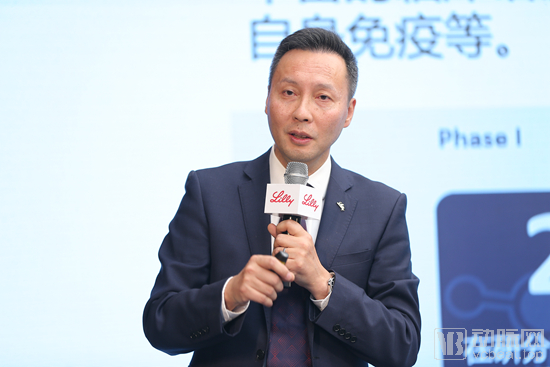
Dr. Wang Yizhe, Senior Vice President of Lilly China and Head of Oncology Products and Cross-Biochemical Products in China
Eli Lilly came to China in 1918 and established its first overseas representative office in Shanghai. Over the past century, Lilly has consistently adhered to the philosophy of “Rooted in China, Benefiting China.” As China accelerates its pace of openness, integration, and innovation, Lilly has been committed to expanding its business in China, fulfilling its mission of innovation, and continuously benefiting Chinese patients. For more than four decades since the launch of reform and opening-up, China has been dedicated to jointly building an open world economy characterized by innovation and inclusiveness, continually introducing new measures to further open up. The second China International Import Expo (CIIE) held in Shanghai is a global event that not only demonstrates China’s commitment to promoting a new round of higher-level opening-up but also serves as an important platform for multinational corporations to showcase innovative products and expand their markets.
Since 2015, China has expanded openness and encouraged innovation in the pharmaceutical sector, launching a series of institutional reforms to accelerate the review and approval of innovative drugs with unprecedented intensity and efficiency. Eli Lilly’s participation in this exhibition, themed “Innovation,” features its new psoriasis medication, Taltz® (ixekizumab injection), which was able to launch early in China by leveraging the favorable policy environment.