

From Wall Street to Medical AI: 31-Year-Old Chen Kuan and Infervision File for IPO

HongShan
Business Consulting, Enterprise Management Consulting Investment Institutions

Infervision
Artificial Intelligence Product Developer
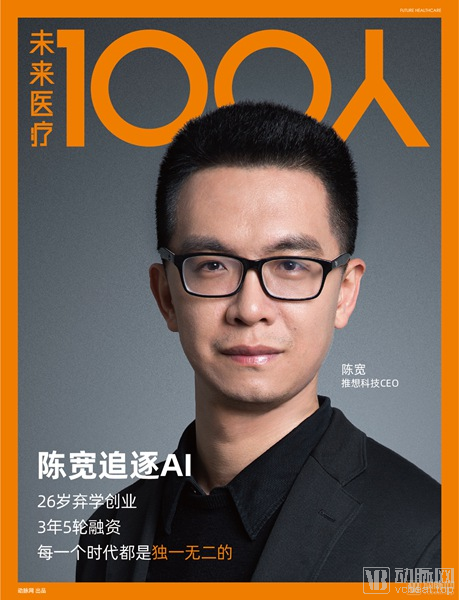
Had it not been for the Malaysian English teacher who told him, “You are bound to become somebody,” and had it not been for his doctoral supervisor, James J. Heckman, who advised him, “If there is something you deeply desire to do, you should pursue it,” Wall Street in the United States might have gained another bright young mind, while China would have lost a technology company dedicated to applying AI in the healthcare industry.
Secured five rounds of financing in three years, leading the medical AI industry. Beyond extensive coverage across healthcare institutions at all levels in 32 provincial-level regions throughout China, it has also exported Chinese AI technology to North America, Europe, and Japan—the world’s most advanced regions in technology and healthcare…
Chen Kuan, the 31-year-old founder and CEO of Infervision, sat in his office on Beijing’s East Fourth Ring Road. Rather than recounting these achievements to the reporter, he shared his journey from studying abroad to returning to China to launch a startup, tracing his path from an only child in an ordinary family to the founder of an AI technology company.
Chen Kuan could have leveraged his world-class Ph.D. in Economics to secure a coveted, high-paying position on Wall Street, yet he chose to pursue AI—a path fraught with difficulty and uncertainty, but one that holds immense social value.
Chen Kuan’s experience seems to reflect a metaphor of the era:
Every era is unique; each generation follows a preordained purpose, and every individual bears a star above their head as they fulfill their mission.
In 2003, Ding Lei of NetEase ascended to the throne of China’s richest person with a paper wealth exceeding RMB 5 billion, becoming the first entrepreneur to claim the title of “China’s wealthiest individual” through the internet industry. In his renowned work Thirty Years of Turbulence, financial writer Wu Xiaobo offered a striking commentary on this event: “Clearly, this was a landmark occurrence, signaling that young internet entrepreneurs had become a genuine mainstream force in business, and that the ‘niche’ for wealth accumulation had indeed shifted abruptly.”
That year, Chen Kuan was about to graduate from junior high school, completely unaware of the ups and downs that would characterize China’s tech and internet industry. At the time, all he knew was that he was about to bid farewell to the city where he had lived for over a decade and to his homeland; he was on the verge of embarking on a journey of relentless running and chasing, facing immense unknowns.
Chen Kuan was born in Shenzhen in the late 1980s. His parents were among the first pioneers who helped build Shenzhen. Chen’s childhood memory of his father is that “he worked very hard and was often away from home. He would usually return only after I had fallen asleep, and he might have already left again before I woke up.”
“Father once told Chen Kuan that when Shennan Avenue, Shenzhen’s main traffic artery, was first built, the road was wide and there were few cars, so they often used it as a soccer field.”
At that time, Chen Kuan showed nothing out of the ordinary. He read extracurricular books, played basketball, and his academic performance was even among the lowest in his class. Although he enjoyed exploring, he had yet to find what truly interested him.
The turning point came in the eighth grade, when 14-year-old Chen Kuan developed a strong interest in physics and began to focus on it. This passion led to a dramatic improvement in his academic performance, yet he simultaneously held two records: “highest grades” and “most frequent failure to submit homework.”
“When I truly focus my mind on one thing, the progress becomes more apparent,” Chen Kuan recalled in an interview with VCBeat.
In Grade 9, Raffles Institution in Singapore will select a cohort of high-achieving middle school students from Shenzhen to study in Singapore. Selected students will not only have their tuition covered by the Singapore government but also receive scholarships.
Chen Kuan took part in this selection exam with the mindset of “just testing my abilities; even if I get admitted, I definitely won’t enroll.” This attitude was shared by many students and parents who participated in the exam at the time. Due to relatively limited access to information, staying in Shenzhen for high school seemed to offer a clearer future compared to attending an unfamiliar school in a foreign country.
The results were announced the very next day, and Chen Kuan had been admitted. At this point, Chen Kuan’s parents began actively reaching out through their social circles. They learned that “admission to this school comes with an obligation to enroll; it is a prestigious institution dedicated to cultivating global political elites and business leaders.”
After careful consideration, Chen Kuan’s parents purchased a ticket to Singapore for their 15-year-old son.
That year, after a prolonged period of stagnation, China’s internet economy roared back into an era of explosive growth. Sina and Sohu successively achieved profitability, Jack Ma’s Alibaba began to pull far ahead of the competition, and Robin Li’s Baidu surpassed Google for the first time in third-party evaluations. Since then, with rapid advances in computing, storage, and networking technologies, along with continuous breakthroughs in big data and artificial intelligence, a highly futuristic world where technology transforms society is unfolding before us.
Boarding the flight to Singapore, Chen Kuan could not have imagined that he, an ordinary young man, would build a high-tech company with over 300 employees from scratch; nor could he have foreseen that his future would unfold like the ever-expanding Shennan Avenue.
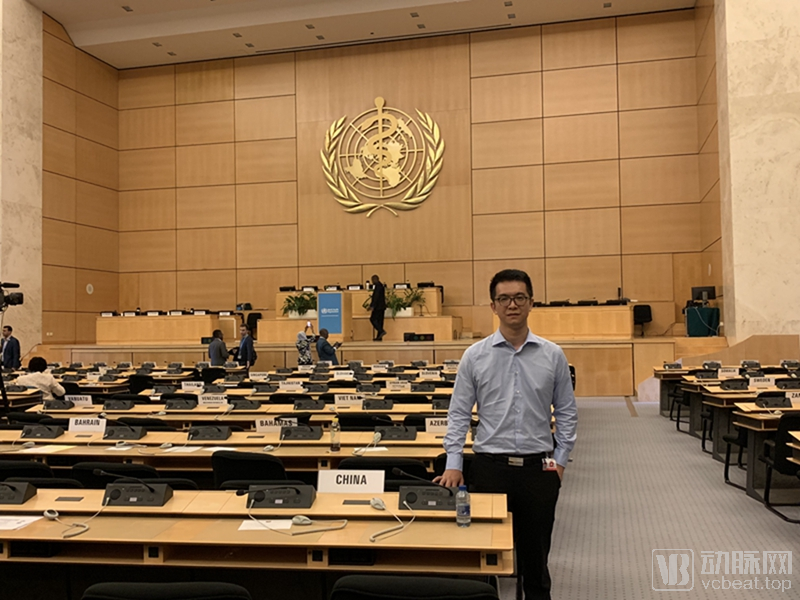
(Infervision, as a representative of Chinese medical AI companies, attends the WHO conference)
He could never have imagined that, one day in the future, the cutting-edge technological narratives of the internet and artificial intelligence would be closely intertwined with his own life.
In late October, Beijing already showed signs of winter, with people on the streets bundled up in heavy clothing.
In Chen Kuan’s office, dressed in his signature all-black attire, he sat in a chair for an interview. I asked him how he perceives himself.
“An introverted person,” he replied.
When Chen Kuan was a child, his mischievous antics often landed him in trouble, with his parents stepping in to mediate and resolve the issues. However, after moving to Singapore, the 15-year-old Chen Kuan had to learn to live independently. More importantly, he underwent a significant transformation, suddenly shifting from being part of the mainstream to becoming part of a marginalized group.
While in Shenzhen, Chen Kuan had familiar family members, spoke a familiar language, and lived in a familiar environment, with no issues communicating with those around him; however, after moving to Singapore, he suddenly became an “outsider from a developing country seeking better educational opportunities.”
Amidst such a stark decline, Chen Kuan’s academic performance was extremely poor, with every subject hovering on the verge of failing. His overall condition was also dire; he had “few friends and appeared to have a very problematic personality.”
At this point, Chen Kuan couldn’t help but recall his state of mind at the time: “In fact, the root cause of all these issues lies in one’s mindset. In other words, I was actually part of a marginalized group in that society, yet I still regarded myself as if I were in Shenzhen, seeing myself as the protagonist.”
The English course was taught by a Malaysian teacher. Although Chen Kuan’s English grades were poor and his scores were low at the time, she consistently encouraged him. In one class, she said to Chen Kuan, “You are bound to become somebody in the world” (meaning he would surely achieve prominence).
Perhaps due to his teacher’s encouragement, or perhaps because of Chen Kuan’s strong adaptability, he revived his neglected skills in mathematical modeling during his last two years in Singapore. His academic performance rose from the bottom of the class to among the top ranks. He not only gradually made friends but also assumed a leadership role. Unlike his own experience of studying alone in Singapore, many other international students were accompanied by their mothers. Chen observed that these mothers struggled to adapt to local life due to language and environmental barriers. In response, he led a social welfare initiative called “Carnation,” designed to help this group adjust their mindset and acclimate to life in Singapore. The project remains operational to this day.
After graduating from high school, Chen Kuan went to the University of Chicago in the United States to study economics.
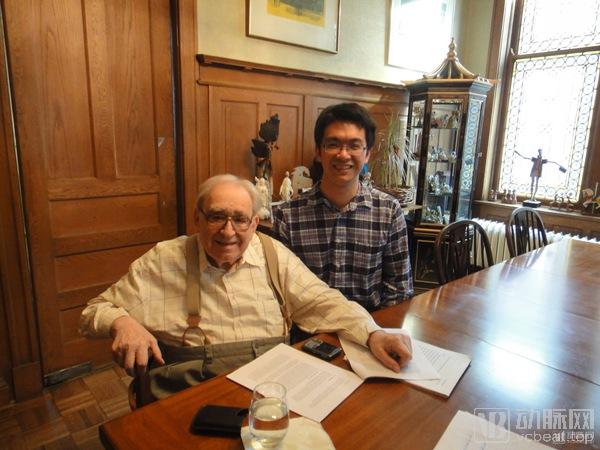
(Chen Kuan with his supervisor during his studies at the University of Chicago in the United States)
It is worth noting that the University of Chicago consistently ranks among the top ten universities worldwide and is a renowned research institution. Its Department of Economics is one of the world’s leading research centers, with 40% of Nobel Laureates in Economic Sciences affiliated with the university. After completing his undergraduate studies, Chen Kuan was able to remain at his alma mater to pursue dual doctoral degrees in finance and economics, a testament to his exceptional academic prowess at the time. Back then, Chen Kuan was the greatest pride of his parents and relatives. Yet no one could have anticipated that during his doctoral studies, Chen Kuan would make another decision that would once again alter the course of his life.
One day in 2014, Chen Kuan, a PhD candidate, was eager to validate a mathematical model. From his apartment on the 28th floor, gazing out at Lake Michigan, a thought struck him deeply: “I’ve been doing schoolwork for 20 years. I’m already 26, and I’m still stuck in academia. This isn’t what I want. I want to leverage my skills—using AI technology and mathematical models—to change or improve social phenomena, bringing tangible social value through mathematical modeling.”
That day, Chen Kuan gazed at the azure Lake Michigan, lost in thought for a long, long time.
When Chen Kuan met with his mentor, James J. Heckman, he shared his plan to take a leave of absence from his studies and return to China to start a business. Heckman, the 2000 Nobel Laureate in Economics, is a pioneer in microeconometrics and has made significant contributions to the theory and methodology of analyzing sample selection. Just before this year’s National Day holiday, Heckman was awarded the Chinese Government Friendship Award.
Heckman, a Christian, offered Chen Kuan a proverb reminiscent of the Bible: “If there is something you deeply desire to do, you should pursue it.”
A few days later, at Chicago O’Hare International Airport, several classmates who had planned to return to China together to launch startups backed out at the last minute and failed to show up. Chen Kuan was about to set foot on his homeland’s soil once again, making a fresh start in his pursuit of AI. At this moment, the only companion by his side was the small yellow cat he had adopted during his studies abroad.
At an altitude of 10,000 meters over the Pacific Ocean, Chen Kuan did not dwell on the dual doctoral degrees that had slipped through his fingers, nor did he contemplate the promising career prospects that might have awaited him on Wall Street. Instead, a single thought echoed in his mind: “AI, AI, AI, AI...”
Infervision’s technological prowess today is a far cry from its early days. The company now boasts an R&D team of over 200 experts recruited from prestigious institutions worldwide, including MIT, the University of Chicago, Duke University, the University of Cambridge, the Chinese Academy of Sciences, Tsinghua University, and Peking University. Additionally, senior executives from medical industry giants such as GE and Philips have joined Infervision in succession.

(Trophies displayed in the exhibition hall at Infervision’s headquarters)
As of June 2019, Infervision’s deployment sites had covered all 32 provincial-level administrative regions across China, while also completing its strategic layout in North America, the Asia-Pacific region, and Europe, spanning eight countries worldwide. The company processed over 40,000 AI-assisted cases daily, with the cumulative number of cases handled by Infervision’s AI servers exceeding 7 million.
In September this year, the Hurun Research Institute released the “Hurun China Potential Unicorns Q2 2019” list, aiming to identify high-growth companies most likely to reach a valuation of $1 billion within three years. Infervision, founded less than four years ago, was prominently featured on the list.
In fact, the value of artificial intelligence had long been anticipated by Chen Kuan. Two years before the AI boom erupted, Chen began leading his team to rent and reside in a dilapidated residential building outside Sichuan Provincial People’s Hospital, where they trained what was likely the first AI model in China capable of being applied to medical imaging.
“The four large chimneys of the hotpot restaurant downstairs were directly facing our windows, filling the entire apartment with the smell of hotpot. But to stay close to clients and save on costs, we had no choice but to live there.” Chen Kuan still vividly recalls the early startup days at Infervision.
As for why he chose healthcare, Chen Kuan had his own considerations: “Compared with other industries, AI holds the greatest social value in the healthcare sector.” However, the reality may not be as simple as he thought.
In the early days of his startup, Chen Kuan faced immense challenges. He and his co-founder, Wang Shaokang, traveled tirelessly day and night to visit thirty to forty top-tier tertiary hospitals across China, yet only one hospital agreed to collaborate. At that time, most hospitals regarded Chen and his team as frauds, often ejecting them before they could even finish their pitch. Throughout this process, Chen continuously used the scholarships he had saved during his student years to cover expenses. The earliest employees received no standard social insurance or housing fund benefits; they stayed solely out of their faith in AI and their trust in the two founders.
However, this did not last long.
In early 2016, Chen Kuan crossed the border from Shenzhen to Hong Kong. Through an introduction, he visited Lu Chuanwei, former CEO of Kuaidi Dache. At that time, Lu had just emerged unscathed from the intense ride-hailing wars and was recuperating in Hong Kong. After listening to Chen’s business proposal, Lu decided to invest in his venture in a personal capacity.
Subsequently, Inno Angel Fund also expressed its willingness to invest, and Chen Kuan secured a total of RMB 12.5 million in angel-round funding.
After securing angel-round financing, Chen Kuan registered the company and relocated the team to Beijing—one of the cities in China with the most concentrated resources in information technology and the healthcare industry.
Some of Infervision’s early employees were very young and referred to Chen Kuan as “CK.”
In their eyes, CK is more like a reliable senior colleague. “CK is very diligent. During business trips, while the rest of us might be scrolling through our phones, he would always be reading papers—both on AI and medicine.” Before joining Infervision, Da Huang worked in R&D at Amazon in the United States. He greatly admires Chen Kuan’s learning ability: “Although CK studied economics, he picks up new knowledge extremely quickly. During product development, he sometimes provides highly professional guidance.”
Although Chen Kuan enjoys the deep trust of his company’s team, the “introverted” leader does not rely on rallying the team with hype, storytelling, or slogans.
Chen Kuan only focuses on his work, quietly developing products, training models, and improving the recognition accuracy of the products with his team.
This atmosphere was precisely what HongShan (formerly known as Sequoia Capital China, hereinafter referred to as “HongShan”) sought. Amid the artificial intelligence boom that erupted in 2017, HongShan participated in every funding round of Infervision except the angel round.
“Medical resources are perpetually scarce, both domestically and internationally, leaving many patients unable to access optimal care. A significant value of artificial intelligence lies in leveraging technology to standardize medical resources, enabling people in different regions to enjoy relatively equitable access to healthcare.” Back then by the shores of Lake Michigan, Chen Kuan did not foresee the current success of Infervision, but he did anticipate the value of AI—and his own.
“The reason for establishing Infervision is to leverage commercial operations of artificial intelligence technology to give back to society, create genuine value for the public and people’s livelihoods, and in the process, realize my own personal life value.”
Colleagues familiar with Chen Kuan all say that he has undergone significant changes in recent years. Attending high-profile international and domestic conferences, delivering speeches, training employees, and granting media interviews... In his role as CEO, Chen Kuan has become increasingly adept and effective across more diverse dimensions.
“Do you think CK can succeed?” I asked Director Zhao of the R&D Department, who joined Infervision in its first year of establishment.
Zhao responded, “Rather than calling it a success, I believe he has the ability to adapt to change. The medical AI industry is evolving rapidly, and I think he can adapt to these changes and lead the company in continuous innovation.”
Chen Kuan stated that the application value of AI in certain specific scenarios is already very clear and has become a consensus. However, the medical field is the most rigorous domain, and any new technology must undergo the strictest and repeated validation before being applied to healthcare.
“Every step our AI takes is like pioneering new ground; it is exceptionally arduous. Over the past few years, the achievements made by Infervision can only be considered modest. We still face many challenges. The healthcare industry is not one that moves quickly. If we compare it to the Long March, we may have only taken the first step,” said Chen Kuan.
When discussing his current entrepreneurial achievements, Chen Kuan gives himself only a 5 out of 100. When I pressed further, asking what score he would give himself if Infervision were to reach the scale of BAT (Baidu, Alibaba, and Tencent), Chen replied that he would rate it 55. However, under no circumstances would he ever give himself a passing grade of 60.
“Because we still have so much to do, product upgrades and optimizations will not cease, and the development and expansion of new products and scenarios are ongoing. I must keep running, keep learning, constantly adjust myself, challenge myself, and spur myself on.”
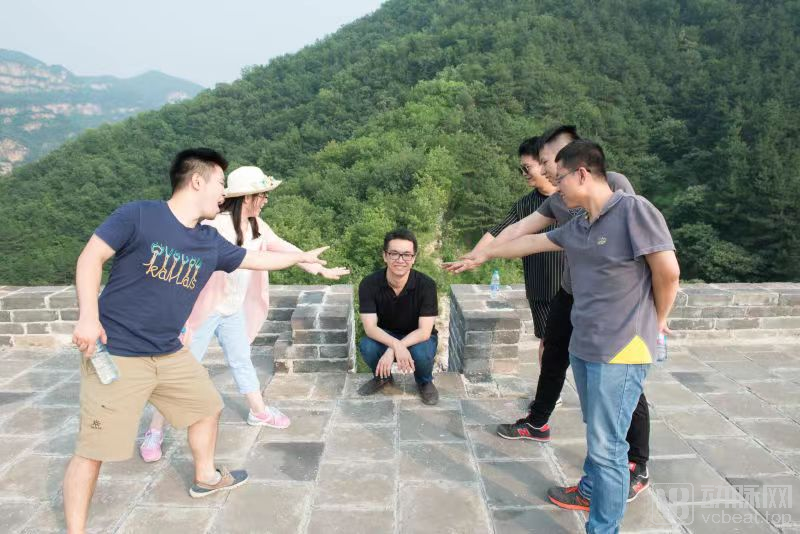
(Early team-building activities during Infervision's startup phase)
In the early days of the startup, Chen Kuan once led his team on a hike along the Great Wall. The star-studded night sky at the foot of the Great Wall mirrored Infervision at the time, which was already gathering momentum for a widespread breakthrough.
That day, he specially brought a xun to play for everyone, and perhaps also for himself. Amidst the serene night sky and the distant, resonant tones of the xun, this group of young visionaries from Infervision seemed to run with all their might under a canopy of stars, chasing the AI in their hearts.
Among the instruments Chen Kuan can play, his favorites are the xun and the violin. The violin is a classic instrument in Western culture, known for its loud, full, and highly penetrating timbre; whereas the xun, an instrument that emerged in China during the early agrarian period, features a simple, unadorned, ethereal, and distant tone.
These are two instruments with vastly different styles, yet Chen Kuan is fond of both and considers each indispensable.
To some extent, this is akin to Infervision’s experience, and also to Chen Kuan’s past.