

JunLian Healthcare Global New Drug Insights Newsletter – Issue 30
Nov 11, 2019 18:00
CST Updated
18:00

This week, there were 10 new drug data entries: 4 in oncology, 2 in anti-infectives, 1 in hematology, 1 in nephrology, 1 in hepatology, and 1 in metabolic disorders.
❖ Founded by Professor Lieping Chen’s teamNextcureRecently UpdatedSiglec15(S15) monoclonal antibodyNC318'sPhase I clinical data, inNSCLCperformed outstandingly in China,ORRFor29%(2/7),DCRFor71%(5/7), stocks also surged248.92%. SinceFollowing the advent of PD-1/PD-L1 inhibitors, the entire world has been searching for the next blockbuster therapy. However, since the failure of IDO inhibitors, countless potential targets have failed to yield promising data even in combination with PD-1 inhibitors, leading the immuno-oncology (IO) field into a period of stagnation. CurrentlySigLec15 has made a groundbreaking debut and may exert its therapeutic effects independently of PD-1, making it highly anticipated. Numerous fast-follow opportunities are expected to emerge in China subsequently.
❖ United StatesHalozymeAnnouncement on Hyaluronidase PreparationsPEGPH20of phase III clinical trial failure for pancreatic cancer. PreviouslyPEGPH20As a technology with the potential to accelerate the absorption of subcutaneous injections, it has garnered significant favor among leading companies in the blockbuster antibody drug sector. Last year, the company partnered with Bristol Myers Squibb and Roche.20The billion-dollar partnership is also eye-catching. However, following Sumitomo'snapabucasin(Stat3Inhibitors,Phase III) and Eli Lilly'spegilodecakin(Peg-IL10,Phase III) failure,PEGPH20 Also Falls VictimPancreatic cancer is known as the "king of cancers."The 5-year survival rate is only8%, the median survival period for advanced pancreatic cancer is only3months, now newDrugs with this MoA have repeatedly failed, and all failures occurred in Phase III trials, resulting in very high sunk costs. Future pipelines targeting pancreatic cancer may need to incorporate a higher risk factor.
NextCure’s Second-Generation Immunotherapy NC318 Announces Phase 1/2 Clinical Data
NextCure Announces Latest Data on Its Novel Immuno-Oncology Drug NC318
NC318 is a monoclonal antibody that targets Siglec-15 (S15), which is expressed on the surface of tumor cells and M2 macrophages. It potently inhibits T-cell activation, thereby suppressing the human immune response against cancer cells.
A total of 43 patients with previously treated advanced solid tumors were enrolled across six dose-escalation cohorts (8–800 mg, administered once every two weeks). Common cancer types included non-small cell lung cancer (NSCLC; n=10), ovarian cancer (n=7), melanoma (n=6), breast cancer (n=3), and colorectal cancer (n=3).
A total of 32 patients were evaluable for efficacy. In NSCLC, one patient achieved a complete response lasting 41 weeks; another achieved a partial response lasting 14 weeks; and three additional patients achieved stable disease. The ORR was 29% (2/7), and the DCR was 71% (5/7).
NC318Approvedsiglec-15Mechanisms for Suppressing Immune Overexpression
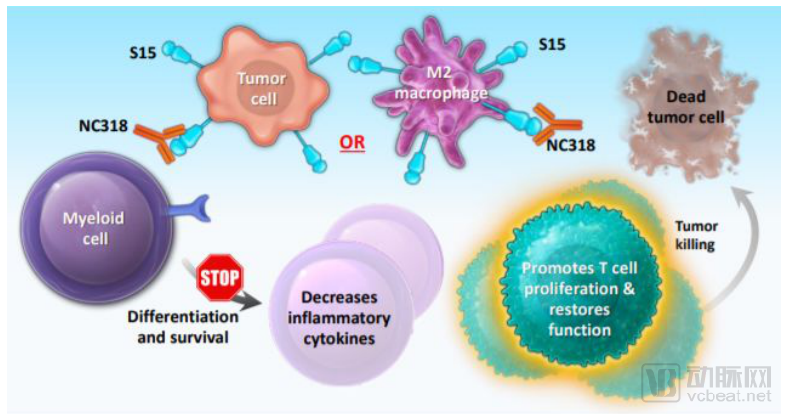
Data Source: NextCure
Halozyme’s Hyaluronidase Formulation PEGPH20 Fails in Phase III Clinical Trial for Pancreatic Cancer
U.S. biotechnology company Halozyme announced that its hyaluronidase formulation PEGPH20 failed in the Phase III clinical trial for pancreatic cancer, known as HALO-301
PEGPH20 is a PEGylated human recombinant hyaluronidase protein that degrades hyaluronic acid. The temporary and reversible degradation of this polysaccharide enhances the diffusion and absorption of macromolecules, enabling many drugs originally requiring intravenous infusion to be administered via subcutaneous injection.
Comparison of the Impact of PEGPH20 versus Placebo on Overall Survival as First-Line Therapy for Advanced Pancreatic Cancer against a Background of Gemcitabine and ABRAXANE®
The OS for the two groups was 11.2 and 11.5 months, respectively, missing the trial endpoint.
Daiichi Sankyo's New Drug for Diabetic NephropathyesaxerenoneDa3Phase Clinical Endpoints
Daiichi Sankyo announced that esaxerenone, its selective mineralocorticoid receptor inhibitor, met both the primary and secondary endpoints in a pivotal Phase 3 trial for the treatment of patients with early-stage diabetic nephropathy.
Esaxerenone (CS-3150) is a nonsteroidal, selective mineralocorticoid receptor (MR) antagonist; MR is a nuclear receptor that plays a role in many cardiovascular and metabolic diseases.
A randomized, double-blind, placebo-controlled Phase 3 clinical trial in which patients with diabetic kidney disease received treatment with an ARB or an ACE inhibitor
Using the urine albumin-to-creatinine ratio (UACR) as the endpoint, esaxerenone increased the patient remission rate by 22.1%, compared with 4% in the placebo group, thereby meeting the primary endpoint of the trial.
Cirius Therapeutics’ New NASH Drug MSDC-0602K Shows Positive Phase 2b Clinical Trial Results
Cirius Therapeutics Announces That MSDC-0602K Significantly Improved Liver Enzyme Levels, Glycemic Control, and Insulin Resistance in Patients with Non-Alcoholic Steatohepatitis (NASH) in the Phase 2b EMMINENCE Trial
MSDC-0602K is a second-generation oral insulin sensitizer that, compared with the first generation, modulates mitochondrial pyruvate carrier (MPC) function while minimizing the direct agonist effects on peroxisome proliferator-activated receptor gamma (PPARγ).
Enrollment of 402 NASH patients for efficacy comparison across different doses
Three different doses of MSDC-0602K (62.3 mg, 125 mg, and 250 mg) significantly reduced the NAFLD Activity Score (NAS) in patients, with 33.3%, 39.8%, and 42.6% of patients, respectively, achieving a reduction of at least 2 points in their NAS scores.
Scynexis’ Oral Antibiotic Ibrexafungerp Meets Primary and Key Secondary Endpoints in Phase 3 Clinical Trial
Scynexis Announces That Its Investigational Oral Antifungal Ibrexafungerp Met Primary and Key Secondary Endpoints in Phase 3 Clinical Trial for Patients with Vulvovaginal Candidiasis (VVC)
Ibrexafungerp (SCY-078) is a novel glucan synthase inhibitor that combines the potent activity of glucan synthase inhibitors with the potential flexibility of both oral and intravenous administration.
Randomized, double-blind, placebo-controlled trial enrolling 376 patients with vulvovaginal candidiasis (VVC) who had a signs and symptoms (S&S) score ≥4 (score range: 0–18).
Compared with the placebo group, 50.5% of patients treated with ibrexafungerp achieved clinical cure after 10 days of treatment, defined as a Signs and Symptoms (S&S) score of 0. This rate was significantly higher than that in the placebo group (p=0.001).
Takeda’s Ninlaro Meets Primary Endpoint in Phase 3 Trial for First-Line Treatment of Multiple Myeloma
Takeda Announces That Its Proteasome Inhibitor Ninlaro (ixazomib) Met the Primary Endpoint in a Phase 3 Trial as First-Line Maintenance Therapy for Adult Patients with Multiple Myeloma (MM) Who Have Not Undergone Stem Cell Transplantation
Ninlaro is the first FDA-approved oral proteasome inhibitor, which selectively binds to the PSMB5 subunit of the proteasome and inhibits its activity.
Randomized, double-blind, placebo-controlled study in newly diagnosed adult patients who had not previously undergone stem cell transplantation; after initial therapy and achievement of partial response, patients received either Ninlaro or placebo.
Compared with the placebo group, patients receiving Ninlaro treatment showed a statistically significant improvement in PFS, meeting the primary endpoint of the trial.
Gilead’s Two New HIV Drugs Demonstrate Long-Term Efficacy
Gilead Announces That Descovy, for Reducing the Risk of HIV Infection in Men and Transgender Women as Pre-Exposure Prophylaxis, and Biktarvy, for Treating Patients with Initial HIV Infection, Have Further Demonstrated Their Long-Term Efficacy and Safety in Extension Studies of Phase 3 Trials
Descovy is a combination formulation containing 200 mg of emtricitabine and 25 mg of tenofovir alafenamide; Biktarvy contains an additional ingredient, bictegravir, which is a novel integrase strand transfer inhibitor (INSTI).
The DISCOVER trial was designed to verify whether Descovy meets the non-inferiority criteria compared with the approved PrEP regimen Truvada; the Biktarvy trial aimed to evaluate its efficacy in suppressing HIV-1 in treatment-naïve adults, compared with DTG/ABC/3TC or DTG plus Descovy, respectively.
The average annual HIV incidence rate was 0.16 per 100 person-years in the Descovy group, compared with 0.30 per 100 person-years in the Truvada group; among patients receiving Biktarvy, 82% achieved an HIV-1 RNA level of <50 copies/mL, meeting the non-inferiority criterion for suppression of viral replication compared with the control group.
Sanofi’s Long-Acting Insulin Meets Phase 3 Clinical Trial Endpoints
Sanofi Announces That Its Long-Acting Insulin Toujeo Gla-300 Met Primary Endpoint in Trial for Children and Adolescents (Aged 6 to 17) with Type 1 Diabetes, Compared with Toujeo Gla-100
Toujeo Gla-300 is a long-acting insulin with an insulin concentration three times that of standard 1 mL insulin (100 units/mL), achieving blood glucose reduction by stimulating peripheral glucose uptake and inhibiting hepatic glucose production.
To verify the efficacy of Toujeo Gla-300 versus Toujeo Gla-100 in reducing HbA1c levels and managing glycemic variability among patients aged 6–17 years with type 1 diabetes and baseline HbA1c levels between 7.5% and 11.0%.
The Toujeo Gla-300 group achieved the primary endpoint of non-inferiority in reducing HbA1c levels, and this group also had relatively lower incidence rates of ketosis and severe hypoglycemia (<54 mg/dL).
Bio-Thera's Adalimumab Injection Receives Marketing Approval
Bio-Thera’s adalimumab injection marketing application (CXSS1800018) has been officially approved by the National Medical Products Administration, with indications identical to those already approved in China for the originator drug Humira.
It is the world’s first fully human TNF-α monoclonal antibody approved for marketing. It specifically binds to soluble human TNF-α and blocks its interaction with the cell surface TNF receptors p55 and p75, thereby effectively inhibiting the pro-inflammatory effects of TNF-α.
Developed and submitted for production approval via the biosimilar pathway, using the originator adalimumab as the reference drug, and supported by comprehensive quality similarity studies, non-clinical similarity studies, and clinical comparative studies.
"demonstrated high similarity to the approved reference drug in terms of quality, safety, and efficacy"
Celgene’s Potential Blockbuster Anemia Therapy Reblozyl Approved by FDA for Market Launch
Reblozyl (luspatercept-aamt), jointly developed by Celgene and Acceleron, has received FDA approval for the treatment of anemia in patients with transfusion-dependent beta thalassemia.
Reblozyl is a soluble fusion protein composed of the Fc domain of IgG1 fused to the extracellular domain of activin receptor IIB. It acts as a ligand trap for TGF-β, preventing the activation of the Smad2/3 signaling pathway by TGF-β, thereby promoting the differentiation and maturation of late-stage erythroid cells.
Patients with β-thalassemia requiring transfusion were randomized in a 2:1 ratio to evaluate the efficacy and safety differences between luspatercept plus best supportive care (BSC) and placebo plus BSC, with the primary endpoint being erythroid response.
21% of patients experienced a >33% reduction in transfusion burden compared with baseline, which was significantly superior to the placebo-treated control group (4.5%, p<0.0001).
ReblozylMechanism of Action
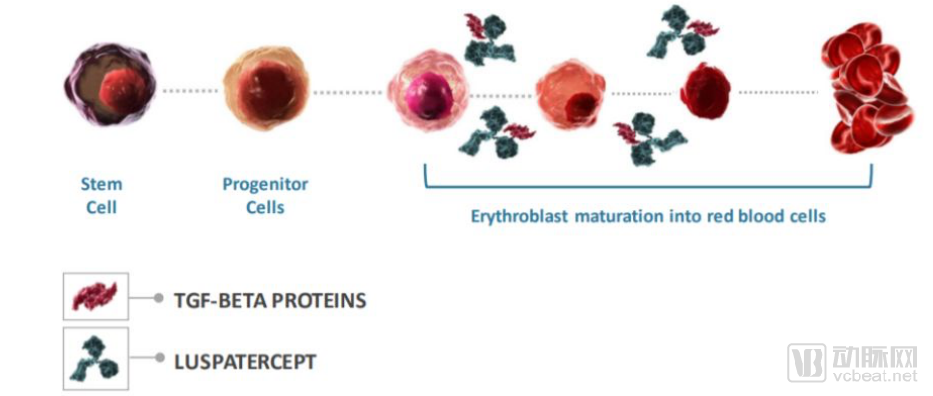
Data Source: ACCELERON
❖ Inovio PharmaceuticalsThe company announced that its in-developmentTCell-Activated ImmunotherapyINO-5401, with immune activatorsINO-9012, jointly developed by Regeneron and SanofiPD-1InhibitorLibtayo(cemiplimab) as a combination therapy for treating patients with newly diagnosed glioblastoma1/2In phase clinical trials, make80%MethylatedMGMTpatients with the gene reached6months of progression-free survival
❖Regeneron announced that interim data analysis showed that the drug co-developed with SanofiPD-1InhibitorLibtayo(cemiplimab) as monotherapy in the first-line treatment of advancedNSCLCPatient's3demonstrated significantly superior efficacy to chemotherapy in phase clinical trials. Currently,LibtayoTwo ongoing3as a monotherapy or in combination with chemotherapy for the treatment of advancedNSCLCPatient
❖ Constellation PharmaceuticalsThe company announced that its selectiveBETInhibitorCPI-0610In the name ofMANIFESTof2In clinical trials, it demonstrated favorable clinical activity in the treatment of patients with myelofibrosis. The trial primarily targeted those who had not previously receivedJAKpatients receiving inhibitor therapy and those on currently marketed therapiesruxolitinibPatients who develop drug resistance or intolerance
❖ AstraZeneca Announces Evaluation of Targeted Anti-Cancer DrugCalquence(acalabrutinib) First-line treatment for chronic lymphocytic leukemiaⅢStageELEVATE-TNInitial data from the study. The study met its primary endpoint at the interim analysis, following this year’s5Released in MayASCENDAfter the study,CalquenceTreatmentCLLthe second keyIIIPhase III Study Meets Primary Endpoint Early